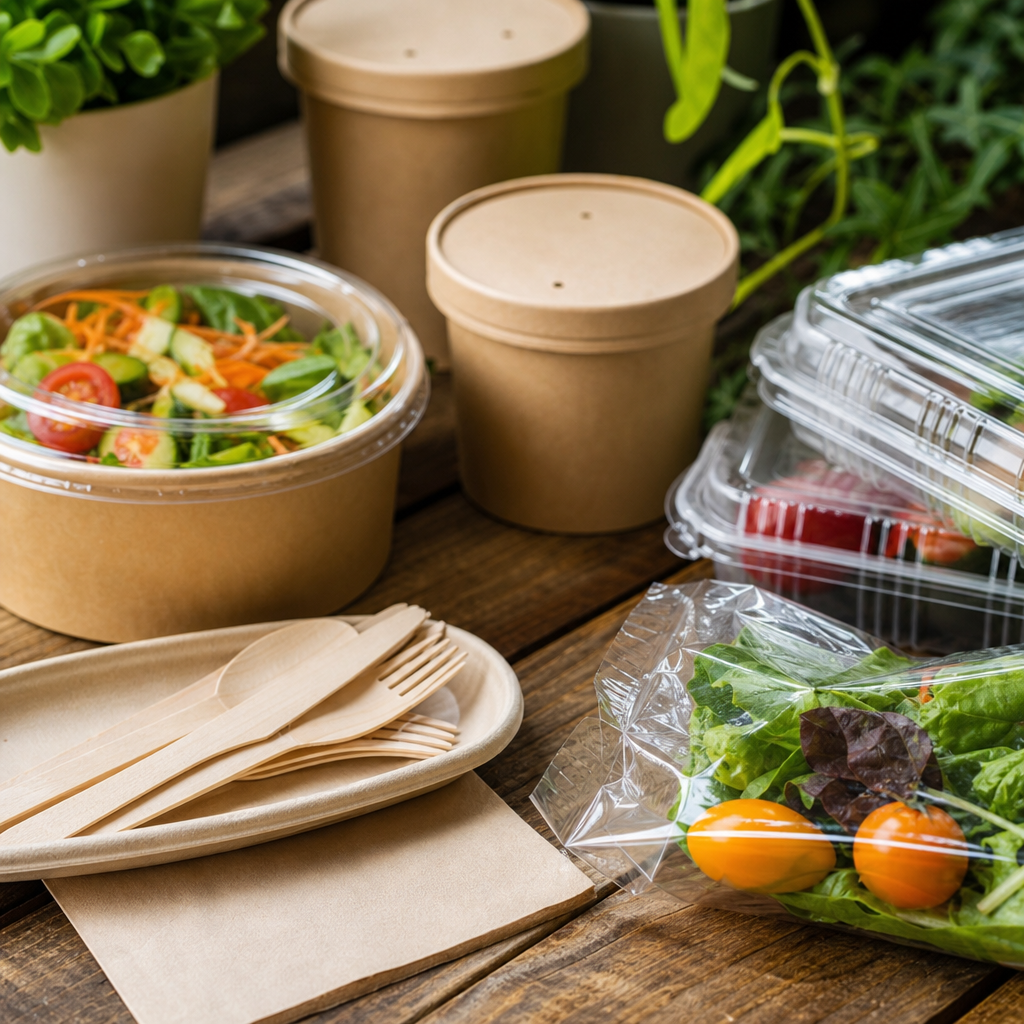
Innovations in biodegradable polymers for food packaging are reshaping how brands protect products, meet regulatory pressure, and reduce persistent plastic waste across global supply chains. In packaging work, I have seen the conversation shift from simply replacing petroleum plastics to engineering materials that perform under real conditions: heat sealing on fast lines, resisting grease, controlling oxygen transmission, and surviving refrigerated distribution without compromising compostability or food safety. Biodegradable polymers are plastics designed to break down through microbial action into smaller natural substances under defined conditions, while food packaging includes flexible films, trays, coatings, pouches, bottles, and multilayer structures used to contain, preserve, transport, and present food. The topic matters because conventional plastic packaging delivers excellent cost and barrier performance, yet its end-of-life burden is increasingly untenable. Retailers, converters, and food manufacturers now need materials that can align product protection with circularity goals, extended producer responsibility rules, and consumer expectations. This hub article explains the main polymer families, the latest material innovations, where they are working now, and the practical limits that still define successful commercial adoption.
Core biodegradable polymer families used in food packaging
The current innovation landscape centers on several polymer families, each with distinct chemistry and processing behavior. Polylactic acid, or PLA, remains the most widely commercialized bio-based biodegradable packaging polymer. Derived largely from fermented plant sugars, PLA offers good stiffness, clarity, and printability, which makes it useful for salad containers, thermoformed cups, lidding films, and dry food formats. Its weakness is brittleness and moderate heat resistance, so recent innovation has focused on impact modifiers, stereocomplex PLA grades, nucleating agents, and crystallization control that increase toughness and improve thermal performance for hot-fill or higher-speed sealing.
Polyhydroxyalkanoates, known as PHAs, are attracting strong interest because they are produced by microorganisms and can biodegrade in a broader range of environments than many alternatives. In practice, PHA grades vary widely: PHB is more brittle, while copolymers such as PHBV can improve flexibility and processability. I have seen developers use PHA in compostable coffee capsules, coated paper cups, and marine-sensitive applications where leakage risk makes environmental persistence a major concern. The challenge remains cost, batch consistency, odor control, and scaling fermentation capacity.
Starch blends are another major category. Native starch alone is too moisture-sensitive for most demanding food packaging, but when plasticized and blended with biodegradable polyesters such as PBAT, it can form cost-effective films for produce bags, bread packaging, and organic waste liners. Cellulose-based materials, including regenerated cellulose films and cellulose nanofiber coatings, add renewable content and excellent grease resistance. Other important materials include PBS, PCL, and PBAT, often used not as stand-alone solutions but as tuning components that give flexibility, sealability, or compostability in multilayer or alloy formulations.
What is driving innovation in innovative polymer applications
Innovation is being driven by a hard engineering reality: a food package must do much more than disappear at end of life. It must preserve shelf life, maintain package integrity through filling and transport, meet migration limits, and run efficiently on existing converting equipment. That is why innovative polymer applications increasingly focus on property balancing rather than single-material substitution. The winning materials are not those with the best sustainability story alone, but those that match conventional performance closely enough to avoid food waste, line downtime, and damaged products.
Regulation is accelerating this work. The European Union’s Packaging and Packaging Waste Regulation, single-use plastics measures, and national compostability labeling requirements are forcing brands to document material claims more carefully. In the United States, state-level extended producer responsibility laws and truth-in-labeling scrutiny are pushing packaging teams to distinguish between industrial compostability, home compostability, and biodegradation under uncontrolled conditions. Standards such as EN 13432, ASTM D6400, and ASTM D6868 provide the frameworks used to evaluate compostable packaging, including disintegration, heavy metal limits, ecotoxicity, and biodegradation thresholds. These standards do not guarantee suitability everywhere, but they are essential decision filters.
Consumer-facing sectors are also shaping material choices. Fresh produce companies need breathable films. Ready-meal producers need trays that tolerate chilled or microwave conditions. Bakery brands need anti-fog, puncture resistance, and seal consistency. In each case, material science is becoming application specific, which is why this hub connects closely to deeper case studies on films, coatings, rigid formats, and multilayer replacements.
Breakthrough material strategies improving performance
The most important breakthroughs are coming from formulation and structure, not from a single miracle resin. Polymer blending has become central. PLA/PBAT blends can improve ductility. PLA/PHA systems can increase toughness and alter biodegradation behavior. Starch-polyester blends can reduce cost while keeping compostability targets. Compatibilizers are critical here because immiscible blends phase separate, causing weak mechanical performance and poor optics. Reactive extrusion, chain extenders, and grafted coupling agents are increasingly used to stabilize morphology and raise melt strength.
Barrier technology is another major frontier. Food packaging often fails sustainability targets because oxygen and water vapor transmission rates are too high for real shelf-life needs. Developers now use nanoclay, chitin nanofibers, cellulose nanocrystals, and layered bio-coatings to reduce permeability. A well-designed coating can turn a compostable base web into a viable structure for snacks, dairy, or coffee, provided the coating remains thin enough not to compromise end-of-life certification. Silicon oxide and aluminum oxide barrier layers have also been explored on compostable films, though recyclability and compostability interactions require careful validation.
Processing innovation matters just as much as chemistry. Biaxial orientation improves mechanical properties and clarity in compostable films. Annealing raises PLA crystallinity and heat deflection. Foam extrusion reduces material use in trays while maintaining rigidity. Digital formulation tools and rheology modeling now allow converters to predict seal window behavior, melt fracture risk, and thermoforming draw performance before costly scale-up trials.
| Polymer or system | Primary packaging strengths | Key limitations | Typical food applications |
|---|---|---|---|
| PLA | Clarity, stiffness, printability, thermoforming | Brittleness, moderate heat resistance, limited moisture barrier | Cold cups, produce clamshells, dry food containers |
| PHA | Broad biodegradation profile, grease resistance, tunable grades | High cost, variable processing, odor sensitivity | Coffee capsules, coated paper, specialty films |
| Starch/PBAT blends | Flexibility, lower cost, compostability | Moisture sensitivity, lower high-barrier performance | Produce bags, bakery films, waste-linked packaging |
| Cellulose-based materials | Renewable feedstock, grease barrier, dead-fold, good optics | Humidity sensitivity, sealing complexity in some formats | Confectionery wraps, window films, coatings |
Coatings, multilayers, and fiber-based hybrid packaging
Some of the most commercially credible innovations are hybrid structures that combine biodegradable polymers with paper or molded fiber. This approach reduces total plastic mass while leveraging paper stiffness and converting familiarity. A common example is dispersion-coated paper for bakery bags, frozen food cartons, or takeaway wraps, where a thin compostable barrier layer replaces polyethylene. In pilot work, I have found that coat weight uniformity and fiber tear behavior matter as much as barrier numbers. If the coating cracks at fold lines or blocks during winding, the concept fails regardless of its sustainability profile.
Molded fiber trays with compostable polymer liners are another fast-growing area. They target meat, produce, and convenience foods where brands want a natural paper appearance without sacrificing moisture or grease resistance. The engineering challenge is adhesion. If the liner delaminates, pack integrity drops. If adhesion is too strong, repulpability or compostability claims may become harder to defend. This is why water-based coatings, extrusion coatings with certified compostable polyesters, and in-mold barrier treatments are being compared carefully.
Flexible multilayers remain the hardest problem. Conventional snack and retort pouches rely on combinations of PET, PE, aluminum foil, and tie layers to achieve excellent barrier and seal performance. Compostable replacements often require mono-material simplification, advanced coatings, or application narrowing. For high-moisture or oxygen-sensitive foods, the realistic path is often partial replacement first, not immediate parity across every shelf-stable category.
Real-world applications across food categories
Fresh produce has been one of the strongest early markets because shelf-life requirements can align well with breathable biodegradable films. Compostable bags for bananas, apples, and leafy greens are already in use in several European retail programs. Here, film permeability can actually help manage respiration when tuned correctly, although excess moisture and fogging must be controlled. Bakery packaging is another practical segment. Bread bags and pastry windows can use starch blends or cellulose films where moderate barrier is sufficient and short distribution cycles reduce risk.
Food service is often the most visible application area. Compostable cutlery has struggled because heat resistance and toughness are difficult, but cups, salad bowls, clear lids, and takeaway containers have advanced considerably. PLA dominates cold beverage and deli formats, while coated paper structures and PHA-enhanced systems are entering greasy or hot-use niches. Coffee capsules have become a high-profile proving ground because they combine heat, pressure, aroma retention, and consumer disposal concerns. Some brands now use certified compostable capsule shells based on PLA or PHA blends, though performance depends heavily on machine compatibility and local collection systems.
Meat and dairy remain demanding segments because they need stronger oxygen barriers and robust leak prevention. Current innovation includes compostable absorbent pad systems, high-barrier bio-coatings, and rigid trays that pair molded fiber with sealed lidding. Success here depends on total pack design, not the polymer alone. If a lower-impact tray shortens shelf life and drives spoilage, the environmental outcome can worsen despite improved material end-of-life.
Manufacturing, certification, and commercial adoption hurdles
Scale-up is where promising materials often struggle. Many biodegradable polymers have narrower processing windows than PE or PET, making them sensitive to moisture, residence time, screw design, and sealing temperature. PLA, for example, hydrolyzes if drying is inadequate before extrusion, which lowers molecular weight and weakens film strength. PHAs can show thermal instability in poorly optimized lines. These are manageable issues, but they require disciplined process control and converter training.
Certification and claims management are equally important. Compostable does not mean suitable for backyard composting, nor does biodegradable mean a package will harmlessly disappear in nature. Brands that fail to state disposal conditions clearly risk regulatory action and consumer distrust. The strongest commercial programs pair certified materials with explicit collection pathways, on-pack labeling tested for comprehension, and retailer or municipal partnerships that make correct disposal plausible.
Cost remains a barrier, especially in value-driven food categories. Resin pricing for PHAs and specialty compostable formulations is still above commodity plastics, and converting scrap rates can erase sustainability gains if process optimization is poor. Yet costs are moving as capacity expands, and some brands offset premiums through downgauging, paper substitution, or reduced extended producer responsibility fees in supportive jurisdictions.
The future of biodegradable food packaging innovation
The next phase of innovation will come from smarter matching of materials to use cases, not from claiming one polymer can solve every packaging problem. Expect more tailored copolymers, enzyme-assisted degradation triggers, and bio-based coatings that deliver high barrier at very low coat weights. Fermentation advances should improve PHA economics, while chemical modification and stereochemistry control will continue to extend PLA performance. Cellulose nanomaterials and chitosan-inspired coatings are likely to play larger roles in grease and oxygen barrier design, especially on paper-based packs.
Data will become a bigger differentiator. Serious packaging teams now compare compostability certification, life-cycle assessment, shelf-life data, and line efficiency together before changing formats. That integrated approach consistently produces better decisions than material marketing alone. For a hub page on innovative polymer applications, the key lesson is clear: biodegradable polymers are no longer niche experiments. They are a growing toolkit of resins, blends, coatings, and hybrid structures already solving specific packaging challenges in produce, bakery, food service, coffee, and selected chilled foods. The best results come from application-led development, rigorous testing, and honest communication about disposal conditions. If you are evaluating sustainable food packaging, start by mapping product needs, barrier targets, processing limits, and end-of-life infrastructure, then use that framework to choose the right biodegradable polymer pathway.
Frequently Asked Questions
1. What are the most important recent innovations in biodegradable polymers for food packaging?
Recent innovation has moved well beyond the idea of simply swapping conventional plastic for any material labeled biodegradable. The most important advances are happening in performance engineering. New biodegradable polymer systems are being designed to meet real packaging demands such as reliable heat sealing, grease resistance, moisture management, puncture strength, and oxygen barrier performance. Materials like PLA, PHA, starch blends, cellulose-based films, and PBS are now being modified through copolymer design, multilayer structures, blending, and coating technologies so they can handle applications that previously required petroleum-based plastics.
Another major innovation is the development of functional coatings and hybrid structures that improve shelf life without undermining compostability goals. For example, some biodegradable films now use bio-based barrier layers to reduce oxygen transmission for snacks, produce, and prepared foods. Others incorporate surface treatments that improve printability, seal consistency, and resistance to oils or condensation. In practice, that matters because food packaging has to perform on high-speed lines and through distribution, not just look sustainable on paper.
Processing compatibility is also a major area of progress. Manufacturers are tailoring biodegradable polymers for blown film, cast film, thermoforming, injection molding, and extrusion coating so they can run on existing converting equipment with fewer line modifications. That is a key commercial breakthrough, because adoption accelerates when brands do not need to rebuild operations from scratch. In short, the biggest innovations are the ones that close the gap between environmental intent and packaging reality.
2. How do biodegradable polymers compare with traditional plastics in food packaging performance?
The answer depends heavily on the application, because food packaging performance is never one-dimensional. Traditional plastics such as PET, PE, PP, and multilayer laminates have been optimized for decades, so biodegradable polymers do not automatically match them in every category. However, the performance gap has narrowed significantly. In some applications, biodegradable materials now deliver very competitive sealing, stiffness, clarity, and formability. In others, especially where extreme moisture resistance, long shelf life, or high-temperature tolerance is required, careful material selection and structure design are still essential.
For example, PLA offers good clarity and stiffness, making it useful for trays, cups, and some fresh food packaging formats, but it can be more brittle than conventional plastics unless modified. PHA has drawn attention because of its biodegradability profile and improving flexibility, though cost and processing consistency can still be challenges. Starch-based blends can work well in certain applications but may require enhancement for moisture resistance. Cellulose-based materials often provide strong renewable-content credentials and can be engineered for good barrier properties when paired with coatings.
From a packaging development standpoint, the real comparison should be made at the package-system level. That includes seal integrity, barrier performance, machinability, migration compliance, product interaction, and performance throughout storage and transportation. A biodegradable polymer that looks promising in the lab may fail if it cannot withstand refrigerated logistics, hot filling, or greasy food contact. The best results come when brands match the material to the use case rather than expecting one biodegradable polymer to replace every conventional resin across the board.
3. Are biodegradable food packaging materials actually compostable in real-world conditions?
This is one of the most important and most misunderstood questions in the category. Not all biodegradable materials are compostable, and not all compostable materials break down effectively in every environment. Some biodegradable polymers are designed to degrade under industrial composting conditions, which typically involve controlled heat, humidity, microbial activity, and processing time. Those conditions are very different from what exists in a backyard compost pile, a landfill, or the natural environment. So when evaluating packaging claims, it is critical to ask where and how the material is meant to break down.
In practical terms, compostability depends on standards, infrastructure, and product design. Packaging may meet recognized compostability standards, but if local collection and processing systems are unavailable, the environmental benefit can be limited. Even certified compostable packaging can struggle in the real world if it includes inks, adhesives, barrier coatings, or multilayer constructions that are not aligned with the end-of-life pathway. This is why current innovation increasingly focuses on whole-package certification rather than just resin-level claims.
For food brands and packaging teams, the takeaway is that end-of-life planning must be part of the design process from the beginning. A package should not only perform during filling, transport, and sale, but also fit within realistic disposal systems. Clear labeling, regional waste management compatibility, and verified third-party standards are essential. In other words, compostability is not just a material property; it is a system outcome.
4. What challenges still limit wider adoption of biodegradable polymers in food packaging?
Despite impressive progress, several challenges still affect large-scale adoption. Cost remains one of the biggest. Many biodegradable polymers are more expensive than commodity plastics, especially when supply is limited or when the material needs specialized modification to reach food-packaging performance targets. For high-volume packaging categories with tight margins, even a small cost increase can slow implementation unless there is a strong regulatory, retailer, or consumer driver.
Performance consistency is another challenge. Food packaging has to work across a wide range of temperatures, filling conditions, and logistics environments. A package may need to survive sealing on fast equipment, cold-chain storage, handling stress, grease exposure, and varying humidity levels while still protecting shelf life. Some biodegradable polymers are highly capable, but not every formulation is robust enough for every application. That means more testing, more formulation refinement, and often more collaboration between resin suppliers, converters, and food manufacturers.
Infrastructure and communication also remain major barriers. If consumers do not understand whether a package belongs in compost, recycling, or general waste, contamination rises and sustainability claims lose credibility. At the same time, composting infrastructure is uneven across markets, and regulations are evolving quickly. There is also the challenge of balancing sustainability goals with food waste reduction, because a package that biodegrades more readily but shortens product shelf life can create a worse overall environmental outcome. The future of adoption will depend on solving all of these issues together, not treating material innovation as a standalone fix.
5. How should brands evaluate biodegradable polymers when choosing food packaging solutions?
Brands should evaluate biodegradable polymers through a packaging performance lens first and a sustainability lens second, then bring the two together. The first step is to define the technical requirements of the food product and supply chain. That includes oxygen and moisture barrier needs, grease resistance, required shelf life, sealing conditions, refrigeration or freezing exposure, filling temperature, and pack format. Once those criteria are clear, brands can identify which biodegradable polymer families are realistic candidates rather than starting with generic sustainability claims.
The next step is validation. A promising material should be tested for machinability, seal strength, drop and puncture resistance, dimensional stability, and product compatibility. Food-contact compliance, migration behavior, and storage performance all need to be confirmed. Brands should also assess whether the material runs efficiently on existing lines or creates operational losses through slower speeds, sealing variability, or scrap generation. In many cases, the hidden cost of poor line performance can outweigh the sustainability benefit of the resin choice if not addressed early.
Finally, brands should evaluate end-of-life fit, certification status, and communication clarity. That means asking whether the package is industrially compostable, home compostable, recyclable in any practical system, or likely to end up in mixed waste. It also means reviewing regional regulations, retailer packaging requirements, and the credibility of any environmental claims. The strongest packaging decisions are made when brands consider the entire lifecycle: source material, converting performance, product protection, consumer use, and disposal pathway. That is where biodegradable polymer innovation becomes commercially useful rather than just conceptually appealing.