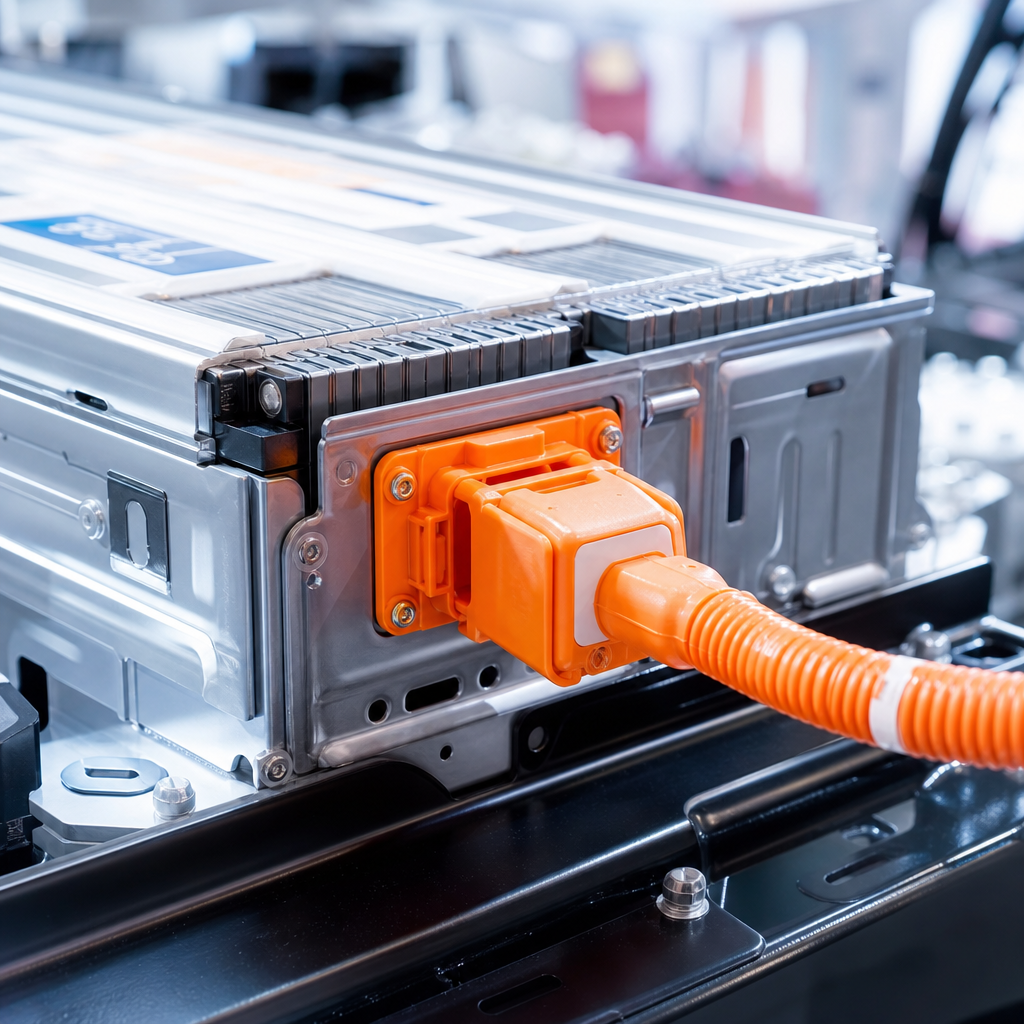
Polymers have become essential materials in high-performance batteries because they solve multiple engineering problems at once: they lower weight, improve safety, enable flexible cell designs, and support faster ion transport when formulated correctly. In battery science, a polymer is a large molecule built from repeating units, but in practical manufacturing it is better understood as a tunable platform that can act as a binder, separator, electrolyte host, coating, structural matrix, or even an active redox material. High-performance batteries, meanwhile, are cells designed to maximize some combination of energy density, power density, cycle life, thermal stability, fast charging, and durability under demanding operating conditions. I have worked with battery teams evaluating electrode formulations, separator coatings, and polymer electrolyte systems, and the lesson is consistent: polymer selection often determines whether a promising chemistry becomes a manufacturable product. This matters across electric vehicles, grid storage, aerospace systems, medical devices, and consumer electronics, where battery failures are unacceptable and marginal gains in performance create major commercial advantage.
The use of polymers in high-performance batteries has expanded far beyond the conventional role of polyvinylidene fluoride binder in lithium-ion cells. Today, engineers use polyethylene and polypropylene microporous films as separators, polyethylene oxide and related matrices in solid polymer electrolytes, styrene-butadiene rubber and carboxymethyl cellulose in water-based anodes, polyimide and aramid coatings for thermal resistance, and conductive polymers such as polyaniline or PEDOT derivatives in specialized architectures. Each choice affects ionic conductivity, electronic insulation, adhesion, porosity, electrolyte wettability, interfacial resistance, and abuse tolerance. As cell formats shift from cylindrical and prismatic packs to pouch, structural, and wearable batteries, polymers become even more important because they allow mechanical compliance without sacrificing electrochemical control. This hub article maps the main innovative polymer applications shaping advanced batteries, explains where each approach works, and clarifies the tradeoffs engineers must manage when moving from laboratory results to scaled production.
Why Polymers Matter in Modern Battery Design
Polymers matter because battery performance depends on interfaces as much as on active materials. Cathodes and anodes may attract attention, but if particles detach from current collectors, if separators shrink under heat, or if electrolytes form unstable interfaces, cell performance collapses. Polymers give manufacturers a way to engineer those interfaces with precision. In a typical lithium-ion electrode, the binder makes up only a few percent of the coating weight, yet it controls adhesion strength, slurry rheology, crack formation during drying, and how the electrode survives thousands of expansion and contraction cycles. In silicon-rich anodes, where volume change can exceed 300 percent during lithiation, advanced binders such as polyacrylic acid, alginate, or crosslinked copolymers can be the difference between rapid capacity loss and commercially viable cycling.
Another reason polymers are central to high-performance battery design is process compatibility. Materials scientists may identify exotic ceramics or inorganic coatings with excellent conductivity or thermal resistance, but if those materials require expensive deposition routes or brittle handling, scale-up becomes difficult. Polymers can often be solution processed, cast as thin films, coated at roll-to-roll speeds, and integrated into existing gigafactory workflows. They also support multifunctionality. A separator coating can simultaneously improve puncture resistance, electrolyte affinity, and shutdown behavior. A gel polymer electrolyte can suppress leakage while preserving ionic pathways. A polymer shell around active particles can reduce side reactions and improve high-voltage stability. Because polymers are chemically tailorable, developers can tune molecular weight, crystallinity, crosslink density, copolymer composition, and functional group content to target precise performance gaps.
Binders: Small Fraction, Outsized Impact
Binders are often underestimated because they are electrochemically inactive, yet they are among the most influential polymer applications in battery engineering. In conventional cathodes, PVDF remains common because it offers chemical resistance and compatibility with N-methyl-2-pyrrolidone processing. However, NMP is expensive and tightly regulated, which has pushed manufacturers toward water-based systems where possible. On graphite anodes, the combination of styrene-butadiene rubber and carboxymethyl cellulose is already standard because it delivers elasticity, adhesion, and lower processing cost. In practice, this pairing also improves coating uniformity and helps maintain electronic pathways during cycling.
The innovation becomes more obvious in high-capacity electrodes. Silicon anodes expand dramatically, so weak binders fail quickly. Polyacrylic acid works better because its carboxyl groups form stronger hydrogen bonding and, in some formulations, covalent interactions with silicon oxide surfaces. Sodium alginate, derived from brown algae, has also shown strong performance due to its polysaccharide backbone and abundant functional groups. Researchers have gone further with self-healing polymers, supramolecular networks, and conductive binders that reduce the need for carbon additives. In labs and pilot lines, I have seen binder optimization raise cycle retention more effectively than changing active particle morphology, simply because the polymer stabilized the entire electrode architecture. For high-performance batteries, the binder is not filler; it is a structural and interfacial control system.
Separators and Polymer Membranes for Safety and Power
Separators are porous polymer membranes placed between anode and cathode to prevent short circuits while allowing ions to pass. Most commercial lithium-ion separators are based on polyethylene, polypropylene, or multilayer PE/PP films produced by dry or wet stretching methods. Their pore structure, thickness, tortuosity, and shutdown behavior directly affect internal resistance and safety. Polyethylene can melt and close pores at elevated temperature, creating a shutdown response that stops ion transport before catastrophic runaway. Polypropylene provides higher mechanical strength but typically melts at a higher temperature, which is why multilayer designs are common.
For high-performance batteries, baseline polyolefin separators are increasingly modified. Ceramic-coated separators use polymer binders to anchor alumina or boehmite particles, improving thermal stability and puncture resistance. Aramid fiber separators and polyimide-based membranes are being evaluated for high-temperature and fast-charge applications because they resist shrinkage better than standard polyolefins. In lithium metal systems, separator chemistry becomes even more critical. Dendrite growth can pierce weak membranes, so developers use reinforced polymer frameworks, surface-functional coatings, and hybrid porous structures to improve mechanical barrier properties. The best separators do more than separate; they regulate ion flux, maintain wetting under lean electrolyte conditions, and preserve dimensional stability during abuse.
| Polymer application | Main function in the cell | Typical materials | Primary benefit | Key limitation |
|---|---|---|---|---|
| Binder | Holds active particles and conductive carbon together | PVDF, SBR, CMC, PAA, alginate | Adhesion and cycle stability | Can increase resistance if poorly formulated |
| Separator | Prevents short circuit while passing ions | PE, PP, PE/PP, aramid, polyimide | Safety and mechanical isolation | Thermal shrinkage in standard polyolefins |
| Polymer electrolyte | Conducts ions through solid or gel matrix | PEO, PAN, PMMA, PVDF-HFP | Leakage reduction and design flexibility | Lower room-temperature conductivity in many systems |
| Surface coating | Protects electrodes and controls interfaces | Polyimide, polydopamine, fluoropolymers | Improved interfacial stability | Added process complexity |
| Conductive polymer | Adds electrochemical or electronic function | Polyaniline, polypyrrole, PEDOT derivatives | Enhanced conductivity or pseudocapacitance | Long-term stability can vary |
Polymer Electrolytes and the Push Toward Solid-State Batteries
Polymer electrolytes are among the most discussed innovative polymer applications because they address one of the industry’s biggest goals: replacing flammable liquid electrolytes with safer solid or gel systems. A polymer electrolyte uses a macromolecular matrix to solvate and transport ions, most commonly lithium ions. Polyethylene oxide has been the benchmark for decades because ether oxygens coordinate with lithium salts and enable ion motion above the polymer’s glass transition and melting-related mobility range. The challenge is that room-temperature ionic conductivity in pure PEO systems is usually too low for demanding applications, especially compared with liquid carbonate electrolytes.
To overcome this, researchers use several strategies. They lower crystallinity through copolymer design, add plasticizers to form gel polymer electrolytes, incorporate ceramic fillers such as LLZO or alumina, and build block copolymer structures that separate mechanical and conductive domains. PVDF-HFP is widely studied in gel systems because it combines mechanical robustness with good electrolyte uptake. PAN and PMMA also appear in membranes designed for high-voltage cathodes or flexible cells. In real devices, gel polymer electrolytes have already found use in lithium polymer batteries for consumer electronics, while next-generation solid-state programs are pursuing sulfide, oxide, and polymer-hybrid architectures. Pure polymer solid electrolytes still face conductivity and interfacial challenges, but they remain attractive because they can be processed into thin, conformal films more easily than brittle ceramic sheets.
Conductive Polymers and Redox-Active Architectures
Some polymers contribute more than mechanical support; they participate directly in charge transport or energy storage. Conductive polymers such as polyaniline, polypyrrole, and poly(3,4-ethylenedioxythiophene) derivatives offer electronic conductivity through conjugated backbones. In batteries, they are used as coatings on active particles, conductive networks in sulfur cathodes, interlayers in lithium-sulfur cells, and pseudocapacitive components in hybrid devices. Their value comes from combining flexibility with conductivity, especially where brittle carbon coatings or heavy metal additives are less suitable.
Lithium-sulfur batteries provide a clear example. Sulfur is attractive because of its high theoretical specific capacity, but soluble polysulfides migrate through the cell and cause rapid fading. Conductive polymers can trap these species through chemical interaction while maintaining electron transfer pathways. Polyaniline-coated sulfur composites and PEDOT-based hosts have both shown improvements in capacity retention. Similar ideas appear in silicon anodes, where conductive polymer coatings cushion volume change and maintain percolation networks. There are also redox-active polymers, including quinone-based and radical-bearing systems, that store charge themselves. These are promising for sustainable or fast-charge chemistries, though most still trail inorganic electrodes in volumetric energy density. Their strongest near-term role is not replacement of conventional electrodes, but selective enhancement of problematic interfaces and transport pathways.
High-Temperature, Flexible, and Structural Battery Applications
Innovative polymer applications become especially important when batteries must operate outside standard conditions. In aerospace and defense systems, cells may see wide temperature swings, vibration, and long storage periods. Polyimides, aramids, fluoropolymers, and high-temperature epoxy-compatible matrices are used because they preserve dimensional stability and electrical isolation better than commodity polymers. In oil and gas downhole tools and certain industrial sensors, thermal endurance is a prerequisite, not a premium feature. Polymer components in these batteries must resist oxidation, solvent attack, and mechanical fatigue while maintaining separator integrity and seal performance.
Flexible and wearable batteries show a different advantage. Here, polymers enable stretchable substrates, gel electrolytes, encapsulation layers, and bend-tolerant current collector interfaces. Medical patches, smart textiles, and foldable devices cannot rely on rigid ceramic-heavy designs. Instead, they use elastomeric or semi-crystalline polymer systems that accommodate deformation without electrolyte leakage or delamination. Structural batteries push the concept further by combining load-bearing composites with electrochemical function. Carbon fiber reinforced polymers can serve as part of the structure, while polymer electrolytes transfer ions between embedded electrodes. These systems remain niche, but they illustrate a larger trend I have seen repeatedly: polymers are not just accessory materials in advanced batteries; they are often the enabling medium that lets a battery match the form factor and duty cycle of the final product.
Manufacturing Realities, Failure Modes, and What Comes Next
Moving an innovative polymer from promising paper to reliable product requires discipline. The first filter is manufacturability. A polymer may improve cycling in coin cells, yet fail in roll-to-roll production because of viscosity drift, poor drying behavior, narrow humidity tolerance, or incompatibility with calendaring. The second filter is interfacial stability over time. Polymers can oxidize at high cathode voltages, swell in electrolyte, or decompose under trace moisture and heat. Developers therefore rely on differential scanning calorimetry, thermogravimetric analysis, electrochemical impedance spectroscopy, peel testing, abuse testing, and long-duration cycling under realistic stack pressure. Standards from organizations such as UL and IEC matter because safety claims are only meaningful when backed by validated protocols.
The near future of polymer use in high-performance batteries will likely center on hybrid designs rather than single-material breakthroughs. Expect more composite separators, single-ion conducting polymer networks, self-healing binders for silicon and lithium metal, and coatings tailored for high-nickel cathodes operating above 4.3 volts. Machine learning is also entering formulation work, helping teams screen polymer architectures against conductivity, modulus, and process constraints. The key takeaway is straightforward: innovative polymer applications shape battery safety, longevity, and manufacturability as much as headline electrode chemistry does. If you are building a battery roadmap or evaluating case studies in advanced energy storage, start by mapping the polymer roles inside the cell, then identify where interfacial control can unlock the next performance gain. That is where many of the most practical breakthroughs are happening today.
Frequently Asked Questions
What role do polymers play in high-performance batteries?
Polymers play multiple critical roles in high-performance batteries because they are not just passive plastics; they are engineered materials that can be tuned to solve several battery design challenges at the same time. In practical battery manufacturing, polymers may function as binders that hold active materials together on the electrode, separators that keep the anode and cathode apart while allowing ions to pass, electrolyte hosts in gel or solid-state systems, protective coatings on electrodes, and structural matrices that improve mechanical integrity. In some advanced chemistries, polymers can also participate more directly in electrochemical performance by helping regulate interfaces and ion transport.
One of the main reasons polymers are so valuable is that they combine low weight with high versatility. Metals and ceramics can offer strength or thermal stability, but polymers can be processed into thin films, porous membranes, flexible coatings, or complex shapes with comparatively low manufacturing cost. That makes them especially useful in applications where energy density, safety, and form factor all matter, such as electric vehicles, aerospace systems, medical devices, and wearable electronics.
Polymers also help manufacturers balance performance tradeoffs. For example, a well-designed polymer binder can improve electrode adhesion and cycling stability without adding much mass. A polymer separator can improve puncture resistance and thermal shutdown behavior. A polymer electrolyte system can reduce leakage risks and support safer operation than traditional liquid-only systems. Because their chemistry is highly tunable, polymers are often selected not as a single material solution but as a platform that can be optimized for conductivity, flexibility, chemical resistance, thermal behavior, and compatibility with specific battery chemistries.
Why are polymers important for battery safety and reliability?
Polymers are important for battery safety and reliability because they help control some of the most failure-prone parts of a cell. A battery contains reactive materials, and its long-term performance depends heavily on the stability of interfaces, the prevention of internal short circuits, and the ability to withstand thermal and mechanical stress. Polymers are used throughout the cell to reduce these risks. In separators, for instance, polymer membranes physically isolate the electrodes while still permitting ionic movement. If that separator fails, a dangerous short circuit can occur, so the polymer’s pore structure, strength, and heat response are crucial.
Many polymer separators are designed with shutdown behavior, meaning their pores can close at elevated temperatures and slow ion flow before the cell reaches a more severe failure condition. Polymer coatings can also protect electrode surfaces from side reactions, suppress unwanted dendrite growth in some systems, and improve interfacial uniformity. In binders, polymers help maintain electrode integrity during repeated charge and discharge cycles, which is especially important in high-capacity materials that expand and contract significantly. Without sufficient mechanical support, particles can crack, lose electrical contact, and accelerate degradation.
Reliability also improves because polymers can be engineered for chemical compatibility. Batteries operate in a harsh electrochemical environment, so materials must resist oxidation, reduction, solvent attack, and long-term degradation. A polymer chosen for one chemistry may fail in another, which is why formulation matters so much. When properly selected, polymers support more stable cycling, lower defect rates, and better resistance to vibration, impact, and temperature fluctuations. In other words, polymers do not just make batteries lighter or easier to manufacture; they are often essential to making them safer and more dependable over time.
How do polymers improve ion transport and battery performance?
Polymers improve ion transport and battery performance by creating controlled pathways for ions to move through the cell while also stabilizing the surrounding structure. This is especially important in separators, gel electrolytes, and solid polymer electrolytes. In a battery, performance depends on how quickly and efficiently ions can travel between electrodes. If ion movement is slow or uneven, the battery may suffer from poor power output, higher internal resistance, uneven aging, and reduced charging speed. Properly formulated polymers can help address these issues by managing porosity, segmental motion, solvent retention, and interfacial contact.
In gel and solid-state systems, polymers often act as host matrices for lithium salts or other ionic species. The polymer framework holds the electrolyte in place and influences conductivity through its chemical structure and mobility. Some polymer systems are designed so that the movement of their molecular chains assists ion hopping, while others are blended with plasticizers, ceramic fillers, or copolymers to improve conductivity and thermal stability at the same time. This is why not all battery polymers perform equally: conductivity depends heavily on molecular design, crystallinity, free volume, and how the polymer interacts with the salt and electrodes.
Polymers can also improve performance indirectly by preserving electrode architecture. A strong, elastic binder helps maintain conductive pathways inside the electrode as the battery cycles, reducing particle isolation and mechanical breakdown. Surface-modifying polymer coatings can lower interfacial resistance and support more uniform charge transfer. In fast-charging batteries, these effects are especially valuable because electrochemical stress is higher. The best polymer systems therefore do more than simply allow ions through; they help create a more stable, lower-resistance, and mechanically resilient environment that supports higher power, better cycle life, and more consistent operation.
What types of polymers are commonly used in high-performance batteries?
Several classes of polymers are commonly used in high-performance batteries, and the right choice depends on the battery chemistry, the component being designed, and the required operating conditions. For electrode binders, widely used materials include polyvinylidene fluoride (PVDF), styrene-butadiene rubber (SBR), and carboxymethyl cellulose (CMC). PVDF has long been favored in lithium-ion batteries for its chemical resistance and good adhesion, while water-based systems such as SBR and CMC are popular because they can reduce solvent use and support more sustainable processing. In silicon-rich anodes and other high-expansion materials, advanced binders are often selected for stronger elasticity and better mechanical resilience.
For separators, polyolefin materials such as polyethylene (PE) and polypropylene (PP) remain standard because they offer useful mechanical strength, processability, and thermal shutdown characteristics. However, these materials are often modified or coated to improve heat resistance, wettability, and dimensional stability. In more advanced systems, polymers such as polyimides, polyacrylonitrile (PAN), polyethylene oxide (PEO), and various fluorinated polymers may be used in electrolyte hosts, high-temperature membranes, or specialty coatings. Each brings different advantages, such as improved ionic conductivity, oxidative stability, or mechanical durability.
Polymer selection is rarely based on one property alone. Engineers evaluate conductivity, adhesion, electrolyte compatibility, thermal behavior, electrochemical stability window, manufacturability, and cost together. Blends, copolymers, and composite systems are increasingly common because a single polymer may not meet every requirement. For example, a polymer electrolyte might be combined with ceramic nanoparticles to raise conductivity and suppress deformation, or a separator may receive a ceramic-polymer coating to improve thermal safety. This layered approach reflects how battery design really works: polymers are chosen not just by chemical name, but by how well they contribute to a balanced, high-performance system.
What are the biggest challenges and future opportunities for polymers in battery technology?
The biggest challenges for polymers in battery technology involve pushing performance without sacrificing safety, manufacturability, or cost. Although polymers offer exceptional versatility, they also come with limitations. Some polymer electrolytes, for example, are safer than liquid electrolytes but struggle with room-temperature ionic conductivity. Some binders provide strong adhesion but may degrade under aggressive electrochemical conditions. Certain separator polymers work well in conventional lithium-ion cells but may not be robust enough for next-generation high-voltage or lithium-metal systems. As battery demands rise, the expectations placed on polymer components rise as well.
Another challenge is interface control. Many battery failures begin not in the bulk material but at the boundary between the polymer and the electrode or electrolyte. Poor interfacial contact can raise resistance, trigger side reactions, or promote uneven ion deposition. This is particularly important in solid-state batteries, where polymer-based electrolytes must maintain intimate contact with solid electrodes during cycling despite stress, expansion, and temperature changes. Long-term stability under repeated charging, high current density, and wide operating temperatures remains a key research area.
The future opportunities, however, are substantial. Researchers are developing new polymer architectures with higher ionic conductivity, better flame resistance, self-healing behavior, and improved compatibility with lithium metal, sodium-ion, and multivalent battery systems. There is also strong interest in recyclable and bio-derived polymers that can reduce environmental impact without compromising performance. In flexible and structural batteries, polymers may enable cells that are not only energy storage devices but also load-bearing or shape-conforming components. Looking ahead, the most promising direction is not simply replacing one battery material with another, but designing multifunctional polymer systems that simultaneously support ion transport, mechanical strength, thermal management, and interfacial stability. That is where polymers have their greatest advantage: they can be engineered to do several jobs at once, which is exactly what high-performance batteries increasingly require.