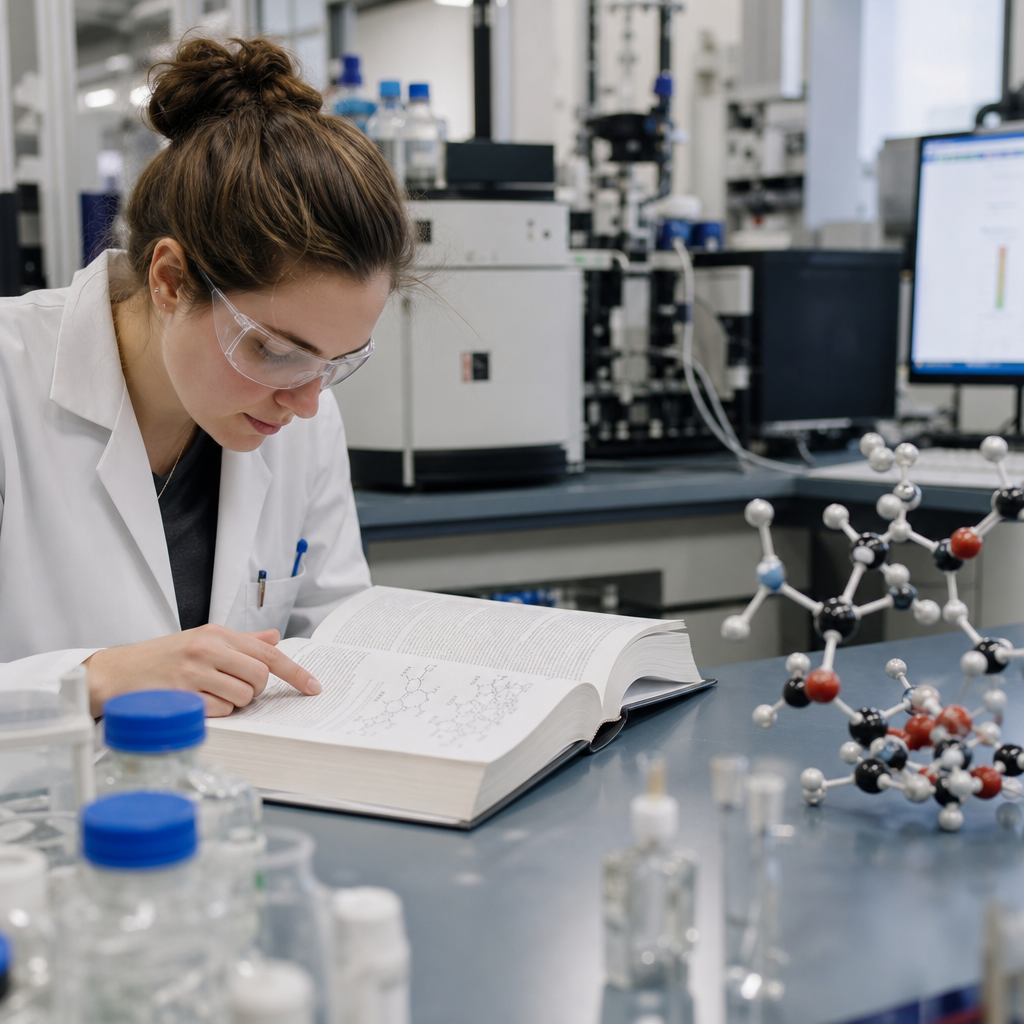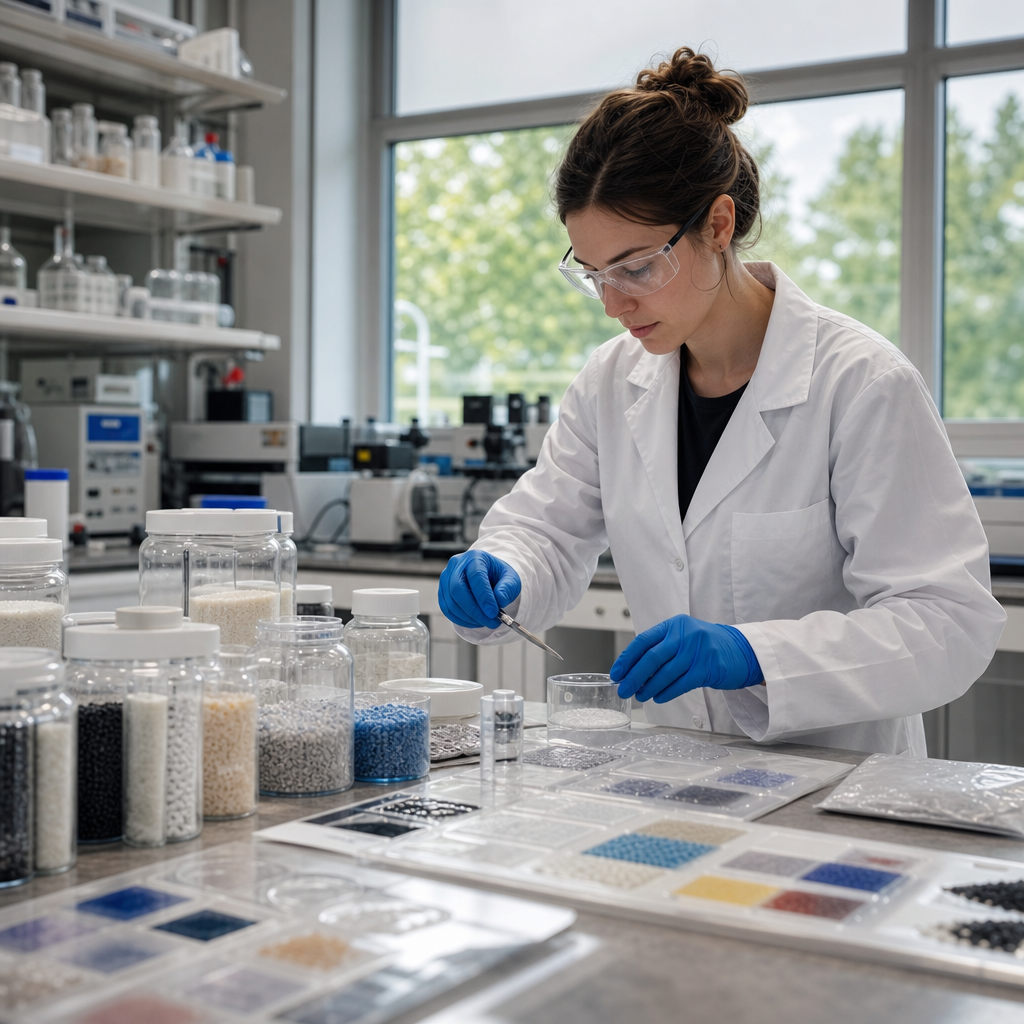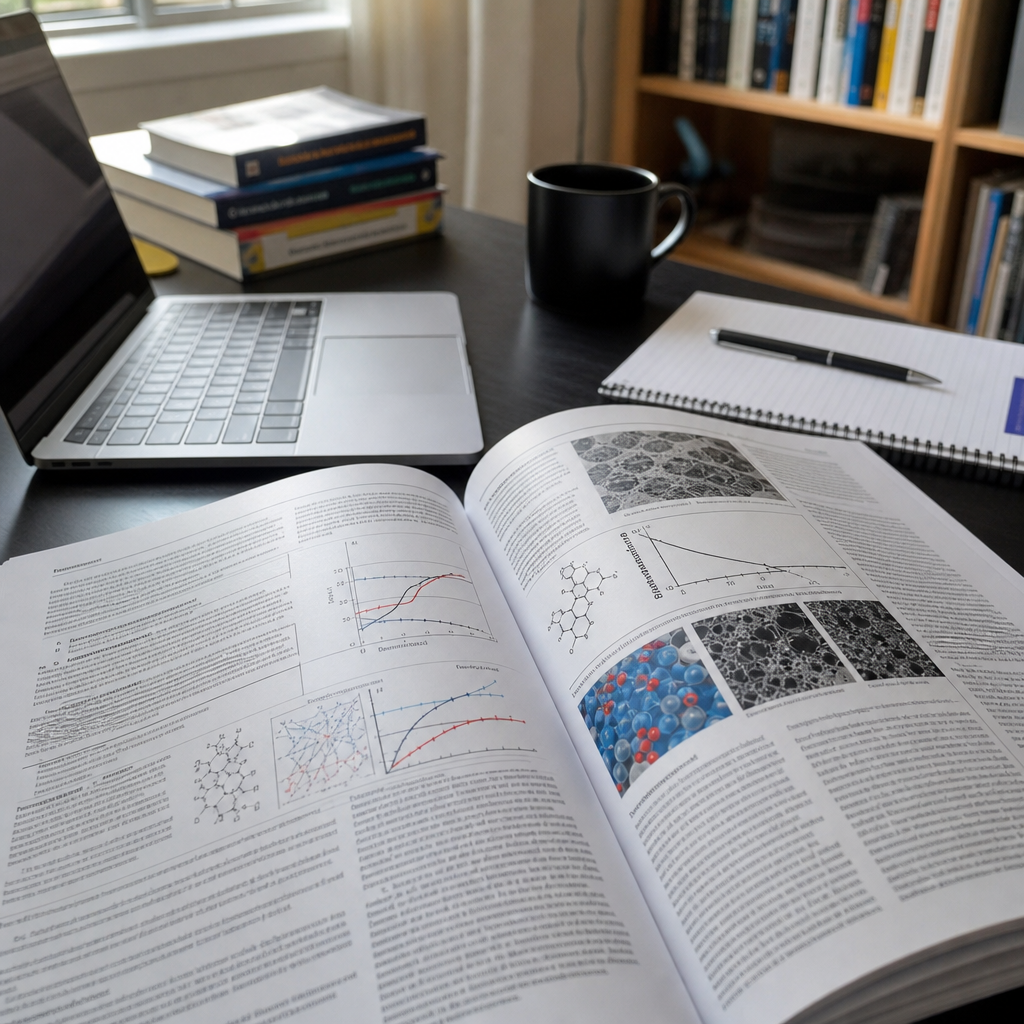
Continuing education in polymer engineering gives professionals a practical way to keep pace with material innovation, manufacturing change, and stricter product requirements. Polymer engineering is the application of chemistry, physics, and process design to the selection, formulation, shaping, testing, and long-term performance of plastics, elastomers, composites, adhesives, coatings, and related materials. Continuing education includes short courses, certificate programs, university extension classes, supplier seminars, standards training, software workshops, and employer-sponsored development built for working engineers. It matters because polymers now sit at the center of automotive lightweighting, medical device safety, electronics reliability, packaging sustainability, and advanced manufacturing.
In practice, the field moves too fast for a degree alone to remain enough. New bio-based resins enter the market, recycling regulations reshape package design, additive manufacturing changes prototyping workflows, and testing expectations evolve under ASTM and ISO methods. I have seen teams lose months because they relied on outdated assumptions about moisture sensitivity, weld line strength, or chemical compatibility. A targeted course often fixes those blind spots faster than trial and error on the production floor. For engineers, technicians, quality specialists, and managers, structured learning reduces mistakes, improves communication across departments, and creates a shared technical language.
This article serves as a hub for courses and training programs in polymer engineering. It explains what continuing education covers, who benefits most, which formats deliver the strongest return, and how training connects directly to better design, processing, compliance, and career growth. If you are choosing among polymer science courses, plastics processing training, materials testing workshops, or broader certificate programs, the goal is simple: invest in education that improves decisions at work and expands long-term capability.
Why Continuing Education Is Essential in Polymer Engineering
Continuing education is essential because polymer engineering is unusually interdisciplinary and application driven. A single product decision may require knowledge of rheology, crystallization behavior, filler dispersion, mold design, thermal degradation, weathering, and regulatory constraints. University programs provide foundations, but day-to-day engineering depends on current processing knowledge and application-specific judgment. When a resin grade changes, a customer tightens dimensional tolerance, or a regulatory team flags a restricted additive, engineers need current training that translates directly into action.
The economic case is strong. Scrap, cycle time losses, failed validation, and field failures are expensive, and many of those problems trace back to preventable knowledge gaps. For example, inadequate understanding of drying requirements for hygroscopic polymers such as nylon or polycarbonate can cause splay, molecular weight loss, brittleness, and warranty claims. Training on material handling, dryer dew point, residence time, and melt temperature can prevent those outcomes. In extrusion, improved understanding of die swell, melt fracture, and screw design helps processors stabilize output and reduce waste.
Continuing education also supports strategic goals. Companies pursuing lightweighting need deeper expertise in fiber-reinforced thermoplastics and joining methods. Organizations building circularity programs need training in design for recyclability, compatibilizers, contamination effects, and life cycle assessment. Medical and aerospace manufacturers need disciplined understanding of traceability, validation, sterilization effects, and long-term performance. In each case, training is not a peripheral benefit. It is part of risk control and competitive advantage.
Core Types of Courses and Training Programs
Polymer engineering education comes in several formats, and each serves a different purpose. Short technical courses are best for focused upskilling. They often cover injection molding, extrusion, polymer characterization, failure analysis, rubber technology, compounding, or additive manufacturing over one to five days. These are useful when a team has a defined problem, such as sink marks, poor adhesion, stress cracking, or color inconsistency, and needs practical methods quickly.
Certificate programs offer broader structure. Universities and recognized training providers may bundle courses in polymer science, plastics engineering, design for manufacturability, and quality systems into a sequence that builds coherent capability. These programs are valuable for early-career engineers entering plastics from mechanical, chemical, or manufacturing backgrounds. They also help experienced professionals formalize expertise for promotion, consulting work, or a shift into specialized roles such as materials development or technical sales.
Vendor and equipment training deserves more respect than it often gets. Resin suppliers, machine builders, hot runner manufacturers, and testing instrument companies regularly provide strong instruction grounded in real applications. A dryer supplier may deliver excellent moisture management training. A DSC or FTIR manufacturer may teach analytical interpretation that prevents misidentification of materials. The best vendor courses are not sales presentations; they are practical sessions taught by engineers who have solved recurring customer problems.
Professional associations and standards organizations add another layer. Training tied to ASTM, ISO, UL, and industry groups helps engineers understand test methods, sample preparation, repeatability limits, and compliance expectations. Without that grounding, teams can misuse data sheets, compare test results incorrectly, or design around numbers that do not reflect actual service conditions. This hub topic connects naturally to deeper articles on polymer testing, processing methods, materials selection, and certification pathways.
Technical Skills These Programs Build
The best polymer engineering courses build decision-making skills, not just vocabulary. Materials selection training teaches engineers how to compare modulus, impact resistance, heat deflection, creep, chemical resistance, flammability, and cost in the context of a real application. Processing courses explain how shear heating, cooling rate, orientation, residence time, venting, and tooling geometry affect part quality. Characterization training builds confidence with DSC, TGA, DMA, FTIR, rheometry, MFI, GPC, and microscopy so engineers can diagnose issues instead of guessing.
Failure analysis is another major benefit. In my experience, this is where continuing education pays back fastest because field problems rarely have a single obvious cause. A cracked housing may involve environmental stress cracking, residual stress from molding, and unexpected cleaner exposure. A delaminated multilayer structure may involve poor interfacial adhesion, contamination, or a change in corona treatment. Courses that teach fracture surface interpretation, thermal history analysis, and root-cause methodology help teams move from symptoms to evidence.
Training also strengthens design communication. Product designers often speak in geometry and aesthetics, while process engineers think in gates, pressure drop, shrinkage, and cooling. Quality specialists focus on acceptance criteria, CpK, and test protocols. Good courses bridge those viewpoints. Engineers learn why rib-to-wall ratio matters, how knit lines form, why corners raise stress concentration, and when simulation tools such as Moldflow or finite element analysis can guide decisions. That shared understanding shortens development cycles.
| Training focus | What participants learn | Typical workplace benefit |
|---|---|---|
| Injection molding | Drying, gating, packing, cooling, troubleshooting defects | Lower scrap, shorter cycle times, better dimensional control |
| Extrusion and compounding | Screw design, melt behavior, dispersion, die performance | More stable output, improved consistency, reduced waste |
| Polymer testing | ASTM and ISO methods, sample prep, data interpretation | More reliable validation and better material comparisons |
| Failure analysis | Fractography, contamination review, degradation pathways | Faster root-cause identification and fewer repeat issues |
| Sustainability and recycling | Design for recyclability, PCR limits, LCA basics | Stronger compliance and more practical circular design choices |
Career and Business Benefits for Engineers and Employers
For individual professionals, continuing education in polymer engineering increases range and credibility. Engineers who understand both material behavior and manufacturing economics are more likely to lead projects, interface with suppliers, and influence specifications. A course in rheology may help a development engineer communicate more effectively with compounders. A workshop on medical polymer validation may prepare a quality engineer for a regulated product launch. Over time, these additions build a portfolio of competence that matters more than generic training hours.
Career mobility is another clear advantage. Polymer engineers work across packaging, consumer products, construction, energy, automotive, aerospace, medical devices, and electronics. Continuing education makes those transitions easier because it helps professionals translate fundamentals into new industry requirements. Someone moving from commodity packaging into medical tubing, for example, needs deeper knowledge of extractables, sterilization, biocompatibility, and documentation. Structured learning can shorten that transition substantially.
Employers benefit through fewer production disruptions and stronger retention. Technical staff usually value education when it is relevant, respected, and applied to real work. I have seen plants use targeted training after repeated molding defects, then track measurable improvements in scrap rate and setup consistency within a quarter. Development groups also use training to standardize how teams evaluate candidate resins, review data sheets, and plan validation testing. The result is not only better output but also less dependence on a small number of tribal experts.
There is also a commercial benefit. Customers increasingly expect suppliers to advise on design, sustainability, and reliability rather than simply quote parts or materials. Teams with stronger training can explain why a resin substitution may affect warpage, why recycled content changes processing windows, or why a flame-retardant grade needs additional verification. That depth supports trust, speeds technical sales, and reduces avoidable disputes after launch.
Choosing the Right Polymer Engineering Program
The right program depends on role, experience level, and business need. Start by defining the problem to solve. If your plant struggles with moisture-related defects, seek hands-on plastics processing training with a strong section on resin handling and troubleshooting. If you work in product development and regularly compare materials, prioritize polymer science courses that cover structure-property relationships, viscoelasticity, crystallinity, aging, and test interpretation. If your goal is promotion into leadership, a broader certificate may offer stronger long-term value than isolated workshops.
Instructor quality matters more than branding alone. Look for faculty who have worked in compounding, molding, testing, or product development, not only in academic research. The best instructors connect theory to production realities such as machine limitations, lot variation, maintenance issues, and customer deadlines. Review syllabi carefully. Strong programs specify methods, standards, and case studies rather than vague promises. For example, a useful testing course should name DSC, TGA, DMA, FTIR, and relevant ASTM or ISO procedures, not just say it covers analytics.
Format should match the learning objective. Online courses are efficient for fundamentals, software demonstrations, and standards awareness. In-person training is better for lab methods, machine setup, molding trials, microscopy, and collaborative troubleshooting. Hybrid models often work well because participants can learn concepts beforehand and use workshop time for application. Finally, measure outcomes. Good programs should lead to changes in scrap, throughput, validation quality, design review accuracy, or time to root cause, not just certificates on a wall.
Building a Long-Term Learning Path
The strongest results come from a learning path rather than one-off classes. Early-career professionals should build fundamentals first: polymer structure, common resin families, processing basics, and test method literacy. Mid-career engineers benefit from specialization in areas such as elastomers, composites, medical materials, barrier packaging, simulation, or recycling systems. Senior professionals often gain the most from advanced failure analysis, regulatory updates, supplier collaboration, and leadership training that helps them coach cross-functional teams.
A practical sequence might begin with introductory polymer materials training, followed by process-specific courses in injection molding or extrusion, then characterization and failure analysis. After that, professionals can add application-focused modules such as automotive underhood materials, implantable polymers, wire and cable compounds, or sustainable packaging design. This staged approach compounds value because each course improves the usefulness of the next one. It also creates a logical internal link structure for any educational resources center covering materials, processing, testing, design, and careers.
Keep records of what was learned and how it changed practice. After every course, capture three actions: a process change to test, a design rule to update, and a measurement or standard to review. That simple discipline turns education into operational improvement. The benefits of continuing education in polymer engineering are clearest when learning is applied quickly, discussed across teams, and revisited as technologies change. Review your current skill gaps, map them to the right courses and training programs, and make ongoing education a deliberate part of engineering performance.
Frequently Asked Questions
1. Why is continuing education important in polymer engineering?
Continuing education is important in polymer engineering because the field changes constantly. New resin systems, additives, composites, processing methods, test standards, and end-use requirements are introduced on a regular basis, and professionals need a reliable way to stay current. Polymer engineering sits at the intersection of chemistry, physics, materials science, and manufacturing, so even experienced engineers can face knowledge gaps when product designs shift or production technologies evolve. Short courses, certificate programs, and university extension offerings help close those gaps in a structured, practical way.
It also supports better decision-making across the full material lifecycle. Engineers are often responsible for selecting materials, optimizing process conditions, improving part performance, troubleshooting failures, and balancing cost with durability, manufacturability, and compliance. Continuing education strengthens those capabilities by updating professionals on topics such as polymer morphology, rheology, degradation, compounding, molding, extrusion, adhesion, coatings, and long-term environmental performance. As a result, they are better prepared to solve technical problems quickly and with more confidence.
Just as importantly, continuing education helps professionals remain valuable in a competitive industry. Employers increasingly look for engineers who can adapt to automation, sustainability goals, tighter tolerances, and more demanding product validation requirements. Ongoing learning demonstrates initiative and technical maturity. It shows that a polymer engineer is not relying only on past training, but is actively building expertise that can improve product quality, reduce waste, shorten development timelines, and support innovation across manufacturing and product development teams.
2. What skills can professionals gain through continuing education in polymer engineering?
Professionals can gain both deep technical knowledge and highly practical problem-solving skills through continuing education in polymer engineering. On the technical side, many programs cover polymer structure-property relationships, material selection, compounding strategies, processing behavior, and failure mechanisms. These topics help engineers understand why one material performs differently from another under stress, heat, moisture, chemical exposure, or long-term loading. That kind of insight is essential when developing products made from plastics, elastomers, adhesives, coatings, or fiber-reinforced composites.
Continuing education also builds process-specific skills. Depending on the course or program, professionals may strengthen their understanding of injection molding, extrusion, blow molding, thermoforming, rotational molding, curing, bonding, or surface treatment. They may learn how variables such as temperature, shear, residence time, pressure, cooling rate, and tooling design affect final part performance. This makes education especially valuable for engineers who need to troubleshoot defects like warpage, sink, brittleness, poor adhesion, dimensional instability, contamination, or inconsistent mechanical properties.
In addition, many continuing education options help develop analytical and strategic skills that are increasingly important in modern polymer engineering roles. These include interpreting laboratory test data, applying material characterization methods, understanding industry standards, supporting regulatory compliance, and evaluating sustainability tradeoffs. Courses may also touch on data-driven process control, quality improvement, design for manufacturability, and communication across R&D, production, quality, and supplier teams. That combination of technical depth and cross-functional capability is one of the main reasons continuing education has such long-term career value.
3. How does continuing education help polymer engineers keep up with new materials and manufacturing technologies?
Continuing education gives polymer engineers a direct path to understanding new materials and manufacturing technologies before those changes become costly challenges on the job. Material innovation is happening rapidly in areas such as bio-based polymers, high-performance thermoplastics, conductive compounds, advanced elastomers, recyclable formulations, lightweight composites, and specialty additives. Without ongoing learning, it can be difficult to evaluate how these materials behave in real production environments or how they compare with legacy options in terms of processability, cost, mechanical performance, and long-term reliability.
Structured educational programs help translate innovation into usable engineering knowledge. Rather than simply hearing that a new resin or process exists, professionals can learn the science behind it, the processing window it requires, the limitations it may present, and the testing methods needed to verify performance. This is especially useful in polymer engineering, where a material that looks promising on paper may perform differently once exposed to actual tooling, thermal history, environmental conditions, or assembly methods. Continuing education helps engineers ask better questions and make more informed implementation decisions.
It is equally valuable on the manufacturing side. Advances in automation, digital monitoring, process simulation, additive manufacturing, inline quality systems, and more precise thermal and rheological control are changing how polymer products are made. Engineers who take continuing education courses can better understand how these tools improve repeatability, reduce scrap, and support faster scale-up from development to production. In practical terms, that means they are more likely to identify opportunities for process improvement, avoid common adoption mistakes, and contribute meaningfully when organizations introduce new equipment, software, or production methods.
4. Can continuing education improve career growth and job opportunities in polymer engineering?
Yes, continuing education can significantly improve career growth and job opportunities in polymer engineering. The field values demonstrated expertise, and additional training helps professionals stand out in a market where employers often need people who can bridge materials science and manufacturing realities. A polymer engineer who has continued learning beyond their original degree may be better positioned for advancement into senior engineering, technical specialist, process development, quality leadership, product development, or materials selection roles.
One reason it helps is that continuing education often aligns closely with real industry needs. Employers are not only looking for broad academic knowledge; they want engineers who can solve processing problems, evaluate new materials, understand testing and standards, and support product reliability. Courses and certificates can provide evidence of that applied competence. For professionals seeking to move into a new segment of the industry, such as medical devices, automotive plastics, consumer products, packaging, aerospace composites, or adhesives and coatings, continuing education can also make the transition more credible and practical.
Beyond promotions and role changes, ongoing learning can strengthen professional confidence and visibility. Engineers who stay current are often more prepared to contribute in technical meetings, lead investigations, work with suppliers, and support strategic decisions involving materials and manufacturing. That can increase trust from managers and peers alike. Over time, continuing education becomes more than a resume advantage; it becomes part of a professional reputation for adaptability, technical rigor, and commitment to high-quality engineering work.
5. What types of continuing education are most useful for polymer engineering professionals?
The most useful type of continuing education depends on a professional’s career stage, technical responsibilities, and industry focus, but several formats are consistently valuable. Short courses are often a strong starting point because they provide concentrated learning on targeted topics such as polymer chemistry, compounding, rheology, processing, failure analysis, or material characterization. These courses are especially helpful for working professionals who need practical knowledge they can apply immediately in manufacturing, design, quality, or R&D settings.
Certificate programs can be particularly useful for professionals who want a more structured and comprehensive learning path. Compared with a single workshop, a certificate typically covers a series of related subjects and helps build a stronger foundation in polymer engineering principles and applications. University extension programs are also attractive because they often combine academic depth with industry relevance, giving learners access to current research, experienced instructors, and updated technical content without requiring a full graduate degree commitment.
For some professionals, the best approach is a combination of formats. A process engineer may benefit from short courses in injection molding and troubleshooting, while a materials engineer may prioritize advanced study in polymer blends, testing, and degradation. Someone moving into leadership may need education that includes quality systems, regulatory expectations, and product lifecycle thinking. The most effective continuing education is the kind that directly supports real work challenges while also building broader expertise for future opportunities. In polymer engineering, where materials, processes, and performance expectations are tightly connected, focused and ongoing learning tends to deliver the strongest return.