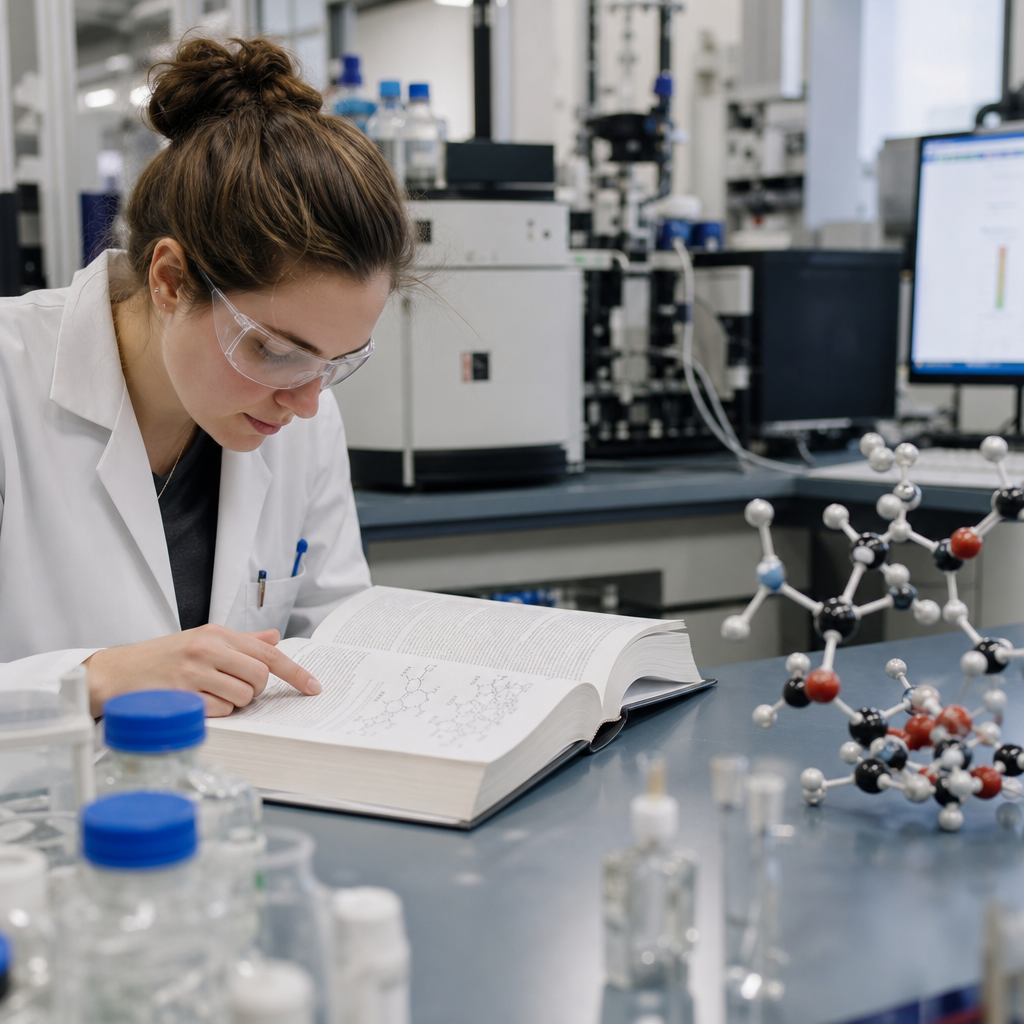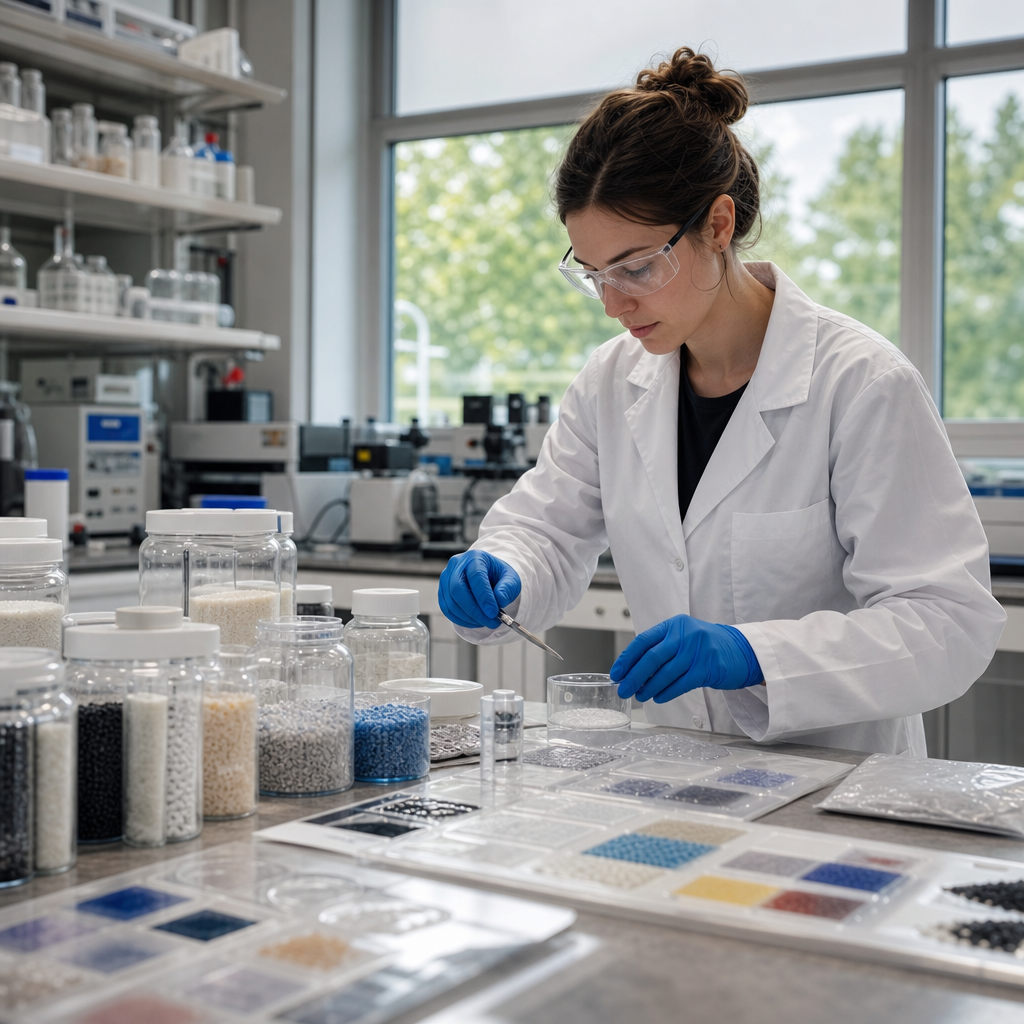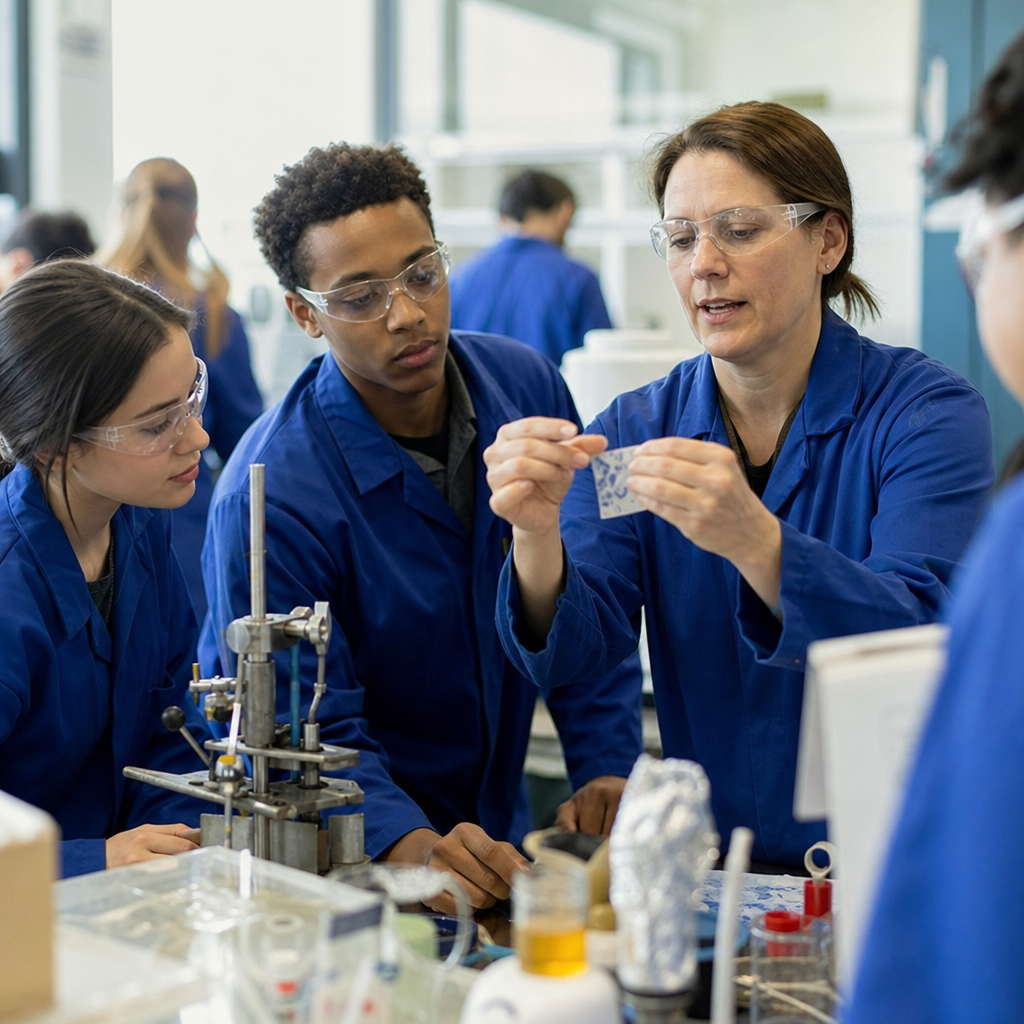
Workshops play a central role in polymer science education because they bridge the gap between theory taught in lectures and the practical judgment required in laboratories, pilot plants, and product development teams. In polymer science, a workshop is a structured, hands-on learning format focused on solving a defined problem, practicing a technique, or building fluency with tools such as rheometers, differential scanning calorimetry, gel permeation chromatography, spectroscopy, extrusion systems, and molecular modeling software. Unlike a standard course module, workshops compress learning into active sessions where participants test materials, interpret data, troubleshoot process variables, and discuss results with instructors and peers. That format matters because polymers are not learned fully from equations alone. Students must connect chain architecture, morphology, processing history, and end-use performance in ways that are difficult to grasp from slides or textbooks.
I have seen this repeatedly in academic and industry training settings. A student may understand crystallinity in principle, yet only during a workshop on thermal analysis does the meaning of a melting endotherm, glass transition shift, or cold crystallization peak become operational. The same is true for processing. It is one thing to define shear thinning; it is another to watch torque, die swell, and surface finish change during extrusion when temperature profiles or screw speed move out of range. Workshops make abstract concepts observable, measurable, and memorable. They also create a natural hub for courses and training programs, since they connect introductory instruction, advanced specialization, safety training, and career preparation into one practical learning pathway.
For educational resources, this topic matters because polymer science sits at the intersection of chemistry, physics, materials science, biology, and manufacturing. Students entering the field need guidance on which learning formats fit their goals: foundational courses, intensive laboratory workshops, software boot camps, industry short courses, certification programs, and continuing education for professionals. A strong hub page on courses and training programs should therefore explain not only what workshops are, but how they support core competencies in synthesis, characterization, processing, sustainability, quality control, and regulatory awareness. When designed well, workshops accelerate skill development, improve retention, strengthen employability, and help institutions keep pace with fast-changing technologies such as recyclable thermoplastics, biobased polymers, additive manufacturing feedstocks, membrane materials, and medical polymers.
This article examines the role of workshops in polymer science education as the organizing center for broader courses and training programs. It covers why workshops improve learning, what formats work best, which topics should be prioritized, how academia and industry use them differently, and how learners can choose the right program. As a hub within educational resources, it also frames the larger subtopic: courses and training programs are most effective when workshops are treated not as optional extras, but as essential components of modern polymer education.
Why workshops improve polymer science learning outcomes
Workshops improve learning because polymer science depends on relationships that are highly contextual. Molecular weight affects viscosity, but the effect changes with temperature, branching, filler loading, and processing history. Mechanical properties depend on orientation, crystallinity, phase separation, plasticizer migration, moisture content, and test conditions. In a workshop, students confront these dependencies directly. They compare samples, run instruments, record anomalies, and explain why real data rarely look as clean as textbook schematics.
Educational research consistently shows that active learning improves comprehension and retention compared with passive lecture formats, and polymer science is especially suited to this approach. A workshop on tensile testing, for example, can connect ASTM or ISO test standards with specimen preparation, strain rate selection, stress-strain curve interpretation, and failure analysis. Students quickly learn that a modulus number is not meaningful without context about sample conditioning, geometry, or processing route. That lesson is foundational for both research and manufacturing careers.
Workshops also build tacit knowledge, the practical understanding that experienced scientists use when deciding whether a result is plausible. An instructor may show how to identify a contaminated DSC pan, recognize wall slip in rheology data, or spot degradation during compounding from odor, color shift, or torque instability. These are difficult skills to acquire from readings alone. By making tacit knowledge visible, workshops shorten the time between classroom learning and independent competence.
Core workshop formats within courses and training programs
Polymer science education benefits from several workshop formats, each serving a distinct purpose within courses and training programs. Introductory workshops usually support undergraduate or early graduate courses. They focus on safe laboratory habits, polymer identification, basic synthesis, thermal analysis, microscopy, and mechanical testing. Their goal is competence with essential concepts and instruments.
Intermediate workshops move from demonstration to guided problem solving. Learners may design a blend, compare processing methods, or optimize a cure schedule. Instructors often use case-based learning drawn from packaging, automotive components, biomedical devices, coatings, or consumer goods. Advanced workshops are more specialized. These can cover topics such as controlled radical polymerization, finite element simulation of polymer processing, failure analysis of composites, life cycle assessment of plastics, or microstructure characterization using SAXS, WAXS, and AFM.
Short courses and professional training workshops are common in industry and continuing education. Organizations such as SPE, ACS divisions, and university extension programs often deliver one- to three-day sessions focused on immediate application. These formats work well for process engineers, quality managers, product developers, and technical sales teams who need practical understanding without enrolling in a semester-long course. The most effective programs combine concise theory with instrument time, data interpretation, and troubleshooting exercises.
| Workshop type | Typical audience | Main focus | Example outcome |
|---|---|---|---|
| Introductory lab workshop | Undergraduates, new researchers | Fundamentals, safety, core instruments | Run DSC and interpret Tg and melting behavior |
| Intermediate application workshop | Senior students, graduate students | Problem solving, formulation, processing | Select additives to improve impact resistance |
| Advanced technical workshop | Researchers, specialists | Deep methods, modeling, niche techniques | Correlate SAXS data with semicrystalline morphology |
| Industry short course workshop | Practicing professionals | Rapid upskilling, troubleshooting | Reduce extrusion defects through process adjustments |
Essential workshop topics for a complete polymer education hub
A comprehensive hub for courses and training programs should map workshops to the competencies employers and research groups actually expect. The first category is polymer synthesis. Workshops here include step-growth and chain-growth polymerization, emulsion systems, living and controlled polymerization methods, purification, conversion tracking, and safe handling of monomers, initiators, and solvents. Students need to understand kinetics, molecular weight control, dispersity, and side reactions, but they also need exposure to batch records, contamination control, and reproducibility.
The second category is characterization. This is usually the most workshop-intensive area because interpretation skill matters as much as instrument access. Strong programs include FTIR for functional group identification, NMR for structure confirmation, GPC or SEC for molecular weight distribution, DSC and TGA for thermal behavior, DMA for viscoelastic performance, rheology for flow properties, XRD for crystallinity, optical microscopy for morphology, and electron microscopy for fracture surfaces or filler dispersion. In practice, students learn most when they analyze one material across several methods and reconcile conflicting signals.
The third category is processing. Workshops in extrusion, injection molding, compression molding, thermoforming, fiber spinning, and additive manufacturing teach that polymers are process-sensitive materials. A polyethylene formulation processed under different cooling rates can show distinct crystallinity and warpage behavior. A moisture-sensitive polyester can degrade in the barrel if drying is inadequate. These are not minor details; they determine whether a product meets specification.
Other important workshop themes include polymer sustainability, recycling, biopolymers, composites, coatings, adhesives, elastomers, membrane fabrication, and biomedical materials. A modern educational resource should also include data analysis workshops using software such as Origin, MATLAB, Python, Minitab, or instrument-native platforms. Industry increasingly expects graduates to handle datasets, perform design of experiments, and communicate findings clearly in technical reports.
How workshops connect academia, industry, and career readiness
One reason workshops are so valuable is that they align educational outcomes with workplace demands. Hiring managers in polymer manufacturing, analytical labs, and R&D groups routinely look for candidates who can do more than recite definitions. They want graduates who understand standard operating procedures, can document methods, recognize bad data, and communicate tradeoffs. Workshops develop these habits naturally because they require preparation, execution, observation, and interpretation under time and resource constraints similar to those in real organizations.
In universities, workshops often strengthen capstone projects and thesis research. A student working on biodegradable packaging films benefits from workshops on barrier testing, compounding, and accelerated aging. Another studying hydrogels for drug delivery may need sessions on swelling behavior, crosslink density, rheology, and sterile technique. These targeted experiences reduce trial-and-error and improve experimental design. They also help faculty standardize methods across cohorts, which raises the quality of student research output.
In industry, workshops often serve onboarding and cross-functional training roles. A process engineer may attend a workshop on screw design and residence time distribution, while a marketing specialist in advanced materials may need a workshop explaining melt flow index, modulus, impact strength, and heat deflection temperature in practical terms. When companies run internal polymer training, workshops create a shared technical language across R&D, production, quality, procurement, and customer support. That alignment reduces costly miscommunication.
Career readiness improves because workshops produce tangible evidence of competence. Students can reference instrument training, project outcomes, posters, lab notebooks, and troubleshooting experience during interviews. Employers trust these examples because they reflect applied learning. In my experience, candidates who can explain why a polymer failed during processing or how they validated a characterization result stand out immediately.
Design principles for effective polymer science workshops
Not all workshops are equally useful. The best polymer science workshops start with clear learning objectives tied to observable skills. “Understand rheology” is too broad. “Measure viscosity as a function of shear rate, identify Newtonian and shear-thinning behavior, and explain implications for coating or extrusion” is specific and assessable. Good workshops also sequence theory just before application. Learners retain more when a brief explanation is followed immediately by practice.
Safety must be explicit. Polymer labs often involve heated equipment, rotating machinery, pressurized systems, reactive chemicals, solvents, and fine particulates. Effective workshops integrate hazard communication, personal protective equipment, waste segregation, emergency response, and equipment lockout procedures instead of treating safety as a separate slide deck. This is particularly important in processing workshops, where the combination of heat and motion introduces risks that newcomers often underestimate.
Assessment should go beyond attendance. Strong programs use pre-lab questions, observation checklists, instrument logs, short data analysis assignments, and reflective summaries on sources of error. I have found that asking participants to defend one interpretation and one limitation of their own data is especially revealing. It shows whether they can reason scientifically rather than simply follow instructions.
Access and scalability matter too. Some institutions cannot offer every advanced technique in-house, so blended models work well. A course may combine online modules, recorded demonstrations, open-source datasets, and intensive in-person workshops on the highest-value instruments. Partnerships with shared facilities, research centers, equipment vendors, and local manufacturers can expand access significantly.
Choosing the right workshop or training path
Students and professionals should choose polymer workshops based on goals, prerequisites, and evidence of quality. If the aim is broad foundation building, start with core courses supported by workshops in synthesis, characterization, and processing. If the aim is specialization, select advanced training tied to a domain such as medical devices, sustainable packaging, composites, or elastomer formulation. For career changers entering materials roles, short courses with strong laboratory or plant relevance usually provide the fastest return.
Quality indicators are straightforward. Review the syllabus for defined outcomes, instrument exposure, standards used, instructor credentials, class size, and assessment method. Look for programs that mention ASTM, ISO, Good Laboratory Practice where relevant, and actual materials problems rather than generic overviews. Ask whether participants will handle samples, analyze raw data, and receive feedback. Those details separate meaningful workshops from superficial demonstrations.
As a hub for educational resources, this subtopic should lead learners toward deeper pages on specific courses, certifications, laboratory skills, software training, sustainability programs, and industry short courses. The value of the hub is clarity: it shows how each training option fits within a coherent polymer science learning pathway rather than presenting disconnected offerings.
Workshops are the engine of polymer science education because they turn concepts into capability. They help learners connect molecular structure to performance, measurements to decisions, and classroom knowledge to professional practice. Across universities, research labs, and manufacturing environments, the strongest courses and training programs use workshops to teach synthesis, characterization, processing, safety, data analysis, and troubleshooting in integrated ways. That approach produces graduates and professionals who are faster to onboard, more reliable in the lab, and better prepared to solve materials problems.
For anyone building skills in this field, the main takeaway is simple: choose learning pathways that include substantial workshop experience, not just lectures. If you are organizing an educational resources hub, structure it around courses and training programs that show clear progression from fundamentals to advanced application. Start with the workshop formats and topics outlined here, then explore specialized training that matches your academic focus or career goals.
Frequently Asked Questions
Why are workshops so important in polymer science education?
Workshops are important in polymer science education because they connect classroom concepts to the real decisions students must make when working with materials, instruments, and processing systems. In lectures, students may learn about polymer structure, viscoelasticity, molecular weight distribution, crystallinity, thermal transitions, and processing behavior in a theoretical way. A workshop turns those ideas into action. Instead of only hearing about rheology, for example, students can observe how a polymer melt responds under shear, compare data from different formulations, and understand why a material behaves differently during extrusion or molding.
This practical format also helps students develop scientific judgment, which is difficult to build through lectures alone. Polymer science often involves interpreting imperfect data, troubleshooting sample preparation, selecting test conditions, and balancing performance, cost, and manufacturability. Workshops expose learners to these realities in a structured environment. They teach not just what an instrument does, but why a method is chosen, how to avoid common errors, and how to translate measurements into material decisions. That makes workshops especially valuable for preparing students for laboratory research, pilot-scale operations, quality control, and product development roles.
What skills do students typically gain from polymer science workshops?
Students gain a blend of technical, analytical, and professional skills from polymer science workshops. On the technical side, workshops often provide direct experience with tools and methods such as rheometry, differential scanning calorimetry, gel permeation chromatography, spectroscopy, microscopy, extrusion systems, and sample preparation procedures. Learners become more comfortable with instrument setup, calibration, method selection, safe operation, and basic data collection. This hands-on familiarity is essential because polymer characterization depends heavily on how samples are prepared and how testing conditions are controlled.
Just as important, students strengthen their ability to interpret results in context. A workshop may ask them to compare thermal data from semicrystalline and amorphous polymers, evaluate how molecular weight affects processability, or relate spectroscopy findings to composition and degradation. These activities build problem-solving skills and help students understand the relationship between chemistry, structure, properties, and processing. Workshops also improve communication and teamwork. Many are built around collaborative troubleshooting, group discussion, and reporting observations clearly, all of which mirror how polymer scientists work in industrial and research settings.
How do workshops help bridge the gap between theory and industrial practice in polymer science?
Workshops bridge the gap between theory and industrial practice by placing students in realistic problem-solving situations where scientific knowledge must be applied under practical constraints. In industry, polymer scientists do not work with concepts in isolation. They are asked to diagnose why a material failed, improve a formulation, select a characterization method, scale up a process, or explain a change in product performance. Workshops recreate this environment by focusing on defined tasks, measurable outcomes, and the use of real tools and datasets. That experience helps students see how theoretical principles guide decisions in manufacturing, testing, and development.
For example, a student may learn in class that molecular weight influences mechanical properties and melt behavior. In a workshop, that same student might analyze gel permeation chromatography data, compare rheological profiles, and discuss what those findings mean for extrusion stability or end-use performance. This is where theory becomes operational knowledge. Workshops also introduce students to workflow discipline, safety expectations, equipment limitations, and the importance of repeatability and documentation. As a result, learners leave with a more accurate understanding of what polymer science looks like in practice, which makes the transition to industrial or research environments much smoother.
What kinds of workshop activities are most effective for teaching polymer science?
The most effective polymer science workshops are those built around clear objectives, meaningful hands-on tasks, and direct links between observations and material behavior. Instrument-based workshops are especially valuable when they go beyond demonstration and require students to make decisions. For example, a rheology workshop may ask participants to choose appropriate test parameters, interpret flow curves, and explain how the results affect processing. A differential scanning calorimetry session may guide students through identifying glass transition temperature, melting behavior, or crystallization patterns and then relating those findings to polymer structure or thermal history.
Problem-centered workshops are also highly effective. These may involve investigating a failed component, comparing alternative formulations, or optimizing a processing condition using available data. In these formats, students learn how to connect chemistry, characterization, and engineering considerations rather than treating each topic separately. Workshops that include discussion, reflection, and troubleshooting tend to be especially strong because they teach students how experts think. The best activities do not simply show learners how equipment works; they help learners understand why a result matters, what could have gone wrong, and how to use evidence to make better material decisions.
Can workshops improve career readiness for students entering polymer science fields?
Yes, workshops can significantly improve career readiness because they develop the practical competence and confidence employers look for in early-career polymer scientists and engineers. Many graduates understand foundational theory but have limited experience applying it to instrumentation, process conditions, or product performance questions. Workshops help close that gap. When students have worked with rheometers, thermal analysis tools, chromatography systems, spectroscopy methods, or processing equipment such as extruders, they are better prepared to contribute in laboratory, manufacturing, and development environments from the start.
Workshops also strengthen the less visible but equally important habits that support professional success. Students learn how to document procedures, evaluate data quality, communicate technical findings, collaborate across roles, and approach troubleshooting systematically. These are everyday expectations in industrial and research settings. In addition, workshop participation often gives students stronger examples to discuss in interviews, portfolios, and research statements because they can speak concretely about solving problems, using instrumentation, and interpreting results. For anyone planning a career in materials development, quality assurance, process engineering, or polymer research, workshop experience is one of the most effective ways to build job-relevant capability.