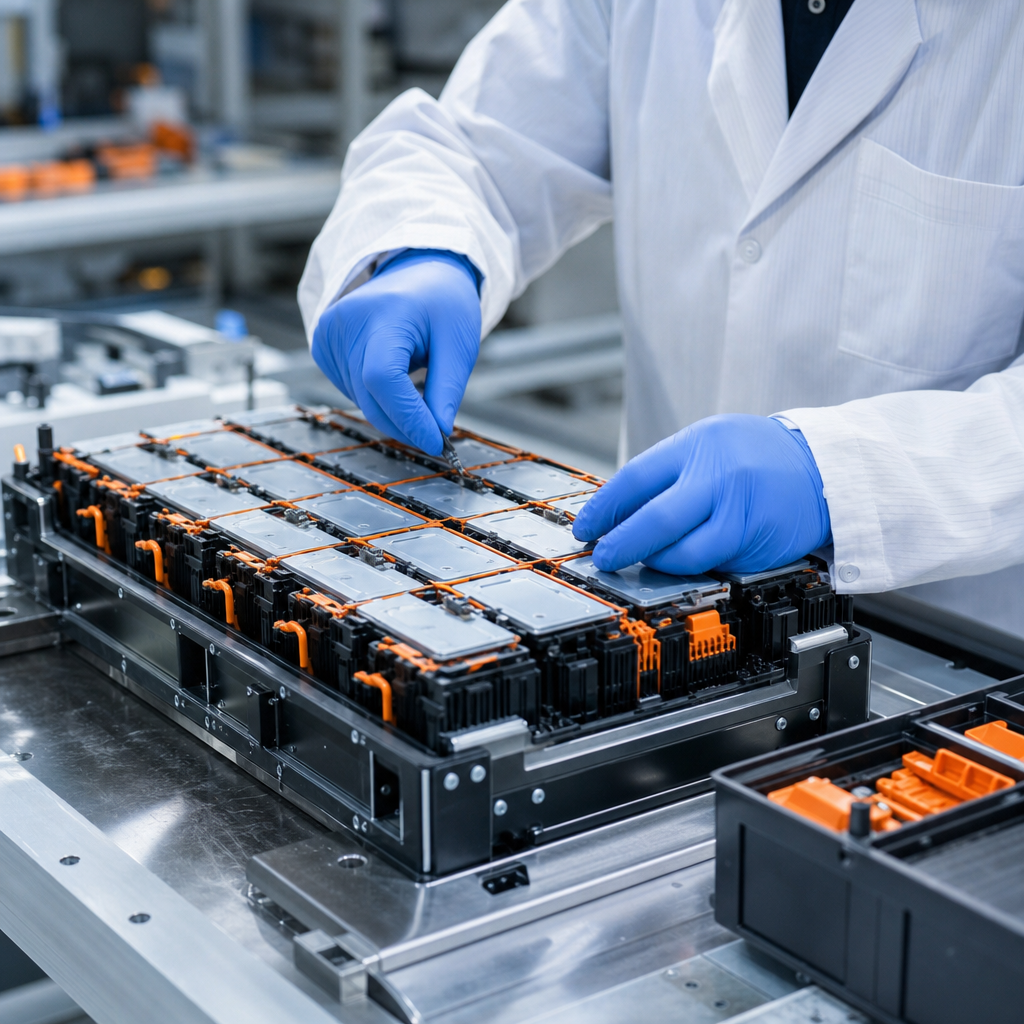
Battery innovation increasingly depends on polymers, and the clearest proof comes from industry-specific case studies that show how material choices change safety, cost, cycle life, and manufacturability. In battery technology, polymers are long-chain molecules used as binders, separators, electrolytes, coatings, structural encapsulants, and thermal interface materials. They matter because batteries are no longer a single-market product. Electric vehicles, grid storage, medical wearables, aerospace systems, and consumer electronics each impose different operating windows, regulatory constraints, and failure tolerances. I have worked on battery content and materials evaluations long enough to see a consistent pattern: when a program stalls, the bottleneck is often not the active material headline, but the supporting polymer system that determines whether the chemistry survives production and field use.
This hub article examines polymers in battery technology advancements through the lens of real applications rather than lab claims. That distinction is important. A polymer that performs well in a coin cell may fail during calendering, swelling, fast charging, sterilization, or low-temperature cycling in a commercial pack. Key terms shape the discussion. A binder holds electrode particles together and secures them to the current collector. A separator is a porous polymer membrane that keeps electrodes apart while allowing ion transport. A polymer electrolyte replaces or supplements liquid electrolyte to improve safety or enable solid-state designs. Encapsulation polymers protect cells from moisture, vibration, and chemical exposure. Understanding these roles is essential for anyone researching battery case studies and applications because each role links directly to measurable business outcomes.
As a sub-pillar hub for industry-specific case studies, this page maps where polymers create practical battery advancements and where limitations remain. It also serves readers who need a reliable overview before drilling into narrower articles on EV batteries, medical devices, aerospace power systems, and stationary storage. The core lesson is straightforward: polymer selection is not an afterthought. It is a system-level engineering decision that shapes energy density, service life, thermal stability, compliance, and total cost of ownership.
Electric Vehicles: Polymer Choices That Scale With Production
In electric vehicles, polymers influence battery performance from slurry mixing to crash response. The most visible example is the binder system in lithium-ion electrodes. Polyvinylidene fluoride, usually processed with N-methyl-2-pyrrolidone in cathodes, became the mainstream option because it offers chemical stability and strong adhesion. On the anode side, especially with graphite and silicon blends, water-based combinations such as styrene-butadiene rubber and carboxymethyl cellulose gained traction because they improve elasticity and reduce solvent recovery costs. In practice, those choices affect more than lab efficiency. They determine coating uniformity, drying time, electrode cracking behavior, and scrap rates at gigafactory scale.
A well-documented EV challenge is silicon expansion in high-capacity anodes. Silicon can expand dramatically during lithiation, causing particle fracture and loss of electrical contact. Polymer binders with stronger mechanical resilience and functional groups that interact with silicon surfaces help preserve the electrode network. Manufacturers and university labs have explored polyacrylic acid, alginate, and crosslinked systems for this reason. The advancement is not theoretical. Better binders have enabled higher silicon content in commercial blends, supporting incremental energy-density gains without catastrophic cycle-life losses. The tradeoff is process sensitivity: some advanced binders improve retention but increase slurry viscosity or require tighter drying control.
Separators are another decisive polymer case. Polyethylene and polypropylene multilayer separators dominate because they provide shutdown behavior when pores close at elevated temperatures. Ceramic-coated polymer separators were adopted to improve thermal resistance and puncture tolerance, especially in automotive cells exposed to aggressive fast charging and large pack formats. In field terms, that means better abuse tolerance and lower risk of internal short propagation. EV battery packs also rely heavily on polyurethane, silicone, epoxy, and acrylic materials for potting, gap filling, cell-to-pack bonding, and thermal management. These polymers are not electrochemically active, yet they strongly influence pack safety, vibration durability, and heat rejection. Battery technology advancements in vehicles therefore come from integrated polymer architecture, not one miracle material.
Grid Storage and Renewable Integration: Durability Over Decades
Stationary energy storage presents a different optimization target. Grid operators care less about peak gravimetric energy density and more about calendar life, thermal stability, maintenance intervals, and predictable degradation. In this market, polymer case studies often center on separator durability, flame-retardant components, and encapsulation materials that survive long service periods in variable climates. Lithium iron phosphate systems used for commercial storage benefit from polymer separators and binders tuned for long cycle life rather than maximum packing density. The operating environment may include daily cycling, elevated summer temperatures, and tight insurance requirements, all of which reward conservative polymer formulations.
Flow batteries offer another clear example. In vanadium redox systems, ion-exchange membranes are the critical polymer component because they control ion selectivity, crossover, and efficiency. Perfluorosulfonic acid membranes, including well-known fluoropolymer families, have set a high performance benchmark but remain expensive. Developers continue testing hydrocarbon-based alternatives to lower system cost while maintaining chemical stability in strongly acidic electrolytes. From an applications perspective, this is one of the strongest reminders that polymer innovation determines commercialization pace. If the membrane degrades or allows excessive crossover, round-trip efficiency falls and maintenance costs rise. If the membrane is too expensive, the levelized cost of storage becomes uncompetitive.
Utilities also evaluate pack-level polymers for fire containment and environmental sealing. Silicone foams, intumescent coatings, and engineered thermoplastics help isolate modules and manage thermal incidents. Here the case-study lesson is practical: a polymer that adds small material cost can prevent expensive downtime, insurer concerns, and site redesign. For stationary storage, advancement means reliable twenty-year service, and polymers are central to achieving that target.
Consumer Electronics and Wearables: Thin, Flexible, and Safe
Consumer devices push polymers in a different direction: thinness, flexibility, cosmetic reliability, and resistance to abuse in compact spaces. Lithium-polymer pouch cells became popular in phones, tablets, and earbuds because laminated polymer-aluminum packaging supports slim form factors. The phrase lithium-polymer is often used loosely in marketing, but the real engineering story is the package and gel or polymer-modified electrolyte system that allows low-profile cell construction. In manufacturing, the pouch film itself is a sophisticated multilayer polymer structure designed to resist moisture ingress, mechanical damage, and seal failure.
Wearables add even tougher requirements. Flexible batteries used in medical patches, smart textiles, and fitness bands need polymer substrates and encapsulants that tolerate bending without electrode delamination. Thermoplastic polyurethane and silicone-based encapsulation materials are common because they combine flexibility with skin-contact durability. I have seen product teams underestimate the role of polymer creep and moisture transmission, only to discover swelling or intermittent electrical failure after accelerated aging. In small electronics, these are not minor issues. A slight seal weakness can trigger gas buildup, enclosure pressure, and field returns.
Fast charging in smartphones provides a useful battery technology case study. As charging rates increased, separator shutdown margins, binder adhesion under repeated expansion, and thermal interface polymers became more important. Device makers cannot afford bulky cooling hardware, so polymer materials must support heat spreading and maintain mechanical integrity in tight assemblies. The result is a market where polymer engineering quietly enables the user-facing features consumers notice most: faster charging, thinner devices, and acceptable battery lifespan.
Medical, Aerospace, and Defense Batteries: Compliance and Failure Intolerance
In medical devices, aerospace platforms, and defense systems, polymers matter because failure consequences are severe and validation requirements are strict. Implantable and portable medical batteries require biocompatible packaging interfaces, sterilization resistance, and stable performance at low drain rates over long periods. Polymer seals, adhesive systems, and separator chemistry must withstand validation testing under standards-driven quality systems. For wearable medical devices such as insulin pumps and cardiac monitors, polymer encapsulation also protects against sweat, cleaning agents, and repeated drops. A battery that passes electrochemical tests but fails enclosure compatibility is not commercially viable.
Aerospace applications emphasize low-temperature function, flame resistance, weight reduction, and outgassing control. Polyimides, fluoropolymers, and high-performance composites appear in insulation, separators, wire coatings, and structural battery-adjacent components because they tolerate demanding thermal environments. In satellites and high-altitude systems, polymer stability under radiation and vacuum conditions becomes a design concern. Defense systems add shock, storage life, and mission-readiness requirements. Thermal batteries, reserve batteries, and ruggedized lithium systems all depend on polymer components selected for very specific duty cycles.
| Industry | Primary polymer roles | Main performance target | Typical tradeoff |
|---|---|---|---|
| Electric vehicles | Binders, separators, gap fillers, adhesives | Fast charging, cycle life, safety at scale | Higher processing complexity for better durability |
| Grid storage | Membranes, separators, fire barriers, seals | Long calendar life and low maintenance | Cost versus chemical stability |
| Consumer electronics | Pouch films, gel systems, encapsulants | Thin form factor and safe fast charging | Moisture protection versus flexibility |
| Medical and aerospace | High-reliability seals, insulation, specialty films | Compliance, low failure rates, extreme environment performance | Qualification time and premium material cost |
The practical takeaway across these sectors is that advanced polymer systems reduce risk only when they are matched to the duty profile and validated under realistic conditions. There is no universal best polymer. There is only a best fit for a defined battery application.
Solid-State and Next-Generation Chemistries: Where Polymers Could Reshape the Market
Many of the most discussed battery technology advancements involve solid-state concepts, lithium-metal anodes, sodium-ion cells, and hybrid electrolyte systems. Polymers sit near the center of each. Solid polymer electrolytes, including polyethylene oxide-based systems and newer block copolymers, promise improved safety and simpler architectures by reducing flammable liquid content. Yet the major challenge remains ionic conductivity at room temperature and stable interfaces with high-energy electrodes. In development programs, I repeatedly see strong headline claims tempered by interface resistance, dendrite suppression limits, and manufacturing complexity.
Sodium-ion batteries offer a useful reminder that polymer lessons transfer imperfectly across chemistries. Some binder and separator systems adapt well, while others need reformulation because electrode swelling, voltage windows, and electrolyte interactions differ from lithium-ion. Water-processable polymers are especially attractive for sodium-ion manufacturing because cost discipline is central to the value proposition. Similarly, sulfur batteries and lithium-metal concepts require polymer hosts, interlayers, or protective coatings that manage shuttle effects and unstable interfaces. Progress is real, but commercialization depends on polymer systems that can be manufactured consistently and qualified at scale.
This is why industry-specific case studies matter. They separate impressive electrochemical data from bankable engineering. For readers exploring the broader case studies and applications topic, the next step is to compare how polymer performance changes across EV, storage, medical, aerospace, and electronics contexts rather than assuming one breakthrough will fit every market.
How to Evaluate Polymer Battery Case Studies as a Decision-Maker
When reviewing a battery materials case study, start with the operating requirement, not the polymer brand name. Ask what failure mode the polymer is meant to solve: electrode cracking, separator shrinkage, electrolyte leakage, flame spread, moisture ingress, or thermal transfer. Then check whether the reported data reflects commercial conditions. Coin-cell improvements are useful, but pouch, prismatic, and cylindrical formats reveal different stresses. Look for cycle life at realistic depth of discharge, storage at elevated temperature, fast-charge performance, abuse testing, and manufacturability indicators such as slurry stability and coating quality.
It is also important to verify standards and test methods. Thermal behavior should be interpreted alongside recognized protocols such as UL, IEC, UN transportation tests, and application-specific OEM validation plans. Materials data should include compatibility with electrolyte solvents, current collectors, and neighboring polymers in the pack. Procurement teams should ask about solvent recovery, regulatory restrictions, recyclability impacts, and supply concentration. A polymer that improves one metric but introduces a single-source risk may not be the best strategic choice.
As the hub page for industry-specific case studies, this article should help you frame those questions before moving into deeper analysis. The central pattern is consistent across sectors: polymers enable battery technology advancements by solving practical reliability problems that active materials alone cannot address. Better binders keep high-capacity electrodes intact. Better separators and membranes improve safety and efficiency. Better encapsulants and thermal materials make the battery usable in real products, not just test fixtures. If you are building a research list or sourcing roadmap, use this page as your starting point, then explore each application-specific article to match polymer strategies to your operating environment, certification burden, and cost target. That is how smart battery programs turn materials science into durable commercial results.
Frequently Asked Questions
How do polymers directly improve battery performance in real-world case studies?
Case studies across electric vehicles, grid storage, medical wearables, and aerospace consistently show that polymers improve battery performance by solving multiple engineering problems at once. In practical battery systems, polymers are used as binders that hold active materials together, separators that prevent short circuits while allowing ion transport, polymer electrolytes that enhance safety, coatings that stabilize interfaces, encapsulants that protect cells from moisture and vibration, and thermal interface materials that help manage heat. When manufacturers change one of these polymer components, they often see measurable gains in cycle life, rate capability, safety margins, and production consistency.
For example, in lithium-ion cell manufacturing, advanced polymer binders can reduce electrode cracking and improve adhesion between active material particles and current collectors. That translates into better capacity retention over repeated charging and discharging. In high-energy applications such as electric vehicles, separator polymers with improved thermal shutdown behavior can slow or prevent catastrophic failure during abuse conditions. In compact devices such as wearables or medical sensors, flexible polymer components allow thinner, lighter, and more mechanically resilient battery designs. The value shown in case studies is not that polymers are a minor additive, but that they frequently determine whether a battery design is commercially viable, scalable, and safe under real operating conditions.
Why are polymers so important for battery safety and thermal management?
Polymers are central to battery safety because they sit at several of the most failure-sensitive interfaces in the cell and pack. One of the clearest examples is the separator, which is typically polymer-based and acts as a physical barrier between the anode and cathode. Its job is deceptively simple: keep the electrodes apart while still allowing ions to move through the electrolyte. In case studies involving automotive and stationary storage batteries, better separator polymer design has improved puncture resistance, dimensional stability, and shutdown behavior at elevated temperatures. Those changes reduce the likelihood of internal shorts and make thermal runaway less likely or slower to propagate.
Polymers also matter in thermal interface materials, potting compounds, encapsulants, and coatings. These materials help move heat away from cells, electrically isolate components, seal battery packs against environmental contamination, and absorb mechanical stress during vibration or impact. In aerospace and high-reliability electronics, polymer selection often determines whether a battery can survive harsh thermal cycling, humidity exposure, and mechanical shock. In many documented product development programs, safety gains did not come from changing the chemistry of the active electrode alone. They came from selecting polymer systems that controlled heat, protected interfaces, and maintained structural integrity under abnormal conditions. That is why polymers are increasingly viewed as a core safety technology rather than a secondary packaging choice.
What do case studies reveal about the relationship between polymers, battery cost, and manufacturability?
One of the strongest lessons from battery case studies is that polymers can lower total system cost even when the material itself is not the cheapest option on a per-kilogram basis. That is because battery economics depend heavily on yield, process speed, scrap rates, equipment compatibility, and long-term reliability. A polymer binder that provides stronger electrode adhesion, for example, can reduce delamination during coating and calendaring, which improves manufacturing yield. A separator polymer with more consistent pore structure can support tighter quality control and lower defect rates. Encapsulation and sealant polymers that resist moisture ingress can reduce warranty failures in the field. These savings often outweigh the initial premium of a higher-performance polymer.
Manufacturability is another major factor. Case studies in high-volume battery production show that polymers influence slurry rheology, coating uniformity, drying behavior, lamination quality, and assembly robustness. In flexible or next-generation batteries, polymer materials can enable roll-to-roll processing, lower-temperature fabrication, and lighter structural integration. That matters enormously in industries where scale is everything, especially electric vehicles and grid systems. In short, polymers do not just affect what a battery can do in theory. They affect whether it can be produced repeatably, economically, and at industrial scale. That is why companies increasingly evaluate polymers not only for electrochemical performance but also for processability and life-cycle cost impact.
How do polymer requirements differ between EVs, grid storage, wearables, and aerospace batteries?
The polymer requirements vary substantially because each market places different demands on the battery. In electric vehicles, polymers must support high energy density, fast charging, long cycle life, vibration resistance, crash resilience, and strict thermal safety. That means separators, binders, gap fillers, adhesives, and encapsulants all need to perform under heavy duty cycles and broad temperature ranges. In grid storage, the emphasis often shifts toward durability, cost-effectiveness, fire safety, and long service intervals. Polymer materials used in these systems must remain stable over many years and support large-format manufacturing without introducing avoidable maintenance or replacement costs.
In medical wearables and portable electronics, polymers often need to be lightweight, flexible, biocompatibility-aware, and reliable in thin form factors. They may also need to tolerate bending, skin contact environments, and miniature assembly constraints. Aerospace is even more demanding, with extreme temperature swings, low outgassing requirements, strict flame and smoke performance, and high resistance to vibration and pressure changes. Case studies make it clear that there is no universal “best polymer” for battery technology. The right choice depends on application-specific tradeoffs among ionic conductivity, mechanical strength, thermal stability, chemical resistance, weight, compliance, and manufacturability. That is one reason why polymer innovation is closely tied to market-specific battery advancement.
What is the biggest takeaway from case studies on polymers in battery technology advancements?
The biggest takeaway is that polymers are not peripheral materials in battery innovation; they are often the hidden enablers of breakthrough performance and commercialization. Case studies repeatedly show that improvements in battery safety, longevity, fast-charge capability, pack integration, and production efficiency are frequently linked to polymer engineering decisions. A new active material may capture attention, but without the right binder, separator, coating, electrolyte matrix, or encapsulation system, the battery may fail to meet real-world requirements. In that sense, polymers often determine whether laboratory performance can be translated into a robust commercial product.
Another key lesson is that polymer selection works best when approached as a system-level decision. A polymer that improves ionic transport but complicates processing may not be the best option. A material that boosts thermal resistance but adds too much weight may not suit aerospace or wearable devices. The most successful case studies come from teams that align polymer chemistry with application demands, manufacturing constraints, regulatory expectations, and long-term reliability goals. For anyone studying battery advancements, the evidence is clear: if you want to understand why some battery technologies scale successfully while others stall, you have to look closely at the polymers involved.