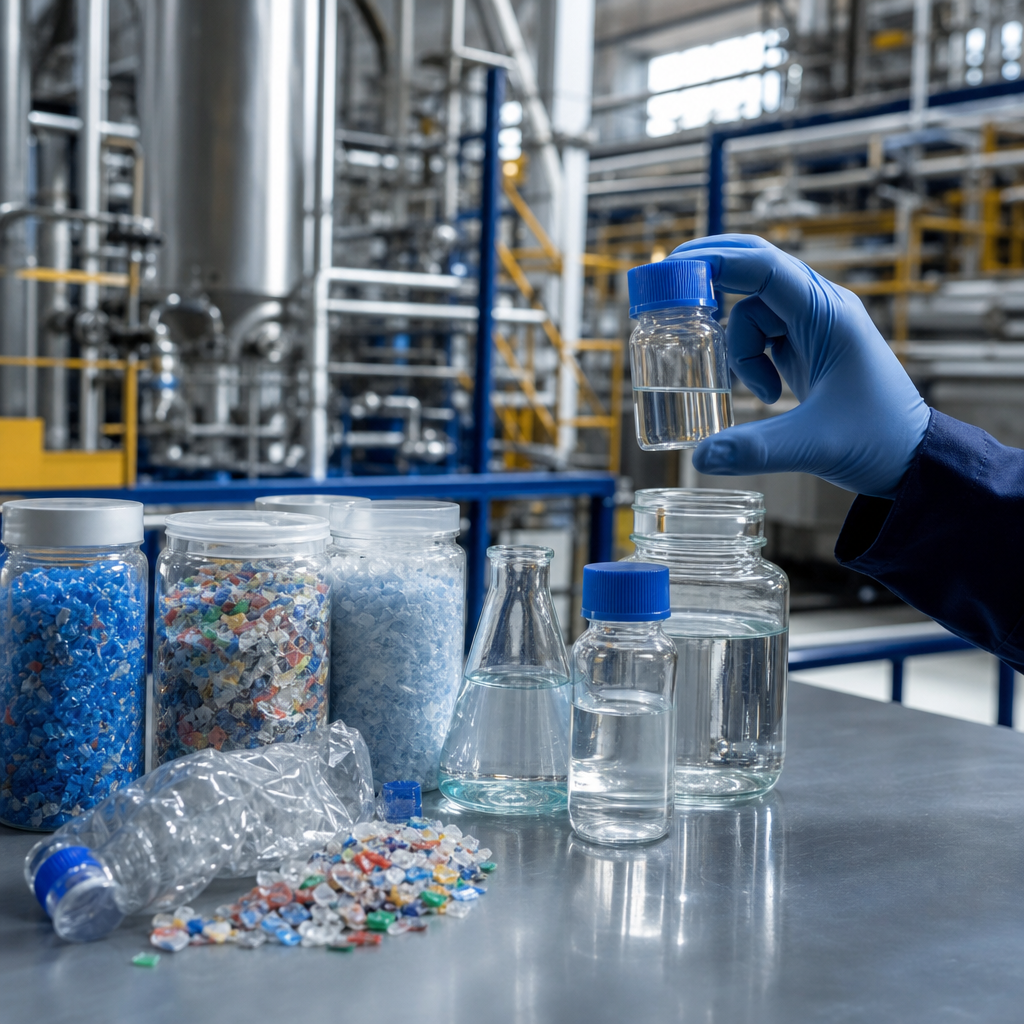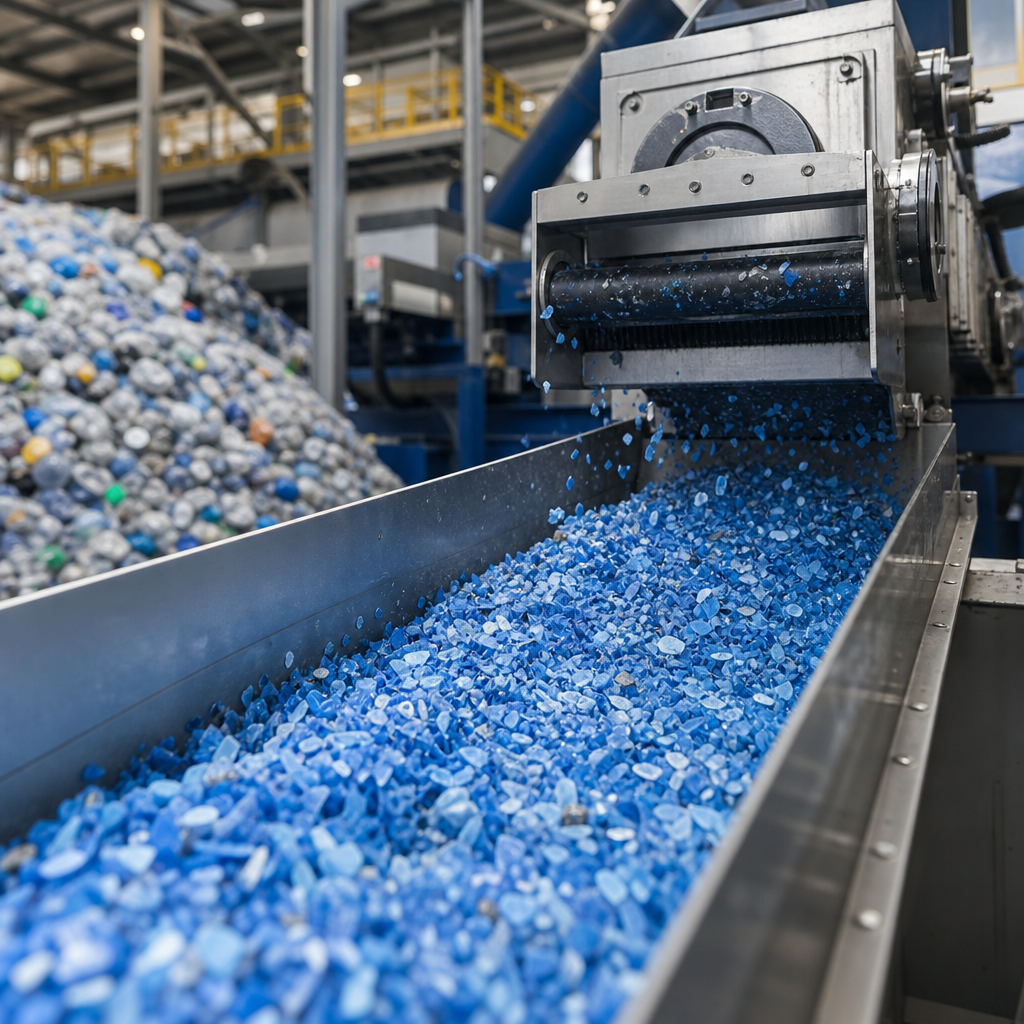
Innovations in polymer-based agricultural solutions are reshaping how farms manage water, nutrients, crop protection, storage, and environmental pressure across diverse production systems. In agriculture, polymers include natural, semi-synthetic, and synthetic macromolecules engineered into films, coatings, hydrogels, membranes, nets, pipes, twines, seed treatments, and controlled-release delivery systems. These materials matter because farming now operates under tighter margins, stricter environmental standards, labor shortages, and more volatile weather than at any point in recent decades. I have seen polymer choices affect outcomes far beyond materials cost: a mulch film can change soil temperature and weed pressure, a drip line resin grade can determine field longevity, and a superabsorbent hydrogel can help establishment in a drought-prone transplanting window. As a hub for industry-specific case studies, this article explains where polymer technologies deliver measurable value, where they fall short, and how growers, distributors, and agribusiness teams can evaluate applications with technical rigor rather than marketing claims.
Water management and irrigation efficiency
Water management is one of the clearest use cases for polymer-based agricultural solutions because polymers already sit at the center of modern irrigation infrastructure. Polyethylene dominates drip irrigation laterals, microtubes, and many fittings because it combines chemical resistance, flexibility, and acceptable field durability at scale. Polyvinyl chloride and high-density polyethylene are widely used in mainlines and conveyance systems, while elastomeric seals and gaskets maintain pressure integrity. In practice, the innovation is not merely the plastic itself but the resin formulation, wall design, emitter geometry, ultraviolet stabilizer package, and clog-resistance performance under real water quality conditions. I have seen low-cost drip lines fail early when carbon black loading, wall uniformity, or pressure regulation quality was inconsistent, producing uneven irrigation and avoidable replacement expense.
Hydrogels represent a second major category. These cross-linked polymers can absorb and retain large amounts of water relative to their dry mass, then release part of that moisture to the rhizosphere over time. Their best-fit applications are usually high-value horticulture, transplanting, landscaping interfaces, seedling establishment, and soils with poor water-holding capacity rather than broadacre row crops where economics are tighter. The case for hydrogels improves when plant establishment losses are expensive. For example, in greenhouse-to-field vegetable transplant systems, adding a hydrogel at root zone placement can reduce early wilting stress during hot planting windows. However, field performance depends on soil texture, salinity, rainfall pattern, and application rate. Under saline water, absorption capacity drops sharply, so performance claims based on distilled water tests should never be accepted as agronomic evidence.
Polymer membranes are also central to reservoir lining and water containment. Geomembranes based on HDPE, LLDPE, and related materials reduce seepage losses in irrigation ponds and lagoons. In dry regions, the avoided water loss can justify the capital outlay quickly, especially when coupled with fertigation programs where nutrient retention matters as much as volumetric water savings.
Controlled-release inputs and seed technologies
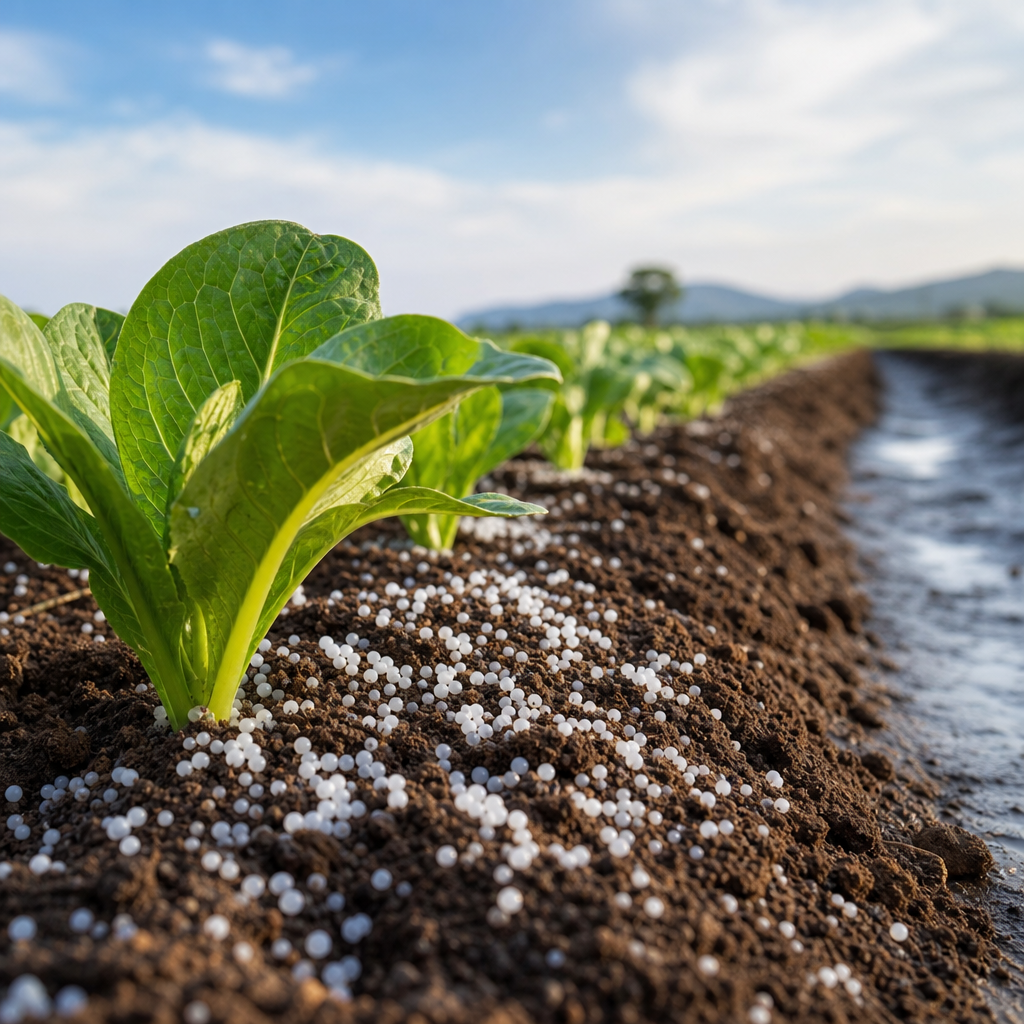
One of the most important innovations in polymer-based agricultural solutions is the shift from simple input delivery to precisely managed release profiles. Polymer-coated fertilizers use a semi-permeable layer to regulate water ingress and nutrient diffusion, allowing nitrogen, potassium, or multi-nutrient granules to release over weeks or months. Established technologies in this category include polymer-sulfur hybrids and fully polymer-coated products used in turf, specialty crops, and increasingly in high-value field applications. The agronomic benefit is straightforward: nutrients become available closer to plant demand, reducing volatilization, leaching, and application frequency. In crops sensitive to early salt injury, coatings can also moderate localized concentration around roots.
Seed coatings are another mature but still fast-evolving application. Polymers in seed treatment systems act as binders, color carriers, dust suppressants, and delivery matrices for fungicides, insecticides, biologicals, micronutrients, and inoculants. Good film coatings improve flowability and singulation in planters while reducing active ingredient loss during handling. That matters operationally because uneven treatment adhesion causes both efficacy issues and stewardship concerns. In the case of legumes, compatibility between polymer layers and rhizobial inoculants must be evaluated carefully; an elegant coating that preserves appearance but harms inoculant viability is a technical failure. Across multiple seed lines, I have found that the best programs are tested for storage stability, abrasion resistance, and germination under both standard and cold stress protocols, not just visual finish.
Microencapsulation extends the same logic to pesticides and biologicals. Encapsulated actives can reduce odor, improve handler safety, and alter release timing, but they also raise formulation complexity and regulatory scrutiny. The practical question for growers is whether the polymer system solves a field problem such as phytotoxicity, drift reduction, wash-off resistance, or shorter reapplication intervals. If it does not, the premium may not pencil out.
Mulch films, greenhouse covers, and protected cultivation
Protected cultivation relies heavily on polymer films, and this is where industry-specific case studies become especially instructive. Mulch films made from polyethylene can warm soil, suppress weeds, reduce evaporation, keep fruit cleaner, and improve early-season crop uniformity. Black mulch remains the standard for weed suppression; clear mulch is used for soil warming and sometimes solarization; reflective silver films can help deter certain insects by altering the visual environment. The gains are crop and climate specific. In strawberry systems, mulch often supports earlier harvest and cleaner fruit. In tomatoes and peppers, the combination of mulch plus drip irrigation frequently delivers more uniform sizing and reduced foliar disease splash compared with bare ground production.
Greenhouse and tunnel covers use multilayer films designed for light transmission, diffusion, thermal behavior, and anti-drip performance. Ethylene-vinyl acetate and specialized polyethylene blends are common because they can be engineered for mechanical strength and optical properties. In commercial greenhouse operations, diffuse light films can improve canopy penetration and reduce shadowing, which helps crop uniformity. Anti-condensate additives reduce droplet formation that otherwise lowers light transmission and can contribute to disease-promoting microclimates. The exact return depends on crop value and local weather, but for tomatoes, cucumbers, ornamentals, and berries, film specification can alter both yield distribution and labor efficiency.
Biodegradable mulch films deserve careful treatment. They are attractive where plastic retrieval is labor intensive or disposal costs are rising, yet field performance varies widely by climate, soil biology, crop duration, and tillage system. A film that fragments before canopy closure can lose weed suppression and become a contamination issue. A film that persists too long after incorporation may undermine the disposal benefit that justified adoption in the first place. Certification and standards matter here; soil biodegradation claims should be linked to recognized test methods rather than generic eco-label language.
Post-harvest protection, storage, and packaging case studies
Polymers continue to create value after harvest, especially where crop losses occur in handling, storage, and transport. Grain storage bags made from multilayer polyethylene have expanded rapidly in regions where permanent silo capacity is limited or harvest volumes fluctuate. Used correctly, these hermetic systems help maintain grain quality by limiting oxygen exchange and suppressing insect development. Their success depends on disciplined sealing, pad preparation, rodent control, and moisture management before filling. Poorly managed bags fail not because the polymer concept is weak, but because operational detail is ignored. I have seen excellent results in cereals and oilseeds where bag placement, fill density, and inspection routines were standardized, and disappointing results where punctures were left unrepaired.
Fresh produce packaging provides another case study class. Modified atmosphere packaging uses polymer films with defined gas transmission rates to help maintain respiration balance around produce. The correct film for leafy greens is not the correct film for berries, mushrooms, or cut vegetables because oxygen demand, carbon dioxide tolerance, and moisture behavior differ by commodity. Perforation design, seal integrity, and cold-chain control are as important as resin choice. For exporters, this packaging can mean the difference between marketable arrival and excessive shrink. However, polymers can also create condensation and waste problems if the package design ignores product physiology or local recycling infrastructure.
| Application | Common polymer approach | Primary benefit | Main limitation |
|---|---|---|---|
| Drip irrigation | Polyethylene laterals and emitters | Precise water delivery | Clogging and UV aging |
| Controlled-release fertilizer | Polymer-coated granules | Nutrient timing | Higher unit cost |
| Mulch film | PE or biodegradable film | Weed and moisture control | Removal or uncertain degradation |
| Seed treatment | Polymer film coating | Active retention and flowability | Compatibility constraints |
| Silage and storage | Barrier films and wraps | Reduced spoilage | Puncture sensitivity |
Livestock, silage, and agricultural infrastructure
Polymer-based agricultural solutions are often discussed as crop technologies, but livestock systems depend on them just as heavily. Silage stretch films and oxygen-barrier wraps are critical in forage preservation. Better films limit oxygen ingress, improve fermentation stability, and reduce dry matter losses. In dairies and feedlots, even small reductions in spoilage translate into meaningful feed-cost savings because forage volume is high and quality drives animal performance. The important technical detail is puncture resistance and seal consistency through the full wrapping process. A premium film only earns its price if machinery settings, bale density, and handling discipline are aligned with the material specification.
Infrastructure is another overlooked domain. Polymer pipes, geomembranes, shade nets, insect nets, flooring components, and corrosion-resistant panels support poultry houses, dairy units, and aquaculture operations. In aquaculture especially, liners and cage components must withstand UV exposure, biofouling, and disinfectant contact while preserving water quality. Material selection should therefore consider not only strength but additive migration, cleanability, and expected service environment. A cheap polymer component exposed to ammonia, sunlight, and repeated sanitation cycles can become expensive very quickly if it embrittles or contaminates the system.
Sustainability, recycling, and procurement decisions
The sustainability debate around polymers in agriculture is real and cannot be reduced to simple pro-plastic or anti-plastic positions. These materials often lower water use, cut pesticide losses, protect yield, and reduce food waste. At the same time, mismanaged films, twines, and containers contribute to disposal burdens and, in some contexts, soil contamination. The right question is whether a given polymer application delivers net agronomic and environmental benefit across its full life cycle. That requires comparing field performance, labor, disposal pathways, recyclability, and replacement frequency.
Procurement decisions should be grounded in total cost of ownership. Buyers should ask for resin type, additive package details, UV stabilization data, thickness tolerance, expected field life, compatibility documentation, and evidence from conditions similar to their own. Recognized evaluation methods matter. For films and plastics, ASTM and ISO test protocols provide a stronger basis than brochure claims. For biodegradable products, insist on clearly stated conditions for degradation and realistic timelines. For controlled-release inputs, ask how release curves shift with soil temperature and moisture. For seed coatings, require germination and dust-off data after storage, not just immediately after treatment.
As the hub for industry-specific case studies, this page points to the central lesson across sectors: polymer innovation succeeds when materials science is matched to agronomy, operations, and end-of-life planning. Farms gain the most when they treat polymers as engineered tools, not interchangeable commodities. The same polyethylene that performs flawlessly in one irrigation design can underperform in another if pressure, chemistry, or installation quality differ. The same biodegradable mulch that reduces cleanup labor in one vegetable system can disappoint in another if the season is too long or soil conditions suppress breakdown. Decision-makers should therefore evaluate product claims against local conditions, trial results, and service support. If you are building a practical roadmap for agricultural materials, use these case-study categories to benchmark your own operation, compare suppliers, and identify the polymer applications most likely to improve yield, efficiency, and resilience.
Frequently Asked Questions
What are polymer-based agricultural solutions, and why are they becoming so important in modern farming?
Polymer-based agricultural solutions are farm inputs, materials, and systems made from large-chain molecules designed to solve practical production challenges. In agriculture, these polymers can be natural, semi-synthetic, or synthetic, and they appear in a wide range of products such as mulch films, greenhouse covers, irrigation pipes, shade nets, baler twines, seed coatings, hydrogels, silage wraps, membranes, controlled-release fertilizers, and crop protection delivery systems. Their growing importance comes from the fact that modern farms are under pressure from multiple directions at once: water scarcity, rising input costs, labor shortages, stricter environmental expectations, more variable weather, and the need to maintain yield and quality across diverse production systems.
What makes polymers especially valuable is their versatility. A polymer can be engineered to block UV light, regulate moisture, slow the release of nutrients, protect seeds during germination, reduce evaporation, improve packaging performance, or extend the service life of infrastructure. That means one class of materials can support productivity, resource efficiency, and post-harvest protection at the same time. As agriculture becomes more data-driven and performance-focused, polymer technologies are increasingly being designed for specific agronomic goals, whether that is improving water retention in sandy soils, reducing nutrient leaching, protecting produce in transit, or enabling more precise agrochemical application. In short, polymer-based solutions matter because they help farms do more with less while adapting to tighter margins and higher environmental accountability.
How are polymers being used to improve water management and irrigation efficiency on farms?
Water management is one of the most important areas where polymer innovation is making a measurable difference. Polymers are used in irrigation pipes, drip lines, membranes, reservoir liners, filtration systems, and water-retention products that help farms move, store, conserve, and apply water more effectively. For example, durable polymer pipes and drip irrigation components support precise delivery directly to the root zone, reducing losses from evaporation, runoff, and deep percolation. Compared with less targeted irrigation methods, polymer-enabled drip systems can improve uniformity and help growers maintain tighter control over crop stress, which is particularly valuable in regions facing drought, irregular rainfall, or water-use restrictions.
Another important innovation is the use of hydrogels and superabsorbent polymers in soil or root-zone management. These materials can absorb and hold large amounts of water, then gradually release it back to plants as the soil dries. In the right crop and soil conditions, that can improve seedling establishment, reduce irrigation frequency, and buffer crops during short dry periods. Polymer membranes and liners are also widely used in water storage ponds and canals to reduce seepage losses, preserving valuable irrigation reserves. In controlled environments such as greenhouses, polymer films and fertigation components can work together to create highly efficient water and nutrient delivery systems. The overall benefit is not simply saving water in a general sense; it is improving timing, placement, and retention so that every unit of water delivers more agronomic value.
In what ways do polymer technologies support nutrient delivery and crop protection?
Polymers play a major role in making nutrient and crop protection programs more precise, efficient, and environmentally responsible. One of the most significant applications is in controlled-release fertilizers, where polymer coatings are used to regulate how quickly nutrients become available to the plant. Instead of releasing a large amount of nitrogen or other nutrients all at once, the polymer coating allows a gradual release based on moisture, temperature, or time. This can better align nutrient availability with crop demand, improving uptake efficiency while reducing losses through volatilization, leaching, or runoff. For growers, that can mean more consistent crop performance and potentially fewer applications.
Polymers are also used in seed coatings, encapsulated pesticides, adjuvants, and carrier systems that improve how active ingredients are delivered and retained. Seed-applied polymer coatings can protect delicate seed treatments, improve flowability during planting, reduce dust-off, and create a more uniform delivery platform for biologicals, micronutrients, or crop protection compounds. In crop protection, polymer-based encapsulation can help stabilize active ingredients, extend residual activity, or control release so products remain effective for longer periods under field conditions. This is especially useful when growers want strong efficacy while minimizing overapplication and off-target movement. As regulations and stewardship expectations continue to tighten, polymer-assisted delivery systems are becoming increasingly attractive because they support a more targeted approach to both fertility and crop protection.
Are polymer-based agricultural products environmentally sustainable, and what should growers consider when evaluating them?
The sustainability of polymer-based agricultural products depends heavily on the material type, the application, how the product is managed in the field, and what happens at the end of its useful life. Not all polymers are the same. Some are designed for long-term durability in infrastructure like pipes and greenhouse coverings, while others are developed for temporary use in mulches, coatings, or delivery systems. There is growing interest in biodegradable and compostable polymer technologies, especially for applications where retrieval after use is difficult or costly. Natural and bio-based polymers are also gaining attention because they may offer a lower environmental footprint in certain use cases. However, performance, degradation behavior, climate conditions, soil biology, and disposal pathways all matter, so sustainability claims should be evaluated carefully rather than assumed.
For growers and agricultural buyers, the best approach is to assess polymer solutions through a life-cycle and systems lens. A product may use synthetic material, but if it sharply reduces water consumption, fertilizer loss, product spoilage, or replacement frequency, the total environmental benefit may still be substantial. At the same time, it is important to consider durability, recyclability, collection logistics, residue risks, and compliance with local waste or environmental regulations. Asking practical questions can help: Is the product recoverable after use? Is there an established recycling stream? Does it break down as claimed under real farm conditions, or only in industrial composting environments? Does it reduce total input use or prevent pollution elsewhere in the system? Sustainable polymer use in agriculture is less about broad labels and more about matching the right material to the right application with responsible management before, during, and after use.
What future innovations in polymer-based agricultural solutions are likely to shape the next generation of farming?
The next wave of polymer innovation in agriculture is likely to be defined by greater precision, smarter functionality, and stronger alignment with sustainability goals. One major area of development is smart delivery systems that respond to environmental triggers such as temperature, moisture, pH, or microbial activity. These materials could make nutrient release or crop protection delivery even more responsive to real crop needs, helping reduce waste and improve consistency in variable field conditions. Advances in polymer chemistry are also supporting new seed treatment platforms, bio-based coatings, and hybrid systems that combine polymers with biological inputs, sensors, or nanostructured materials to improve stability and field performance.
Another important trend is the development of higher-performing biodegradable films, coatings, and soil-contact materials that maintain agronomic effectiveness while reducing end-of-season removal and disposal burdens. In protected agriculture, polymers will continue evolving to improve light management, thermal control, anti-drip behavior, and barrier performance in greenhouses and tunnels. Post-harvest applications are also expected to expand, with advanced packaging and storage materials helping extend shelf life, reduce spoilage, and preserve quality during transport. More broadly, polymer-based agricultural solutions are moving away from being viewed as simple support materials and toward being recognized as engineered performance tools. As farms adopt more precise and resilient production systems, polymers will likely play an even larger role in helping growers manage risk, improve resource efficiency, and meet both economic and environmental targets.