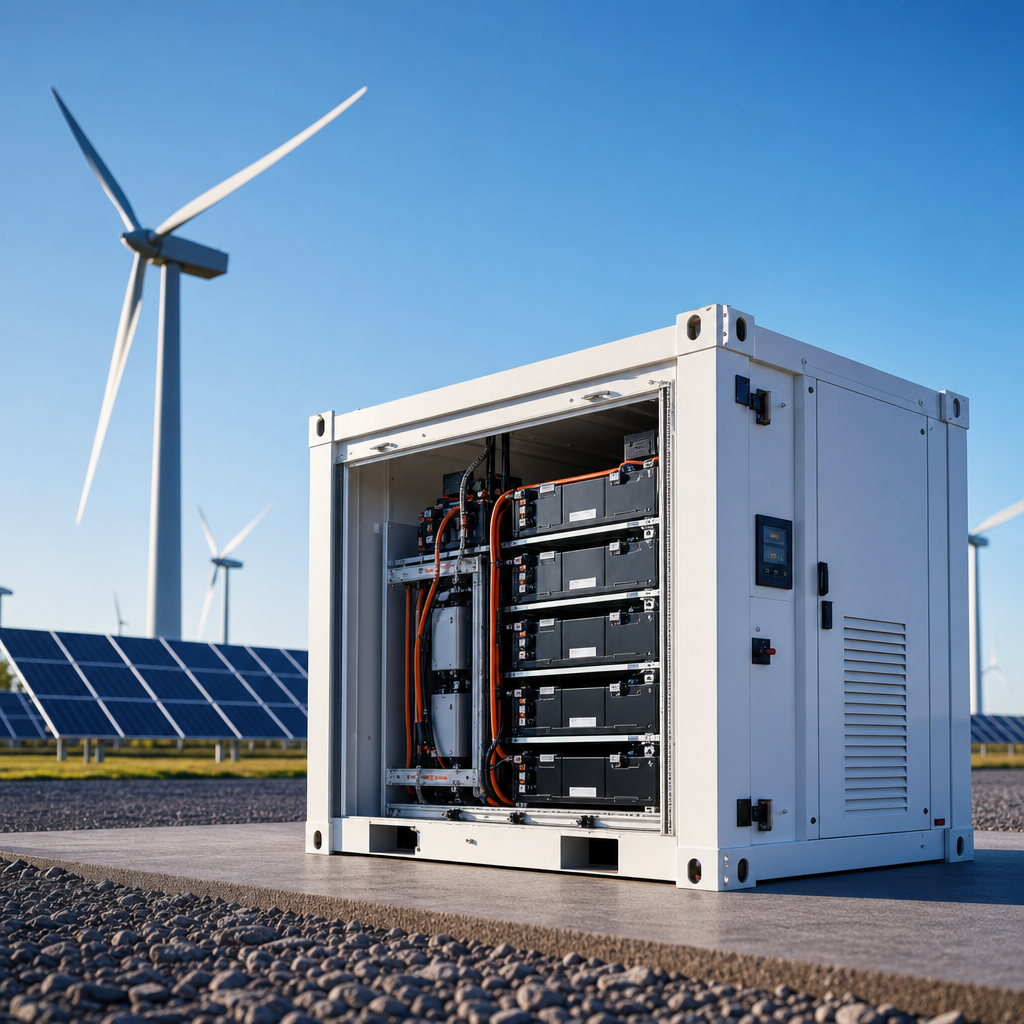
Polymers sit at the center of modern renewable energy storage because they solve a stubborn engineering problem: how to store intermittent wind and solar power safely, cheaply, and at scale. In practical terms, polymers are large-chain molecules used as binders, separators, electrolytes, coatings, membranes, and structural components inside batteries, supercapacitors, hydrogen systems, and thermal storage units. When I have evaluated storage projects for grid, mobility, and industrial applications, the pattern has been consistent: performance gains rarely come from one breakthrough material alone. They come from system-level improvements, and polymers repeatedly enable those improvements by controlling ion transport, heat resistance, flexibility, durability, and manufacturing cost.
Renewable energy storage matters because generation from solar panels and wind turbines does not always match demand. Utilities need hour-scale balancing, manufacturers need power quality, electric fleets need fast charging without grid stress, and remote communities need resilient backup. Traditional materials such as metals, ceramics, and glass remain essential, but they often struggle with weight, brittleness, processing complexity, or cost when deployed at mass scale. Polymer science changed that equation. It introduced lightweight separators for lithium-ion cells, ion-exchange membranes for flow batteries and electrolyzers, encapsulants for photovoltaic modules paired with storage, and phase-change containers for thermal systems. These materials are not peripheral; they are often the reason a storage technology becomes commercially viable.
This hub article explains how polymers revolutionized renewable energy storage through industry-specific case studies. It defines where polymers create value, shows how those gains appear in real applications, and connects the main storage categories that practitioners evaluate today. If you are mapping this topic across utility, transportation, manufacturing, buildings, and remote infrastructure, the core question is simple: which polymer-enabled design choices improve safety, lifetime, efficiency, and economics in a given operating environment? The sections below answer that directly and establish the framework for deeper case-study articles across this subtopic.
Why polymers changed the storage design playbook
Polymers revolutionized renewable energy storage by making devices more manufacturable and more application-specific. In lithium-ion batteries, polymer separators such as polyethylene and polypropylene create a microporous barrier that allows lithium ions to pass while preventing electrical short circuits between electrodes. Shutdown functionality in multilayer separators adds a safety mechanism: pores collapse at elevated temperature, slowing ion movement before thermal runaway escalates. Binder polymers such as polyvinylidene fluoride and water-based alternatives like styrene-butadiene rubber with carboxymethyl cellulose help active materials adhere to current collectors, affecting cycle life, swelling behavior, and electrode integrity. In solid-state and gel systems, polymer electrolytes support safer architectures by reducing liquid flammability and improving interface conformity.
Outside batteries, polymers define the operating envelope of other storage systems. Proton exchange membranes in hydrogen electrolyzers and fuel cells govern conductivity, gas crossover, and chemical stability. Redox flow batteries rely on ion-selective membranes to maintain electrolyte separation while sustaining charge transport. Supercapacitors use polymer binders and separators to preserve high-power performance across thousands of cycles. Thermal energy storage systems use polymer encapsulation to contain phase-change materials and prevent leakage under repeated heating and cooling. In each case, the polymer is not merely a packaging choice. It actively controls electrochemical, thermal, or mechanical behavior. That is why storage developers now treat polymer selection as a strategic engineering decision rather than a procurement detail.
The commercial impact is measurable. Lower weight improves energy density at the pack level. Roll-to-roll processing reduces manufacturing cost. Corrosion resistance extends service intervals. Flexible films enable compact module design. Compatibility with automated coating and lamination supports gigafactory scale. Standards bodies and testing protocols reflect this importance. IEC battery safety testing, UL stationary storage standards, and transport regulations all interact with polymer properties through flammability, dielectric strength, puncture resistance, and chemical stability. In project reviews, I have seen the same lesson repeatedly: a polymer that appears inexpensive on the bill of materials can determine whether a storage system passes abuse testing, meets warranty life, or fails prematurely in the field.
Utility-scale battery storage case studies
Grid-scale battery energy storage systems have been one of the clearest demonstrations of polymer-enabled innovation. Utility projects must survive high cycle counts, wide temperature swings, and stringent safety review while delivering predictable economics. In lithium iron phosphate systems, common in large stationary deployments, polymer separators and binders support long-duration cycling and thermal stability. Pack-level polymeric busbar insulation, thermal interface pads, potting compounds, and flame-retardant enclosures help contain faults and simplify assembly. Integrators increasingly select materials that meet UL 94 flammability classifications and support propagation resistance strategies required by fire authorities and insurers.
A practical example comes from solar-plus-storage installations in hot climates. Ambient heat accelerates electrolyte degradation, separator shrinkage risk, and mechanical stress in battery modules. Polymer thermal interface materials and engineered foams improve heat transfer from cells to cooling plates while damping vibration during transport and operation. UV-resistant polymer cable insulation and outdoor-rated housings reduce maintenance in desert sites where dust and temperature are persistent threats. These choices do not make headlines like megawatt-hour capacity numbers do, yet they directly affect availability, warranty claims, and the levelized cost of stored energy.
Flow batteries provide another utility case study. Vanadium redox flow systems use polymer membranes to separate positive and negative electrolytes. The membrane must balance proton conductivity, vanadium crossover resistance, and chemical durability in acidic media. Perfluorosulfonic acid membranes, often benchmarked against Nafion, have set performance standards, but cost has driven work on hydrocarbon-based alternatives. For long-duration storage, membrane durability can determine total cost of ownership more than stack hardware does. Utilities evaluating eight- to twelve-hour storage increasingly compare membrane replacement intervals, efficiency losses from crossover, and maintenance complexity, all of which are fundamentally polymer questions.
Electric vehicles and charging infrastructure integration
Electric vehicles are often discussed separately from renewable energy storage, but in practice they are deeply linked. Vehicle batteries absorb renewable electricity, and managed charging or vehicle-to-grid services can shift demand in ways that support the grid. Polymer innovation has been central to this connection. High-nickel cathode cells require separators, binders, and coatings that tolerate aggressive chemistry and fast-charging stress. Silicone and polyurethane gap fillers improve thermal management at the module and pack level. Polyamide and polypropylene structural components reduce weight without sacrificing mechanical robustness. Adhesive systems now carry both structural and thermal roles, replacing some metal fasteners and reducing assembly complexity.
Charging infrastructure also benefits from polymer materials. Liquid-cooled fast-charging cables rely on durable polymer jackets that withstand repeated flexing, oil exposure, and weathering. Power electronics in charging cabinets use conformal coatings and encapsulants to resist moisture and contamination. Stationary buffer batteries placed beside high-power chargers use the same polymer-enabled separator and insulation technologies found in grid systems, but they face distinct duty cycles characterized by frequent high-rate charge and discharge pulses. This is why transportation storage case studies should be read alongside charging infrastructure case studies rather than in isolation.
| Industry application | Key polymer role | Main benefit | Typical tradeoff |
|---|---|---|---|
| Utility-scale lithium-ion | Separator, binder, insulation, thermal interface | Safety and lower pack cost | Heat and flame-retardant additives can raise cost |
| Flow batteries | Ion-exchange membrane | Long-duration efficiency | Membrane crossover and replacement expense |
| Electric vehicles | Lightweight structures, adhesives, separators | Higher range and faster assembly | Repair complexity and recycling challenges |
| Hydrogen storage systems | Membranes, liners, seals | Chemical resistance and gas management | Permeation control is difficult |
| Buildings and thermal storage | Encapsulation, insulation films | Load shifting and retrofit ease | Material aging under cycling |
Hydrogen, fuel cells, and power-to-X systems
Hydrogen storage and conversion systems illustrate how polymers support renewable energy storage beyond batteries. In proton exchange membrane electrolyzers, polymer membranes conduct protons from anode to cathode while separating product gases. Their conductivity, water management, and chemical stability directly shape stack efficiency and lifetime. In fuel cells, the same membrane class affects cold-start behavior, durability, and contamination tolerance. Balance-of-plant components such as seals, gaskets, humidification hardware, and liners also depend on polymers that can handle pressure, humidity, and reactive environments without embrittlement or excessive gas permeation.
Compressed hydrogen storage tanks offer a concrete case study. Type IV tanks use a polymer liner, typically high-density polyethylene, wrapped in carbon fiber composite. The liner provides a gas barrier and corrosion resistance while keeping weight lower than metal alternatives. This configuration has been decisive for mobility and distributed energy applications where mass matters. The limitation is also polymer-related: hydrogen permeation, thermal cycling, and long-term aging require careful validation under ISO and SAE test conditions. In real deployment decisions, operators balance lower weight and corrosion resistance against inspection requirements and lifetime uncertainty under fast-fill conditions.
Power-to-X plants, including green ammonia and synthetic fuel production, increasingly pair electrolyzers with renewable generation and short-duration battery systems. Polymer membranes and coatings help these hybrid sites handle variable operation caused by intermittent power input. Variable load is not a minor issue; it changes hydration, stress distribution, and degradation pathways inside membranes. Developers that ignore this often underestimate maintenance schedules. Polymer engineering therefore connects directly to bankability. A membrane that holds performance under dynamic cycling can improve stack uptime and reduce the frequency of costly overhauls.
Buildings, industry, and thermal storage applications
Not every renewable storage solution centers on electricity. Buildings and factories often gain more value from storing heat or cooling, and polymers have transformed those systems as well. Phase-change materials can absorb and release heat near target temperatures, but many useful formulations suffer from leakage, low shape stability, or compatibility issues with surrounding materials. Polymer encapsulation addresses these constraints by enclosing the phase-change medium in shells, panels, or composite matrices. In commercial buildings, polymer-based thermal panels can shift HVAC loads away from peak hours, reducing electricity demand when renewable supply is tight or expensive.
Industrial process heat offers another important case. Food processing, textiles, chemicals, and district heating networks increasingly evaluate thermal storage to capture excess renewable electricity or solar thermal output. Polymer-lined tanks resist corrosion from salts or heat-transfer fluids better than some metal-only designs. Aerogel-reinforced polymer blankets and advanced insulation foams reduce standby losses in tanks and piping. Where temperatures rise beyond the limits of common polymers, hybrid systems combine metal vessels with polymer gaskets, seals, and external insulation. The engineering lesson is straightforward: polymers rarely replace every conventional material, but they often make integrated thermal storage practical and economical.
For residential systems, polymers support compactness and retrofit simplicity. Hot-water tanks use foam insulation, flexible piping, and valve components that cut heat loss and installation labor. Battery systems installed in homes depend on flame-retardant casings, cable insulation, and encapsulated electronics that tolerate garages, basements, and outdoor walls. If this hub is guiding readers through industry-specific case studies, the key takeaway is that the same material family can solve very different storage problems, from ion transport in a battery cell to heat retention in a building envelope.
Limits, recycling, and what to evaluate next
Polymers revolutionized renewable energy storage, but they are not a perfect answer. Some degrade under UV exposure, elevated temperature, solvent attack, or repeated mechanical stress. Fluorinated materials can deliver outstanding chemical resistance yet complicate end-of-life handling and cost targets. Adhesive-heavy pack designs may improve manufacturability while making disassembly harder. Membranes that maximize conductivity can suffer crossover or hydration sensitivity. Engineers therefore evaluate polymers through the full life cycle: raw material availability, processing route, fire behavior, repairability, recyclability, and compatibility with recycling streams for metals and active materials.
Recycling is the next major frontier. Battery recyclers have become highly effective at recovering metals such as lithium, nickel, cobalt, and copper, but polymer separators, binders, potting compounds, and housings are more difficult to recover at high value. Mechanical separation, solvent-based delamination, and thermal processes each involve tradeoffs in energy use, purity, and emissions control. Similar challenges appear in fuel-cell membranes and composite hydrogen tanks. The industry is responding with design-for-disassembly principles, water-based binders, thermoplastic composites, and debondable adhesives. These are not niche ideas; they are quickly becoming procurement criteria for buyers who expect circularity reporting.
The practical next step is to assess storage technologies through the lens of application fit. Ask which polymer components are mission-critical, what failure modes dominate the environment, how standards testing reflects real duty cycles, and whether replacement or recycling pathways are established. Those questions will guide every deeper article in this hub. Polymers changed renewable energy storage because they made high-performance systems scalable across industries. Understanding where they add value, and where they impose limits, helps developers choose better architectures, avoid preventable failures, and build storage portfolios that are safer, longer-lasting, and more economical. Use this hub to compare case studies, identify the most relevant sector pathway, and move your next storage decision from broad interest to informed action.
Frequently Asked Questions
Why are polymers so important in renewable energy storage systems?
Polymers are important because they make renewable energy storage systems safer, more durable, more affordable, and easier to manufacture at scale. Wind and solar power are inherently intermittent, so storage technologies must handle repeated charging and discharging, changing temperatures, mechanical stress, and long service lives without failing. Polymers help solve these problems in multiple ways. In batteries, they act as binders that hold active materials together, separators that prevent short circuits while allowing ion transport, and electrolytes or gel matrices that improve safety and flexibility. In supercapacitors, they support fast ion movement and structural stability. In hydrogen systems, polymer membranes are essential for proton exchange and gas separation. In thermal energy storage, polymer-based encapsulation materials and insulation components improve heat management and system reliability.
What makes polymers especially valuable is their tunability. Engineers can tailor a polymer’s chemistry to improve conductivity, flexibility, chemical resistance, flame retardancy, adhesion, or barrier performance depending on the storage application. That means polymers are not just passive fillers; they are often performance-defining materials. In commercial deployment, this matters because the success of a storage system is determined not only by theoretical energy density, but also by how safely and consistently it performs over thousands of cycles in real-world operating conditions. Polymers enable that practical performance, which is why they sit at the center of modern storage design.
How do polymers improve the safety of batteries and other storage technologies?
Safety is one of the biggest challenges in energy storage, especially as systems become larger and are deployed in homes, vehicles, factories, and grid-scale installations. Polymers improve safety by controlling how materials interact inside the device. In lithium-ion batteries, polymer separators keep the positive and negative electrodes apart while still allowing ions to pass through. If that separator fails, a short circuit can occur, so the polymer’s mechanical strength, thermal stability, and pore structure are critical. Many advanced separators are designed to shut down ion flow at elevated temperatures, helping prevent thermal runaway. Polymer binders also contribute to safety by maintaining electrode integrity and reducing the risk of particle detachment, cracking, and internal defects during long-term cycling.
Beyond conventional batteries, polymers also reduce risk in solid-state and gel-based systems by replacing or stabilizing flammable liquid electrolytes. Polymer electrolytes can lower leakage risk, improve dimensional stability, and support safer packaging formats. In hydrogen storage and fuel cell systems, polymer membranes help regulate gas transport and reduce cross-contamination, which is essential for safe and efficient operation. Protective polymer coatings can also shield components from moisture, corrosion, and chemical degradation. Taken together, these functions reduce failure modes at both the cell and system level. That is why material selection in storage projects often focuses heavily on polymer behavior under heat, stress, and long-duration cycling rather than on electrochemistry alone.
What role do polymers play in making energy storage more affordable and scalable?
Polymers help reduce costs across the full value chain, from manufacturing to operation to end-of-life management. One of their biggest advantages is processability. Many polymers can be coated, cast, extruded, printed, laminated, or molded using mature industrial methods, which lowers manufacturing complexity and supports high-volume production. In battery manufacturing, polymer binders and separator films are compatible with roll-to-roll processing, one of the main reasons modern cell production can be scaled efficiently. In membrane-based hydrogen technologies and flow batteries, polymers allow thin, lightweight, and precisely engineered layers to be made with relatively repeatable quality. That repeatability matters because cost is not just about raw materials; it is also about yield, throughput, scrap rates, and long-term reliability.
Polymers also improve affordability indirectly by extending service life and reducing maintenance. A separator that resists puncture, a binder that keeps electrodes intact, or a coating that limits corrosion can preserve system performance for years longer than lower-quality alternatives. Over a project lifetime, that can significantly reduce the levelized cost of storage. In grid applications especially, owners care less about headline chemistry claims and more about dependable performance under heavy cycling, high ambient temperatures, and demanding duty cycles. Polymers contribute to that bankability. As storage expands for renewable integration, electric mobility, and industrial decarbonization, scalable polymer manufacturing becomes a major enabler of deployment because it bridges laboratory innovation with commercial production realities.
Are polymers only used in batteries, or do they matter in other renewable energy storage technologies too?
Polymers matter far beyond batteries. While they are widely known for use in lithium-ion cells, they are also fundamental in supercapacitors, hydrogen storage systems, fuel cells, redox flow batteries, compressed gas systems, and thermal energy storage technologies. In supercapacitors, conductive and structural polymers help support rapid charge-discharge behavior, electrode stability, and ion accessibility. In redox flow batteries, polymer membranes separate electrolytes while enabling selective ion transport, directly affecting efficiency, crossover losses, and operating life. In hydrogen systems, polymer electrolyte membranes are at the heart of proton exchange membrane fuel cells and electrolyzers, where they govern ionic conductivity, hydration behavior, and chemical durability.
Polymers are also used in tanks, liners, seals, insulation layers, protective coatings, and composite structures. For example, hydrogen storage vessels often rely on polymer liners combined with composite reinforcements to balance weight, pressure resistance, and gas containment. In thermal storage, polymers can be used to encapsulate phase change materials, improve insulation, and protect system components from environmental wear. This broad relevance is one reason polymers are so influential in renewable energy infrastructure as a whole. They do not belong to a single storage category; they are enabling materials across many technologies. As the energy transition evolves, the ability to engineer polymers for specific temperature ranges, chemical environments, and mechanical demands will continue to shape which storage solutions become commercially dominant.
What are the biggest future opportunities and challenges for polymers in renewable energy storage?
The biggest opportunities lie in advanced polymer design for higher performance, safer operation, and more sustainable supply chains. Researchers are developing polymer electrolytes for solid-state batteries, self-healing polymers that can recover from mechanical damage, conductive polymers that improve charge transport, and multifunctional materials that combine structural support with electrochemical performance. There is also strong interest in polymers that can tolerate higher voltages, harsher chemical environments, and wider temperature ranges. These improvements could unlock better grid storage systems, longer-range electric vehicles, more efficient hydrogen production, and flexible storage devices for wearable or distributed applications. In other words, future polymer innovation is not just incremental; it could reshape the architecture of storage technologies themselves.
The challenges are equally important. Many high-performance polymers are difficult to recycle, energy-intensive to produce, or reliant on feedstocks that raise sustainability concerns. There is also the technical challenge of balancing competing properties. A polymer may have excellent mechanical strength but poor ionic conductivity, or strong chemical resistance but difficult manufacturing behavior. Long-term durability under real operating conditions remains a key hurdle, especially in systems expected to last for a decade or more. For commercial adoption, new polymer materials must prove not only that they work in the lab, but that they can be manufactured consistently, integrated into existing production lines, meet safety and regulatory standards, and deliver favorable economics at scale. That is why the future of polymers in energy storage will depend on a combination of materials science, process engineering, lifecycle thinking, and rigorous field validation.