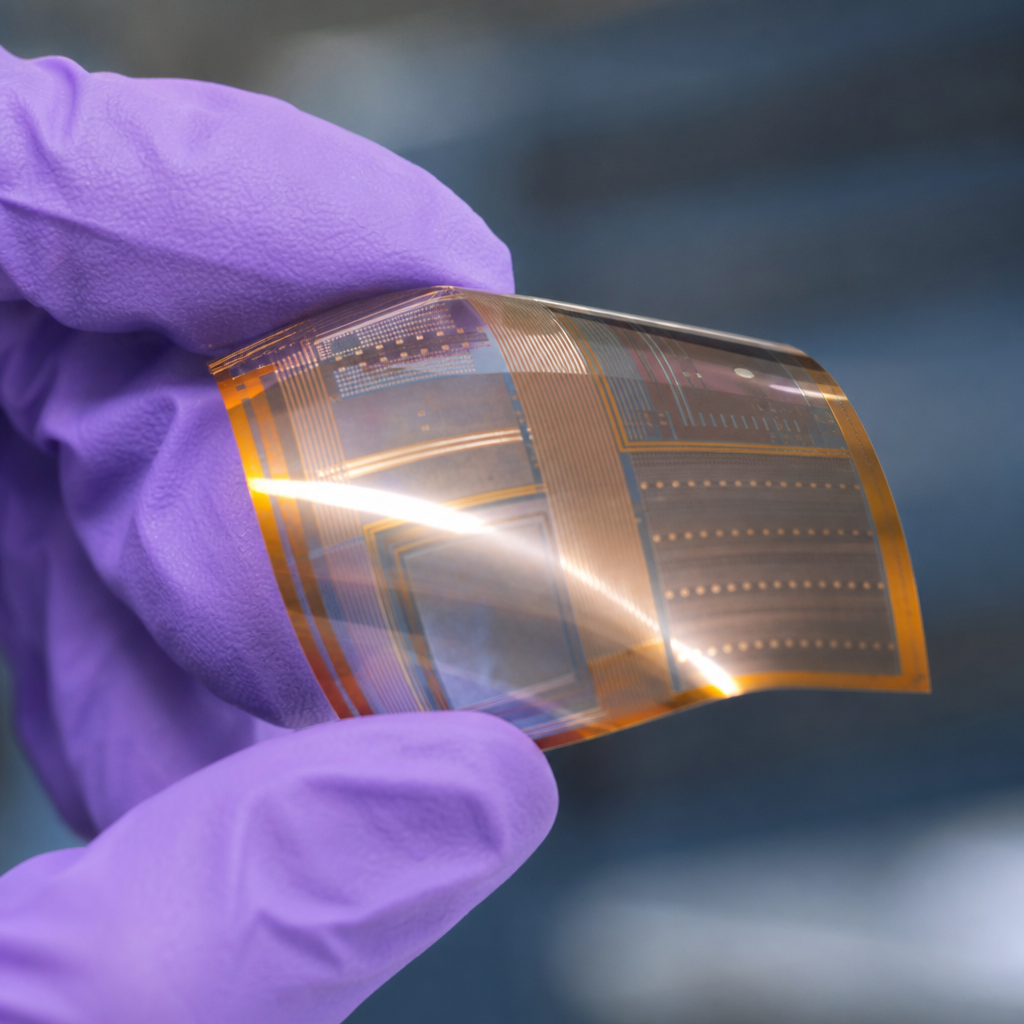
Flexible electronics moved from laboratory curiosity to commercial reality because polymers solved a materials problem that rigid silicon and brittle metal oxides could not. In practical terms, flexible electronics are circuits, sensors, displays, power devices, and interconnects built on bendable substrates that keep working while folded, stretched, rolled, or conformally mounted on skin, fabric, packaging, or curved equipment housings. Polymers advanced this field by serving not only as lightweight substrates, but also as semiconductors, dielectrics, encapsulants, adhesives, barrier layers, electrolytes, and printable inks. That breadth matters. When I have evaluated flexible device stacks, performance rarely depended on one heroic material; it depended on whether every polymer layer managed heat, moisture, mechanical strain, and process compatibility at the same time.
Understanding how polymers advanced flexible electronics technology requires defining several key terms. A substrate is the base film that supports the device, such as polyethylene terephthalate, polyethylene naphthalate, or polyimide. Conductive polymers, including PEDOT:PSS and polyaniline, transport charge while remaining processable from solution. Dielectric polymers electrically isolate layers and store charge in transistors and capacitors. Barrier polymers and hybrid coatings slow oxygen and water vapor ingress, which is critical because organic semiconductors, metal nanowires, and perovskites degrade rapidly in humid air. Printed electronics refers to additive manufacturing methods like inkjet, gravure, flexographic, aerosol jet, and screen printing that deposit functional materials at low temperature over large areas. Stretchable electronics go further than flexible designs by tolerating repeated elongation, often through elastomers like PDMS, TPU, and Ecoflex.
The topic matters because the commercial and industrial use cases are now substantial. OLED displays in foldable phones rely on polymer layers for substrates, planarization, encapsulation, and stress management. Wearable biosensors need soft polymer interfaces so electrical contact is stable on moving skin. Smart packaging, electronic shelf labels, RFID tags, membrane switches, flexible solar modules, and conformal medical patches all depend on polymer processing to keep costs down and form factors adaptable. As this hub for polymers in high-tech and electronics, the article maps the material classes, manufacturing methods, design tradeoffs, and application case studies that define the subtopic. It explains why some polymers became industry standards, where they still fall short, and how engineers choose among them when balancing conductivity, mobility, transparency, thermal budget, barrier performance, and long-term reliability.
Why polymers became foundational materials in flexible electronics
Polymers became foundational because they can be engineered across a wider design space than glass or conventional wafers. A useful flexible electronics material must bend without cracking, survive coating and patterning steps, and maintain electrical properties after repeated deformation. Polyimide emerged early because it combines high thermal stability, dimensional control, and chemical resistance, allowing processing temperatures above what PET usually tolerates. PET and PEN gained popularity when low-cost roll-to-roll manufacturing and optical clarity mattered more than extreme heat resistance. In development programs I have seen, substrate choice was often the first serious architecture decision, because it constrained every later step: annealing temperature, solvent selection, registration accuracy, lamination pressure, and even what encapsulation chemistry could be used safely.
Polymers also enabled additive manufacturing. Instead of subtractive etching on brittle wafers, engineers could print conductive traces, active layers, and dielectric patterns directly onto continuous webs. That reduced waste and unlocked high-throughput production similar to packaging and label converting. The lower processing temperature of many polymer systems made it possible to integrate electronics on paper, films, textiles, and thermally sensitive biomedical substrates. This shift expanded the market beyond premium devices. Simple examples include disposable glucose strips, NFC labels, flexible heaters, and curved automotive interior controls. More complex examples include organic thin-film transistors, electrophoretic displays, and flexible hybrid electronics, where silicon chips are mounted onto polymer circuits to combine rigid chip performance with conformal packaging.
Mechanical compliance was another breakthrough. Brittle inorganic conductors fail when strain concentrates at small radii, while polymers can redistribute stress, absorb impact, and protect interfaces. Engineers use neutral plane design, placing fragile active layers near the stack position experiencing minimal strain during bending, and polymer thickness control makes that feasible. Planarization polymers smooth rough electrode surfaces so thin semiconducting layers are not punctured by asperities. Adhesive polymers hold laminated stacks together while limiting delamination during thermal cycling. Encapsulation films prevent catastrophic ingress without adding much weight. In short, polymers did not just support flexible electronics; they created manufacturable, survivable systems.
Key polymer classes and what each one contributes
Different polymer families advanced flexible electronics in different ways, and choosing the wrong class usually creates a reliability problem later. Commodity substrates such as PET are inexpensive, transparent, and widely available, making them suitable for low-temperature printed circuits, sensors, and display films. PEN offers better dimensional stability and thermal resistance than PET, so it is often selected when registration accuracy and moderately higher curing temperatures are needed. Polyimide is the workhorse for demanding devices, including flexible printed circuits, OLED backplanes, and aerospace electronics, because it resists heat and maintains integrity under repeated bending. Colorless polyimide variants matter in optoelectronics where amber tint would reduce display quality or transmission.
Semiconducting polymers made truly soft active electronics possible. Poly(3-hexylthiophene), diketopyrrolopyrrole-based polymers, and donor-acceptor systems improved charge mobility enough for organic transistors, photodetectors, and solar cells. Conductive polymers such as PEDOT:PSS became ubiquitous as transparent electrodes, hole-transport layers, antistatic coatings, and biointerfaces. Their conductivity can be tuned through additives like DMSO or ethylene glycol, though that often affects water sensitivity and film morphology. Dielectric polymers, including PMMA, PVP, fluorinated polymers, and crosslinked systems, define transistor gate behavior by controlling leakage current, capacitance, and interfacial traps. Elastomers such as PDMS, TPU, and SBS support stretchable circuits, epidermal sensors, and soft robotics by tolerating large strains while maintaining comfort and contact.
Barrier and encapsulation polymers are just as important as active layers because device failure usually starts with environmental attack. Organic LEDs, organic photovoltaics, and many printed sensors are highly sensitive to oxygen and moisture. Multilayer polymer barrier films, often paired with inorganic layers from atomic layer deposition or sputtering, reduce water vapor transmission rates to levels suitable for longer operating life. UV-curable acrylates, epoxies, and silicone encapsulants are common in assembly because they cure quickly and can be dispensed selectively. The table below summarizes the most common polymer roles in this hub topic.
| Polymer or class | Primary role | Main advantage | Common limitation | Typical application |
|---|---|---|---|---|
| PET | Substrate film | Low cost, optical clarity | Limited heat resistance | Printed sensors, RFID labels |
| PEN | Substrate film | Better dimensional stability than PET | Higher cost | Display films, precision printed circuits |
| Polyimide | High-performance substrate | Excellent thermal endurance | Color, cost, moisture uptake tradeoffs | Flexible displays, aerospace circuits |
| PEDOT:PSS | Conductive polymer layer | Solution processable, transparent | Moisture sensitivity, moderate conductivity | Electrodes, hole-transport layers, biosensors |
| PDMS or TPU | Elastomer support | Stretchability and skin conformity | Gas permeability or solvent sensitivity | Wearables, soft sensors, medical patches |
Manufacturing methods that polymers unlocked at scale
Polymers changed not only device design but also factory economics. Flexible electronics became commercially plausible when polymer films could be processed in roll-to-roll lines using methods adapted from graphic arts, packaging, and coating industries. Gravure printing supports high speed and is suited to large volumes once cylinders are optimized. Screen printing handles thicker pastes, making it useful for conductive silver traces, carbon electrodes, and dielectric layers in membrane switches or biosensor strips. Inkjet printing excels at digital patterning and rapid prototyping because it eliminates masks, though viscosity windows and nozzle reliability impose constraints. Aerosol jet printing can produce finer features on uneven surfaces, which helps in flexible hybrid electronics and three-dimensional assemblies.
Coating and curing are equally important. Slot-die coating delivers uniform thin films for active layers and barrier stacks with minimal material waste. Lamination joins multilayer systems while protecting delicate printed features. Photonic sintering and intense pulsed light processing can consolidate metal nanoparticle inks rapidly without overheating polymer substrates, a major improvement over furnace sintering. Laser patterning, plasma treatment, and corona treatment improve wettability, adhesion, and resolution. In production audits, I have found that surface energy control is often the hidden variable behind line yield: a polymer film that is slightly contaminated or poorly treated will cause dewetting, pinholes, edge ragging, or weak bonding no matter how good the ink formulation looks on paper.
Standards and metrology keep these processes credible. Sheet resistance is commonly measured with four-point probe methods. Adhesion may be assessed using ASTM tape tests or peel testing, while bend fatigue is evaluated through cyclic radius tests and electrical monitoring. Water vapor transmission rate and oxygen transmission rate are central for encapsulation qualification. Differential scanning calorimetry, dynamic mechanical analysis, profilometry, AFM, and SEM help engineers connect polymer morphology to device behavior. Scalable manufacturing succeeded because polymers allowed this process-control framework to be applied on continuous webs, bringing flexible electronics closer to industrial discipline rather than one-off lab fabrication.
Case studies and applications across the electronics landscape
The clearest case study is the foldable display. These systems require an ultrathin cover layer, emissive stack, backplane, touch sensing, barrier film, adhesive, and support architecture that survive thousands of folds at small radii. Polyimide became central because it handles higher processing temperatures than PET and can be engineered into optically suitable films. Polymer planarization layers smooth transistor backplanes, while optically clear adhesives maintain lamination and suppress interfacial defects. Thin-film encapsulation often combines inorganic and polymer layers to block moisture while limiting crack propagation. The result is not perfect; crease visibility, particle contamination, and fatigue at the hinge region remain persistent engineering challenges. Even so, without polymers, commercially viable foldable OLED devices would not exist.
Wearable and medical electronics provide another strong example. Skin-mounted ECG patches, hydration sensors, and continuous temperature monitors need soft, breathable, low-modulus materials that conform to a moving body without creating pressure points. Elastomeric polymers and biocompatible adhesives enable that interface. PEDOT:PSS has been used in bioelectrodes because it offers mixed ionic and electronic conductivity, lowering interfacial impedance compared with some dry metal electrodes. Microfluidic layers in polymer patches route sweat or interstitial fluid toward sensing zones. In practice, the hard part is not merely sensitivity; it is keeping calibration stable under sweat, motion, cleaning products, and repeated wear. Polymer selection determines whether the device remains comfortable and accurate after days of use instead of just one bench test.
Energy devices also show how polymers advanced flexible electronics technology. Organic solar cells rely on semiconducting polymers and fullerene or non-fullerene acceptor systems processed from solution onto thin films. Flexible batteries and supercapacitors use polymer separators, gel electrolytes, binders, and encapsulants to maintain safety while tolerating deformation. Printed zinc-based batteries for smart labels and medical disposables frequently depend on polymer packaging and electrolyte containment. In automotive interiors and industrial equipment, flexible heaters, capacitive touch surfaces, printed antennas, and conformal lighting elements all use polymer substrates because they fit curved surfaces and reduce assembly weight. These applications demonstrate the hub theme clearly: polymers are not a niche material choice in electronics; they are the platform that broadens where electronics can go.
Limits, tradeoffs, and where the field is heading next
Polymers are transformative, but they are not universally superior. They generally conduct heat poorly, so thermal management becomes difficult in power-dense flexible systems. Many polymers absorb moisture, creep under constant stress, or expand more with temperature than inorganic layers, which can cause warping, interfacial stress, and drift. Transparent conductive polymers still lag indium tin oxide, silver nanowires, or metal mesh in absolute conductivity for some applications. Solution processing can introduce solvent compatibility problems between successive layers. Recycling is another concern because multilayer flexible electronics often combine polymers, metals, adhesives, and barrier coatings that are hard to separate economically.
The next phase of progress will come from better integration, not one miracle material. Researchers are improving semiconducting polymer mobility, stretchable conductor durability, and self-healing elastomers that recover after cuts or strain. Monomaterial design concepts may simplify recycling. Bio-based polymers and lower-solvent formulations are gaining attention as environmental regulations tighten. Hybrid stacks that pair polymers with ultrathin inorganic layers, carbon nanomaterials, or silicon chiplets will likely dominate commercially because they combine flexibility with proven electronic performance. For readers exploring case studies and applications, the central lesson is straightforward: polymers advanced flexible electronics by making devices manufacturable, conformal, and application-specific. If you are planning materials selection, process development, or market research in polymers in high-tech and electronics, use this hub as your starting point and build outward into substrates, conductive polymers, wearable sensors, printed energy devices, and flexible display architectures.
Frequently Asked Questions
1. Why were polymers so important in turning flexible electronics from a lab concept into real products?
Polymers were essential because they addressed the central limitation of traditional electronic materials: rigidity. Conventional silicon wafers and many metal oxide materials perform well electrically, but they are brittle and poorly suited to repeated bending, twisting, rolling, or stretching. Flexible electronics require materials that can maintain electrical performance while tolerating mechanical deformation, and polymers offered that combination in a way earlier materials could not.
What made polymers especially transformative is that they did not contribute in just one role. They became the substrate, the dielectric layer, the encapsulant, the adhesive, the conductor in some designs, and even the semiconductor in others. That multi-functionality gave engineers a complete materials platform for building electronics that were thin, light, mechanically compliant, and manufacturable at scale. Instead of forcing rigid electronic components onto bendable products, designers could build the electronics themselves around softness, flexibility, and conformability.
Polymers also enabled entirely new form factors. Devices could be mounted on curved industrial housings, embedded in smart packaging, laminated onto textiles, or placed directly on skin for health monitoring. In each of these cases, the electronics had to survive mechanical strain without cracking or losing signal integrity. Polymer materials helped absorb stress, distribute strain, and preserve the function of delicate active layers. That is one reason flexible electronics progressed from research demonstrations to practical wearables, foldable displays, electronic labels, smart sensors, and medical patches.
2. What specific roles do polymers play inside flexible electronic devices?
Polymers play multiple structural and functional roles, which is a major reason they accelerated the technology so quickly. One of the most visible roles is as the substrate, or base layer, on which the device is built. Materials such as polyimide, polyethylene terephthalate, and polyethylene naphthalate provide a lightweight, bendable foundation that replaces rigid glass or silicon. These polymer films are thin, durable, and compatible with continuous manufacturing methods, making them ideal for large-area and flexible devices.
Polymers also serve as dielectric materials that insulate one electrical layer from another while still allowing capacitive behavior where needed. In transistors, sensors, and energy devices, this insulation is critical for controlling current flow and maintaining stable performance. In addition, polymer encapsulation layers protect sensitive electronics from moisture, oxygen, abrasion, chemicals, and repeated mechanical handling. Without that protection, many flexible devices would degrade rapidly in real-world environments.
Another major role is in conductive and semiconductive formulations. Conductive polymers and polymer composites loaded with silver, carbon nanotubes, graphene, or other conductive fillers can create printable interconnects, electrodes, and sensing elements. Semiconducting polymers can function as active layers in organic transistors, solar cells, and light-emitting devices. Because many of these materials can be deposited from solution, they support printing and coating methods that lower manufacturing complexity compared with traditional chip fabrication.
Finally, polymers act as mechanical enablers. Adhesive polymers bond layers together while preserving flexibility. Elastomeric polymers allow stretchable electronics to deform with skin, muscle, or fabric. Stress-buffering polymer layers reduce crack formation and extend fatigue life under repeated bending. In practical device design, these supporting roles are just as important as the electrical ones because flexible electronics succeed only when mechanical reliability and electrical performance advance together.
3. How do polymers improve the durability and performance of electronics that bend, fold, or stretch?
Polymers improve durability by managing mechanical stress more effectively than brittle materials. When a device bends, the outer surface experiences tension and the inner surface experiences compression. Brittle inorganic materials tend to crack under these conditions, especially after repeated cycles. Polymers, by contrast, can deform elastically or plastically over a wider range, which allows them to absorb strain and reduce localized stress concentrations. This property is fundamental to making electronics that survive thousands or even millions of bending events.
In layered flexible devices, polymers can be engineered to place sensitive conductive traces or active semiconductor layers near the neutral mechanical plane, where bending strain is minimized. They can also act as compliant interlayers that decouple fragile components from larger substrate movements. This means the device does not merely bend because it is thin; it bends reliably because the polymer architecture actively protects the critical electrical features during deformation.
Performance benefits extend beyond mechanical resilience. Many polymers are highly transparent, which is valuable in flexible displays, touch sensors, and photovoltaic devices. Others offer low dielectric loss, smooth surface quality, chemical resistance, or thermal stability, all of which help preserve electrical function. Encapsulation polymers prevent oxygen and water from damaging sensitive organic and hybrid electronic layers, improving shelf life and operational lifetime. In wearables and biomedical devices, soft polymer systems also improve user comfort and skin compatibility, which directly affects product usability and adoption.
Stretchable electronics highlight this advantage even more clearly. Elastomer-based polymers can expand and recover repeatedly, especially when combined with serpentine conductors, microcracked films, or conductive composites. That allows circuits to maintain continuity while following body motion, soft robotics movement, or dynamic surfaces. In short, polymers do not just make electronics flexible in a basic sense; they make them robust, functional, and practical under the real mechanical demands of use.
4. Which applications of flexible electronics benefited the most from polymer materials?
Some of the biggest beneficiaries have been wearable health devices, flexible displays, smart packaging, electronic skin, and lightweight energy systems. Wearable sensors are a strong example because they need to conform to skin, remain comfortable over long periods, and continue functioning despite sweat, motion, and repeated handling. Polymer substrates and encapsulants made it possible to build ultra-thin biosensors, temperature monitors, heart-rate patches, and motion trackers that move naturally with the body rather than resisting it.
Flexible and foldable displays are another major application area. These systems require transparent, durable materials that can support thin-film transistors, conductive layers, and protective coatings while surviving repeated folding or rolling. Polymers became indispensable here because they replaced rigid glass in many layers and enabled lightweight display stacks with improved impact resistance and bend tolerance. Their role is not limited to the outer surface; polymer dielectrics, planarization layers, and barrier films all contribute to display reliability.
Smart packaging and large-area printed electronics also benefited tremendously. Because polymers are compatible with roll-to-roll processing and printing techniques, they support low-cost production of RFID tags, environmental sensors, anti-counterfeiting labels, and disposable diagnostic devices. These products often need to be inexpensive, thin, and scalable over large areas, which aligns well with polymer-based manufacturing. Traditional rigid microelectronics would be too costly or mechanically unsuitable for many of these use cases.
Energy devices such as flexible batteries, supercapacitors, and solar cells have also advanced through polymer integration. Polymers help create bendable separators, electrolytes, substrates, and encapsulation systems that maintain safety and performance in deformable formats. In medical technology, soft implantable or epidermal electronics depend heavily on polymers for biocompatibility and mechanical matching with tissue. Altogether, polymer materials did not just improve one niche category; they enabled a broad ecosystem of flexible products across consumer, industrial, healthcare, and energy markets.
5. What are the main challenges of using polymers in flexible electronics, and how is the industry overcoming them?
Despite their advantages, polymers come with tradeoffs that engineers must manage carefully. One of the biggest challenges is that many polymers do not match the electrical performance of traditional inorganic semiconductors. Organic semiconducting polymers can be highly useful in low-power and large-area applications, but they often have lower charge-carrier mobility, lower long-term stability, and greater sensitivity to environmental conditions than crystalline silicon. That means materials selection must be closely tied to application requirements.
Thermal limitations are another issue. Many polymer substrates cannot tolerate the high processing temperatures commonly used in conventional semiconductor manufacturing. This restricts deposition methods, annealing steps, and material combinations. To address this, researchers and manufacturers have developed low-temperature processing methods, solution-based deposition, photonic curing, transfer printing, and hybrid integration approaches that place high-performance materials onto polymer supports without damaging them.
Barrier performance is also critical. Moisture and oxygen can quickly degrade organic electronic layers, electrodes, and some energy storage materials. Since many polymers are somewhat permeable, advanced encapsulation is often necessary. The industry has responded with multilayer barrier films, inorganic-organic hybrid coatings, atomic layer deposition on polymer-compatible surfaces, and carefully engineered laminate structures that dramatically improve environmental protection while preserving flexibility.
There are also challenges related to fatigue, dimensional stability, and large-scale consistency. Repeated strain can eventually cause delamination, microcracking, or drift in electrical properties. Some polymers expand or contract with temperature and humidity changes, complicating precision manufacturing. To solve these problems, companies use strain-engineered layouts, composite materials, surface treatments, adhesion promoters, and reliability testing tailored to real use conditions. The broader trend is toward hybrid systems, where polymers provide flexibility and processability while metals, nanomaterials, and selected inorganic layers contribute conductivity, barrier function, or high-speed electronic performance. That hybrid strategy is helping the field preserve the strengths of polymers while overcoming their weaknesses, which is why flexible electronics continues to mature commercially.