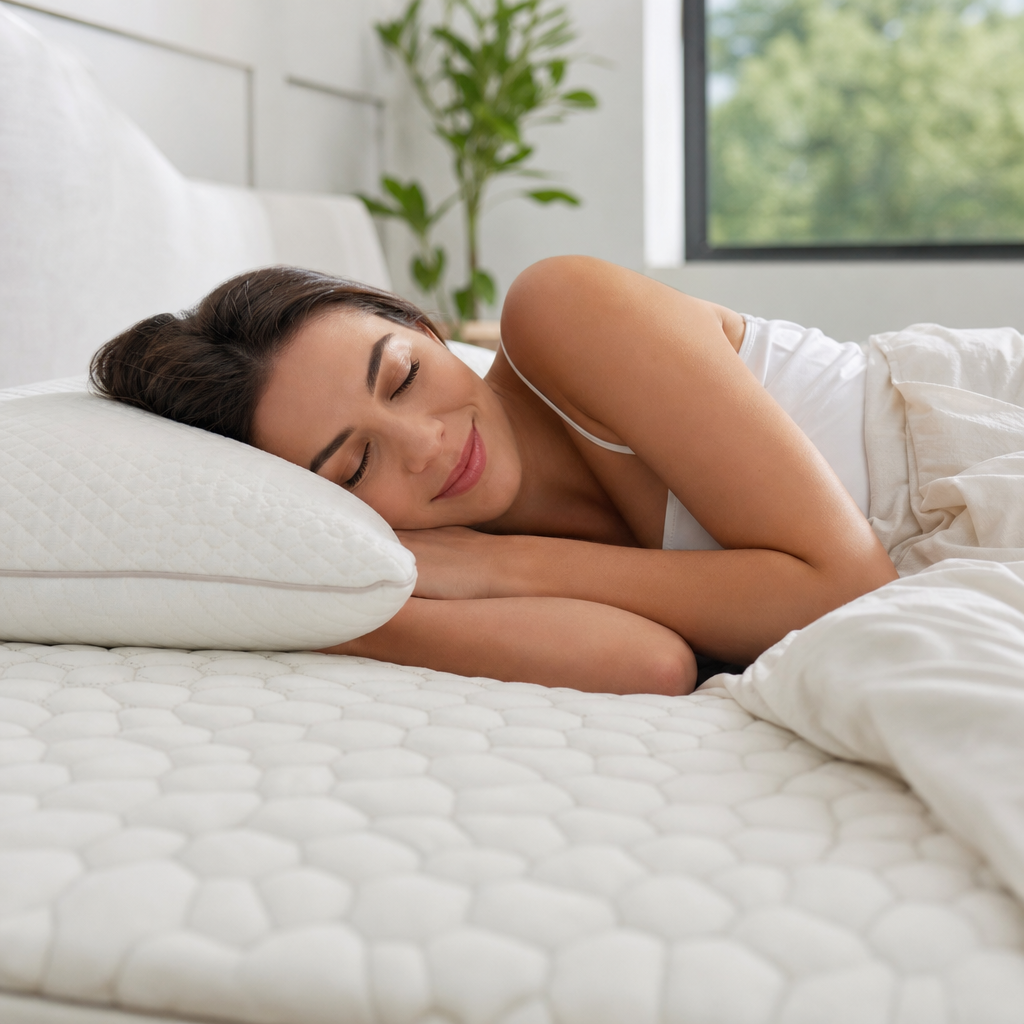
Polymers have quietly reshaped how mattresses and bedding feel, perform, and last, turning everyday sleep products into carefully engineered systems for pressure relief, temperature regulation, hygiene, and durability. In practical terms, a polymer is a large molecule made of repeating units, and in sleep products that includes polyurethane foams, polyester fibers, elastane blends, polyethylene films, polypropylene nonwovens, silicone finishes, and specialty phase-change coatings. I have worked with foam specifications, textile performance claims, and product testing protocols long enough to see the pattern clearly: comfort is not a vague marketing idea but the result of measurable material behavior. This matters because a mattress or bedding set has to do several jobs at once. It must cushion bony areas without collapsing under heavier body zones, manage heat and moisture over eight hours of contact, resist dust mites and microbial growth, survive repeated compression and laundering, and do so at a price consumers can actually afford. Polymer innovations in consumer goods are central to that balance, especially in sleep products where user expectations are high and product lifecycles are long. As a hub topic under case studies and applications, this article explains how polymers enhance mattress comfort, what materials dominate modern bedding, where the tradeoffs appear, and why future product development increasingly depends on smarter polymer design rather than simple increases in thickness or softness.
Why polymers dominate mattress and bedding design
Polymers dominate this category because they can be tuned with unusual precision. A steel spring has a limited range of behavior, but a polyurethane foam can be formulated for density, indentation force deflection, resilience, airflow, and recovery speed. Polyester fill can be engineered as hollow fiber for loft, microdenier for softness, or bonded batting for structure. Polyethylene and polyurethane films can be made breathable enough for mattress protectors while still blocking liquids. In development meetings, this tunability is the reason polymer selection usually comes before cover styling or quilting patterns. The comfort profile is set first at the material level.
The key performance measures are straightforward. Density helps predict support and longevity in foam, although it does not equal firmness. Indentation force deflection, often measured at 25 percent compression, indicates how hard or soft a foam feels under load. Resilience measures bounce, while hysteresis and recovery relate to energy absorption and how quickly a material springs back. For bedding textiles, fiber denier, crimp, moisture regain, and surface finish influence hand feel and thermal behavior. Understanding these terms matters because comfort complaints usually trace back to one of them. A mattress that feels plush in a showroom but develops body impressions often uses lower density foam. Sheets that feel smooth but trap heat may rely on dense synthetic weaves with limited moisture transport.
Consumer goods teams also favor polymers because they scale well in manufacturing. Slabstock foam lines, melt-spun fibers, needle-punched nonwovens, extrusion coating, and lamination can produce consistent material at industrial volumes. That consistency supports quality control and product segmentation, from entry-level mattresses to premium hybrid models. It also enables internal linking across the broader polymer innovations in consumer goods topic, because the same material science principles appear in footwear cushioning, upholstered furniture, performance apparel, medical textiles, and protective packaging.
How foam polymers create pressure relief and support
Mattress comfort starts with load distribution, and polymer foams are the main tools used to shape it. Conventional polyurethane foam remains the baseline comfort layer in many beds because it is versatile, relatively affordable, and easy to pair with springs or denser support cores. High-resilience polyurethane foams increase elasticity and support factor, helping the surface compress gently under shoulders and hips while resisting excessive sagging under the torso. In product evaluations, these foams often perform best when designers avoid the common mistake of chasing softness at the expense of support.
Viscoelastic polyurethane, widely called memory foam, adds another dimension by responding slowly to pressure and temperature. That slower recovery allows the foam to redistribute load across a larger contact area, reducing peak pressure points. This is why side sleepers often report less shoulder and hip discomfort on a well-designed memory foam mattress. The effect is real, not imaginary marketing. Pressure mapping systems used in sleep labs show lower localized pressure on appropriate viscoelastic constructions compared with firmer conventional surfaces. However, memory foam can also restrict movement and hold heat if airflow is poor or the formulation is too dense, so the best designs use open-cell chemistry, perforation, convoluting, or thinner comfort layers above a more responsive transition foam.
Latex foam, whether natural, synthetic, or blended, is another important polymer-based material in sleep comfort. Natural latex comes primarily from rubber tree sap and contains polyisoprene, while synthetic latex usually relies on styrene-butadiene rubber. In mattresses, latex is valued for high resilience, durability, and a buoyant feel that differs from the slow sink of memory foam. I often describe the difference simply: memory foam hugs, latex lifts. For many users, especially combination sleepers, that livelier response makes repositioning easier without sacrificing pressure relief.
| Polymer material | Main comfort benefit | Typical limitation | Common application |
|---|---|---|---|
| Conventional polyurethane foam | Balanced cushioning at moderate cost | Lower grades can soften prematurely | Comfort and transition layers |
| Viscoelastic polyurethane | Pressure redistribution and motion damping | Can retain heat and slow movement | Top comfort layers, toppers |
| Latex foam | Responsive support and long fatigue life | Higher cost and heavier weight | Premium comfort cores and hybrid layers |
| Polyester fiberfill | Soft loft and lightweight cushioning | Can mat down with repeated use | Pillows, comforters, quilt layers |
Hybrid mattresses show how polymer innovation works in practice. Pocketed coils provide structural support and airflow, while polymer foams above them determine pressure relief, surface feel, and motion isolation. The success of the product depends less on any single miracle material than on layer interaction. A high-quality hybrid typically combines a breathable cover, responsive surface foam, a transition layer tuned for spinal alignment, and a stable base. When consumers ask what makes one mattress comfortable and another disappointing, this layered polymer engineering is usually the answer.
How textile polymers improve softness, temperature control, and moisture management
Bedding comfort extends beyond the mattress itself. Sheets, protectors, comforters, and pillow shells rely heavily on polymer-based fibers and finishes to control softness and microclimate. Polyester is often misunderstood here. Cheap polyester can feel clammy, but well-engineered polyester microfiber can be exceptionally smooth, lightweight, and durable. Fiber cross-section, filament fineness, yarn structure, and finishing all matter. Brushed microfiber sheet sets, for example, use mechanical finishing to raise a soft surface, while filament polyester blends can create cool-touch fabrics with low friction.
Moisture management is one of the clearest examples of polymers enhancing bedding performance. Hydrophobic fibers such as polyester do not absorb much water into the fiber itself, but they can move liquid along engineered channels on the fabric surface. That is why athletic textiles and some modern bedding use modified polyester constructions to wick perspiration away from the skin. Polypropylene, another low-moisture-regain polymer, appears in some sleep accessories and nonwoven layers because it dries quickly and resists mildew. The limitation is that moisture transport is not the same as evaporation. For a sleeper to feel cooler, the bedding system must also allow airflow and release heat to the environment.
Phase-change materials provide another polymer-enabled route to temperature regulation. These technologies often encapsulate paraffin or similar substances within polymer shells and apply them to fibers, foams, or coatings. As the microcapsules absorb heat, the phase-change material melts and buffers temperature swings near the skin. In testing, the effect is usually most noticeable during the first part of sleep or during transient warming rather than as an all-night refrigeration system. That distinction matters. Good thermal design uses phase-change additives as one tool alongside breathable knit covers, open-cell foams, ventilated constructions, and moisture-managing fabrics.
Stretch fabrics also matter more than many shoppers realize. Mattress covers that include elastane or flexible polyurethane-based components can contour more effectively over foam layers, reducing the drum-tight surface effect that interferes with pressure relief. Similarly, knitted polyester blends often feel more adaptive than rigid woven ticking because they can deform with the sleeper rather than resisting body shape changes. In bedding, comfort comes not only from softness but from low mechanical resistance between body and material.
How polymers support hygiene, protection, and product lifespan
Comfort depends on cleanliness and stability as much as softness. A mattress protector that crinkles, traps heat, or leaks will undermine the entire sleep system, so barrier polymers have become an important innovation area. Polyurethane membranes are widely used in protectors because they can be made waterproof yet breathable, unlike older vinyl barriers that often felt stiff and noisy. A thin polyurethane film laminated to fabric can block liquids, dust mite allergens, and many stains while preserving stretch and a more natural hand. For families with children, allergy sufferers, and hospitality operators, this is one of the clearest examples of polymers improving real-world comfort through prevention rather than cushioning.
Antimicrobial and anti-odor technologies are more nuanced. Some bedding uses polymer binders to anchor silver-based additives or other antimicrobial agents to fibers and surfaces. These treatments can help control odor-causing microbes, but they are not a substitute for laundering and they do not make a product sterile. In my experience, the best hygiene claims are the simplest ones: washable covers, effective liquid barriers, fast-drying fabrics, and constructions that reduce dust accumulation. Those are easier to verify than broad marketing promises.
Durability is where polymer quality becomes especially important. Repeated compression causes foam fatigue, permanent set, and softening. Repeated washing can break down finishes, distort fiber loft, and weaken laminations. Better products manage these risks through material selection and testing. Common standards include ASTM and ISO methods for foam compression set, tensile strength, tear resistance, and fabric abrasion. CertiPUR-US is often referenced for flexible polyurethane foam content and emissions in North America, while OEKO-TEX labels are used across textiles to address harmful substance screening. These certifications do not guarantee comfort on their own, but they help buyers identify products built with more disciplined material controls.
Another overlooked factor is edge performance. Polymer reinforcement rails or higher-density perimeter foams are often added to mattresses so users can sit or sleep near the edge without excessive collapse. That improves usable surface area and reduces the insecurity many sleepers feel on soft all-foam constructions. Again, the comfort gain is practical and measurable.
What current case studies reveal about polymer innovations in consumer goods
The mattress and bedding sector offers a useful case study for polymer innovations in consumer goods because it shows how material science translates directly into user experience. Consider bed-in-a-box mattresses. Their success depends on polyurethane foams and hybrid constructions that can be compressed, rolled, shipped, and then recover shape after unpacking. That business model would be impossible with traditional innersprings alone. The consumer benefit is convenience, but the underlying driver is polymer resilience and recovery engineering.
Another case is cooling mattress design. Brands now combine graphite-infused foams, gel-modified viscoelastic layers, breathable polyester knit covers, and phase-change coatings to address heat complaints. Not every cooling claim is equally meaningful, but the broader trend is valid: manufacturers are using multiple polymer technologies to manage thermal comfort rather than relying on a single finish. In side-by-side evaluations, products that pair airflow pathways with moderate-conductivity additives generally perform more consistently than products that market one cooling ingredient in isolation.
Pillows and comforters show a similar evolution. Polyester fiberfill was once treated as a low-cost substitute for down. Today, engineered conjugate hollow fibers and siliconized polyester fills can mimic loft, recovery, and softness much more effectively. These materials trap air for insulation, resist clumping better than basic staple fill, and allow washable constructions that are easier to maintain than natural down in some households. The tradeoff is that premium natural materials can still outperform synthetics in certain moisture and luxury hand-feel metrics, so polymer solutions succeed best when they target practical performance rather than imitation alone.
Looking ahead, the strongest developments are likely to come from circular materials, lower-emission chemistries, and better end-of-life planning. Bio-based polyols are already used in some polyurethane foams, recycled polyester is common in covers and fill, and mono-material designs may simplify future recycling streams. For manufacturers and buyers alike, the lesson is clear: polymers enhance the comfort of mattresses and bedding most effectively when they are selected as part of a full system, tested against realistic use conditions, and matched to the sleeper’s actual needs. If you are building content around polymer innovations in consumer goods, use the mattress and bedding category as a reference point, then explore related applications in furniture, apparel, and home textiles to see how the same materials solve different comfort problems.
Frequently Asked Questions
1. What kinds of polymers are commonly used in mattresses and bedding, and what does each one do?
Polymers show up in nearly every layer of modern sleep products, and each type is selected for a specific job. Polyurethane foams are among the most important because they can be engineered to feel soft, supportive, resilient, contouring, or pressure relieving depending on their formulation. That is why they are widely used in comfort layers, transition layers, and support cores. Memory foam, for example, is a form of polyurethane foam designed to respond slowly and conform closely to the body, while other polyurethane foams are designed to be springier and more breathable.
Polyester is another major polymer used in bedding. It appears in fiberfill, quilting layers, mattress covers, sheets, blankets, and pillow stuffing because it is lightweight, durable, quick drying, and easy to blend with other fibers. In bedding fabrics, elastane is often added in small amounts to improve stretch and fit, especially in fitted sheets, mattress protectors, and knit covers that need to move with the mattress without bunching. Polypropylene is commonly used in nonwoven layers, such as hygienic barrier fabrics and certain internal structural components, because it is light, strong, and moisture resistant. Polyethylene often appears in protective films and waterproof barriers, especially in mattress protectors designed to block spills and allergens while remaining thin and flexible.
Silicone-based finishes and specialty polymer coatings also play a significant role. These can reduce friction, improve fabric hand feel, add water repellency, or help maintain softness after repeated washing. Some advanced bedding products use phase-change polymer coatings or microencapsulated materials that absorb and release heat to help smooth out temperature swings during sleep. Taken together, these polymers do far more than add convenience. They allow mattress and bedding manufacturers to fine-tune comfort, support, hygiene, stretch, durability, and thermal performance in ways that natural materials alone often cannot achieve consistently.
2. How do polymers improve mattress comfort and pressure relief?
Polymers improve comfort by giving manufacturers precise control over how a mattress responds to body weight, movement, and heat. In practical use, comfort comes down to how evenly a sleep surface distributes pressure, how well it supports spinal alignment, and how effectively it reduces stress at high-load areas such as the shoulders, hips, and lower back. Polymer foams, especially polyurethane-based foams, are valuable because they can be engineered with different densities, firmness levels, cell structures, and response rates. This means one layer can be designed to cradle the body gently, while another can prevent excessive sinking and maintain support underneath.
Memory foam is one of the clearest examples. Because it softens in response to body heat and pressure, it contours around curves and helps spread force over a broader surface area. That can reduce sharp pressure points and create a more cushioned feel, which many side sleepers especially appreciate. More resilient polymer foams, including high-resilience polyurethane foams and latex-like synthetic formulations, can provide a more buoyant comfort profile. These materials still offer pressure relief, but they also make it easier to move and change positions during the night, which is important for combination sleepers.
Polymers also contribute to comfort in bedding layers beyond the mattress core. Polyester fiberfill in quilted tops, pillows, and mattress pads can add loft and softness, while elastane in fabric covers helps the outer textile stretch smoothly over contouring foams without restricting their performance. This matters because a stiff cover can interfere with how well pressure-relieving layers work. In well-designed systems, polymer-based foams, fibers, and stretch fabrics work together so the mattress feels comfortable immediately on contact and continues to support the body properly over the full sleep period.
3. Can polymers really help with temperature regulation in mattresses and bedding?
Yes, but the answer depends on which polymer is used and how the product is engineered. Polymers are not all thermally identical, and temperature regulation in sleep products is usually the result of system design rather than a single miracle material. For example, some polymer foams can be made with more open-cell structures that allow better airflow through the mattress. This helps heat and moisture move away from the body more efficiently than in older, denser foam designs. Manufacturers may also shape foam with channels, perforations, or zoned cut patterns to increase ventilation.
Polymer-based phase-change materials are another important innovation. These materials are often incorporated into coatings, fibers, or surface finishes and are designed to absorb excess body heat when the sleeper feels too warm, then release that heat later as the temperature drops. They do not make a bed cold in the way an air conditioner does, but they can help moderate temperature fluctuations and create a more stable sleep environment. Moisture management is also part of the equation. Polyester fibers, while not absorbent like some natural fibers, can be engineered to wick moisture and dry quickly, which helps reduce that clammy feeling some sleepers dislike.
Protective barriers and knit covers made from polymers can also support temperature performance when they are thin, breathable, and flexible. A poorly designed waterproof layer can trap heat, but advanced polyethylene or polyurethane film technologies can create barriers that block liquids while still allowing water vapor transmission. That is a major improvement for mattress protectors and encasements. In other words, polymers absolutely can help with thermal comfort, but the best results come from combining breathable foams, moisture-managing fabrics, and heat-buffering technologies into a coordinated bedding system.
4. How do polymers make mattresses and bedding more durable and hygienic?
Durability is one of the biggest advantages polymers bring to sleep products. Mattresses and bedding are subjected to constant compression, friction, moisture, body oils, repeated washing, and everyday wear. Properly selected polymers can be engineered to resist these stresses far better than many untreated natural materials. High-quality polyurethane foams, for instance, can be formulated to maintain support and recover their shape after years of repeated loading. Polyester fibers retain loft reasonably well, resist wrinkling, and tolerate laundering better than many delicate alternatives. Elastane helps fitted products keep their shape and stay snug instead of loosening prematurely.
From a hygiene perspective, polymers are especially useful because they can form barriers, dry quickly, and resist conditions that encourage microbial growth. Polyethylene or polyurethane-based protective layers can block spills, sweat, and stains from penetrating into the mattress core, where moisture is difficult to remove. Polypropylene nonwovens are often used in inner components and protective constructions because they are lightweight and moisture resistant. Fast-drying polyester fabrics and fills can also reduce the length of time moisture remains trapped in bedding, which matters for freshness and maintenance.
In addition, many polymer-based fabrics and finishes are designed to support allergen management. Mattress encasements and protectors made with tightly engineered polymer textiles or films can help reduce exposure to dust mites, pet dander, and other common irritants by creating a physical barrier. Silicone and specialty surface finishes may also improve cleanability and reduce fiber-to-fiber friction, helping fabrics stay smoother and more serviceable over time. While no material makes a mattress permanently immune to wear or contamination, polymers significantly improve how well sleep products hold up and how easy they are to keep clean under normal use.
5. Are polymer-based mattresses and bedding safe, and what should shoppers look for?
In general, polymer-based sleep products can be very safe when they are made to current quality standards and sourced from reputable manufacturers. The key issue is not whether a product contains polymers, but how those polymers are formulated, processed, and tested. Modern mattresses and bedding use many polymer families that have long track records in consumer products, including polyurethane foams, polyester textiles, polypropylene nonwovens, and polyethylene barriers. What matters most is whether the finished product has been evaluated for harmful substances, emissions, and performance consistency.
Shoppers should look for transparent brands that provide material disclosures and third-party certifications where appropriate. Certifications related to low volatile organic compound emissions and restricted chemical content can be especially useful because they indicate the product has been screened against recognized standards. It is also worth paying attention to practical construction details. A high-quality polymer foam should not break down rapidly, develop deep body impressions prematurely, or give off strong persistent odors beyond the short airing-out period that some new products may have. Covers and protectors should feel durable, fit properly, and perform as advertised without excessive stiffness or heat buildup.
It is also helpful to remember that polymer-based does not mean low quality by default, and natural does not automatically mean superior. Polymers allow manufacturers to engineer performance with a high level of precision, which can improve pressure relief, cleanliness, stretch, washability, and lifespan. For consumers, the best approach is to evaluate the total product: materials, certifications, warranty, reputation of the manufacturer, and how well the design matches your sleep needs. When chosen carefully, polymer-enhanced mattresses and bedding can offer a safe, comfortable, and long-lasting sleep environment.