Electronic sensors have become the quiet infrastructure of modern life, measuring motion in cars, glucose in wearables, humidity in factories, pressure in medical catheters, and gases in smart buildings. At the center of many recent improvements is a class of materials often underestimated outside engineering circles: polymers. In high-tech electronics, polymers are long-chain molecules engineered to provide mechanical flexibility, chemical selectivity, dielectric control, optical response, and biocompatibility. When chosen and processed correctly, they do far more than package a device. They actively enhance sensitivity, stability, durability, manufacturability, and cost performance.
In my work reviewing sensor platforms for electronics teams, I have repeatedly seen polymer selection determine whether a prototype remains a lab curiosity or becomes a manufacturable product. A humidity sensor that drifts after thermal cycling, a wearable electrode that irritates skin, or a gas sensor that responds too slowly often traces back to the wrong polymer matrix, coating, substrate, or encapsulant. This is why polymers matter in electronic sensors: they bridge electrical function with the messy realities of temperature swings, moisture exposure, human contact, vibration, and miniaturized assembly.
This hub article explains how polymers enhance the performance of electronic sensors across major application classes, including flexible electronics, medical devices, automotive systems, industrial monitoring, and consumer products. It also defines the key polymer roles used in sensor design. These roles include substrate materials such as polyimide and PET, sensing layers such as conductive polymers and hydrogels, dielectric layers in capacitive devices, membranes used for selective transport, encapsulants that improve reliability, and adhesives that preserve signal integrity during packaging. Understanding these categories helps engineers compare technologies and choose the right path for a given sensing problem.
The topic matters because electronics are moving toward thinner, lighter, lower-power, more conformable systems that must still produce accurate measurements over long service lives. Traditional rigid materials like silicon, glass, and ceramics remain essential, but on their own they cannot satisfy every requirement in wearable, implantable, disposable, stretchable, or large-area sensor systems. Polymers fill that gap. They enable roll-to-roll fabrication, tunable surface chemistry, reduced weight, lower processing temperatures, and compatibility with textiles, skin, plastics, and curved structures. As sensor deployment expands through the Internet of Things, medical diagnostics, and advanced manufacturing, polymers are no longer peripheral materials. They are central performance enablers.
What polymers do inside electronic sensors
Polymers improve sensor performance by influencing how the device interacts with electrical signals and the external environment. In resistive, capacitive, optical, piezoelectric, electrochemical, and field-effect sensors, a polymer can be the active sensing medium or a supporting material that stabilizes measurement conditions. For example, conductive polymers such as PEDOT:PSS and polyaniline change conductivity when exposed to humidity, strain, or specific gases. In capacitive sensors, polymer dielectrics alter permittivity and thickness under pressure or moisture, creating measurable signal changes. In electrochemical biosensors, polymer membranes regulate ion transport, reduce fouling, and immobilize enzymes or antibodies.
Performance gains typically appear in five areas. First, polymers can increase sensitivity by swelling, adsorbing analytes, or changing dielectric properties in response to very small environmental shifts. Second, they improve selectivity when functional groups are tailored to interact with target molecules such as ammonia, ethanol, or glucose. Third, they boost mechanical resilience because many polymers survive flexing and repeated deformation better than brittle inorganic materials. Fourth, they simplify manufacturing through printing, coating, lamination, and low-temperature deposition. Fifth, they improve system reliability by acting as barriers against moisture, oxygen, particles, and mechanical shock.
These benefits are not automatic. Polymer chemistry, molecular weight, crosslink density, filler loading, glass transition temperature, water uptake, and coefficient of thermal expansion all affect final performance. A polyimide flexible substrate may survive high soldering temperatures, while PET may distort under the same process. A hydrogel may be excellent for ion transport but can dry out in low-humidity storage. A silicone elastomer may provide stretchability but allow more gas permeation than fluoropolymers. Effective sensor design depends on matching material behavior to the sensing mechanism and use environment.
Key polymer families used in high-tech and electronics sensors
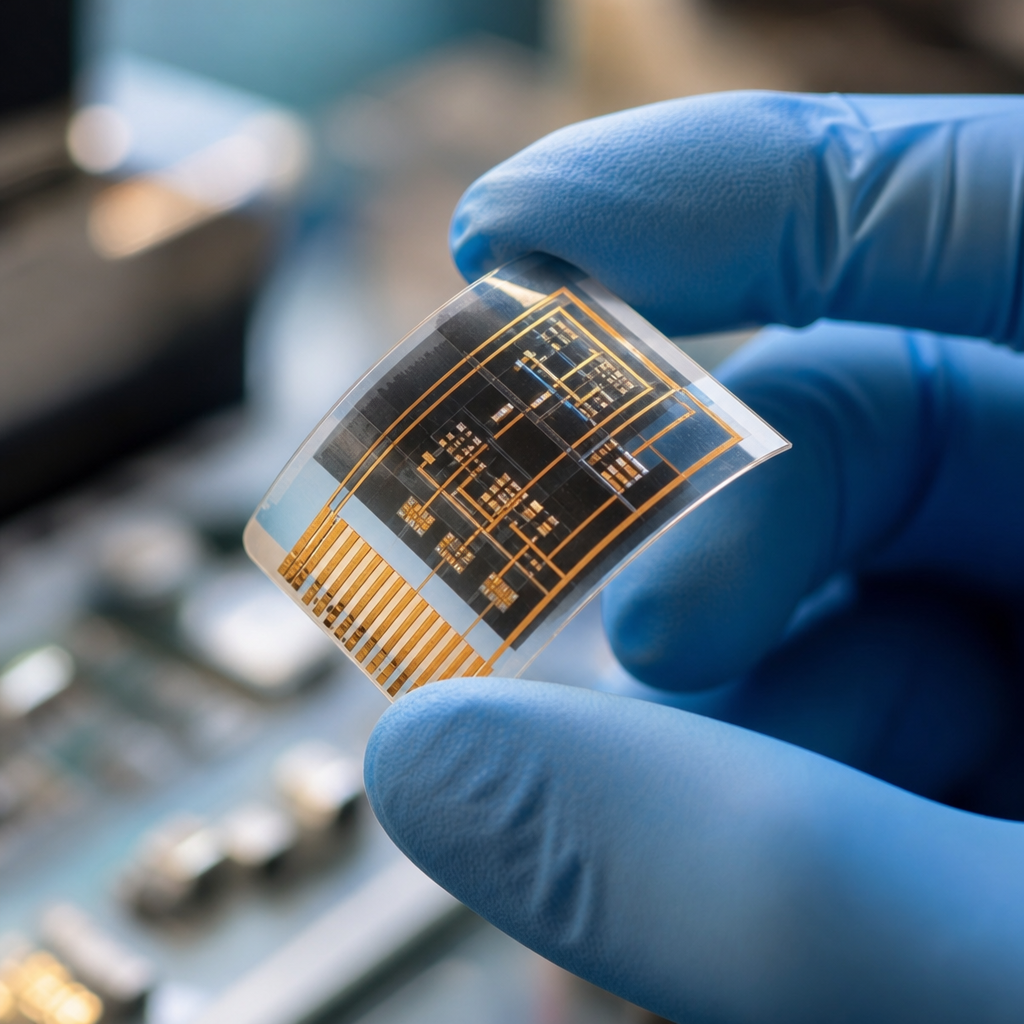
Several polymer families dominate modern sensor engineering because their properties are well characterized and compatible with electronic manufacturing. Polyimide is widely used as a flexible substrate in pressure sensors, temperature arrays, and MEMS-adjacent devices because it combines thermal stability, chemical resistance, and dimensional control. PET and PEN are common in lower-cost flexible sensor platforms and printed electronics due to optical clarity, good barrier behavior, and compatibility with roll-to-roll processing. PDMS is important in microfluidics and stretchable sensors because it is transparent, soft, and easy to mold, though it can absorb small hydrophobic molecules.
Conductive polymers serve a more active role. PEDOT:PSS appears in bioelectrodes, organic electrochemical transistors, and transparent sensor layers because it offers mixed ionic and electronic conduction. Polyaniline and polypyrrole are used in gas sensing and biosensing applications where redox activity matters. Hydrogels, often based on polyacrylamide, PEG, alginate, or hybrid networks, support ion transport and soft tissue interfacing in biomedical sensors. Fluoropolymers such as PVDF and its copolymers are especially valuable in piezoelectric sensing, vibration monitoring, and wearable pressure detection.
| Polymer | Typical sensor role | Main advantage | Common limitation |
|---|---|---|---|
| Polyimide | Flexible substrate, insulation layer | High thermal stability and mechanical durability | Higher cost than commodity films |
| PET/PEN | Printed sensor substrate | Low cost and scalable processing | Lower temperature tolerance |
| PDMS | Stretchable layer, microfluidic structure | Elasticity and easy molding | Gas and solvent permeability |
| PEDOT:PSS | Conductive sensing film, biointerface | Mixed ionic-electronic conductivity | Environmental stability can require additives |
| PVDF | Piezoelectric sensing film | Strong response to pressure and vibration | Poling and phase control are critical |
Material choice often reflects application constraints rather than one universal best option. In a disposable medical patch, low-cost printable polymers may outrank long-term thermal endurance. In under-hood automotive sensing, thermal cycling, oil exposure, and vibration push engineers toward more robust polymer systems. This hub article connects those decisions to practical outcomes across the wider field of polymers in high-tech and electronics.
How polymers raise sensitivity and selectivity
Sensitivity improves when a sensor material produces a larger measurable change for a given stimulus. Polymers can amplify that change through swelling, charge transport variation, dipole reorientation, or analyte binding. Humidity sensors illustrate this clearly. Hygroscopic polymers absorb water, changing dielectric constant or resistance. Polyimide-based capacitive humidity sensors are common because absorbed moisture alters permittivity in a predictable way, allowing stable measurements across wide relative humidity ranges. Many automotive HVAC modules and industrial transmitters rely on this principle because polymer films respond quickly and can be manufactured consistently.
Selectivity comes from chemical design. By introducing functional groups or blending polymers with nanoparticles, engineers can bias the sensor toward a target analyte. In gas sensing, polyaniline films respond strongly to ammonia because acid-base interactions affect doping state and conductivity. Molecularly imprinted polymers create shape- and chemistry-specific cavities for compounds such as pesticides, pharmaceuticals, or biomarkers. In biosensors, polymer brushes and membranes can reject interfering species while allowing the desired molecule to reach the electrode. Nafion, for example, is frequently used in electrochemical sensors to manage ion transport and reduce interference from negatively charged contaminants.
Nanocomposites extend these gains. Adding carbon nanotubes, graphene, metal oxides, or metallic nanoparticles to a polymer matrix creates percolation networks that change electrical behavior under strain, gas exposure, or temperature shifts. I have seen flexible strain sensors based on silicone and carbon black deliver useful signal response at bending radii that would crack thin metal traces. The polymer provides deformability; the conductive filler network converts that motion into a measurable resistance change. That combination explains why polymer composites are so widely studied for wearable sensing and structural health monitoring.
Reliability, packaging, and environmental protection
Sensor accuracy is meaningless if drift, delamination, corrosion, or contamination destroys the signal over time. Polymers are therefore essential to packaging and reliability engineering. Encapsulants, conformal coatings, underfills, and adhesive layers protect delicate sensor structures from moisture, salts, oils, vibration, and thermal stress. Epoxies, silicones, urethanes, parylenes, and fluoropolymer coatings are chosen based on permeability, adhesion, dielectric behavior, modulus, and chemical resistance. For miniaturized electronics, the wrong encapsulant can induce mechanical stress, shift calibration, or trap contaminants during cure.
Barrier performance is especially important in medical and consumer electronics. A wearable sweat sensor must resist salt ingress and repeated bending while maintaining skin-safe contact. A glucose monitoring patch may use layered polymer systems: one layer for adhesion, one for fluid management, one for electrode protection, and one for breathable comfort. In implantable systems, biostability and sterilization compatibility become critical. Parylene C is often used because it provides a pinhole-resistant conformal barrier and has a long history in medical electronics, though process control remains vital to avoid defects at edges and interfaces.
Reliability also depends on matching mechanical properties across the stack. A rigid die mounted on a highly flexible substrate can fail if interconnect strain is not managed. Polymers help by redistributing stress and accommodating thermal expansion mismatch. In field deployments, I have seen coating decisions make the difference between months and years of stable operation, particularly in sensors exposed to condensation, cleaning chemicals, or outdoor cycling. Good polymer packaging does not merely shield electronics; it preserves calibration and signal consistency.
Flexible, wearable, and biomedical sensor applications
Few areas show the value of polymers more clearly than flexible and wearable sensors. Human skin, clothing, and soft tissues are dynamic surfaces, so brittle materials alone are a poor fit. Polymer substrates and elastomers allow sensors to bend, twist, and stretch without losing electrical continuity. This is why fitness bands, smart patches, e-textiles, and soft rehabilitation devices depend heavily on polymers. Common examples include pressure-sensitive insoles, respiration monitors laminated into garments, and skin-mounted electrodes for ECG or EMG that replace rigid gel electrode assemblies with softer, longer-wear interfaces.
Biomedical sensing benefits from polymer biocompatibility and ionic transport. Hydrogels can match tissue softness, reducing irritation and improving signal coupling. Conductive polymer coatings on neural or cardiac electrodes lower impedance and improve charge transfer, which enhances recording quality and stimulation efficiency. In microfluidic diagnostics, PDMS has been used extensively for prototype chips because it supports rapid fabrication of channels, valves, and optical inspection windows. Commercial systems may shift to thermoplastics for scale, but polymer microfluidics remain foundational in point-of-care testing.
Real-world examples are now common. Continuous glucose monitors use polymer adhesives, membranes, and protective layers to control analyte diffusion and skin wear performance. Flexible pressure sensors built with PVDF or polymer composites are used in robotic grippers to detect contact force. Sweat sensors in sports and occupational health platforms use selective polymer layers to stabilize readings for sodium, lactate, or pH. The lesson across these case studies is consistent: polymer engineering determines comfort, signal fidelity, and manufacturability at the same time.
Industrial, automotive, and consumer electronics case studies
In industrial sensing, polymers often solve the durability-cost equation. Capacitive polymer humidity sensors are standard in building controls, compressed air systems, and process monitoring because they provide reliable response at practical cost. Printed polymer thick-film sensors appear in disposable test strips, membrane switches, and low-cost pressure mats. In structural monitoring, polymer composite strain sensors can be bonded onto curved surfaces where traditional gauges are harder to integrate. These designs are attractive when large-area coverage and conformability matter more than extreme precision.
Automotive systems provide a harsher proving ground. Under-hood sensors face heat, vibration, fuel vapor, oils, and road contaminants. Here, high-performance polymers support pressure sensing, occupancy detection, humidity control, battery monitoring, and cabin air quality measurement. Polyimide flexible circuits and robust encapsulants are widely used because they survive thermal cycling better than cheaper films. Polymer-based MEMS packaging also helps isolate sensitive elements from corrosive exposure while keeping response times acceptable. Electric vehicles add further demands, including thermal management and long-life monitoring in battery packs and power electronics assemblies.
Consumer electronics emphasize thinness, weight, and user experience. Polymer films enable touch sensors, foldable form factors, microphones, environmental sensors, and health features in watches and earbuds. The growth of printed electronics has made it easier to integrate sensor functions into labels, packaging, and disposable devices. Looking ahead, the hub topic of polymers in high-tech and electronics will keep expanding through hybrid material systems, better barrier films, bioresorbable polymers, and recyclable sensor platforms. For teams building the next generation of sensor products, the practical next step is clear: treat polymer selection as a core design decision from concept through qualification, not as an afterthought delegated to packaging.
Frequently Asked Questions
How do polymers improve the performance of electronic sensors?
Polymers enhance electronic sensors by giving engineers a highly tunable material platform that can be optimized for both sensing accuracy and device durability. Unlike rigid, brittle traditional materials, polymers can be engineered for flexibility, stretchability, softness, dielectric stability, chemical resistance, and selective interaction with specific target molecules. That means they do much more than simply hold a sensor together—they often directly influence how well the sensor detects pressure, strain, humidity, temperature, gases, or biological markers.
One of the biggest advantages is mechanical adaptability. In wearable devices, medical catheters, robotic skins, and flexible consumer electronics, sensors must bend and conform to curved surfaces without losing electrical performance. Polymer substrates and encapsulants make that possible. They reduce cracking, improve comfort, and allow sensors to maintain stable signal output even during repeated motion. This is especially important in applications where rigid components would create signal noise, user discomfort, or early device failure.
Polymers also improve sensing through chemical and electrical design. Certain polymers can absorb moisture, interact with gases, respond to pH changes, or bind with biomolecules, creating measurable changes in conductivity, capacitance, resistance, or optical behavior. In this way, polymers act as active sensing layers rather than passive packaging. Conductive polymers, ionically active polymers, and functional polymer composites can be tailored to respond very selectively to a target stimulus, helping improve sensitivity and reduce interference from unrelated environmental factors.
Another important benefit is manufacturing versatility. Polymers are often compatible with printing, coating, patterning, and low-temperature processing methods, which supports scalable production of compact, lightweight, and low-cost sensors. This makes them attractive not only for high-performance medical and industrial systems, but also for disposable diagnostics, smart packaging, and large-area environmental monitoring. In practical terms, polymers help sensors become more accurate, more durable, more comfortable, and more economical to produce.
Why are polymers especially important in flexible and wearable sensor technologies?
Polymers are foundational to flexible and wearable sensor design because the human body and real-world surfaces are dynamic, curved, and constantly in motion. Traditional sensor materials such as silicon and ceramics can deliver excellent electronic performance, but they are often too rigid for direct integration with skin, textiles, soft medical devices, or deformable surfaces. Polymers solve that mismatch by offering mechanical properties closer to those of soft biological tissues and flexible structures.
In wearable sensors, comfort and signal stability are closely related. A sensor that does not conform well to the skin may shift during movement, introduce motion artifacts, or lose contact altogether. Polymer-based substrates, adhesives, and encapsulation layers help sensors stay in place while remaining breathable, lightweight, and comfortable for long-term use. This is critical in applications such as heart-rate monitoring, sweat analysis, glucose tracking, rehabilitation devices, and motion detection, where the quality of the data depends on consistent contact and low mechanical stress.
Polymers also allow engineers to build stretchable interconnects and sensing layers that continue functioning under repeated bending, twisting, and stretching. Materials such as elastomers can be combined with conductive fillers, nanomaterials, or intrinsically conductive polymers to create sensor systems that remain electrically responsive during deformation. This makes them ideal for smart clothing, electronic skin, soft robotics, and next-generation prosthetics, where devices must withstand thousands of movement cycles without failure.
Just as important, polymer systems can be designed to protect sensitive electronics from sweat, humidity, friction, and environmental exposure while still allowing the desired analytes or stimuli to reach the sensing interface. That balance between protection and responsiveness is one of the reasons polymers are so valuable in wearable technology. They help translate laboratory-grade sensing concepts into practical, body-compatible devices that can operate reliably in everyday conditions.
What types of polymers are used in electronic sensors, and what roles do they play?
Electronic sensors use a wide range of polymers, and each category serves a distinct function depending on the sensing mechanism and device architecture. Some polymers are primarily structural, acting as flexible substrates, encapsulation layers, or adhesives. Others are electrically active and participate directly in signal generation or modulation. The choice depends on whether the sensor needs flexibility, dielectric control, ionic transport, optical responsiveness, chemical selectivity, or some combination of these properties.
For structural and packaging purposes, engineers often use polymers such as polyimide, polydimethylsiloxane (PDMS), polyethylene terephthalate (PET), and thermoplastic polyurethane (TPU). These materials are valued for flexibility, thermal stability, transparency, softness, and biocompatibility. They form the mechanical foundation of flexible pressure sensors, strain gauges, microfluidic biosensors, and wearable patches. In many cases, they also act as barrier materials that protect sensing elements from contamination or moisture while preserving device integrity.
Conductive polymers such as PEDOT:PSS, polyaniline, and polypyrrole are important when the polymer itself contributes to electrical signal behavior. These materials can respond to chemical or physical changes by altering conductivity or electrochemical characteristics, making them useful in biosensors, gas sensors, and electrochemical sensing platforms. Their conductivity can often be tuned through doping, blending, or processing conditions, which gives designers control over sensitivity and dynamic range.
There are also functional polymers designed for selective interaction with target substances. For example, humidity-sensitive polymers may absorb water and change capacitance, while gas-sensitive polymers may swell or undergo charge-transfer interactions when exposed to specific vapors. In biosensing, polymer matrices can immobilize enzymes, antibodies, or nucleic acids in a stable environment that preserves biological activity. This is especially valuable in medical diagnostics and environmental sensing, where selectivity is just as important as raw sensitivity. In short, polymers can serve as the flexible backbone, the active transducer, the selective interface, and the protective barrier all within the same sensor system.
How do polymers help improve sensitivity and selectivity in chemical and biosensors?
Polymers improve sensitivity and selectivity by creating a controlled interface between the sensor and the substance being measured. In chemical and biosensors, performance depends heavily on how effectively the sensing surface can capture, recognize, and transduce the presence of specific molecules. Polymers are extremely useful here because their chemistry can be customized at the molecular level. Engineers can introduce functional groups, pores, charges, hydrophilic or hydrophobic domains, and receptor-binding sites that favor interaction with a particular analyte while discouraging others.
Sensitivity improves when a polymer amplifies the sensor’s response to small chemical changes. For example, a polymer may absorb a gas, swell in the presence of humidity, transport ions, or alter its electrical conductivity when exposed to a target compound. Even subtle interactions can produce measurable changes in capacitance, impedance, resistance, or optical properties. Because polymers can be processed into thin films, nanostructured coatings, hydrogels, or porous membranes, they also offer large active surface areas, which increases contact with analytes and strengthens the resulting signal.
Selectivity is equally important, especially in complex environments such as human sweat, blood, industrial air streams, or polluted water. A sensor that reacts to everything is often less useful than one that reacts strongly to the right thing. Polymer chemistry helps solve this challenge. Molecularly imprinted polymers, for instance, can be fabricated with cavities shaped for a specific molecule, almost like synthetic recognition sites. Other polymer matrices are designed to immobilize enzymes or antibodies so that only a targeted biochemical reaction generates a signal. This targeted interaction helps reduce false positives and improves reliability.
In practical applications, these properties allow polymer-enabled sensors to perform well in glucose monitors, breath analyzers, pathogen detection devices, volatile organic compound sensors, and industrial process monitors. The real advantage is that polymers can be engineered to balance response speed, reversibility, stability, and specificity. That flexibility in design is one of the main reasons they continue to drive advances in next-generation sensing technologies.
What are the main challenges of using polymers in electronic sensors, and how are engineers addressing them?
Although polymers offer major advantages, they also introduce engineering challenges that must be carefully managed. One of the most common issues is long-term stability. Some polymers can absorb moisture, undergo swelling, age under ultraviolet exposure, or experience gradual changes in electrical and mechanical properties over time. In sensor applications, even small material shifts can affect calibration, baseline drift, repeatability, and overall accuracy. This is especially important in medical, automotive, and industrial environments where sensor reliability is non-negotiable.
Another challenge is balancing flexibility with electronic performance. A polymer that is soft and comfortable may not always provide the conductivity, barrier protection, or thermal tolerance required for demanding applications. Likewise, a highly responsive polymer sensing layer may be sensitive not only to the target analyte, but also to temperature fluctuations, mechanical strain, or environmental contaminants. This can complicate signal interpretation and require advanced compensation strategies in sensor design and software.
Manufacturing consistency is also a major consideration. Polymer properties can vary with processing conditions such as solvent choice, curing temperature, humidity, coating thickness, and mixing ratios. For large-scale production, even slight variations can lead to inconsistent sensor behavior. Engineers address this through tighter process control, standardized formulations, better surface treatment methods, and integration with established printing and microfabrication techniques. Material characterization and accelerated aging tests are