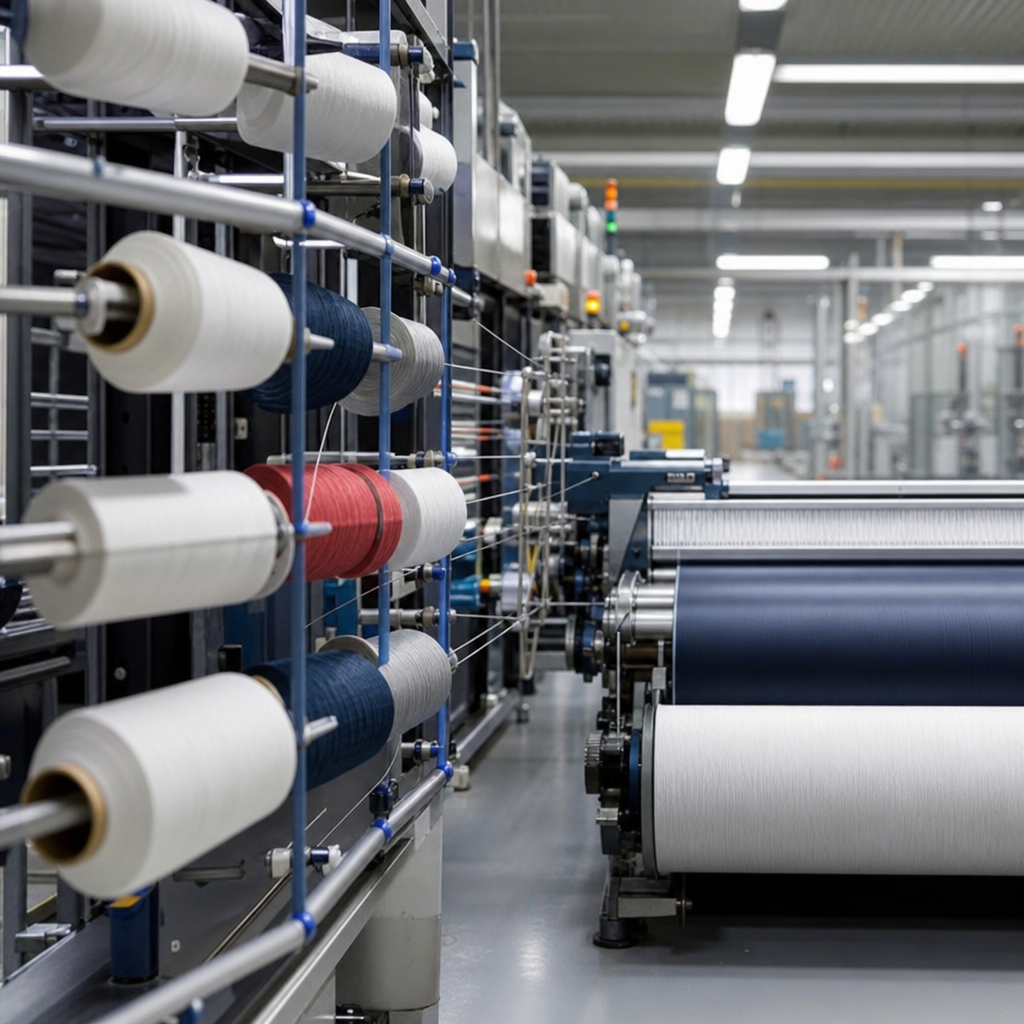
Polymers transformed textile manufacturing by solving durability, consistency, cost, and performance problems that natural fibers alone could not reliably overcome at industrial scale. In textiles, a polymer is a large molecule made of repeating units, and it can appear as a fiber-forming material itself, a coating, a finish, an adhesive, a dye-binding aid, or a process additive. When manufacturers discuss problem-solving with polymers, they usually mean using materials such as polyester, nylon, acrylic, elastane, polyurethane, polyethylene, polypropylene, and engineered resin systems to improve spinning, weaving, knitting, dyeing, finishing, and end-use behavior. That shift matters because textile production has always balanced conflicting demands: strength versus softness, water resistance versus breathability, low cost versus long service life, and speed versus quality control. I have seen mills struggle with yarn breakage, shade variation, shrinkage claims, seam failure, and moisture-management issues; polymer science addressed each one with targeted material design. Today, polymers sit at the center of apparel, home textiles, medical fabrics, automotive interiors, filtration media, geotextiles, and protective clothing. Understanding how polymers solved these manufacturing challenges helps buyers, engineers, and product teams choose materials that match performance needs, regulatory requirements, and sustainability goals. This hub article explains the major problems polymers addressed, the mechanisms behind those solutions, and the practical tradeoffs that still shape modern textile decision-making across categories, markets, and production systems.
From Fiber Limitations to Engineered Performance
Before synthetic polymers became widely available, textile manufacturers depended heavily on cotton, wool, silk, flax, and later regenerated cellulose fibers such as viscose rayon. Those materials remain important, but they create operational constraints. Cotton wrinkles, absorbs moisture readily, and can shrink. Wool offers warmth and resilience but can felt, pill, and require careful laundering. Silk delivers luster and hand feel yet lacks the abrasion resistance and price stability needed for many mass-market uses. Even rayon, while versatile, loses strength when wet unless specifically modified. Mills trying to scale production with only these fibers faced inconsistent bale-to-bale quality, variable staple length, microbial risk in storage, and sensitivity to humidity during spinning and weaving.
Synthetic polymers changed the equation because manufacturers could control molecular structure and therefore engineer repeatable properties. Polyester, built primarily from polyethylene terephthalate, offered high tensile strength, crease resistance, dimensional stability, and strong resistance to sunlight and many chemicals. Nylon introduced exceptional abrasion resistance and toughness, which made it ideal for hosiery, luggage fabrics, ropes, and technical textiles. Acrylic provided a wool-like aesthetic with lighter weight and easier care. Elastane solved the long-standing challenge of adding stretch and recovery without relying on uncomfortable rubber yarns. Once these polymer families matured, textile plants could tune denier, cross-section, crimp, luster, and filament count to meet defined specifications instead of accepting whatever nature delivered that season.
This control improved manufacturing yield. Continuous filament polyester reduced lint generation compared with staple systems, lowering contamination in weaving and knitting. Thermoplastic behavior enabled heat setting, so fabrics could be stabilized after processing and retain width, shape, and pleats. Polymer blends also solved single-fiber weaknesses. Polyester-cotton shirting, for example, combined cotton comfort with polyester wrinkle resistance and faster drying. Nylon-elastane knit structures brought durable stretch to sportswear. These were not cosmetic gains. They reduced claims, cut reprocessing, improved sewing efficiency, and supported global standardization for brands sourcing from multiple regions.
How Polymers Solved Core Manufacturing Challenges
The most important contribution of polymers was practical problem solving across the production line. In spinning, fiber strength and elongation reduced end breakage, especially at higher machine speeds. In weaving, smoother filament yarns passed through heddles and reeds with less friction, decreasing stops and loom downtime. In knitting, engineered yarn uniformity improved loop formation and minimized barre defects. In dyeing and finishing, polymer chemistry created pathways for disperse dyes, cationic modification, moisture-management finishes, stain resistance, and durable water repellency. In garment production, thermoplastic fibers improved pleat retention and seam stability when used correctly.
Dimensional control was a major breakthrough. Consumers had long accepted that garments would shrink, stretch out, or distort after laundering. Heat-set polyester and textured synthetic yarns sharply reduced those issues. Manufacturers could now meet tighter tolerances for width, skew, spirality, and growth. For home textiles, that meant curtains that held shape and upholstery that resisted abrasion. For industrial uses, it meant conveyor fabrics, airbags, and reinforcement textiles that performed predictably under load.
Another challenge was moisture behavior. Natural fibers absorb water, which can be beneficial for comfort, but excessive absorbency slows drying and can increase fabric weight, microbial growth, and energy use in finishing. Hydrophobic polymers such as polyester and polypropylene offered quick drying, lower water uptake, and good insulation retention when wet. Later, engineers modified surfaces and cross-sections to move sweat by capillary action rather than simple absorption. Athletic apparel benefited immediately, but so did workwear, military base layers, and medical textiles where faster drying and controlled fluid handling matter.
Cost stability was equally significant. Petrochemical feedstocks are not immune to price swings, yet synthetic polymer production delivered more uniform supply than many agricultural fibers affected by weather, pests, land use, and harvest cycles. That consistency supported long production runs, better forecasting, and fewer quality surprises. It also enabled the rise of nonwovens, where spunbond and meltblown polypropylene and polyester opened entirely new categories, from hygiene products to filtration and disposable protective garments.
| Manufacturing challenge | Polymer-based solution | Typical textile example | Operational benefit |
|---|---|---|---|
| Yarn breakage at high speed | High-tenacity polyester or nylon filaments | Warp yarns for shirting and technical fabrics | Fewer machine stops and higher loom efficiency |
| Shrinkage and distortion | Heat-set thermoplastic fibers | Pleated garments, knit activewear | Better dimensional stability after washing |
| Poor stretch recovery | Elastane core or covered yarns | Leggings, denim, compression garments | Improved fit retention and wearer mobility |
| Slow drying fabrics | Hydrophobic polyester or polypropylene | Sportswear, base layers, linings | Faster moisture release and lower fabric weight |
| Low abrasion resistance | Nylon 6 or nylon 6,6 reinforcement | Luggage, upholstery, military gear | Longer service life and fewer warranty claims |
| Weak barrier performance | Polyurethane coatings and laminates | Rainwear, medical gowns, tents | Waterproofing with controlled flexibility |
Case Studies Across Apparel, Home, and Technical Textiles
One of the clearest case studies is the replacement of heavy, slow-drying outdoor fabrics with nylon and polyester systems. Early rainwear often relied on tightly woven cotton, wax treatments, or rubberized fabrics. These materials could resist water briefly, but they were heavy, lost comfort quickly, and often cracked or stiffened in use. Polyamide and polyester shells, paired with polyurethane coatings or microporous membranes, solved that combination of problems. Manufacturers gained lighter weight, faster drying, improved tear resistance, and easier seam sealing. Consumers gained waterproof jackets that could be packed small and worn actively rather than only in emergencies.
Denim offers another useful example. Traditional all-cotton denim gives authentic aesthetics, but it can bag at knees and waist, and restrictive fit limits movement. Introducing small percentages of elastane, typically two to five percent depending on construction, solved mobility and recovery issues while keeping the visual identity of denim intact. Mills had to adjust processing because excessive heat can damage elastane and poor tension control can create grin-through or uneven extension. Once those controls were standardized, stretch denim became a dominant global category because it solved a real comfort problem without sacrificing familiar style.
In home textiles, polyester fundamentally changed care expectations. Curtains, bedding, and upholstery fabrics once demanded ironing, careful washing, or frequent replacement after sunlight exposure and abrasion. Polyester’s resistance to wrinkling and good light stability reduced maintenance and extended usable life. Texturizing methods such as false-twist and air-jet processing also improved hand feel, making synthetic fabrics less slick and more textile-like. The result was not merely cheaper furnishing fabric; it was a more reliable product for hotels, hospitals, and commercial interiors where laundering frequency and durability determine lifecycle cost.
Technical textiles show the broadest problem-solving range. In automotive manufacturing, polyester and nylon support seat fabrics, airbags, tire cord, headliners, and reinforcement structures because they combine strength with controlled elongation and process consistency. In medicine, polymer nonwovens enabled disposable gowns, drapes, wound dressings, and filtration layers with defined barrier and cleanliness properties. In civil engineering, polypropylene and polyester geotextiles solved soil stabilization, drainage, erosion control, and separation challenges at a scale impossible with traditional woven natural materials. In each case, the value came from targeted polymer properties matched to a measurable performance requirement.
Processing Innovations Enabled by Polymer Chemistry
Polymers did not only create new fibers; they improved how textiles are processed. Melt spinning allowed direct formation of continuous filaments from polymer chips, reducing dependence on complex natural fiber preparation. Draw texturing introduced bulk and elasticity to filament yarns, helping synthetic fabrics mimic the comfort and appearance of spun yarns. Bicomponent fiber engineering, where two polymers are combined in side-by-side or sheath-core formats, solved crimp generation, bonding, and thermal behavior problems. Self-crimping conjugate fibers, for instance, improved loft in insulation and bulk in nonwovens without requiring heavy mechanical finishing.
Surface chemistry also advanced. Plasma treatment, alkaline reduction, cationic dyeable polyester, and hydrophilic finishes helped overcome the classic criticism that synthetics feel clammy or resist coloration options. In practice, mills now use polymer-compatible finish systems to tune antistatic behavior, wickability, flame resistance, antimicrobial performance, and stain release. The key is that these effects are more durable when built into polymer structure or bonded compatibly, not just applied as short-lived topical treatments.
Lamination and coating technologies expanded textile performance further. Polyurethane, acrylic, silicone, and fluorine-free water-repellent systems can be applied to woven or knitted substrates to create barriers, grip, insulation, or aesthetic effects. These additions must be balanced carefully. A waterproof coating may reduce breathability. A soft hand finish may lower abrasion resistance. A membrane can improve hydrostatic head but complicate recycling. Experienced textile development teams test Martindale abrasion, pilling, moisture vapor transmission, hydrostatic pressure, tear strength, and wash durability before committing a polymer system to production.
Sustainability, Limits, and the Next Phase of Problem Solving
Any honest discussion of how polymers solved challenges in textile manufacturing must also address their limitations. Synthetic fibers are durable, but that durability creates end-of-life issues when products are not designed for recycling or reuse. Microfiber shedding from synthetic textiles is a legitimate environmental concern, especially during laundering. Fossil-based feedstocks raise carbon questions, and blended constructions can make material recovery difficult. These are not reasons to ignore polymers; they are design constraints that modern manufacturers must manage deliberately.
The industry response is increasingly technical rather than rhetorical. Recycled polyester from post-consumer bottles is common, though bottle-to-fiber systems do not fully solve textile circularity. More promising are textile-to-textile recycling efforts for polyester and nylon, including depolymerization routes that return polymers to monomers. Solution-dyed synthetics reduce water and energy use by embedding pigment before fiber formation. Dope-dyed polypropylene has long demonstrated this logic in carpets and nonwovens. Bio-based polyamides, mechanically recycled nylon, lower-shed yarn engineering, and mono-material garment strategies are all active development paths.
Performance standards are pushing improvement as well. Brands increasingly require testing under protocols from AATCC, ASTM, ISO, and OEKO-TEX related frameworks for colorfastness, chemical safety, comfort, and durability. That pressure is healthy because it forces polymer solutions to prove real benefit rather than rely on marketing language. In my experience, the best textile programs ask a simple question at every stage: what problem does this polymer solve, and what new constraint does it introduce? That approach leads to better products than chasing novelty for its own sake.
Polymers solved the biggest historical bottlenecks in textile manufacturing by making fibers and finishes more predictable, stronger, easier to process, and more adaptable to demanding uses. They reduced breakage, shrinkage, wrinkling, slow drying, abrasion failure, and barrier limitations. They enabled stretch apparel, washable home furnishings, disposable medical fabrics, engineered nonwovens, weatherproof outerwear, and durable industrial textiles. Just as important, they gave manufacturers a toolkit for precision: molecular design, thermal control, surface modification, and composite construction. The lesson for product developers and sourcing teams is clear. Choose polymers based on the exact problem to be solved, validate performance with recognized test methods, and account for durability, comfort, recyclability, and total lifecycle impact from the beginning. If you are building out your understanding of case studies and applications, use this hub as your starting point and map each textile challenge back to the specific polymer mechanism that solved it.
Frequently Asked Questions
1. How did polymers help solve major problems in textile manufacturing?
Polymers solved several of the biggest limitations that textile manufacturers faced when relying mainly on natural fibers. At industrial scale, mills need fibers and treatments that behave predictably through spinning, weaving, knitting, dyeing, finishing, cutting, and sewing. Natural fibers such as cotton, wool, and linen offer many valuable qualities, but their performance can vary due to crop conditions, fiber length differences, moisture sensitivity, and inconsistent availability. Polymers introduced a much higher level of control. Materials such as polyester and nylon could be engineered for consistent diameter, strength, elasticity, and surface behavior, which made production faster, more uniform, and less wasteful.
They also addressed durability problems. Polymer-based fibers and coatings improved abrasion resistance, wrinkle recovery, dimensional stability, and resistance to repeated washing. This was especially important for workwear, upholstery, sportswear, industrial fabrics, and high-volume apparel where products had to keep their shape and function over time. In addition, polymers helped solve cost and supply issues by reducing dependence on seasonally variable raw materials. Because many polymer systems can be manufactured under controlled conditions, they support more stable output and more predictable pricing.
Beyond forming the fiber itself, polymers also work as coatings, finishes, adhesives, dye-binding aids, and processing additives. That means they improve textiles not only at the yarn level, but throughout the entire manufacturing chain. They can make fabrics easier to dye, less likely to pill, more water-resistant, softer to the touch, or better able to bond in laminated structures. In practical terms, polymers helped transform textile manufacturing from a process with many natural-material uncertainties into one that could deliver reliable performance, repeatable quality, and scalable production.
2. What is a polymer in textile manufacturing, and how is it used beyond synthetic fibers?
In textile manufacturing, a polymer is a large molecule made up of repeating units, and its role extends far beyond simply being the raw material for synthetic fibers. Many people immediately think of polyester, nylon, acrylic, or elastane when they hear the word polymer, and those are indeed important examples of fiber-forming polymers. However, polymers are used throughout textile production in multiple functional ways. They can be applied as surface coatings to improve water resistance or stain resistance, used as finishes to change hand feel or wrinkle behavior, added as binders to help pigments adhere, or incorporated as adhesives in laminated and nonwoven textile structures.
This broader use is one reason polymers became so valuable to the industry. A woven or knitted fabric may still be based partly on natural fibers, yet polymers can be added to solve very specific manufacturing and performance problems. For example, a polymer finish may reduce shrinkage, improve crease recovery, or enhance dye uptake. A polymer coating can create barrier properties for rainwear, medical textiles, or protective gear. In printing and coloration, polymers can help pigments bind more effectively to fabric surfaces, which supports better colorfastness and more efficient processing. In nonwovens, polymer binders help hold fibers together without traditional spinning and weaving.
Manufacturers value polymers because they are highly tunable. Their chemistry can be adjusted to deliver flexibility, toughness, softness, adhesion, moisture management, thermal behavior, or chemical resistance depending on the end use. That flexibility makes polymers problem-solving tools rather than just substitute fibers. In modern textile production, they are fundamental not only to what the fabric is made from, but also to how the fabric performs, how efficiently it is manufactured, and how well it meets commercial and technical requirements.
3. Why were polymers more consistent and scalable than natural fibers alone?
One of the central advantages of polymers in textile manufacturing is consistency. Natural fibers are agricultural or animal-based materials, so they can vary significantly from batch to batch. Fiber length, fineness, strength, moisture content, and contamination levels may shift depending on weather, soil, harvesting methods, storage conditions, and biological differences. Those variations create challenges for mills that need stable machine settings and predictable outputs. Even small inconsistencies can affect spinning efficiency, yarn breakage rates, fabric appearance, dye uniformity, and final product quality.
Polymers changed that by allowing manufacturers to produce fiber-forming materials under tightly controlled industrial conditions. Synthetic fibers can be engineered with specific denier, tensile strength, elongation, crimp, luster, and cross-sectional shape. That level of precision gives textile producers much tighter control over downstream processing. Machines can be optimized around known material behavior, which reduces stoppages, lowers defects, and improves throughput. In a high-volume manufacturing environment, repeatability is a major economic advantage, and polymers helped deliver it.
Scalability is another key reason polymers became so important. Natural fibers depend on land use, climate patterns, harvest cycles, and complex supply chains. By contrast, polymer production can be expanded through industrial manufacturing systems designed for continuous output and standardized quality. This made it easier for textile producers to meet growing global demand for apparel, home textiles, automotive fabrics, filtration media, and technical textiles. Consistency and scale together helped solve a major historical bottleneck: how to produce large quantities of fabric with reliable properties at costs the market could support. Polymers did not eliminate the value of natural fibers, but they gave the industry a dependable way to meet modern production demands.
4. How did polymers improve textile performance, durability, and cost efficiency?
Polymers improved textile performance by enabling manufacturers to design fabrics for specific end-use demands instead of accepting the limitations of a fiber in its natural state. Polyester, for example, brought strong resistance to stretching, shrinking, and wrinkling, which made garments easier to care for and helped finished products maintain their shape. Nylon contributed excellent strength and abrasion resistance, making it especially useful in hosiery, outerwear, luggage fabrics, and industrial applications. Other polymer systems added elasticity, weather resistance, or chemical resistance depending on the product category. This ability to engineer performance directly into the material represented a major shift in textile manufacturing.
Durability was one of the most important gains. Fabrics made with or treated by polymers often perform better under repeated wear, laundering, friction, and environmental exposure. Polymer coatings and finishes can also add resistance to water, oils, UV exposure, and microbial growth. In many cases, this extends product life and reduces the frequency of replacement, which is valuable both commercially and functionally. For manufacturers and brands, longer-lasting products can improve customer satisfaction and reduce quality complaints tied to pilling, fading, distortion, or early fabric failure.
Cost efficiency came from several directions at once. First, polymers helped reduce waste by improving process consistency and lowering defect rates. Second, many polymer-based textiles could be produced quickly and in large volumes, which supported economies of scale. Third, blends of natural fibers with polymers often delivered a balance of comfort, durability, and affordability that was difficult to achieve with natural fibers alone. Finally, polymer additives and finishes made it possible to enhance lower-cost substrates rather than relying exclusively on premium raw materials. In short, polymers improved value across the full textile chain: manufacturing efficiency, product performance, service life, and cost competitiveness.
5. Are polymers used only to replace natural fibers, or do they also work with them?
Polymers are not used only as replacements for natural fibers; in many of the most successful textile applications, they work alongside them. This is one of the most important points to understand in textile manufacturing. The industry’s goal is usually not to choose between natural and polymer-based materials in absolute terms, but to combine materials in ways that solve practical production and performance challenges. Blending cotton with polyester, for example, can create fabrics that retain some of cotton’s softness and comfort while gaining better wrinkle resistance, improved dimensional stability, faster drying, and greater durability. Similar logic applies to wool blends, stretch fabrics, coated fabrics, and finished home textiles.
Polymers also support natural fibers indirectly through finishes and auxiliaries. A cotton fabric may remain primarily cotton, yet polymer-based resins, binders, softeners, or performance finishes can make it easier to process and more competitive in the marketplace. These treatments can improve crease resistance, reduce shrinkage, enhance print quality, or add water repellency. In bonded and laminated textiles, polymers allow natural-fiber fabrics to be combined with membranes, foam layers, or backing materials for added structure and functionality. This is common in upholstery, outerwear, footwear, automotive interiors, and technical textiles.
So while polymers certainly made it possible to create fully synthetic textiles, their bigger contribution was giving manufacturers a versatile toolkit. They can be the fiber, the finish, the coating, the adhesive, or the additive that helps a natural-fiber textile perform better and manufacture more reliably. That is why polymers are so central to the evolution of modern textiles: they did not simply replace older materials, they expanded what textiles could do and how efficiently they could be made.