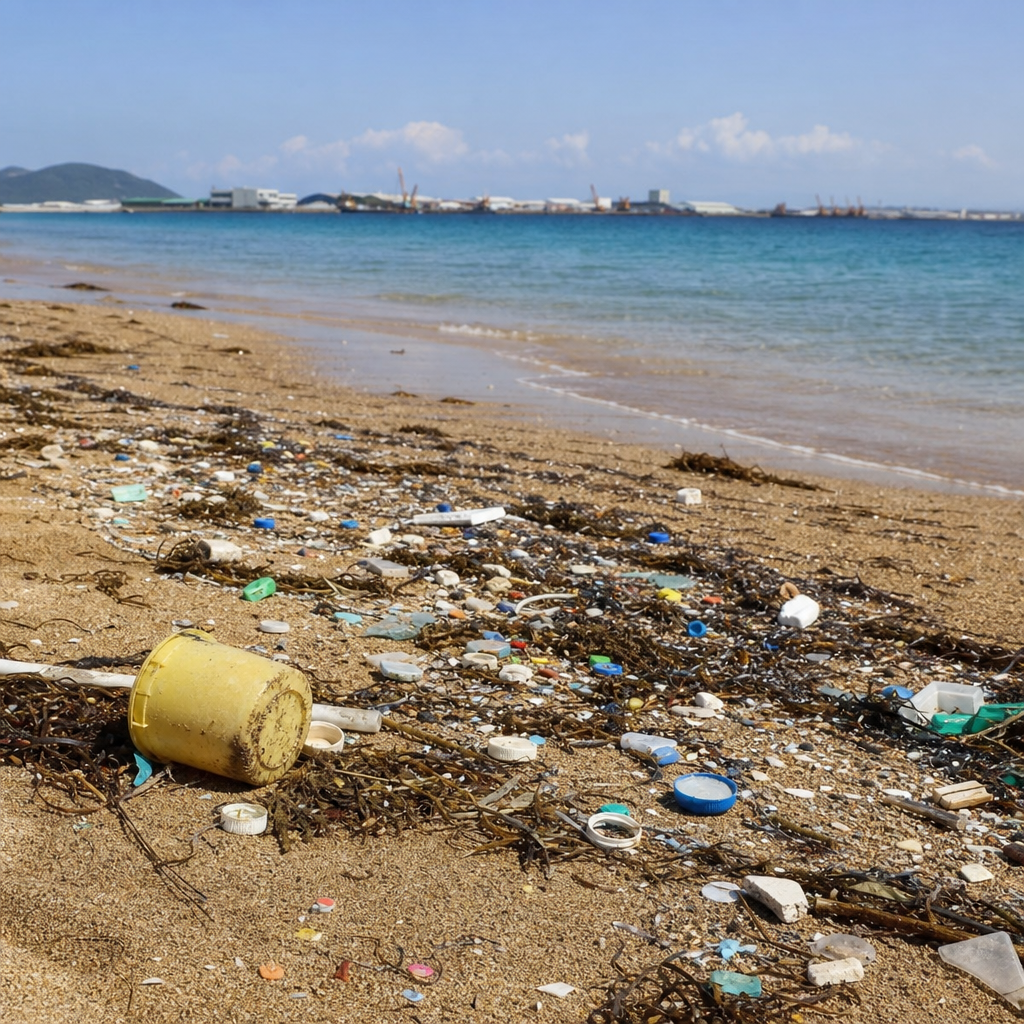
Marine pollution mitigation increasingly depends on polymer science because the same class of materials associated with persistent waste is also central to cleanup, containment, sensing, and circular recovery systems. In practical terms, polymers are large molecules made of repeating units, and they can be engineered as plastics, fibers, foams, membranes, gels, coatings, and composites with tightly controlled properties. Marine pollution includes floating macroplastics, microplastics, oil spills, heavy metals, nutrient runoff, sewage-borne contaminants, and emerging pollutants such as PFAS and pharmaceutical residues. When I have worked on materials selection for water-treatment and containment projects, the core question was never whether a polymer was good or bad in the abstract. The real question was which polymer architecture solved a defined environmental problem without creating a larger downstream burden.
That distinction matters because oceans and coastal systems place unusual demands on materials. Saltwater accelerates corrosion, ultraviolet radiation degrades exposed surfaces, wave energy abrades booms and nets, biofouling changes performance, and recovery logistics often fail if devices are too fragile or expensive. Polymers matter here because they are lightweight, chemically tunable, manufacturable at scale, and adaptable to both temporary emergency response and long-life infrastructure. Polypropylene sorbents can remove hydrocarbons from spill zones, polyamide and polyester fibers can reinforce durable barriers, polyurethane foams can capture oils, and functionalized biopolymers such as chitosan can bind dissolved metals. Membrane polymers including PVDF, PES, PTFE, and cellulose derivatives already underpin desalination, filtration, and wastewater polishing systems that reduce pollutant discharge before contaminants ever reach estuaries or the open sea.
This case study hub examines problem-solving with polymers across marine pollution mitigation, connecting field response, treatment technologies, product design, and end-of-life management. The goal is comprehensive coverage: how polymers are used, why certain chemistries succeed, where they fail, and how better design choices reduce secondary pollution. For readers building research programs, procurement plans, policy briefs, or educational content under case studies and applications, this page provides the framework. The strongest marine solutions use polymers not as disposable shortcuts, but as deliberately selected tools within monitored systems that prioritize efficiency, recoverability, durability, and life-cycle accountability.
Oil spill response: absorbent polymers, booms, and selective uptake
Oil spill response is one of the clearest examples of polymers solving a marine pollution problem with measurable performance criteria. The task is not simply to soak up liquid. Responders need materials that selectively capture hydrophobic hydrocarbons while rejecting water, remain buoyant in waves, resist tearing during retrieval, and support safe recovery or disposal. Polypropylene has dominated this space for decades because melt-blown polypropylene fibers combine oleophilicity, hydrophobicity, low density, and relatively low cost. Sorbent pads, rolls, and pillows made from these fibers can adsorb many times their own weight in oil depending on viscosity and weathering state. In field deployments, they are often paired with boom systems that physically contain slicks before sorbents are applied.
Performance depends heavily on structure, not only chemistry. A nonwoven polypropylene mat with high surface area will take up light fuel rapidly, while a denser composite may perform better during retrieval because it resists shedding. Polyurethane foams and crosslinked polymer sponges have also shown strong hydrocarbon selectivity, especially when surface-treated to enhance roughness and contact angle effects. Research groups have developed reusable absorbents coated with polydimethylsiloxane, graphene-based layers, or magnetic particles to support wringing, solvent recovery, or magnetic retrieval. In practice, the tradeoff is straightforward: the more sophisticated the sorbent, the more difficult it usually becomes to certify, manufacture, and deploy at emergency scale.
The lesson from real spill response is that material choice must match the response window. During the first hours, rugged polypropylene systems remain valuable because they are available, familiar, and logistically simple. During recovery and remediation, reusable engineered polymers may lower total waste generation if collection infrastructure exists. For sub-pillar articles on sorbent design, boom materials, and spill cleanup efficiency, this hub’s central point is clear: success comes from selective uptake, mechanical integrity, and planned post-use handling, not absorbency numbers alone.
Microplastic capture and filtration: membranes, nets, and treatment trains
Microplastic pollution demands a different polymer strategy because the target contaminant often is polymeric itself. Capturing particles below five millimeters, and especially below 100 microns, requires separation systems that operate continuously under realistic flows. In wastewater treatment upgrades, membrane polymers such as polyvinylidene fluoride, polysulfone, and polyethersulfone are widely used in microfiltration and ultrafiltration modules. These systems can intercept synthetic fibers, tire-wear particles, fragments, and associated organic matter before discharge. Membrane bioreactors have reported high solids removal efficiencies, but performance hinges on fouling control, pretreatment, and sludge management. If captured particles remain in biosolids that are later mismanaged, marine leakage can still occur.
At the source level, polymer innovation also helps intercept particles from washing machines, stormwater channels, and industrial outfalls. Polyester and nylon textile shedding can be reduced through fabric engineering, but end-of-pipe controls remain necessary. Laundry filters, cartridge housings, geotextile-based catch basins, and modular stormwater screens commonly rely on durable polymer components because metals corrode and ceramics are heavy. In harbor applications, floating interceptor devices often combine polyethylene or HDPE structural elements with mesh media designed to trap debris while allowing water passage. The challenge is balancing retention with maintenance burden: finer capture improves removal but increases clogging, head loss, and labor.
For decision-makers comparing options, the most useful question is where in the treatment train polymer capture creates the highest net benefit. Upstream interception usually reduces cost and prevents fragmentation, while downstream polishing improves total removal but can be energy intensive. Standards work is still evolving; sampling methods differ, and particle counts can vary with mesh size, digestion protocol, and spectroscopic confirmation. Even so, the direction is established. Effective marine microplastic mitigation uses polymers in membranes, housings, and capture structures to stop particles before they disperse into ecosystems where recovery becomes nearly impossible.
Polymer-based adsorbents for heavy metals, nutrients, and dissolved contaminants
Not all marine pollution is visible. Coastal waters receive dissolved metals from industrial discharge, ammonia and phosphate from agricultural runoff and sewage, dyes from manufacturing, and persistent organics from numerous urban sources. Polymer-based adsorbents have become important because they can be tailored with functional groups that bind specific contaminants. Chitosan, derived from chitin in crustacean shells, is one of the most cited examples. Its amine groups can chelate metal ions such as copper, lead, cadmium, and chromium, and modified chitosan beads, membranes, and hydrogels have been tested extensively in saline and brackish conditions. Alginate, cellulose derivatives, and synthetic ion-exchange resins provide similar opportunities with different selectivity profiles.
From experience, the key to evaluating these materials is to move beyond laboratory capacity values reported in milligrams per gram. Real marine and estuarine waters contain competing ions, variable pH, suspended solids, and natural organic matter that sharply alter adsorption behavior. A resin that performs well in deionized water can underperform in seawater because sodium, calcium, magnesium, and chloride interfere with target binding. That is why field-ready systems often use staged treatment: coagulation or settling first, then adsorption, then membrane or polishing steps. Synthetic polymers with sulfonic, carboxylic, phosphonic, or amine functionalities can be packed into columns or formed into beads for regeneration, but chemical recovery must be controlled to avoid creating concentrated secondary waste streams.
Biopolymer systems deserve special attention because they align with circular materials goals, yet they are not automatically superior. Chitosan is renewable and useful, but it can swell, weaken, or dissolve unless crosslinked properly. Crosslinkers, however, may reduce binding sites or introduce toxicity concerns. The practical lesson is nuanced: polymer adsorbents can solve dissolved pollution problems effectively when selectivity, regeneration, salinity tolerance, and disposal pathways are designed together rather than optimized one at a time.
Durable coastal infrastructure and floating systems that prevent pollution spread
Many marine pollution interventions fail not because the chemistry is wrong, but because the hardware cannot survive the coast. Polymers are essential in the structural side of mitigation: floating barriers, turbidity curtains, geotextile tubes, silt fences, aquaculture skirts, erosion-control mats, and modular litter traps. High-density polyethylene is widely used for floating frames and pipes because it offers corrosion resistance, weldability, and favorable buoyancy. Polyester and polyamide textiles add tensile strength in reinforced barriers, while PVC-coated fabrics can provide waterproofing and abrasion resistance. In dredging zones and construction near shorelines, polymer-based turbidity curtains reduce sediment plumes that would otherwise transport adsorbed metals and nutrients into sensitive habitats.
These applications illustrate an important principle for the broader problem-solving with polymers theme: prevention often beats remediation. A floating debris boom at a river mouth can intercept litter before it disperses across a bay. A geotextile dewatering tube can contain contaminated sediments during handling. A liner or coating in port infrastructure can prevent leachate release. Yet durability creates a second obligation. UV degradation, seam failure, mechanical fatigue, and biofouling can turn infrastructure into a pollution source if inspection and replacement are neglected. Material selection must therefore consider stabilizers, anti-fouling strategies, tensile ratings, weld quality, and expected service interval.
| Application | Common polymer system | Main benefit | Primary limitation |
|---|---|---|---|
| Oil sorbent pads | Polypropylene nonwoven | Selective hydrocarbon uptake and buoyancy | Waste generation after use |
| Microfiltration modules | PVDF or PES membranes | High particle removal in treatment plants | Fouling and energy demand |
| Metal-binding beads | Chitosan or ion-exchange resin | Targeted adsorption of dissolved contaminants | Regeneration complexity in saline water |
| Floating debris barriers | HDPE frames with polymer mesh | Prevents litter dispersion | Maintenance burden and storm damage risk |
In successful deployments, operators treat these systems like assets, not one-off installations. Inspection schedules, retrieval plans, spare inventory, and weather thresholds matter as much as polymer grade. For readers exploring case studies on coastal resilience, stormwater interception, or harbor cleanup, the broader takeaway is that polymers extend environmental control into places where metals corrode, concrete cracks, and response windows are short.
Designing polymers for lower secondary impact: biodegradability, recovery, and life-cycle control
The hardest question in marine pollution mitigation is whether using more polymers to solve pollution can deepen the plastics problem. The answer depends on design and governance. Not every biodegradable polymer is suitable for seawater, and many products marketed as compostable require industrial composting conditions that do not exist in marine environments. Polylactic acid, for example, may persist in cool seawater far longer than buyers expect. Polyhydroxyalkanoates have stronger marine biodegradation potential in some formulations, but cost, mechanical performance, and shelf stability remain constraints. Where retrieval is possible, durable and reusable polymers often outperform nominally biodegradable disposables because they avoid fragmentation and can enter managed recycling or energy recovery pathways.
Life-cycle thinking is nonnegotiable. A reusable oil sorbent that survives ten cycles may reduce material demand significantly, but only if de-oiling, transport, and redeployment are operationally realistic. A membrane with excellent removal performance may still carry a poor footprint if frequent chemical cleaning and replacement offset treatment gains. Recycled-content HDPE in barrier systems can lower virgin polymer demand, yet quality control is critical because contaminants and inconsistent molecular weight distributions affect welding and long-term strength. International guidance from organizations such as ISO and ASTM helps define test methods for degradation, tensile performance, and chemical resistance, but procurement teams must still translate standards into site-specific specifications.
This is where hub-level thinking adds value. Problem-solving with polymers is not a catalog of miracle materials. It is a disciplined process: define the pollutant, map exposure conditions, select a polymer system with known performance data, design for maintenance and retrieval, and plan end-of-life before deployment begins. If any of those steps are skipped, a technically elegant material can become an environmental liability. The best marine case studies show the opposite outcome: polymers chosen with restraint, validated against field conditions, and integrated into systems built for accountability.
What these case studies mean for future marine cleanup strategies
Across oil spill response, microplastic capture, dissolved contaminant removal, and coastal containment, one conclusion stands out: polymers are most effective when they are engineered as part of complete mitigation systems rather than treated as standalone products. Their value comes from tunable surface chemistry, low weight, corrosion resistance, and scalable manufacturing. Their risk comes from weathering, poor recovery, false biodegradability claims, and unmanaged disposal. The practical path forward is not to reject polymer solutions, but to raise the standard for how they are selected, tested, deployed, and recovered.
For researchers and practitioners working under the broader case studies and applications umbrella, this hub establishes the main themes for every supporting article in the subtopic. Ask direct questions. What pollutant is being targeted? Why is a given polymer the right material? What standards support the performance claim? How will the system be maintained in saltwater, under UV exposure, and during storms? What happens after saturation, fouling, or structural failure? Clear answers to those questions separate credible mitigation from greenwashed product marketing.
The main benefit of problem-solving with polymers is precision. The same material class can absorb oil, filter fibers, chelate metals, reinforce barriers, and enable reuse-oriented treatment systems when engineered correctly. Used carelessly, it can also add to the burden it was meant to reduce. If you are building content, research, or procurement plans around marine pollution mitigation, use this page as the hub: start with the pollutant, follow the polymer-performance evidence, and insist on life-cycle accountability before any solution goes into the water.
Frequently Asked Questions
How are polymers used in marine pollution mitigation, and why are they so important?
Polymers play a central role in marine pollution mitigation because they can be engineered to solve several very different environmental problems at once. In the marine context, they are used in absorbent materials for oil spill response, filtration membranes for water treatment, geotextiles and booms for containment, coatings that reduce biofouling and corrosion, sensor platforms for detecting contaminants, and advanced sorbents that capture dissolved pollutants or microplastics. Their importance comes from their versatility: polymer chemistry allows scientists and engineers to tune flexibility, porosity, hydrophobicity, durability, density, mechanical strength, and chemical resistance with a very high degree of precision. That means the same broad class of materials can be adapted to float on seawater, selectively absorb hydrocarbons, resist saltwater degradation, or function as part of a circular recovery system.
What makes polymers especially significant in this field is that they sit at the intersection of both the problem and the solution. Many marine pollution challenges are linked to polymer-based waste, particularly persistent plastics that fragment into microplastics. At the same time, polymer science provides tools to remove, contain, detect, and even redesign materials so they generate less harm in the first place. In a case-study setting, this often means comparing conventional materials with newer polymer systems that are more recoverable, recyclable, biodegradable in controlled conditions, or more efficient during cleanup operations. In other words, polymers matter not just because they are everywhere in marine industries and waste streams, but because they offer one of the most adaptable material platforms for practical mitigation strategies.
Can polymers really help address microplastics, or do they risk making the problem worse?
Yes, polymers can help address microplastics, but this is also where careful design and responsible use become essential. On the positive side, polymer-based membranes, fibers, and adsorbent materials are being used to capture microplastics from wastewater before they reach rivers and oceans. Researchers are also developing polymer-coated meshes, electrospun mats, hydrogel systems, and composite filtration media that can selectively trap tiny particles while maintaining water flow and operational efficiency. In addition, polymer sensors and analytical platforms can improve monitoring by detecting microplastic presence, particle size, chemical additives, and transport behavior in marine environments. These applications show that polymer science is not limited to passive materials; it also supports prevention, interception, and measurement.
However, the concern is valid. If a polymer-based cleanup material sheds fibers, degrades unpredictably, or is not recovered after use, it can contribute to the very contamination it was meant to reduce. That is why case studies in this area often focus on life-cycle performance rather than just laboratory efficiency. The key questions are whether the material remains stable in seawater, whether it can be collected and reused, whether it releases additives, and whether it can be safely recycled or disposed of after deployment. The most credible solutions are not simply “new polymers,” but polymer systems designed with end-of-life management, low shedding risk, and environmental compatibility in mind. So the short answer is yes, polymers can be part of the microplastics solution, but only when their full environmental pathway is built into the design from the beginning.
What types of polymer materials are most effective for oil spill cleanup and containment in marine environments?
For oil spill mitigation, some of the most effective polymer materials are those that combine hydrophobic behavior, oleophilic selectivity, buoyancy, and mechanical durability. Polypropylene sorbents have long been used because they repel water while absorbing oil efficiently, making them practical for booms, pads, and skimmers. Polyurethane foams and other porous polymer networks are also valuable because their structure can be tailored to increase surface area and oil uptake. More advanced systems include functionalized aerogels, polymer composites reinforced with carbon-based materials, and reusable sponges engineered to selectively absorb hydrocarbons while remaining light enough for deployment in open water. These materials are often evaluated based on sorption capacity, speed of uptake, recovery efficiency, reusability, and resistance to saltwater and wave action.
Containment is just as important as absorption, and polymers are deeply involved there as well. Floating booms, flexible barriers, and coated fabrics rely on polymer formulations that resist UV exposure, salt, abrasion, and repeated deployment. In real-world case studies, the best-performing materials are not necessarily those with the highest one-time oil uptake in a lab, but those that maintain performance under dynamic marine conditions and can be recovered with minimal secondary waste. Increasingly, researchers and industry teams are also looking beyond emergency response to circularity: can the absorbed oil be recovered, can the sorbent be reused multiple times, and can the cleanup material itself be recycled afterward? These questions are reshaping what “effective” means in oil spill mitigation, moving from simple capture toward whole-system environmental performance.
How do polymer-based membranes, gels, and coatings support long-term marine pollution prevention?
Polymer-based membranes, gels, and coatings are especially valuable because they support prevention as much as cleanup. Membranes are widely used in desalination, wastewater treatment, and industrial discharge control, where they can remove suspended solids, organic pollutants, oils, and in some cases very fine particulate matter before contaminants enter marine ecosystems. Their effectiveness depends on pore structure, surface chemistry, fouling resistance, and mechanical integrity, all of which can be adjusted through polymer design. In a mitigation case study, membranes may appear upstream of the ocean itself, but that is exactly the point: some of the most effective marine pollution strategies prevent contaminants from reaching seawater in the first place.
Gels and coatings extend that preventive role in different ways. Hydrogels and polymer gels can be designed to bind specific contaminants, act as controlled-release systems for remediation agents, or function in sensing platforms that indicate the presence of pollutants. Coatings, meanwhile, are critical for ships, offshore infrastructure, nets, and coastal equipment. Anti-corrosion coatings increase asset longevity and reduce material losses, while fouling-resistant coatings can lower fuel use and reduce maintenance-related waste. There is also growing interest in low-toxicity alternatives to legacy marine coatings that relied on harmful biocides. Together, membranes, gels, and coatings show how polymer science contributes not only to visible cleanup operations but also to the quieter, long-term infrastructure changes that reduce pollution loads over time. That preventive dimension is often what gives polymer-based mitigation its greatest environmental value.
What should a strong case study include when evaluating polymers for marine pollution mitigation?
A strong case study should go well beyond saying that a polymer material “worked” in a controlled test. It should explain the pollution problem being addressed, such as floating macroplastics, microplastics, oil spills, bilge contamination, shoreline runoff, or dissolved chemical pollutants, and then connect that problem to a specific polymer-based intervention. The study should identify the material type, whether it is a membrane, foam, fiber, coating, composite, gel, or containment structure, and describe why it was chosen based on relevant properties like selectivity, buoyancy, strength, porosity, stability, or reusability. Just as importantly, it should compare baseline conditions with results after deployment, using clear performance metrics such as contaminant removal efficiency, capacity, operational lifespan, recovery rate, maintenance needs, and cost per unit of pollution mitigated.
The strongest case studies also address environmental trade-offs honestly. That means examining the sourcing of the polymer, energy use in production, durability in seawater, risk of fragmentation or additive release, ease of retrieval, and end-of-life options such as recycling, regeneration, or safe disposal. Real-world marine mitigation is rarely a matter of single-variable optimization; a material that performs well in one category may underperform in logistics, scale-up, or environmental safety. Including these factors makes the case study more credible and more useful for decision-makers. Ideally, the study should also discuss deployment conditions, such as salinity, wave energy, temperature, contaminant concentration, and biological fouling, because marine environments are highly variable. When all of those pieces are included, the case study becomes a practical evaluation of whether a polymer system delivers meaningful pollution reduction without creating new problems in the process.