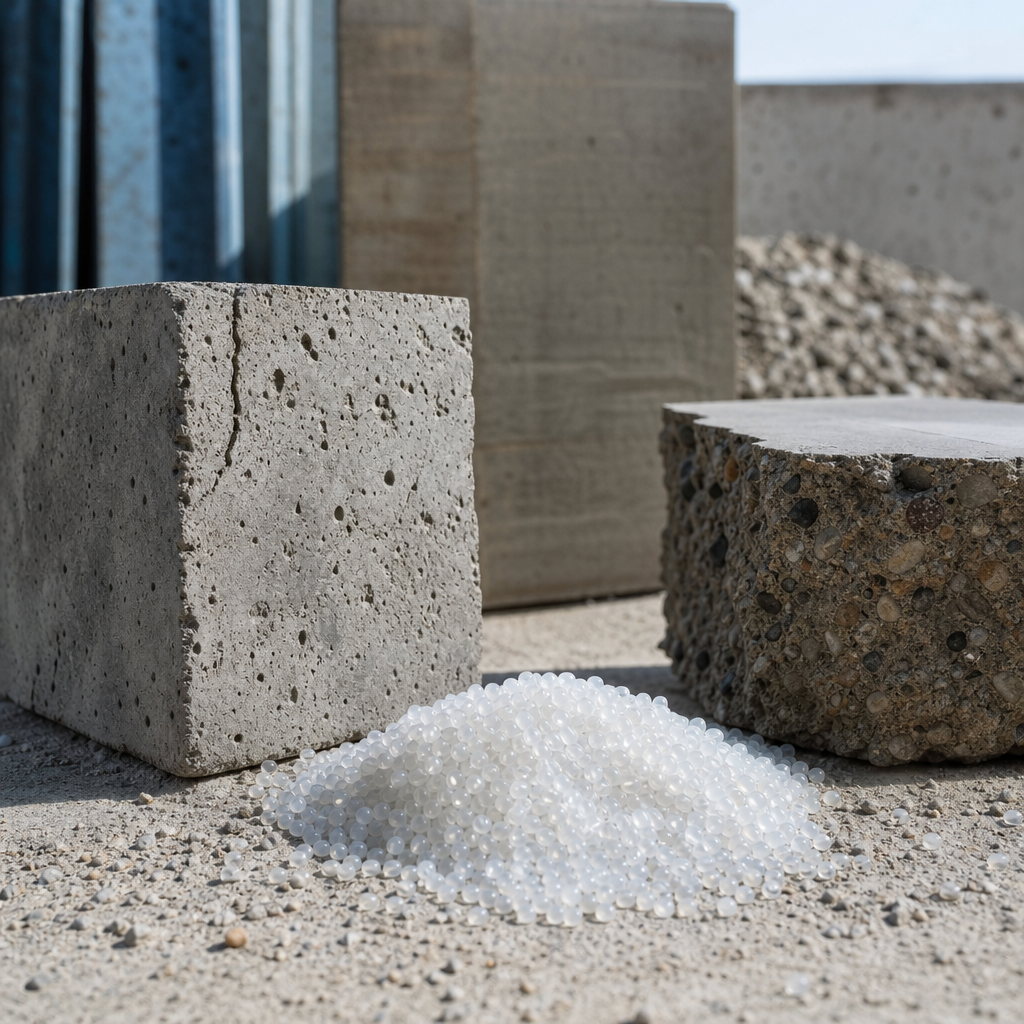
Polymers transformed construction materials by solving recurring performance problems that traditional mixes, metals, and timber could not address consistently under modern service conditions. In construction, a polymer is a large-chain molecule used as a binder, modifier, coating, fiber, sealant, membrane, or composite matrix to improve strength, adhesion, flexibility, durability, chemical resistance, and moisture control. I have worked on specification reviews where a small polymer dosage in mortar, concrete, or waterproofing changed whether a repair lasted two winters or twenty years. That practical reality explains why polymers matter: they reduce cracking, limit water ingress, protect embedded steel, speed installation, and extend maintenance cycles. From acrylic-modified renders to epoxy anchors and polyurea coatings, polymers now sit inside many high-performing systems rather than being niche additives. As a hub topic, problem-solving with polymers connects repair engineering, flooring, facades, roofing, infrastructure, and off-site manufacturing. Understanding how polymers enhanced the performance of construction materials starts with the failures they were meant to fix. Concrete is strong in compression but weak in tension and vulnerable to shrinkage cracking. Cement mortars can debond from smooth or dense substrates. Steel corrodes when chlorides and moisture reach it. Timber swells, decays, or burns. Bitumen ages. Joints open under thermal movement. Polymers address these issues by altering microstructure and macroscopic behavior at the same time. They form films, bridge pores, improve particle packing, absorb movement, and create barriers against water, chemicals, and oxygen. The result is not one universal material but a family of targeted solutions that engineers and contractors match to the service environment, design life, and application method.
Why polymers became essential problem-solvers
The rise of polymers in construction was driven by clear jobsite failures and tighter performance expectations. Postwar infrastructure expansion exposed the limits of plain cement systems in aggressive climates, especially where freeze-thaw cycling, deicing salts, industrial chemicals, or marine exposure accelerated deterioration. At the same time, buildings became lighter, more airtight, and more complex, increasing movement at interfaces and raising demands on sealants, adhesives, and membranes. In my experience, the first question on many remedial projects is not whether a polymer will be used, but which polymer chemistry fits the failure mode. A car park deck with chloride contamination needs a different solution than a bathroom substrate, a bridge bearing plinth, or a facade panel joint.
Polymers became essential because they can be tuned. Acrylics provide ultraviolet stability and good water resistance in coatings and renders. Styrene-butadiene rubber, often called SBR, improves adhesion, abrasion resistance, and flexibility in repair mortars and screeds. Epoxies deliver high bond strength, chemical resistance, and low shrinkage, making them standard for structural bonding, anchoring, and industrial flooring. Polyurethanes offer elastomeric movement accommodation and can cure quickly, which is valuable in sealants and traffic coatings. Polyvinyl acetate and redispersible polymer powders improve workability and bonding in tile adhesives and dry-mix mortars. High-density polyethylene and PVC introduced durable pipe and membrane options that resist many forms of corrosion better than metal.
What changed performance most was the shift from thinking of polymers as substitutes to treating them as modifiers and system enablers. Concrete did not disappear; polymer modification made it denser, tougher, and more reliable in repair and finishing layers. Steel did not disappear; polymer coatings delayed corrosion and polymer grouts improved baseplate support. Masonry did not disappear; polymer-enhanced mortars and sealants helped manage moisture and movement. This systems view is the foundation of effective problem-solving with polymers across construction materials.
How polymers improve cement-based materials
Cement-based materials benefited earlier and more visibly from polymers than almost any other category. Polymer-modified mortar works because the cement hydrates while the polymer forms a co-matrix within the hardened paste. That co-matrix improves tensile capacity, adhesion to substrates, impermeability, and resistance to cracking from drying shrinkage or thermal movement. On patch repairs, this matters more than headline compressive strength. A very strong but brittle repair can fail at the bond line; a polymer-modified repair mortar with balanced modulus and adhesion often survives better in service.
One common example is SBR latex in floor screeds and repair mortars. Added to the gauging liquid, it reduces permeability and increases bond to concrete, useful on balconies, loading bays, and wet areas. Acrylic polymers are often preferred in decorative or exterior renders because they retain color and weather well under sunlight. Redispersible powders based on vinyl acetate-ethylene are now standard in dry-mix tile adhesives, self-leveling compounds, and external insulation basecoats because they simplify batching while delivering flexible bond performance. Standards such as EN 12004 for tile adhesives and EN 1504 for concrete repair help classify these systems by measurable performance rather than marketing claims.
Polymer-modified concrete and polymer concrete are related but different. In polymer-modified concrete, cement remains the primary binder and the polymer enhances properties. In polymer concrete, the polymer resin itself acts as the main binder, often with aggregates and fillers, creating very rapid strength gain and excellent chemical resistance at higher material cost. I have seen polymer concrete chosen for drainage channels in industrial plants where acids would quickly degrade ordinary cementitious products. The specification made sense because downtime cost far more than the premium material.
The practical lesson is straightforward: polymers enhance cement-based materials when the design problem involves adhesion, permeability, abrasion, or movement tolerance. They are less magical when poor substrate preparation, uncontrolled moisture, or incompatible curing conditions are ignored. Most failures I have investigated traced back to application errors rather than chemistry limits.
Barrier protection, bonding, and repair systems
Many of the most valuable polymer applications are invisible after handover because they sit inside repair and protection systems. Coatings based on epoxy, acrylic, polyurethane, and polyurea protect concrete and steel from water, chlorides, carbonation, fuels, and chemicals. Adhesives based on epoxy or methacrylate bond steel plates, composite laminates, tiles, and precast elements. Injection resins based on polyurethane or epoxy stop active leaks or fill cracks. Surface sealers based on silane and siloxane, while not always discussed alongside bulk polymers, provide hydrophobic protection that dramatically reduces water uptake in concrete and masonry.
For infrastructure owners, the logic is economic. Corrosion of reinforcing steel begins when carbonation lowers concrete alkalinity or chlorides breach the passive layer around the steel. Once corrosion products expand, cracking and spalling follow. Polymer-rich protective coatings and membranes slow the transport mechanisms that start this cycle. On bridge deck waterproofing, for example, a well-bonded membrane under asphalt can prevent water and salt ingress for years, protecting the deck below and reducing lifecycle cost.
Bonding and anchoring systems show another performance leap. Epoxy anchors distribute load efficiently and achieve high pull-out resistance when installed correctly in sound substrate, which is why they are widely used for post-installed rebar and heavy fixings. However, they are sensitive to hole cleaning, temperature, and creep under sustained load, so approvals and design methods matter. Guidance from bodies such as the European Organisation for Technical Assessment and test methods from ASTM or EN frameworks help engineers qualify products for structural use.
| Construction problem | Polymer solution | Performance gain | Typical application |
|---|---|---|---|
| Repair mortar debonding | SBR or acrylic modification | Higher adhesion and lower permeability | Balcony edges, patch repairs |
| Rebar corrosion from chlorides | Epoxy coating or waterproof membrane | Barrier to moisture and salts | Bridge decks, car parks |
| Joint movement causing leaks | Polyurethane sealant | Elastic movement accommodation | Facade and pavement joints |
| Chemical attack on floors | Epoxy or polyurethane flooring | Chemical and abrasion resistance | Factories, warehouses, labs |
| Rapid leak sealing | Hydrophilic or hydrophobic PU injection | Fast crack sealing in wet conditions | Basements, tunnels |
These systems work best when selected by failure mechanism rather than product category. If the main risk is ultraviolet exposure, choose chemistry with known weathering resistance. If movement is high, avoid brittle systems. If the substrate is damp, verify moisture tolerance. Polymer-enhanced construction materials deliver durable results only when the polymer is matched to the actual cause of failure.
Polymers in composites, insulation, and off-site construction
Another major advance came from polymer-based composites and insulation products that changed what buildings and infrastructure could weigh, span, and conserve. Fiber-reinforced polymer composites, commonly called FRP, combine fibers such as glass, carbon, or aramid with a polymer matrix, usually epoxy, polyester, or vinyl ester. The fibers provide directional strength; the matrix transfers load and protects the fibers. In strengthening projects, carbon FRP laminates bonded to concrete beams can increase flexural capacity with minimal added dead load. I have specified such systems where access was limited and steel plate bonding would have been slower, heavier, and more corrosion-prone.
FRP also appears in bridge decks, gratings, rebars, cladding panels, and cooling tower components because it resists corrosion in environments that rapidly attack steel. The tradeoff is anisotropy, temperature sensitivity, and different fire behavior, so detailing and code compliance require care. Long-term creep, resin glass transition temperature, and bond performance all matter. Still, for marine works, wastewater plants, and chemically aggressive settings, polymer composites often solve problems that conventional materials struggle with.
Insulation is another field where polymers changed performance expectations. Expanded polystyrene, extruded polystyrene, polyurethane, and polyisocyanurate boards deliver high thermal resistance with low weight, supporting energy-efficiency targets and condensation control. Closed-cell polymer foams can also improve moisture resistance compared with fibrous products in specific applications. Sandwich panels with metal skins and foam cores accelerated industrial construction by combining enclosure, insulation, and finish in one factory-made unit. Window frames made from unplasticized PVC improved durability and reduced maintenance compared with poorly protected timber in many climates.
Off-site construction relies heavily on polymers because factory conditions suit adhesives, sealants, membranes, laminates, and composite panels. Structural insulated panels, prefabricated bathroom pods, modular facades, and lightweight roofing systems all depend on polymer-enabled interfaces. Faster assembly is not the only benefit; consistent quality control often improves because polymer-based components are applied under controlled temperature and humidity rather than improvised on an exposed site.
Limits, tradeoffs, and how to specify polymers well
Polymers enhanced the performance of construction materials, but they do not remove engineering tradeoffs. Some polymers soften at elevated temperature, degrade under ultraviolet light, burn or produce smoke, or lose bond on poorly prepared substrates. Solvent-based products can raise health and environmental concerns. Even water-based formulations need correct curing windows. Cost can also be higher than traditional materials, especially for high-performance epoxies, polyureas, and carbon composites. The right question is not whether polymers are better in the abstract, but whether they improve whole-life performance for a specific duty.
Good specification starts with exposure class, loading, movement, moisture condition, application constraints, and required design life. Then verify compatibility between substrate and polymer system, including coefficient of thermal expansion, vapor permeability, and modulus. For concrete repair, I usually review pull-off strength requirements, crack-bridging needs, chloride exposure, and expected maintenance access before selecting a product family. For flooring, chemical maps and cleaning regimes are essential because a resin that resists water may fail under organic acids or hot oils.
Quality assurance is decisive. Surface preparation, dew point checks, mixing ratios, induction times, pot life, wet film thickness, curing temperature, and adhesion testing should be treated as critical controls, not paperwork. Manufacturers such as Sika, BASF Master Builders Solutions, Mapei, Fosroc, GCP, and Saint-Gobain Weber publish detailed technical data, but the datasheet is only the start. Mock-ups, field trials, and installer competence often determine whether polymer-enhanced construction materials achieve their designed performance.
The strongest case studies share a pattern. A defined problem is identified, a polymer technology is chosen for that mechanism, detailing supports the material behavior, and installation is controlled. That is why this hub topic matters. Problem-solving with polymers is not a catalog of products; it is a method for making construction materials last longer, perform better, and fail less often in the real world. To use this hub well, explore each subtopic through the lens of the problem being solved: water ingress, cracking, corrosion, thermal inefficiency, chemical attack, weight, speed, or maintenance burden. When polymers are specified with that discipline, they stop being additives and become performance tools. Review your current material choices, compare them against the service environment, and identify where a polymer-enhanced system can deliver measurable lifecycle value on your next project.
Frequently Asked Questions
What are polymers in construction materials, and why have they become so important?
In construction, polymers are large-chain molecules used to modify, bind, reinforce, coat, seal, or protect traditional materials such as concrete, mortar, asphalt, steel, wood, and masonry. They appear in many forms, including latex admixtures, epoxy binders, acrylic coatings, polyurethane sealants, PVC and TPO membranes, polypropylene fibers, and fiber-reinforced polymer composites. Their importance comes from the fact that they solve performance issues that conventional materials often struggle with under modern service conditions, especially where structures face moisture, chemicals, temperature movement, abrasion, impact, or repeated loading.
What makes polymers so valuable is their ability to improve multiple properties at once. A properly selected polymer can increase adhesion, reduce permeability, improve flexibility, limit cracking, enhance wear resistance, and extend service life. In practical terms, even a small polymer dosage in a mix or coating system can significantly change how a material behaves in the field. That is why polymers are now common in repair mortars, waterproofing systems, flooring, bridge deck overlays, sealants, insulation products, pipes, geomembranes, and corrosion-protection systems. Instead of replacing traditional construction materials outright, polymers often enhance them by making them more reliable, more durable, and better suited to demanding environments.
How do polymers improve the performance of concrete, mortar, and cement-based materials?
Polymers improve cement-based materials by changing both their fresh-state behavior and their hardened performance. In concrete and mortar, polymer modifiers can improve workability, cohesion, bond strength, tensile performance, and resistance to water ingress. Traditional cementitious materials are strong in compression but comparatively weak in tension and vulnerable to cracking, shrinkage, and permeability-related deterioration. Polymers help address these weaknesses by forming films or networks within the cement matrix, refining pore structure, and improving the bond between paste and aggregate or between repair material and substrate.
One of the biggest advantages is adhesion. Polymer-modified mortars bond far better to existing concrete, masonry, tile, or metal than unmodified mixes. This is especially important in patching, rendering, screeds, tile adhesives, and repair systems where debonding is a common cause of failure. Polymers also improve flexibility, which helps the material tolerate minor movement and thermal cycling without cracking as easily. In flooring, bridge repairs, industrial surfaces, and wet areas, this added resilience can make a major difference in long-term performance.
Another critical benefit is reduced permeability. By lowering water absorption and limiting the transport of chlorides, sulfates, and other aggressive agents, polymers help protect embedded steel reinforcement and slow deterioration. Some polymer-modified systems also show improved abrasion resistance and better freeze-thaw durability. In specification and field practice, these improvements often translate into fewer callbacks, better finish quality, and longer maintenance intervals. The key point is that polymers do not simply make concrete “stronger” in a narrow sense; they make cement-based materials more balanced and more durable in real-world service.
Which construction problems do polymers help solve better than traditional materials alone?
Polymers are especially effective where traditional materials repeatedly fall short because of cracking, leakage, corrosion, poor adhesion, chemical attack, or movement. For example, plain cement mortar may be adequate in a dry, low-stress interior application, but in exposed areas it can crack, absorb water, lose bond, or deteriorate under freeze-thaw cycles. A polymer-modified version can better handle substrate movement, resist moisture ingress, and remain bonded over time. Likewise, conventional rigid joints or brittle repair materials often fail at transitions, corners, penetrations, and interfaces where movement and stress concentration are unavoidable; elastomeric polymer sealants and flexible membranes are specifically designed to handle those conditions.
Polymers also solve recurring waterproofing and moisture-control problems. Roof membranes, below-grade barriers, liquid-applied waterproofing systems, and vapor control layers all rely heavily on polymer chemistry because moisture is one of the most persistent causes of building failure. In corrosion protection, polymer coatings and linings isolate steel and concrete from aggressive environments, while polymer-modified overlays reduce the penetration of harmful salts and chemicals. In industrial facilities, wastewater plants, marine structures, and parking decks, these improvements can be decisive.
Another area where polymers stand out is repair and rehabilitation. Older structures often need materials that can bond to imperfect substrates, cure with reduced shrinkage, and tolerate service demands better than a standard replacement mix. Polymers are also widely used in composites, such as FRP strengthening systems, where lightweight reinforcement is needed without the installation burdens associated with heavy steel. In short, polymers are not a luxury add-on; they are often the practical answer to known failure modes that traditional materials alone do not consistently control.
Are polymer-enhanced construction materials always better, or do they require careful selection and specification?
Polymer-enhanced materials are highly effective, but they are not automatically better in every application. Their success depends on selecting the right polymer type, dosage, formulation, and installation method for the service environment. Different polymers behave very differently. Epoxies may offer excellent bond and chemical resistance but can be relatively rigid. Polyurethanes may provide flexibility and sealing performance but require proper moisture and substrate control during installation. Acrylics, styrene-butadiene systems, vinyl acetates, and other chemistries each have strengths, limitations, and compatibility considerations. That means specifications must be based on performance requirements, not just product category names.
Surface preparation, curing conditions, temperature, moisture content, and substrate condition also matter greatly. A high-quality polymer repair mortar can still fail if placed over contaminated concrete, if movement joints are ignored, or if the substrate moisture exceeds product tolerances. Similarly, some polymer products are sensitive to ultraviolet exposure, solvent contact, or installation temperature. Others may require primers, specific mixing procedures, or controlled thickness. In practice, many material failures blamed on “the product” are actually failures of selection, detailing, or application.
Cost should be considered in terms of life-cycle value rather than initial material price alone. Polymer-modified materials may cost more upfront, but if they reduce cracking, leakage, corrosion, or premature replacement, they often provide better long-term economy. The most effective approach is to match the polymer system to the actual exposure conditions, structural demands, maintenance strategy, and substrate characteristics. When properly specified and installed, polymer-enhanced materials can deliver excellent results. When used casually or without understanding the chemistry and field conditions, they can underperform just like any other construction product.
What are the most common applications where polymers have had the biggest impact on modern construction?
Polymers have had a major impact across nearly every part of modern construction. In concrete repair and protection, they are used in bonding agents, polymer-modified mortars, crack injection systems, surface sealers, and protective coatings. In flooring and industrial environments, epoxy and polyurethane systems provide durable, chemical-resistant, and abrasion-resistant finishes that conventional toppings alone cannot match. In waterproofing, polymer-based sheet membranes and liquid-applied membranes are central to roofing, foundations, podium decks, tunnels, bathrooms, and water-retaining structures.
They have also transformed sealing and movement-joint technology. Modern silicone, polyurethane, and hybrid sealants can accommodate expansion, contraction, vibration, and differential movement much more effectively than older rigid fillers. In roadwork and transportation infrastructure, polymers are used in modified asphalt, bridge deck systems, joint materials, and protective overlays to improve fatigue resistance, rutting resistance, and durability. In building envelopes, polymers play a crucial role in air barriers, insulation boards, weather-resistant barriers, glazing systems, and cladding interfaces where water and air control are critical to performance.
Another high-impact area is structural strengthening and lightweight composites. Fiber-reinforced polymer systems allow engineers to strengthen beams, columns, slabs, and walls with minimal added weight and limited disruption to the existing structure. Plastic piping systems, polymer geosynthetics, corrosion-resistant tanks, composite panels, and advanced adhesives have also expanded what designers can achieve. The broad reason for this impact is simple: polymers help materials perform more predictably in demanding conditions. They give engineers and contractors tools to manage movement, moisture, durability, and maintenance in ways that traditional materials alone often cannot sustain over the long term.