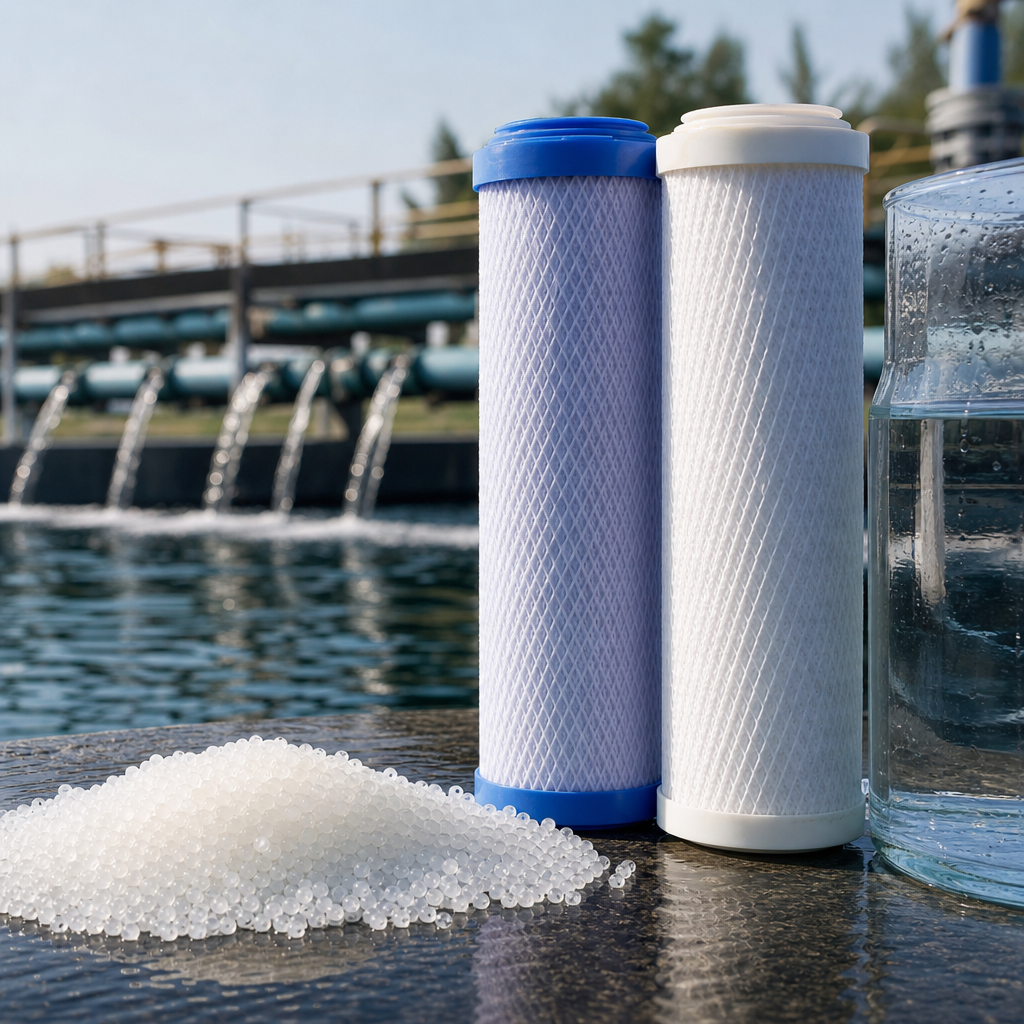
Water purification changed dramatically when polymers moved from niche industrial materials to core treatment tools. In practical terms, polymers are large molecules built from repeating units, and in water treatment they are engineered to capture contaminants, strengthen membranes, bind metals, disinfect surfaces, and improve process efficiency. Water purification challenges include turbidity, pathogens, dissolved salts, heavy metals, oil, microplastics, natural organic matter, and emerging pollutants such as PFAS, pharmaceuticals, and dye residues. Across municipal plants, desalination systems, industrial wastewater lines, and household filters, problem-solving with polymers has become one of the most effective ways to make water safer, cheaper to treat, and more reliable to deliver.
I have seen this shift firsthand in treatment projects where operators were constrained by aging infrastructure, tight chemical budgets, stricter discharge permits, and source water that changed week to week. In those settings, polymers solved real operational problems that sand filters, chlorine alone, or conventional settling could not solve efficiently. Cationic flocculants tightened sludge blankets. Polyamide membranes cut salt loads to drinking-water levels. Ion-exchange resins removed nitrate and hardness with predictable regeneration cycles. Antifouling coatings extended membrane run time. Adsorptive polymer beads captured trace organics that previously slipped through. This matters because water systems now face a dual pressure: rising contamination complexity and rising expectations for public health, reuse, and sustainability. A modern treatment train increasingly depends on carefully selected polymers working at multiple stages, not a single miracle material.
As a hub article under case studies and applications, this guide explains how polymers solved water purification challenges by focusing on the underlying problems, the polymer classes used to address them, and the lessons learned from field deployment. It defines the main treatment roles polymers play, shows where they outperform older methods, and clarifies their limitations. The goal is simple: if you need a clear, technically grounded overview of problem-solving with polymers in water purification, this page should give you the framework and examples needed to understand the full landscape and explore deeper articles from here.
Why Water Purification Needed Better Materials
Traditional water treatment relied heavily on coagulation with metal salts, gravity settling, filtration through sand or anthracite, and disinfection with chlorine or ozone. Those methods still matter, but many modern challenges exposed their limits. Fine colloids remain stable and resist settling. Dissolved ions such as sodium, nitrate, arsenic, and fluoride pass through media filters. Industrial wastewater often contains emulsified oils, surfactants, solvents, and color bodies that are difficult to separate. Seawater desalination requires materials that can reject salts under pressure without failing mechanically. Reuse systems need selective barriers and adsorbents that can manage trace contaminants at low concentrations. In short, the chemistry of contamination became more complex than many conventional methods were designed to handle.
Polymers solved this gap because they are tunable. A treatment polymer can be designed for charge density, molecular weight, porosity, hydrophilicity, selectivity, crosslink density, thermal stability, and surface functionality. That tunability lets engineers match a material to a specific separation problem. For example, when negatively charged clay particles keep water cloudy, a cationic polymer can neutralize surface charges and bridge particles into settleable flocs. When dissolved salts must be removed, thin-film composite polyamide membranes provide nanometer-scale transport control. When hardness causes scaling, sulfonated ion-exchange resins swap calcium and magnesium for sodium or hydrogen. The same broad family of materials can therefore solve entirely different purification problems through different mechanisms.
How Polymers Work in Water Treatment Trains
In practice, polymers do not represent one technology. They appear across the treatment train as soluble additives, solid adsorbents, membrane selective layers, structural supports, and protective coatings. Polyacrylamide-based flocculants are dosed in tiny amounts, often less than a few milligrams per liter, yet they can transform sedimentation performance by creating larger, denser flocs. Ion-exchange polymers function as insoluble beads with fixed charged groups that exchange undesirable ions for less harmful ones. Membranes made from polyamide, polysulfone, polyethersulfone, polyvinylidene fluoride, or cellulose acetate separate contaminants by size, charge, or diffusion behavior. Functionalized hydrogels, chelating polymers, and molecularly tailored sorbents add another level of selectivity for difficult contaminants.
When I evaluate polymer use in a plant, I usually break the problem into five questions: what is the contaminant, in what form does it exist, what concentration range matters, what competing species are present, and how will the polymer be regenerated, cleaned, or disposed of. Those questions determine whether the right answer is coagulation aid, membrane, resin, adsorbent, or hybrid system. A polymer that performs brilliantly against lead in clean groundwater may fail in textile wastewater loaded with surfactants and suspended solids. Conversely, a robust ultrafiltration polymer membrane may remove bacteria and turbidity extremely well but do nothing for dissolved nitrate. The strength of polymer-based purification is not universality; it is fit-for-purpose design.
| Water challenge | Polymer solution | Primary mechanism | Typical application |
|---|---|---|---|
| Turbidity and colloids | Polyacrylamide flocculants | Charge neutralization and bridging | Municipal clarification |
| Hardness and nitrate | Ion-exchange resins | Reversible ion exchange | Groundwater treatment |
| Salinity | Polyamide RO membranes | Selective diffusion barrier | Desalination and reuse |
| Pathogens and suspended solids | PVDF or PES ultrafiltration membranes | Size exclusion | Drinking water plants |
| Trace organics and metals | Functionalized polymer adsorbents | Adsorption and chelation | Industrial polishing |
Flocculants and Coagulant Aids: Solving Turbidity Fast
One of the earliest and most widespread polymer success stories is flocculation. Raw water often contains fine suspended particles that are too small and too stable to settle quickly. Metal coagulants such as alum or ferric chloride destabilize particles, but polymers improve the process dramatically by linking particles together into larger agglomerates. High-molecular-weight polyacrylamides, available in cationic, anionic, and nonionic forms, became standard because they reduce settling time, increase sludge dewaterability, and lower total coagulant demand when correctly optimized.
In surface-water plants dealing with seasonal runoff, polymer coagulant aids often make the difference between stable turbidity removal and filter breakthrough. Jar testing typically reveals the optimal dose range and mixing conditions. Overdosing is a real risk because excess polymer can restabilize particles or foul downstream filters. The best operators do not treat polymers as generic chemicals; they tune molecular weight, charge type, shear exposure, and feed point. In mining water treatment and paper mill wastewater, I have seen a small change in polymer selection cut clarifier overflow solids enough to avoid downstream membrane fouling. That is classic problem-solving with polymers: not replacing the whole process, but unlocking performance where the bottleneck actually sits.
Membrane Polymers: The Breakthrough in Desalination and Reuse
If one polymer technology reshaped global water security, it is the membrane. Reverse osmosis became commercially dominant because thin-film composite polyamide membranes offered high salt rejection, workable flux, and scalable module design. Today, seawater reverse osmosis plants routinely achieve more than 99 percent salt rejection, allowing coastal cities from Israel to Saudi Arabia to Singapore to turn seawater into potable water. The membrane itself is only one layer in a composite structure, typically formed over a porous polysulfone support with a polyester backing, but that thin polyamide selective skin is the heart of separation.
Ultrafiltration and microfiltration membranes made from PVDF, PES, and related polymers solved another set of problems: reliable pathogen and particle removal with compact footprints. These membranes are now common as pretreatment for reverse osmosis, as standalone barriers in drinking water plants, and in wastewater reuse systems where biological treatment is paired with membrane filtration. Membrane bioreactors, for example, use polymeric membranes to retain biomass while producing clarified effluent suitable for further polishing. Their key advantage is consistent water quality despite variable influent conditions.
The challenge with membrane polymers is fouling. Organic matter, biofilms, scale, and colloids reduce flux and raise energy use. That problem drove another wave of polymer innovation: hydrophilic surface modification, zwitterionic coatings, low-fouling feed spacers, and chemically resistant cleaning protocols. The lesson from field use is clear. Membranes solved purification challenges not because they are flawless, but because polymer science kept improving selectivity, durability, and cleanability together.
Ion-Exchange Resins: Selective Removal of Dissolved Contaminants
Some contaminants are truly dissolved and will never settle or filter out by size alone. That is where ion-exchange polymers solved a longstanding challenge. These resins are typically crosslinked polymer beads, often based on styrene-divinylbenzene, with functional groups that exchange target ions. Softening resins remove calcium and magnesium, preventing scale in boilers, cooling towers, and household appliances. Strong-base anion resins remove nitrate, sulfate, chromate, and other problematic anions. Specialized chelating resins target metals such as copper, lead, nickel, and uranium with much higher selectivity than general-purpose media.
Groundwater utilities have used ion exchange for decades because it is predictable, modular, and relatively easy to automate. A nitrate-selective resin, for instance, can protect communities in agricultural regions where fertilizer runoff pushes nitrate above regulatory limits. Regeneration chemistry matters, however. Brine waste from regeneration must be managed responsibly, and high sulfate levels can compete with nitrate on some resins. In industrial settings, resin fouling by iron, organics, or oxidants can shorten service life. Even so, for many dissolved contaminants, polymeric ion exchange remains one of the most direct and cost-effective tools available.
Adsorptive and Functional Polymers for Emerging Pollutants
Emerging pollutants exposed the limits of standard treatment and pushed polymer science into more selective territory. Activated carbon remains important, but polymer adsorbents now address compounds that require tailored interactions. Functionalized beads, porous organic polymers, and chelating networks can be designed to bind specific classes of contaminants through hydrophobic attraction, hydrogen bonding, ion exchange, or coordination chemistry. This matters for PFAS, dye molecules, pharmaceuticals, endocrine-disrupting compounds, and dissolved metals present at low but consequential concentrations.
PFAS removal is a useful example. Short-chain PFAS are harder to capture than long-chain compounds, and performance depends strongly on water matrix chemistry. While granular activated carbon often works better for longer-chain PFAS, ion-exchange polymers with engineered functional groups can show superior uptake for broader PFAS ranges in some applications. Likewise, textile wastewater containing persistent dyes may be treated with polymeric adsorbents or polyelectrolyte complexes that outperform simpler settling approaches. These solutions are not plug-and-play; they depend on competitive adsorption, breakthrough behavior, and disposal strategy. But they show how problem-solving with polymers evolved from bulk separation to molecularly informed contaminant targeting.
Case Study Patterns, Tradeoffs, and What Comes Next
Across case studies, the winning pattern is rarely a single polymer doing everything. Successful systems layer polymer functions. A municipal reuse plant may use cationic polymer for clarification, PVDF ultrafiltration for suspended solids and pathogens, polyamide reverse osmosis for dissolved salts, and polymeric antiscalants to protect membranes. An electronics manufacturer may pair ion exchange with specialty adsorbents to polish rinse water for recirculation. A refinery may use demulsifying polymers upstream and membrane separation downstream. The hub lesson is that polymers solve water purification challenges best when deployed as coordinated parts of a treatment train built around contaminant form and process economics.
Tradeoffs are real. Some polymers raise concerns about residual monomers, especially acrylamide, so certified formulations and proper dosing control are essential. Membranes consume energy and need pretreatment. Resins require regeneration chemicals. Spent adsorbents and concentrate streams still need disposal or destruction. Biodegradability is another important frontier because not every effective treatment polymer is environmentally ideal at end of life. Current development focuses on greener synthesis, lower-fouling surfaces, stronger selectivity for trace contaminants, and hybrid materials that combine adsorption with catalysis or disinfection.
The key takeaway is straightforward. Polymers solved water purification challenges because they gave engineers control at the molecular level while remaining scalable at plant level. They clarified muddy water, desalinated seawater, removed dissolved ions, captured emerging contaminants, and made reuse technically practical. For anyone exploring case studies and applications in this field, start by mapping the contaminant problem to the polymer function. That mindset explains why these materials matter and where the next breakthroughs will come from. Use this hub as your entry point, then go deeper into each application area to compare materials, mechanisms, and operating results in real systems.
Frequently Asked Questions
1. What role do polymers play in modern water purification?
Polymers play a central role in modern water purification because they can be designed to solve multiple treatment problems at once. At the most basic level, polymers are large molecules made from repeating chemical units, and that structure gives engineers unusual control over how the material behaves in water. Some polymers act as coagulants and flocculants, helping tiny suspended particles clump together so they can be removed more easily. Others are used in membrane systems, where polymer-based films separate clean water from salts, organic compounds, pathogens, and other contaminants. There are also specialty polymers that adsorb heavy metals, capture oils, resist biofouling, or provide antimicrobial surface properties.
What makes polymers especially valuable is their versatility. Traditional treatment methods often depend on multiple separate steps, each targeting a narrow category of contaminants. Polymer technologies can improve several steps in the same system by increasing contaminant removal, lowering energy use, reducing chemical consumption, and improving the durability of treatment equipment. In practical treatment plants, that means better handling of turbidity, natural organic matter, dissolved pollutants, and even newer contaminants of concern. Rather than being a single product category, polymers have become a platform technology that supports clarification, filtration, desalination, disinfection, and polishing stages across municipal, industrial, and point-of-use water treatment.
2. How did polymers help solve common water purification challenges like turbidity, pathogens, and dissolved contaminants?
Polymers helped solve these challenges by addressing the physical, chemical, and biological dimensions of water contamination. For turbidity, polymer flocculants are extremely effective because they bridge fine particles together into larger aggregates, or flocs, that settle faster and filter more efficiently. This is important because many suspended solids are too small to remove economically without some form of particle destabilization and aggregation. By improving solid-liquid separation, polymers make downstream treatment more reliable and reduce the burden on filters and membranes.
For pathogens, polymers have improved both direct and indirect control strategies. Some polymer-based membranes physically block bacteria, protozoa, and viruses based on pore size and surface characteristics. Other polymers are modified with antimicrobial functionalities that reduce microbial attachment or inhibit biofilm growth on treatment surfaces. This is significant because biofouling is one of the most persistent operational problems in water systems. When microbes colonize membranes or pipes, they reduce flow, increase pressure requirements, and shorten equipment life. Polymer surface engineering has made it possible to create treatment materials that are not only selective, but also more resistant to microbial buildup.
Dissolved contaminants present a different challenge because they cannot be removed by simple settling or conventional screening. Here, advanced polymer membranes and adsorbent polymers became game changers. Reverse osmosis, nanofiltration, and related membrane systems rely heavily on polymer science to reject dissolved salts, metals, organic molecules, and trace contaminants. In parallel, functionalized polymers can be tailored with chemical groups that selectively bind specific pollutants, such as arsenic, lead, mercury, or industrial organics. This combination of selective chemistry and scalable manufacturing is one reason polymers transformed water purification from a mostly mechanical process into a far more precise and adaptable treatment system.
3. Why are polymer membranes considered such a breakthrough in water treatment and desalination?
Polymer membranes are considered a breakthrough because they made high-performance separation practical, scalable, and economically viable for a wide range of applications. Before membrane technology matured, removing dissolved salts and very small contaminants often required energy-intensive or cumbersome processes. Polymer membranes changed that by providing thin, selective barriers that allow water molecules to pass while rejecting unwanted substances. This principle now underpins reverse osmosis desalination, ultrafiltration, microfiltration, and nanofiltration systems used around the world.
The breakthrough was not just scientific; it was operational. Polymer membranes can be manufactured in forms such as hollow fibers, flat sheets, and spiral-wound modules, allowing treatment systems to be compact and modular. That flexibility made it easier to deploy advanced purification at municipal plants, industrial facilities, and even portable or household systems. In desalination, polymer membranes made it possible to convert seawater and brackish water into drinking water at scales large enough to support cities and industries. In wastewater reuse, they help remove suspended matter, microorganisms, dissolved organics, and other contaminants that would otherwise limit safe reclamation.
Another reason polymer membranes stand out is the degree to which they can be engineered. Their pore structure, surface charge, hydrophilicity, chemical resistance, and fouling behavior can all be adjusted to improve performance. Researchers and manufacturers continue refining polymer membranes to increase water flux, reduce energy demand, improve chlorine tolerance, and resist fouling from organic matter, oil, scaling minerals, and microbes. That constant innovation means polymer membranes are not a static solution; they are an evolving technology platform that continues to push water treatment toward greater efficiency, reliability, and contaminant specificity.
4. Can polymers remove heavy metals, oil, microplastics, and emerging pollutants from water?
Yes, and this is one of the clearest examples of why polymers became so important in advanced treatment. Heavy metals such as lead, cadmium, chromium, and mercury are dangerous even at low concentrations, and many polymer materials can be engineered with binding sites that selectively capture metal ions. These include ion-exchange polymers, chelating resins, and hybrid polymer composites designed to hold onto metals while allowing treated water to pass through. Because the chemistry can be tuned, polymer systems can often target specific pollutants more efficiently than broad, nonselective treatment methods.
Oil contamination is another area where polymers have delivered major improvements. Certain polymeric materials are designed to be highly oleophilic, meaning they attract oils, while others are hydrophilic and repel fouling in membrane systems. This makes them useful in separating oil-water emulsions, treating industrial wastewater, and protecting downstream processes from clogging and performance loss. In sectors such as petrochemicals, food processing, transportation, and manufacturing, polymer-based separation materials have become essential for meeting discharge and reuse requirements.
Microplastics and emerging pollutants present newer and more complex challenges, but polymers are part of the solution there as well. Membrane filtration can physically remove many microplastic particles, while advanced adsorbent polymers can capture trace organics such as pesticide residues, pharmaceutical compounds, endocrine-disrupting chemicals, and other persistent contaminants. Natural organic matter and so-called emerging pollutants can be difficult because they exist at low concentrations, in mixed chemical forms, and often alongside many competing substances. Polymer-based treatment media are useful in these cases because they can be tailored for affinity, selectivity, and regeneration. While no single material removes every contaminant equally well, polymers have significantly expanded the treatment toolbox for difficult pollutants that older systems struggled to manage consistently.
5. What makes polymer-based water purification more efficient and sustainable than older treatment approaches?
Polymer-based purification can be more efficient and sustainable because it improves removal performance while often reducing waste, energy consumption, and chemical demand. In clarification processes, polymer coagulants and flocculants can accelerate particle removal and reduce the amount of conventional additives needed to achieve target water quality. In membrane systems, well-designed polymer materials can produce higher throughput at lower pressures, which directly affects energy use. Better fouling resistance also means less frequent cleaning, lower downtime, longer equipment life, and fewer replacement costs.
Sustainability also comes from precision. Older treatment approaches often relied on broad, relatively blunt methods that worked well for some contaminants but not for others. Polymer technologies can be customized for specific water sources and treatment goals, whether the challenge is salinity, metal contamination, organic loading, microbial risk, or industrial process water recovery. That adaptability helps utilities and manufacturers optimize treatment trains instead of over-treating or using excessive chemicals as a safety margin. In water-scarce regions, polymer membranes have also made water reuse and desalination far more practical, which is critical for long-term resilience.
That said, sustainability depends on thoughtful design and lifecycle management. The best polymer solutions are those that combine high performance with durability, cleanability, and safe disposal or regeneration. Current research is focused on greener polymer chemistries, recyclable materials, lower-fouling surfaces, and composite systems that extend service life while maintaining high contaminant rejection. So the real sustainability advantage is not simply that polymers replaced older materials; it is that they made water treatment smarter, more targeted, and more capable of delivering safe water under increasingly difficult environmental and regulatory conditions.