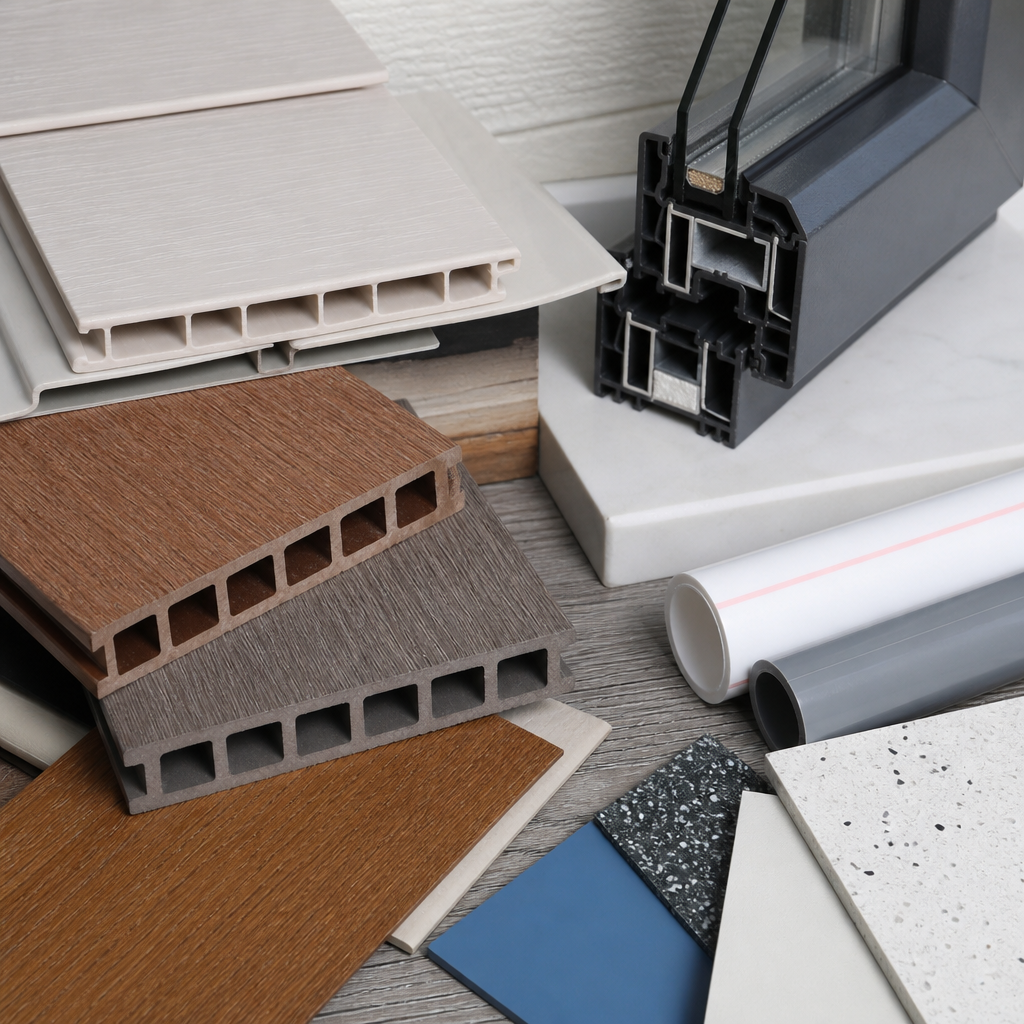
Innovations in polymers for home improvement products are reshaping how homeowners renovate, repair, insulate, seal, paint, and protect their living spaces, and the changes are far more significant than simple material substitution. In this hub article on polymer innovations in consumer goods, the focus is on the materials science behind practical products people use every day: flooring, coatings, sealants, adhesives, pipes, insulation, composites, and smart surfaces. A polymer is a large molecule made of repeating units, and in home improvement applications those molecules are engineered to deliver specific performance traits such as flexibility, impact resistance, ultraviolet stability, low volatile organic compound emissions, moisture control, and thermal efficiency. I have worked with product teams evaluating polymer-based construction materials, and the pattern is consistent: the best innovations solve several problems at once, including durability, ease of installation, compliance with safety standards, and total lifecycle cost. That matters because residential buildings face constant stress from humidity swings, sunlight, cleaning chemicals, abrasion, microbial growth, and occupant expectations for better indoor air quality. Consumers may see a tube of caulk or a luxury vinyl plank, but the real value lies in formulation decisions involving acrylics, polyurethanes, silicones, polyolefins, epoxies, fluoropolymers, and bio-based blends. Understanding these innovations helps homeowners choose better products, helps contractors specify materials more accurately, and provides context for related case studies across the broader consumer goods landscape.
Why polymers dominate modern home improvement
Polymers dominate modern home improvement because they can be tailored more precisely than wood, metal, glass, or mineral-based materials alone. In practice, that means a manufacturer can adjust monomer selection, molecular weight, crystallinity, filler loading, crosslink density, plasticizer content, or surface treatment to create a product that behaves exactly as needed in service. For example, a window flashing tape must adhere in cold weather, resist water intrusion, and remain stable after years of thermal cycling. A butyl or acrylic pressure-sensitive adhesive backed by a polymer film can do that better than many traditional alternatives. The same principle applies to high-build elastomeric roof coatings, waterborne wall paints, moisture-cured flooring adhesives, and cross-linked polyethylene plumbing systems. Polymers also lower installed weight, reduce corrosion risk, and support prefabrication. In the residential sector, those benefits translate into faster projects and fewer callbacks.
Another reason polymers lead this category is processing flexibility. Extrusion, injection molding, blow molding, calendaring, reactive curing, emulsion polymerization, and additive compounding let manufacturers make products at consumer scale without sacrificing functional sophistication. A vinyl siding panel, a polypropylene storage system, and a structural adhesive cartridge all come from different manufacturing routes, yet each benefits from polymer chemistry that controls performance and shelf life. Standards shape adoption as well. ASTM test methods, UL fire classifications, NSF requirements for potable water components, and GREENGUARD or similar emissions certifications influence formulation choices. When a polymer innovation succeeds, it is usually because it balances performance with manufacturability and compliance, not because it introduces novelty for its own sake.
Coatings, paints, and surface protection systems
One of the clearest areas of polymer innovation in consumer goods is coatings. Modern interior paints increasingly rely on advanced acrylic emulsions that deliver scrub resistance, hide, stain blocking, and lower odor compared with older solvent-heavy systems. Exterior coatings use acrylic, polyurethane, fluoropolymer, or hybrid binder technologies to improve weatherability and color retention. I have seen side-by-side weathering panels where higher-quality acrylic formulations maintained gloss and resisted chalking long after commodity coatings degraded. That performance comes from careful binder selection, pigment dispersion, coalescent optimization, and additives such as rheology modifiers, dispersants, defoamers, and UV absorbers.
Surface protection now goes beyond paint film durability. Anti-microbial additives, easy-clean topcoats, ceramic-reinforced floor finishes, and elastomeric waterproof membranes all depend on polymer architecture. Polyurethane dispersions are widely used where abrasion resistance and flexibility are both required, such as cabinet coatings, wood floor finishes, and concrete sealers. Epoxy systems remain essential for garage floors and basement coatings because they bond strongly to prepared concrete and resist many household chemicals. Silicone-modified and fluorinated top layers are used where water repellency and dirt pickup resistance matter, including masonry sealers and self-cleaning glass treatments. The key consumer shift is that coatings are increasingly expected to add function, not just color.
Sealants, adhesives, and gap-filling materials
Sealants and adhesives are the hidden polymer workhorses of home improvement. Around windows, tubs, backsplashes, trim, subfloors, roofing penetrations, and expansion joints, performance depends on selecting the right chemistry. Silicone sealants remain the benchmark for long-term flexibility, water resistance, and temperature tolerance in wet areas. Acrylic latex caulks are easier to tool and paint, making them useful for interior trim and low-movement joints. Polyurethane sealants offer strong adhesion and toughness for exterior joints and demanding substrates, though application conditions and cure chemistry must be respected. Silyl-modified polymers, often marketed as SMP or STP technologies, have become especially important because they combine paintability, lower odor, broad adhesion, and weather resistance in one formulation.
Adhesive innovation has changed installation methods across flooring, tile underlayments, wall panels, and insulation. Reactive hot melts, moisture-cured urethanes, and hybrid construction adhesives now replace many mechanical fasteners. That improves aesthetics and can reduce penetrations that compromise moisture barriers. In real installations, the advantage is not only bond strength but movement accommodation. A rigid adhesive on a dimensionally unstable substrate often fails regardless of advertised strength. Polymer scientists therefore tune modulus, tack, open time, and cure rate to suit practical jobsite conditions. The best consumer products clearly state substrate compatibility, cure time, service temperature, and limitations, because misuse is one of the main causes of adhesive failure.
Flooring, wall panels, and decorative composites
Flooring has become one of the most visible examples of polymer innovation in home improvement products. Luxury vinyl tile and luxury vinyl plank use multilayer constructions that combine polyvinyl chloride or other thermoplastic layers with wear coats, printed décor films, embossed textures, and sometimes rigid cores made with stone-polymer or wood-polymer composites. These products succeed because they offer water resistance, dimensional stability, easy cleaning, and highly realistic visuals. The strongest versions include polyurethane or UV-cured wear layers that resist scratching and staining better than earlier resilient floors. Rigid core systems can bridge minor subfloor imperfections and simplify click-lock installation, which matters to both contractors and DIY homeowners.
Wall panels and decorative composites follow a similar path. Engineered polymer panels imitate tile, wood, concrete, or stone while reducing weight and eliminating grout maintenance. Fiber-reinforced polymer bathroom panels, for example, can deliver fast renovation cycles in moisture-prone spaces. Wood-plastic composites used in trim, deck boards, and cladding blend cellulose fillers with polyethylene or polypropylene matrices to improve stiffness while resisting rot and insect damage. These products are not identical to natural materials; they expand differently with temperature and may require specific fastening details. However, when correctly specified, they provide a durable alternative with lower maintenance demands than traditional wood assemblies.
Insulation, air sealing, and energy efficiency
Home energy performance has pushed polymer innovation into insulation and air sealing products. Spray polyurethane foam, polyisocyanurate boards, expanded polystyrene, extruded polystyrene, and polyethylene vapor control films all play major roles in controlling heat flow and moisture movement. The value of these polymers is not just high thermal resistance per inch, but system integration. A well-formulated one-component foam sealant can close air leakage paths around rim joists, pipe penetrations, and window frames that would otherwise undermine the effectiveness of bulk insulation. In blower door testing, these small sealing interventions often have an outsized impact on measured infiltration.
Recent innovation has focused on lower global warming potential blowing agents, improved fire performance, and better moisture management. Closed-cell foam can add racking strength and reduce vapor transmission, but it must be used with an understanding of drying potential and ignition barrier requirements. Open-cell foam provides air sealing with different vapor behavior and lower density. Aerogel-enhanced blankets, vacuum insulation concepts, and phase change materials receive attention, but mainstream residential adoption still centers on polymer foams and films because they deliver proven cost-performance value. For homeowners, the practical lesson is that insulation products should be evaluated as part of an assembly, not as isolated R-value numbers.
Plumbing, fixtures, and water management applications
Polymer innovations have transformed residential plumbing and water management. Cross-linked polyethylene, commonly known as PEX, changed branch plumbing by offering flexibility, freeze tolerance, and fast installation compared with rigid copper or chlorinated polyvinyl chloride in many use cases. Polypropylene random copolymer pipe systems are also used where heat fusion joining offers durable leak-resistant assemblies. Drainage, sump components, shower pans, waterproofing membranes, and under-sink traps all benefit from polymer formulations designed for chemical resistance, dimensional consistency, and long service life. In bathrooms and kitchens, acrylic and composite fixture surfaces balance appearance with impact resistance and repairability.
| Application | Common polymer innovation | Primary homeowner benefit | Main limitation |
|---|---|---|---|
| Water supply lines | PEX | Flexible installation, fewer fittings | UV exposure sensitivity before installation |
| Exterior decking | Wood-plastic composite | Low maintenance, rot resistance | Thermal expansion requires detailing |
| Garage floor coating | Epoxy or polyaspartic system | Chemical and abrasion resistance | Surface preparation is critical |
| Window and bath sealing | Silicone or SMP sealant | Waterproof flexible joints | Paintability varies by chemistry |
| Exterior insulation | Polyiso or polystyrene foam | High thermal efficiency | Fire and moisture detailing required |
Waterproofing is another area where polymer design matters. Liquid-applied membranes based on acrylic, polyurethane, or modified bitumen chemistries create continuous barriers on roofs, balconies, foundations, and wet rooms. Sheet membranes use polyethylene, thermoplastic polyolefin, or composite constructions to provide predictable thickness and puncture resistance. The consumer-facing benefit is fewer leaks and lower mold risk, but long-term success still depends on substrate preparation, seam treatment, drainage design, and compatibility with adjacent materials. No polymer can compensate for poor detailing around transitions and penetrations.
Sustainability, safety, and what comes next
Sustainability in polymer-based home improvement products is advancing, but it requires a realistic view. Recycled content, bio-based feedstocks, lower-emission waterborne systems, halogen-free flame retardants, and design for recyclability are all meaningful improvements. Some composite decking products now incorporate large fractions of recycled polyethylene film and reclaimed wood fiber. Paint manufacturers continue reducing VOC levels while improving film performance through better acrylic and hybrid binder chemistry. Carpet backing, insulation facings, and underlayment materials increasingly use recycled polymers where performance can be maintained. In my experience, the best sustainability gains come from extending service life and reducing replacement frequency, not from marketing claims attached to marginal renewable content.
Safety and health remain central. Consumers should look for products that disclose emissions performance, intended use conditions, and curing requirements. For example, low-VOC does not automatically mean low odor during application, and a durable two-component coating may require stricter ventilation and personal protective equipment than a simpler waterborne alternative. Fire performance also matters. Many polymer products require flame retardant strategies, thermal barriers, or installation methods that meet code requirements. Looking ahead, expect more self-healing coatings, antimicrobial surfaces with carefully validated claims, smart films that respond to heat or light, and digitally manufactured components using advanced thermoplastics. The most important trend, however, is integration: polymers are being engineered as parts of complete home performance systems rather than isolated consumer goods.
The central lesson from innovations in polymers for home improvement products is that chemistry now drives everyday residential performance in ways most buyers never see but immediately benefit from. Better polymers have made paints tougher and lower in odor, flooring more water resistant, sealants more durable, insulation more effective, plumbing faster to install, and composites easier to maintain. They also introduce tradeoffs, including code constraints, substrate sensitivity, temperature-related movement, and end-of-life complexity. That is why smart product selection depends on matching polymer type to the application instead of relying on broad marketing labels.
As the hub for polymer innovations in consumer goods within case studies and applications, this page provides the framework for evaluating related product categories with more confidence. When comparing options, focus on service conditions, certification, installation requirements, expected lifespan, and compatibility with surrounding materials. Those factors determine whether an innovation performs in the real world. Use this article as a starting point, then explore the connected subtopic pages and case studies to identify the right polymer-based solutions for your next home improvement project.
Frequently Asked Questions
What kinds of polymer innovations are having the biggest impact on home improvement products today?
The biggest advances are happening in products homeowners use constantly but may not think of as “advanced materials.” Modern flooring systems, high-performance paints and coatings, flexible sealants, stronger construction adhesives, improved plastic piping, rigid and spray foam insulation, fiber-reinforced composites, and easy-clean or antimicrobial surfaces all rely on new polymer chemistry. What has changed is not just that polymers are replacing traditional materials such as wood, metal, or cement in some applications, but that the polymers themselves are becoming more specialized. Manufacturers now tune properties like flexibility, UV resistance, chemical resistance, moisture management, thermal insulation, impact strength, and cure speed for very specific home use cases.
For example, luxury vinyl flooring and engineered composite boards are designed to handle foot traffic, spills, temperature swings, and cleaning chemicals better than earlier generations. Acrylic, polyurethane, epoxy, and hybrid coatings are being formulated to last longer, adhere better, and resist cracking or yellowing. In sealants and adhesives, silane-modified polymers and advanced polyurethane systems are helping products bond dissimilar materials while staying flexible over time. In insulation, polymer foams are improving energy efficiency by trapping air in highly controlled cellular structures. Even piping has evolved through crosslinked polyethylene and other engineered polymer systems that resist corrosion, scale buildup, and freeze damage better than many older materials. Taken together, these innovations are making home improvement materials more durable, lighter, easier to install, and better suited to modern performance expectations.
Why are polymers so widely used in products like sealants, coatings, adhesives, flooring, and insulation?
Polymers are widely used because they can be engineered at the molecular level to deliver combinations of properties that are difficult to achieve with traditional materials alone. A polymer is made of long repeating molecular chains, and by adjusting chain structure, additives, crosslinking, fillers, and processing methods, scientists can create materials that are soft or rigid, transparent or opaque, breathable or waterproof, chemically resistant or impact absorbing. That flexibility makes polymers especially valuable in home improvement, where one product may need to stick to multiple surfaces, tolerate weather exposure, insulate against heat loss, or maintain appearance under daily wear.
In practical terms, polymers solve common homeowner problems very efficiently. A sealant needs to move with expansion and contraction around windows, tubs, and siding without splitting. An adhesive needs to create a strong bond with wood, tile, drywall, metal, or plastic while curing in a reasonable time. A coating needs to form a protective film that resists moisture, stains, abrasion, and sunlight. Flooring needs to be dimensionally stable, cleanable, and comfortable underfoot. Insulation needs to trap air or gas while remaining lightweight and easy to install. Polymers do all of this because their chemistry can be fine-tuned for performance, cost, and manufacturability. That is why they now appear in everything from caulks and waterproof membranes to composite decking and energy-efficient window frames.
How are advanced polymers improving durability, energy efficiency, and maintenance in the home?
Advanced polymers are improving durability by forming materials and surface layers that better resist moisture intrusion, cracking, abrasion, corrosion, and chemical exposure. In coatings and exterior finishes, polymer binders help create films that stay intact through temperature changes, UV exposure, and repeated cleaning. In plumbing and piping, polymer systems can resist rust and mineral buildup, reducing maintenance and preserving flow performance over time. In flooring and countertop applications, wear layers and engineered polymer surfaces are built to handle scratches, dents, stains, and impact better than many conventional alternatives. This does not mean every polymer product automatically outperforms every traditional product, but it does mean modern formulations are often designed with very specific long-term stress conditions in mind.
Energy efficiency is another major area of improvement. Polymer foams used in insulation reduce heat transfer by trapping gases within cellular structures, helping walls, roofs, and foundations perform better thermally. Window and door seals made from elastomeric polymers help reduce air leakage, while advanced weatherproof membranes improve building-envelope performance. Reflective and cool-roof coatings use polymer matrices to hold pigments and additives that reduce solar heat gain. Even piping and HVAC components benefit, because lightweight polymer materials can support efficient system design and reduce heat loss in some applications. Maintenance also improves because many polymer-based products are easier to clean, less prone to mold or mildew retention when properly formulated, and more resistant to everyday damage. For homeowners, that translates into fewer repairs, lower energy bills, and products that keep their appearance and function longer with less effort.
Are modern polymer-based home improvement products more sustainable than older materials?
Sustainability is a nuanced issue, but many modern polymer innovations are improving environmental performance in meaningful ways. The answer depends on the full life cycle of the product, not just whether it is made from plastic or synthetic chemistry. A polymer-based product can be more sustainable if it lasts significantly longer, reduces replacement frequency, improves home energy efficiency, lowers transportation emissions due to lighter weight, or requires less maintenance and fewer harsh cleaning chemicals. For example, durable polymer insulation can reduce heating and cooling energy use for years, and corrosion-resistant polymer pipes may reduce premature replacement compared with materials that degrade more quickly in certain conditions.
There are also important advances in formulation and manufacturing. Some products now include recycled polymer content, lower-VOC chemistries, water-based systems, bio-based feedstocks, or designs that use less material while maintaining performance. Composite products may be engineered to reduce reliance on old-growth timber or heavy mineral-based materials in particular applications. At the same time, sustainability concerns remain real, especially around end-of-life disposal, recycling complexity for multi-material composites, and the environmental impact of certain additives or production methods. The most responsible way to evaluate polymer-based home improvement products is to look at durability, indoor air quality certifications, energy performance, recycled content, repairability, and disposal options together. In many cases, the newest innovations are moving the category in a more sustainable direction, but product-by-product evaluation still matters.
What should homeowners look for when choosing polymer-based products for renovation or repair projects?
Homeowners should focus first on fit-for-purpose performance rather than broad claims like “premium polymer” or “advanced composite.” The most important question is whether the material is engineered for the specific environment in which it will be used. For example, a bathroom sealant should emphasize mold resistance, flexibility, and water exposure performance. An exterior coating should be rated for UV stability, moisture resistance, and temperature cycling. Flooring should be evaluated for wear-layer thickness, scratch resistance, subfloor compatibility, and moisture tolerance. Adhesives should match the substrate materials and expected load conditions. Pipe materials should be approved for the intended pressure, temperature, and plumbing code requirements. In other words, polymer chemistry is only useful when it is correctly matched to the application.
It is also wise to review technical data sheets, manufacturer warranties, certification labels, and installation instructions carefully. Look for information about VOC emissions, cure time, service temperature range, flexibility, water resistance, chemical resistance, and expected lifespan. Reputable products will usually provide measurable standards rather than vague marketing language. Homeowners should also consider whether the product is DIY-friendly or requires professional installation, because even the best polymer formulation can underperform if applied incorrectly. Finally, think long term: ease of maintenance, repairability, color stability, and compatibility with surrounding materials often matter just as much as upfront cost. The strongest purchasing decisions come from understanding how the product’s polymer technology supports real-world performance in your particular home.