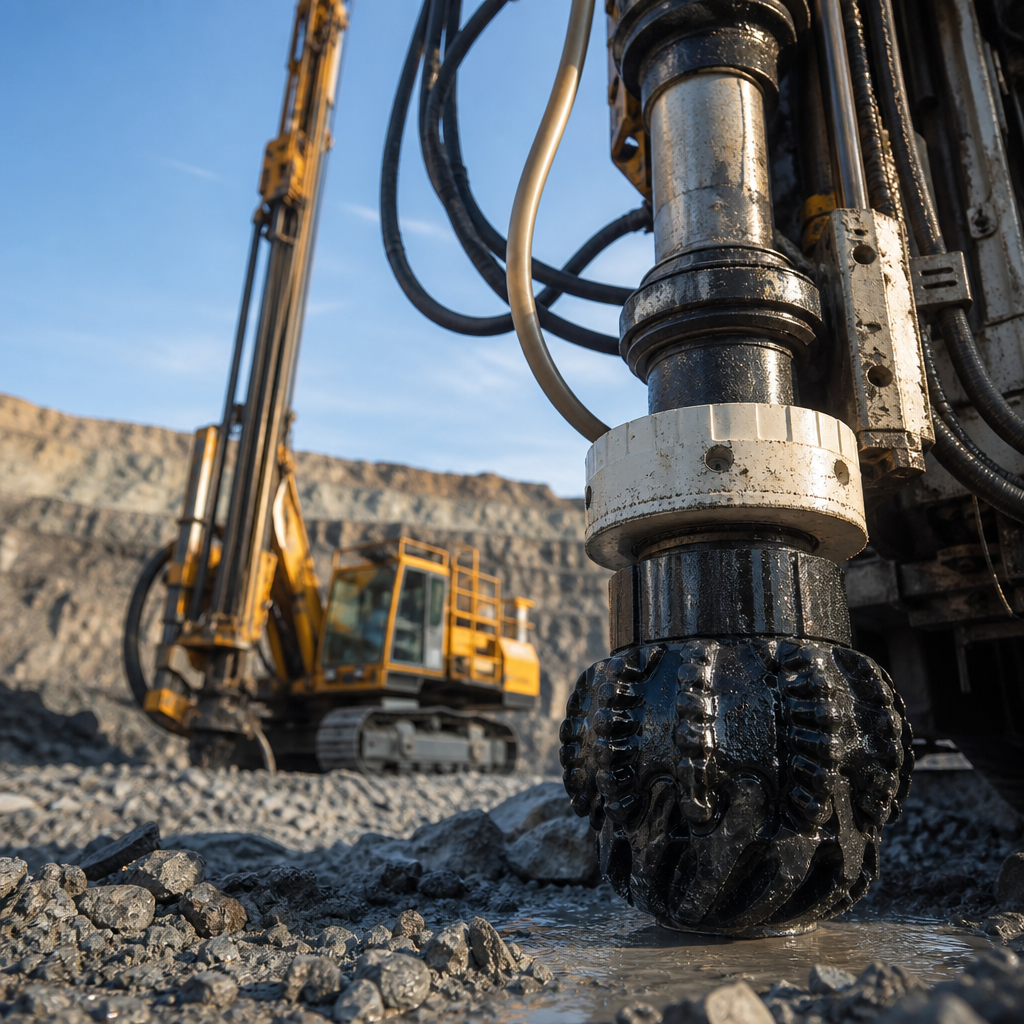
Polymers have become indispensable in mining and drilling equipment because they solve a persistent industrial problem: how to keep machines operating in abrasive, wet, chemically aggressive, and high-load environments without excessive downtime. In this context, polymers are engineered materials made of long molecular chains, including thermoplastics, thermosets, elastomers, fluoropolymers, and composite matrices, that are selected to reduce wear, resist corrosion, absorb impact, seal fluids, insulate electrical systems, and lower equipment weight. Mining and drilling operations expose components to ore slurry, rock fines, vibration, pressure cycling, ultraviolet radiation, hydrocarbons, and process chemicals, all of which quickly degrade unprotected metal parts. After years of working with plant maintenance teams, drill rig rebuilders, and procurement engineers, I have seen polymer upgrades deliver measurable gains in uptime when they are specified against real failure modes rather than chosen as generic “plastic replacements.” This article serves as a hub for polymers in industrial applications by showing where these materials fit across equipment systems, why certain polymer families outperform steel, rubber, or ceramics in specific roles, and how operators can evaluate design tradeoffs. Understanding the role of polymers in enhancing mining and drilling equipment matters because production economics depend on reliability: every unplanned shutdown affects throughput, labor efficiency, maintenance budgets, and safety performance.
Why polymers perform so well in mining and drilling service
The simplest answer is that polymers can be engineered for functions that conventional metals cannot deliver alone. Ultra-high-molecular-weight polyethylene, or UHMWPE, provides very low friction and excellent abrasion resistance in chutes, liners, and transfer points. Polyurethane combines elasticity with high tear strength, making it effective for screens, hydrocyclone parts, scraper blades, and slurry handling components. Nylon, acetal, PEEK, PTFE, and filled engineering plastics are used where dimensional stability, chemical resistance, and controlled friction are needed in bearings, bushings, wear rings, and insulators. In drilling systems, elastomers such as nitrile, hydrogenated nitrile, fluoroelastomers, and polyurethane are critical for seals, packers, stators, cable protection, and vibration control.
These materials improve equipment life through several mechanisms. First, they interrupt abrasive contact. A polymer liner can sacrifice itself gradually while protecting a steel substrate from gouging and erosive wear. Second, they resist corrosion. In mineral processing circuits containing acidic water, chlorides, or flotation reagents, nonmetallic parts avoid the electrochemical attack that damages steel and aluminum. Third, they dampen vibration and impact. That matters in drill feeds, crusher skirts, conveyor idlers, and pump components, where shock loading can loosen fasteners and accelerate fatigue cracking. Fourth, polymers can reduce sticking and carryback. Low-friction liners improve material flow in hoppers handling wet ore, coal, or concentrates, which reduces blockages and manual cleanout.
Performance, however, depends on correct selection. Not every polymer belongs in every mine. Temperature limits, creep under constant load, UV stability, hydrolysis, solvent compatibility, and fire behavior must be reviewed against operating conditions. I have seen excellent UHMW liners fail prematurely when installed near high-temperature process equipment, and I have seen polyurethane parts swell when exposed to incompatible fluids. The lesson is practical: polymers enhance mining and drilling equipment when the specification starts with the duty cycle, chemistry, and mechanical stress of the application.
Key applications across mining and drilling equipment
Across surface mines, underground operations, and drilling fleets, polymers appear in more equipment categories than many buyers realize. In material handling, polymer liners are installed in bins, hoppers, truck beds, transfer chutes, feeder skirts, and conveyor components. Their purpose is to reduce wear, noise, and sticking while protecting structural steel. In slurry transport, rubber-lined and polyurethane-lined hoses, pump casings, impellers, and valve seats provide a balance of abrasion resistance and flexibility. In comminution and classification circuits, polyurethane screen panels, cyclone spigots, and wear inserts are common because they tolerate repeated impact from sharp particles while being easier to replace than metal fabrications.
Drilling equipment depends heavily on polymers in sealing and dynamic contact areas. Top drive systems, mud pumps, downhole motors, drill string protectors, wireline tools, and hydraulic cylinders all use seals, wipers, backup rings, and packers made from specialized elastomers and thermoplastics. These components must retain sealing force under pressure, temperature variation, and fluid exposure. Cable jackets and connector insulation in electric drills also rely on polymer compounds selected for flexibility, flame resistance, and dielectric strength. On mobile equipment, polymer bushings, composite bearings, vibration mounts, and cab isolation parts support reliability while reducing lubrication demand.
| Equipment area | Common polymer types | Main benefit | Typical example |
|---|---|---|---|
| Chutes and hoppers | UHMWPE, HDPE, polyurethane | Abrasion resistance and flow improvement | Low-friction liners preventing ore buildup |
| Pumps and slurry lines | Polyurethane, rubber, PTFE | Wear resistance and chemical compatibility | Slurry pump liners and hose interiors |
| Drill seals and packers | NBR, HNBR, FKM, TPU, PEEK | Pressure retention and fluid sealing | Mud pump seals and downhole packers |
| Bearings and bushings | Nylon, acetal, PTFE-filled composites | Low friction and reduced lubrication | Pivot bushings on mobile machinery |
| Screens and wear parts | Polyurethane, rubber composites | Impact absorption and service life | Modular screen media in wet processing |
These applications matter because they address costly operational pain points. For example, a vibrating screen deck fitted with polyurethane modular panels often lasts longer than woven wire in wet, corrosive duties, while reducing noise exposure for nearby workers. A polymer-lined chute may eliminate the persistent hang-ups that force operators to stop a belt and manually knock down material. In drilling, a better elastomer compound in a seal stack can prevent fluid leakage that would otherwise contaminate the system, damage nearby components, and trigger a shutdown for repair.
Material selection: matching polymer chemistry to failure mode
The most important selection rule is simple: choose the polymer for the failure mechanism, not for the catalog description. If abrasive sliding wear dominates, UHMWPE, cast nylon, or polyurethane may be strong candidates. If the issue is chemical exposure, fluoropolymers, PVDF, PTFE, or FKM elastomers may be more suitable. If temperature and load are both high, PEEK, polyimide, or reinforced thermosets can outperform commodity plastics. In slurry service, hardness alone does not determine success; resilience, particle size, velocity, and angle of impact all affect wear behavior. A hard material may resist cutting in one application but crack under repeated impact in another.
Standards and test methods help engineers compare options. ASTM D638 covers tensile properties of plastics, ASTM D2240 measures durometer hardness, ASTM G65 is commonly used for dry sand abrasion testing, and ISO 1817 guides evaluation of rubber resistance to liquids. For tribology, coefficient of friction and PV limits must be considered in bearings and bushings. For seals, compression set, extrusion resistance, and compatibility with drilling mud additives or hydraulic fluids are central. In electrical systems, IEC and UL ratings for insulation and flame behavior become relevant, especially in underground equipment where fire risk is tightly controlled.
Filled and reinforced polymers deserve special attention. Glass-filled nylon improves stiffness and creep resistance but can become more abrasive to mating surfaces. PTFE-filled compounds reduce friction but may sacrifice mechanical strength. Carbon-filled PEEK can deliver excellent dimensional stability and wear resistance in high-end bearing applications, but at a price point that only makes sense where downtime costs justify it. In practice, the best specification often comes from reviewing failed parts, mapping the wear pattern, checking fluid chemistry, and then testing two or three candidate materials in a controlled trial rather than relying on one supplier datasheet.
Operational benefits: uptime, safety, energy, and maintenance
The clearest benefit of polymers in mining and drilling equipment is reduced downtime. Wear liners, seals, bushings, and flexible components are consumables, but better materials extend replacement intervals and make maintenance more predictable. A mine that pushes shutdowns from every six weeks to every ten weeks on a problematic chute or screen section gains more than part-life savings; it frees maintenance labor, stabilizes production scheduling, and lowers the inventory pressure of emergency spares. In drilling operations, reliable elastomeric sealing helps maintain pressure integrity, which protects pumps and prevents fluid loss events that can escalate into more serious operational issues.
Safety improves in several ways. Polymer screen media and liners generally reduce noise compared with steel-on-rock contact. Lighter polymer components are easier and safer to handle during changeouts, particularly in confined spaces or elevated work areas. Nonconductive polymer insulators protect electrical systems from shorting and moisture ingress. Better flow-promoting liners also reduce the need for workers to intervene manually in blocked chutes or hoppers, an activity associated with struck-by and engulfment hazards. In underground operations, however, safety also requires verification of fire performance, smoke generation, and static dissipation where applicable.
Energy and efficiency gains are real, though they vary by application. Lower-friction liners can improve bulk material flow, reducing the power needed to move sticky ore. Lightweight polymer parts on mobile and rotating systems can lower inertial loads. Composite bearings with self-lubricating fillers reduce grease demand and can perform in dirty conditions where conventional lubrication quickly fails. These are not speculative benefits; they show up in maintenance logs, power monitoring, and reduced contamination in lubricant analysis. The main caution is that polymers are not a universal answer. Where temperatures exceed the material limit or where sharp mechanical loading causes cracking, a metal, ceramic, or hybrid design may still be the better engineering choice.
Implementation lessons from real industrial applications
Successful polymer adoption in mining and drilling is usually incremental, evidence-based, and cross-functional. The projects that work best start with a known bottleneck, such as a transfer chute that blocks during wet season, a slurry pump component wearing out too quickly, or a drill rig seal package failing under pressure spikes. Operations, maintenance, reliability, and suppliers then define the exact duty conditions: material size distribution, moisture, temperature, velocity, chemical exposure, expected service hours, and installation constraints. That detail matters because two apparently similar mines can produce entirely different wear behavior.
One common example is chute lining. I have seen steel-lined chutes handling wet coal and sticky copper concentrate cause repeated hang-ups, with operators using water lances or manual tools to clear buildup. Replacing selected impact zones with polyurethane and flow zones with UHMWPE often changed the outcome because each material served a distinct function: one absorbed impact, the other reduced adhesion. Another example comes from slurry pumps, where switching to elastomer-lined wet ends improved life in fine-particle service, but only after impeller speed and particle size were reviewed. In coarse, highly angular ore, the same material might not have been the best choice.
For drilling equipment, seal reliability often improves only after teams account for more than pressure rating. Surface finish, gland design, extrusion gaps, temperature cycling, and the chemistry of mud additives all influence seal life. An HNBR compound may outperform standard nitrile in heat and oil resistance, while FKM may be better for aggressive fluids but less suitable at low temperatures. The lesson for this hub page on polymers in industrial applications is clear: the material is only part of the system. Installation quality, component geometry, operating discipline, and inspection routines determine whether polymer upgrades produce lasting results.
Polymers enhance mining and drilling equipment by solving specific reliability problems that metals alone often cannot address. They resist abrasion, corrosion, impact, and chemical attack; improve sealing, insulation, and bulk material flow; reduce noise and weight; and, when chosen correctly, extend service intervals in some of the harshest operating environments in industry. The strongest results come from matching polymer type to failure mode, validating choices with standards and field trials, and treating the part as part of a complete operating system rather than as a simple substitute material.
As a hub for case studies and applications, this overview of polymers in industrial applications points to a practical decision framework. Start with the equipment area, identify the dominant stressors, review the chemistry and temperature window, and then compare candidate materials based on wear behavior, sealing performance, friction, creep, and maintenance requirements. Use supplier data, but verify it against your actual duty cycle. A polymer liner, seal, bushing, or screen panel is not “better” in the abstract; it is better only when it reduces the failure mechanism that is costing the operation time and money.
If you are evaluating mining or drilling equipment upgrades, begin with one high-cost failure point and document the current condition in detail. Then test a targeted polymer solution, measure service life, installation time, and downstream maintenance effects, and use those results to guide wider adoption across the plant or fleet.
Frequently Asked Questions
1. Why are polymers so important in mining and drilling equipment?
Polymers are important in mining and drilling equipment because they help solve some of the most difficult operating challenges in the industry: abrasion, moisture, corrosion, chemical exposure, heavy mechanical loads, and constant impact. Mining and drilling systems work in environments where metal components alone often suffer from rapid wear, rust, fatigue, or lubrication-related failures. Engineered polymers provide an alternative or complementary material option that can improve durability, lower maintenance frequency, and keep equipment running longer between shutdowns.
What makes polymers especially valuable is their versatility. They are not a single material but a broad family that includes thermoplastics, thermosets, elastomers, fluoropolymers, and fiber-reinforced composite matrices. Each category can be tailored for a specific function. Some polymers are selected for low friction and sliding wear resistance, others for sealing and flexibility, others for chemical resistance, and others for impact absorption. In many mining and drilling applications, these properties directly translate into less unplanned downtime, fewer component replacements, and improved reliability in punishing field conditions.
Polymers also help reduce the total cost of ownership of equipment. Even when a polymer part is not as hard as steel, it may outperform metal in real-world service because it resists corrosion, dampens vibration, protects mating surfaces, and can be replaced more quickly. In high-throughput industrial operations, avoiding a shutdown can be far more valuable than the price of any single part. That is why polymers have become indispensable in liners, seals, bearings, hoses, pump components, wear pads, conveyor parts, cable protection, and many other mining and drilling systems.
2. Which polymer types are commonly used in mining and drilling applications?
Several polymer families are widely used in mining and drilling equipment, and each is chosen based on the operating environment and performance demands. Thermoplastics such as UHMW polyethylene, nylon, acetal, and PTFE are often used where low friction, abrasion resistance, or chemical resistance are required. UHMW, for example, is popular in liners and chute applications because it helps bulk materials flow more efficiently while resisting sliding wear. PTFE and related fluoropolymers are commonly selected for seals, valve seats, and chemically exposed components because they offer excellent resistance to aggressive fluids and very low surface friction.
Elastomers such as polyurethane, nitrile, EPDM, and fluoroelastomers are also essential. These materials are used in seals, gaskets, hoses, vibration isolators, and impact-sensitive parts. Polyurethane is especially valued in mining because it combines toughness, flexibility, and strong abrasion resistance, making it useful in screens, liners, scraper blades, and protective coatings. Depending on the formulation, elastomers can also perform well under repeated compression, dynamic loading, and wet service conditions.
Thermosets and composite materials play another major role. Epoxy systems, phenolics, and reinforced composites are used where dimensional stability, structural strength, electrical insulation, or corrosion resistance matter. Fiber-reinforced polymer composites can replace or augment metal parts in selected structures and housings, especially where weight savings and corrosion performance are beneficial. The key point is that no single polymer works everywhere. Engineers choose materials based on wear mode, load, temperature, fluid compatibility, impact conditions, and service life expectations. This careful matching of polymer type to application is what makes these materials so effective in harsh mining and drilling environments.
3. How do polymers improve wear resistance and equipment life in abrasive environments?
Polymers improve wear resistance by acting as sacrificial, low-friction, or impact-absorbing surfaces in areas where abrasive particles and repeated contact would quickly damage unprotected metal. In mining and drilling, wear is rarely caused by one factor alone. Equipment may face sliding abrasion from ore, gouging from large particles, slurry erosion, vibration, shock loading, and contamination by water or chemicals. Certain engineered polymers are well suited to handle these combined stresses because they can deform slightly under load, distribute impact energy, and reduce the friction that accelerates surface degradation.
For example, polymer liners installed in chutes, hoppers, bins, and transfer points can reduce sticking and material buildup while also protecting structural steel from constant abrasion. Polyurethane wear components can endure repeated particle impact and are often used in screening, slurry handling, and high-abuse zones. In rotating or sliding assemblies, polymer bushings and bearing materials may operate with reduced lubrication demands and lower friction coefficients than metal-on-metal contact, which helps limit heat generation and surface scoring. In many cases, polymers also protect adjacent components, meaning the benefit extends beyond the part itself.
Equipment life improves because polymers help break the cycle of progressive damage. Once a metal surface becomes rough, corroded, or worn, it often wears even faster. A properly chosen polymer layer or replaceable wear part can shield the primary equipment structure, making maintenance more predictable and less expensive. Instead of replacing major metal assemblies, operators can often replace polymer liners, seals, or pads during scheduled maintenance windows. That approach reduces downtime, preserves critical equipment, and improves long-term asset performance in highly abrasive service.
4. In what ways do polymers help with corrosion, sealing, and chemical resistance?
Polymers offer a major advantage in corrosive and chemically aggressive environments because many of them are inherently resistant to water, salts, drilling fluids, acids, alkalis, hydrocarbons, and process chemicals that can quickly degrade conventional metals. In mining and drilling operations, equipment is frequently exposed to wet slurry, chemically treated fluids, saline water, and contaminated process streams. Under these conditions, corrosion can weaken metal parts, seize fasteners, damage sealing surfaces, and lead to leaks or premature failure. Engineered polymers can serve as barriers, sealing materials, or corrosion-resistant components that help prevent these issues.
Sealing is one of the most important applications. Elastomeric polymers are used in O-rings, gaskets, diaphragms, packings, and dynamic seals because they can compress, recover, and maintain contact under fluctuating pressure. Fluoropolymers and specialty elastomers are often selected where aggressive chemicals or elevated temperatures would degrade standard rubber compounds. This is critical in pumps, valves, hydraulic systems, drilling tools, and fluid transfer systems, where leakage can compromise safety, reduce efficiency, and accelerate component damage.
Polymers also act as protective linings and coatings in tanks, pipes, pump housings, and process equipment. By isolating metal from corrosive media, they help extend service life and maintain system integrity. In some cases, corrosion resistance alone justifies the use of polymer-based materials, especially when a metallic alternative would require expensive alloys or frequent replacement. The result is more reliable fluid handling, fewer leaks, less contamination, and better equipment performance in environments where corrosion and chemical attack are a constant operational concern.
5. What should engineers consider when selecting polymers for mining and drilling equipment?
Polymer selection should always be based on the actual service conditions rather than on general material reputation alone. The first considerations are the type of wear and load involved. Engineers need to determine whether the component will face sliding abrasion, impact, compression, vibration, slurry erosion, or a combination of these. A material that performs well in a low-load liner may fail quickly in a high-load bearing or sealing application. Temperature range is also crucial, because some polymers soften, creep, harden, or lose elasticity outside their design window.
Chemical compatibility is another major factor. Exposure to oils, drilling muds, solvents, acids, caustics, and water chemistry can dramatically change polymer performance. Swelling, embrittlement, stress cracking, or loss of sealing force can occur if the wrong material is chosen. Engineers must also account for dimensional stability, pressure, speed, UV exposure, and whether the part must meet electrical, flame, or regulatory requirements. Installation method matters as well. A high-performance polymer can still fail if it is poorly supported, incorrectly machined, or used without regard to thermal expansion and fastening design.
Just as important is thinking in terms of system performance, not just individual material properties. The best polymer choice is often the one that delivers the most reliable operation, easiest maintenance, and lowest lifecycle cost. That may mean using a composite liner instead of hardened steel, a polyurethane wear part instead of rubber, or a fluoropolymer seal in place of a conventional elastomer. In practice, successful selection comes from matching the polymer to the exact duty cycle and environment, then validating it through testing, field experience, and maintenance data. When that process is followed, polymers can significantly enhance the efficiency, longevity, and uptime of mining and drilling equipment.