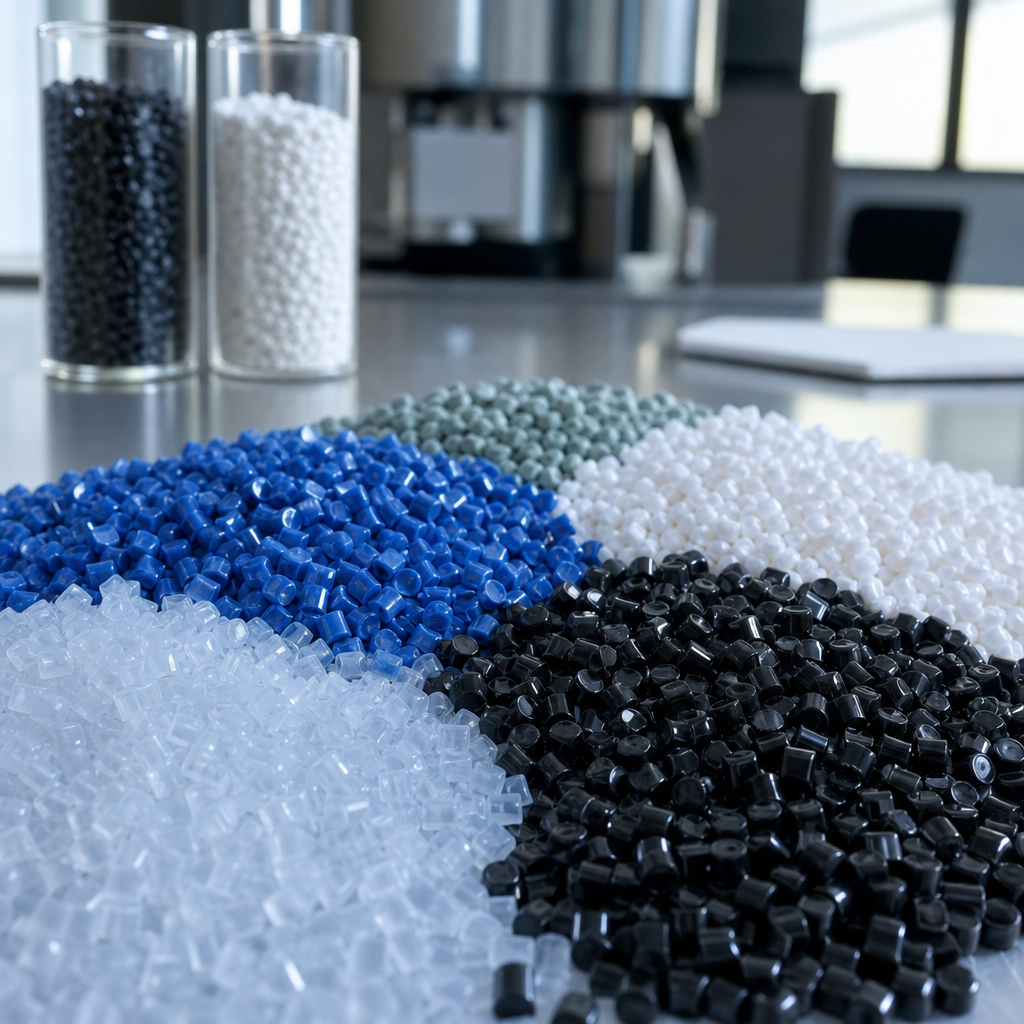
Innovations in polymer blends for high-performance applications are reshaping how engineers solve durability, weight, heat, chemical resistance, and manufacturability challenges across modern industry. A polymer blend is a physical combination of two or more polymers designed to deliver a balance of properties that a single resin cannot provide alone. In practice, these systems can be miscible, partially miscible, or immiscible, with performance governed by phase morphology, interfacial adhesion, molecular weight, crystallinity, and processing history. I have worked on projects where a simple switch from a neat engineering thermoplastic to a compatibilized blend solved stress cracking in fluid-handling parts without adding machining steps or major tooling cost. That is why blends matter: they turn material selection from a compromise into a problem-solving discipline.
As a hub page for problem-solving with polymers, this article explains how polymer blends are used to meet demanding application targets, where they outperform base resins, and what technical decisions determine success. High-performance applications span automotive under-hood components, electrical connectors, medical housings, aerospace interiors, membranes, battery modules, industrial seals, and consumer electronics that must survive impact, temperature cycling, ultraviolet exposure, sterilization, or aggressive chemicals. The core idea is straightforward. By combining polymers such as polycarbonate, ABS, nylon, PBT, PPO, PEI, PPS, or elastomers, formulators can tune stiffness, toughness, flame behavior, dimensional stability, dielectric performance, and surface quality. The result is not just a new material grade; it is a targeted answer to a defined engineering failure mode, which is the lens every application team should use when evaluating blends.
Why polymer blends outperform single-resin solutions
Most high-performance plastic failures begin with a mismatch between service conditions and a resin’s inherent property profile. A material may have excellent tensile strength yet fail under repeated impact, hold dimensions well yet crack in oils, or survive chemicals yet warp under heat. Polymer blends address these gaps by combining complementary behaviors. A classic example is PC/ABS, where polycarbonate contributes heat resistance and toughness while ABS improves processability and low-temperature impact performance. This blend became a standard for automotive interior trim, laptop housings, and appliance enclosures because it offers a practical balance of stiffness, aesthetics, and moldability that neither component delivers alone at the same cost point.
Another important family is PPE or PPO blended with polystyrene or polyamides. These systems improve dimensional stability, hydrolysis resistance, and electrical properties in applications such as pump components, electrical parts, and water-contact housings. In under-hood environments, nylon blended with elastomeric modifiers can significantly increase notched impact strength, helping air-intake manifolds and clips survive assembly abuse and winter conditions. In cable management and electrical systems, PBT blends are used because they process cleanly, retain dielectric strength, and can achieve good flame performance with appropriate packages. Across these examples, the principle is consistent: blends let engineers optimize a property set rather than chase one headline number from a datasheet.
The real advantage appears when the design team defines the failure mode precisely. If a part fails by brittle fracture after paint baking, the answer may be a heat-resistant toughened blend. If a housing creeps near a fastener boss, the answer may be a glass-filled blend with higher modulus and lower moisture sensitivity. If a membrane housing swells in a cleaning agent, the answer may be a more chemically resistant matrix paired with a compatibilizer that preserves impact strength. Blends are therefore not generic upgrades. They are engineered responses to stress, environment, geometry, and process constraints, which makes them central to problem-solving with polymers.
Core innovation areas driving modern blend development
The most important innovations in polymer blends are happening in compatibilization, morphology control, reactive extrusion, sustainable feedstocks, and multifunctional additive integration. Compatibilizers are often grafted copolymers such as maleic anhydride-grafted polyolefins or styrene-ethylene/butylene-styrene systems that improve interfacial adhesion between otherwise incompatible phases. When interfacial tension is reduced and adhesion is increased, the dispersed phase can deform under stress rather than debond, which improves impact toughness and fatigue resistance. I have seen a small change in compatibilizer loading transform fracture surfaces from clean brittle planes into energy-absorbing ductile morphologies under SEM analysis, directly correlating with drop-test survival.
Reactive extrusion has also changed how blends are built. Rather than melt-mixing polymers passively, formulators can trigger in-situ chain extension, grafting, branching, or transesterification during compounding. This is particularly useful in polyester-based blends, where chain extenders improve melt strength and stabilize recycled content. Morphology control is equally critical. The size, shape, and distribution of phases influence properties more than many teams expect. Co-continuous morphologies can improve conductivity pathways or permeability control, while fine rubber domains can toughen a rigid matrix without destroying stiffness. Processing conditions such as screw design, residence time, shear rate, and cooling profile strongly affect this structure, so material selection and process development cannot be separated.
Sustainability is now shaping blend innovation as much as performance. Recycled PET blended with impact modifiers, polyamides blended with bio-based feedstocks, and mechanically recycled polyolefins upgraded through compatibilization are moving from niche trials into production. The challenge is variance control. Post-consumer and post-industrial streams can fluctuate in viscosity, contamination, and color, so high-performance blend design increasingly relies on robust incoming characterization using DSC, TGA, FTIR, melt flow testing, and rheology. The strongest formulations are not simply greener versions of legacy materials; they are redesigned systems built to absorb variability while still meeting UL, ISO, ASTM, or OEM validation requirements.
How engineers match blend design to specific application problems
Successful blend selection starts with a disciplined translation of field problems into measurable material requirements. Engineers should define service temperature range, load case, expected chemicals, regulatory constraints, assembly method, appearance targets, and likely failure mechanisms. For example, in electric vehicle battery packs, polymer blends used for module covers or connector components must balance flame retardancy, dielectric integrity, dimensional stability, and resistance to thermal cycling. A blend with excellent impact strength but poor comparative tracking index may create electrical reliability issues. Conversely, a highly flame-retardant formulation that becomes brittle after humidity aging may fail in assembly. The solution only becomes obvious once the problem is framed in application terms rather than generic material labels.
Medical and laboratory equipment offers another useful case study. Housings, trays, and sterilizable components often require resistance to disinfectants, repeated wiping, or gamma and EtO sterilization. Polycarbonate blends can provide clarity and toughness, but some grades are vulnerable to environmental stress cracking from certain cleaners. In these cases, polyester blends, acrylic-modified systems, or high-heat amorphous blends may perform better, even if they require different gate design or drying conditions. In industrial pumps and valves, blends based on PPS, fluoropolymers, or modified nylons may be chosen because they hold properties in hot water, fuels, or corrosive media where commodity resins fail quickly.
| Application problem | Common blend approach | Main benefit | Typical tradeoff |
|---|---|---|---|
| Impact failure in housings | PC/ABS or toughened nylon | Higher ductility and drop resistance | Lower chemical resistance in some fluids |
| Warping near heat sources | PBT/PET or PPE blends | Better dimensional stability and heat performance | Processing window can narrow |
| Chemical stress cracking | Modified polyester or specialty polyamide blends | Improved resistance to cleaners, oils, fuels | May need stricter drying and mold control |
| Electrical insulation with flame limits | Flame-retardant PBT or PA blends | Dielectric performance with compliance potential | Additives can reduce toughness |
| Weight reduction versus metal | Glass-filled engineering blends | High stiffness-to-weight ratio | Surface finish and weld-line behavior can suffer |
This problem-first approach is the foundation for every supporting article in this subtopic. Whether the issue is creep, impact, hydrolysis, wear, permeability, flame performance, or recyclability, the same method applies: define the failure, identify the limiting property, screen candidate blends, then validate under realistic conditions. That sequence saves time and prevents a common mistake, which is selecting a resin family based on reputation instead of evidence.
Processing, testing, and validation in high-performance environments
Even the best polymer blend can fail if it is processed incorrectly. Moisture-sensitive materials such as polyamides, polyesters, and many high-heat resins require controlled drying to avoid hydrolysis, viscosity loss, splay, and reduced mechanical performance. Shear-sensitive blends can degrade if screw speed, back pressure, or residence time are excessive. Fillers and reinforcements alter flow orientation, which affects warpage, weld-line strength, and anisotropy. In molding trials, I look first at moisture content, melt temperature, mold temperature, gate location, and venting before blaming the formulation. Many “material failures” are really processing failures that changed morphology or molecular integrity before the part ever reached testing.
Validation for high-performance applications must go beyond standard datasheet values. Tensile strength and HDT are useful screening metrics, but they are not enough for real service conditions. Engineers should use instrumented impact testing, DMA for temperature-dependent modulus, chemical immersion with retained property measurement, creep testing under load, CTI and dielectric tests for electrical parts, and aging protocols that reflect actual duty cycles. Automotive programs may require thermal shock, fluid exposure, fogging, and OEM-specific odor or emissions standards. Medical devices may require biocompatibility screening, sterilization aging, and extractables review. Aerospace interior materials may face FAR 25.853 flammability and smoke requirements. A blend is only high performance if it stays functional after realistic exposure, not just if it posts impressive initial numbers.
Digital tools are improving this work. Moldflow analysis helps predict filling, sink, and warpage. Finite element analysis can use orthotropic material cards for reinforced blends to estimate deformation around fasteners or snap fits. Rheometry and microscopy reveal whether compounding created the expected phase structure. Still, simulation cannot replace physical validation, because blends often respond to long-term heat, humidity, and chemicals in nonlinear ways. Smart teams use analysis to narrow options, then confirm performance with targeted testing that mirrors field use as closely as possible.
Where the next generation of polymer blends is heading
The next wave of innovation is focused on electrification, circularity, lightweighting, and function integration. Electric vehicles need polymers that manage heat, insulate electricity, resist coolants, and survive aggressive assembly cycles. Data centers and 5G hardware require blends with stable dielectric properties, low warpage, and reliable flame performance in compact geometries. Industrial automation is pushing for housings and connectors that can handle oils, vibration, and higher operating temperatures without moving to metal. In each case, blend technology is evolving to deliver multiple functions at once rather than one property improvement at a time.
Advanced compatibilizers, nanofillers, and hybrid reinforcement systems are central to this shift. Conductive blends for EMI shielding now combine polymer matrices with carbon-based networks while trying to preserve toughness and processability. Thermally conductive yet electrically insulating blends use boron nitride or specialized ceramic fillers to move heat away from batteries and power electronics. Self-reinforced and long-fiber blends are improving stiffness without the weight penalty of traditional metal solutions. At the same time, recyclability is forcing designers to think about disassembly, mono-material strategies, and the compatibility of blend components in future recovery streams. The winning materials will not just perform well today; they will fit tomorrow’s manufacturing and regulatory landscape.
For teams building a problem-solving with polymers knowledge base, polymer blends deserve central attention because they connect chemistry, processing, design, and field reliability. The key lesson is simple: the best blend is the one engineered around a specific application problem and verified under realistic conditions. Start with the failure mode, use morphology and compatibilization deliberately, validate with the right standards, and account for processing from the beginning. If you are selecting materials for demanding parts, use this hub as your starting point, then map each challenge to the right blend strategy and test plan before finalizing design decisions.
Frequently Asked Questions
What are polymer blends, and why are they important for high-performance applications?
Polymer blends are physical combinations of two or more polymers formulated to achieve a property profile that a single material often cannot deliver on its own. Instead of relying on one resin to provide strength, toughness, heat resistance, chemical stability, processability, and weight reduction all at once, engineers can combine complementary polymers to create a more balanced system. This approach is especially important in high-performance applications, where materials must meet demanding mechanical, thermal, environmental, and manufacturing requirements simultaneously.
In practical terms, polymer blends help solve real engineering tradeoffs. A material with excellent stiffness may be too brittle, while one with good impact resistance may lack dimensional stability at elevated temperatures. By blending polymers, developers can tailor performance for specific end uses in automotive components, aerospace interiors, electrical housings, medical devices, industrial equipment, and consumer electronics. These blends are increasingly valuable because they support lightweighting, durability, and design flexibility without always requiring the cost of fully custom polymer synthesis. As industries push for higher efficiency and longer service life, polymer blends have become a critical tool for designing materials that perform reliably under complex operating conditions.
How does miscibility affect the performance of a polymer blend?
Miscibility plays a central role in determining how a polymer blend behaves. In a miscible blend, the polymers mix at the molecular level and form a single-phase material. This often leads to more uniform properties, clearer thermal behavior, and consistent mechanical performance. In partially miscible or immiscible blends, the polymers separate into distinct phases, and the size, shape, and distribution of those phases strongly influence the final material properties. Whether a blend is fully miscible or not, the key issue is how the internal structure, or morphology, supports the target application.
For high-performance uses, immiscible blends are actually quite common, but they require careful control. If the phase domains are too large or poorly bonded, the blend may suffer from weak impact strength, poor fatigue resistance, or inconsistent dimensional stability. On the other hand, a well-engineered multiphase morphology can produce an excellent combination of toughness, stiffness, heat resistance, and processability. Interfacial adhesion is especially important because stress must transfer effectively between phases under load. This is why compatibilizers, reactive processing, and optimized compounding conditions are often used to refine morphology and improve phase interaction. In short, miscibility is not simply a binary material trait; it is a design variable that directly shapes performance, reliability, and manufacturability.
What recent innovations are improving the performance of polymer blends?
Recent innovations in polymer blends are focused on better control of phase morphology, stronger interfacial adhesion, and broader multifunctional performance. One major area of progress is the use of advanced compatibilizers, including grafted polymers, block copolymers, and reactive additives that chemically or physically improve the interface between otherwise incompatible polymers. These materials help reduce domain size, stabilize phase structure, and improve stress transfer, which can significantly enhance impact resistance, tensile properties, and long-term durability.
Another important innovation is the use of precision compounding and processing technologies. Improved extrusion systems, better screw designs, in-line monitoring, and data-driven process optimization allow manufacturers to fine-tune dispersion and morphology with greater consistency. Researchers are also combining polymer blending with reinforcing fillers, flame retardants, conductive additives, and nanomaterials to create multifunctional systems. For example, a blend can now be designed not only for toughness and heat resistance but also for electromagnetic shielding, reduced flammability, or improved barrier properties. In addition, sustainability-driven innovation is expanding the use of recycled polymers, bio-based resins, and circular design strategies within high-performance blends. The result is a new generation of polymer systems that are more application-specific, more efficient to process, and better aligned with performance and environmental goals.
What properties can engineers optimize by using polymer blends instead of a single polymer?
Engineers use polymer blends because they offer a practical way to optimize multiple properties at the same time. Depending on the formulation, blends can improve toughness, stiffness, impact strength, heat deflection performance, chemical resistance, wear behavior, dimensional stability, and low-temperature durability. They can also reduce density, improve surface appearance, enhance flow during molding, and support more efficient manufacturing. In many cases, the goal is not to maximize one property in isolation, but to create a balanced material that performs reliably across the full range of conditions the part will experience.
This is particularly valuable in high-performance environments, where components are exposed to thermal cycling, mechanical stress, aggressive chemicals, UV exposure, or repeated loading. For example, an automotive under-hood part may need to resist heat and fluids while still being lightweight and moldable into complex shapes. An electrical enclosure may need flame resistance, dimensional control, and impact toughness. A medical device housing may require sterilization resistance, appearance quality, and crack resistance. Polymer blends allow engineers to tune these combinations more effectively than many single-resin systems. When blend composition, morphology, and interfacial design are properly controlled, the result can be a material platform that is both technically robust and commercially efficient.
What industries benefit most from innovations in high-performance polymer blends?
A wide range of industries benefit from advances in high-performance polymer blends, especially those under pressure to improve durability, reduce weight, increase thermal capability, and streamline manufacturing. The automotive sector is one of the largest users, because polymer blends help reduce vehicle mass while maintaining impact performance, chemical resistance, and thermal stability in interior, exterior, and under-the-hood applications. Aerospace also benefits from blends that contribute to lightweight structures, flame performance, cabin durability, and resistance to harsh operating conditions. In electrical and electronics markets, polymer blends are used for housings, connectors, and structural parts that must balance insulation, dimensional stability, heat resistance, and flame retardancy.
Medical, industrial, packaging, construction, and consumer goods sectors also gain significant advantages. In medical applications, blends can be tailored for sterilization tolerance, toughness, and process consistency. In industrial equipment, they support wear resistance, mechanical strength, and chemical durability. In construction and infrastructure, they can improve weatherability, impact performance, and service life. Even in advanced packaging, polymer blends are being engineered for barrier properties, sealability, and sustainability. What makes these materials so broadly useful is their adaptability. As application requirements become more demanding and more specialized, polymer blends give manufacturers a scalable way to engineer materials around performance targets rather than forcing product design to conform to the limits of a single polymer.