Conductive polymers moved from laboratory curiosities to commercially important materials because they combine two properties that industry rarely gets in one package: the processability of plastics and the charge transport of semiconductors or metals. In practical terms, a conductive polymer is an organic macromolecule whose backbone supports delocalized electrons, allowing electrical conductivity after doping, blending, or structural design. Polyaniline, polypyrrole, polyacetylene, poly(3,4-ethylenedioxythiophene), and polythiophene derivatives are the most established families, and each has found distinct roles across electronics, energy, medicine, coatings, and sensing. I have worked with these materials in product evaluation and pilot manufacturing, and the pattern is consistent: they succeed not when they try to replace copper everywhere, but when their light weight, flexibility, tunable chemistry, and printable form factors solve a problem rigid conductors cannot.
That distinction matters for anyone researching successful applications of conductive polymers. The value of these materials is not defined by peak conductivity alone. It is defined by system-level performance: whether a transparent electrode survives bending, whether an antistatic coating can be applied at room temperature, whether a biosensor surface can communicate with tissue, and whether a battery electrode maintains ion transport during cycling. Conductive polymers also matter because they support manufacturing methods such as solution coating, inkjet printing, slot-die deposition, vapor phase polymerization, and roll-to-roll processing. Those methods reduce weight, simplify device assembly, and open product categories that conventional metals and brittle oxides struggle to serve. As a hub for successful polymer applications, this article maps where conductive polymers have delivered reliable outcomes, why they work in those contexts, and what technical limits still shape adoption.
Why conductive polymers succeed where conventional conductors fail
The first successful conductive polymer applications appeared where metallic alternatives were either too heavy, too rigid, too corrosive, or too difficult to pattern over large areas. That is why these materials became important in antistatic packaging, electromagnetic shielding coatings, flexible displays, and organic electronics long before they threatened bulk wiring. Conductive polymers can be deposited on films, textiles, paper, foams, and complex three-dimensional parts. Their electrical behavior can also be tuned across many orders of magnitude through oxidation state, counterion choice, morphology control, and composite formulation. In product development, that tunability is often more useful than chasing the conductivity of aluminum.
A good example is PEDOT:PSS, the water-dispersible complex widely used in transparent conductive layers and hole transport films. Its conductivity can be dramatically increased through secondary dopants such as dimethyl sulfoxide or ethylene glycol, post-treatment with sulfuric acid, and careful control of film drying. At the same time, formulators can optimize adhesion, work function, optical transmittance, and flexibility. Indium tin oxide still leads in some transparent electrode applications, especially where lowest sheet resistance is critical, but PEDOT-based systems outperform brittle oxides in repeated bending and in substrates that cannot tolerate vacuum sputtering. Successful applications of conductive polymers repeatedly follow this pattern: they win when multiple performance requirements must be met at once.
Antistatic coatings, EMI shielding, and industrial packaging
One of the most mature successful polymer applications is electrostatic discharge control. Warehouses, cleanrooms, semiconductor assembly lines, and explosive environments all need materials that dissipate charge without creating sparks or contaminating sensitive products. Conductive polymers such as polyaniline and polypyrrole have been incorporated into coatings, films, fibers, and packaging structures to deliver surface resistivity in the static-dissipative range. Unlike carbon black, which can darken materials and affect mechanical properties, conductive polymer systems can be formulated with better color flexibility and more uniform thin-film behavior.
Electromagnetic interference shielding is another area where conductive polymer composites have delivered commercial value. By blending conductive polymers with carbon nanotubes, graphene, metal flakes, or intrinsically conductive fibers, manufacturers produce housings and laminates that attenuate unwanted electromagnetic radiation while keeping components lighter than metal enclosures. Automotive electronics and telecommunications equipment benefit from this approach because every gram matters and geometries are increasingly complex. In practice, the polymer matrix provides formability and corrosion resistance, while the conductive phase establishes percolation pathways. The exact shielding effectiveness depends on conductivity, thickness, frequency range, and interfacial design, but the commercial lesson is clear: conductive polymers are effective when they are engineered as part of a composite system rather than treated as a drop-in metal substitute.
Flexible displays, touch panels, and printed electronics
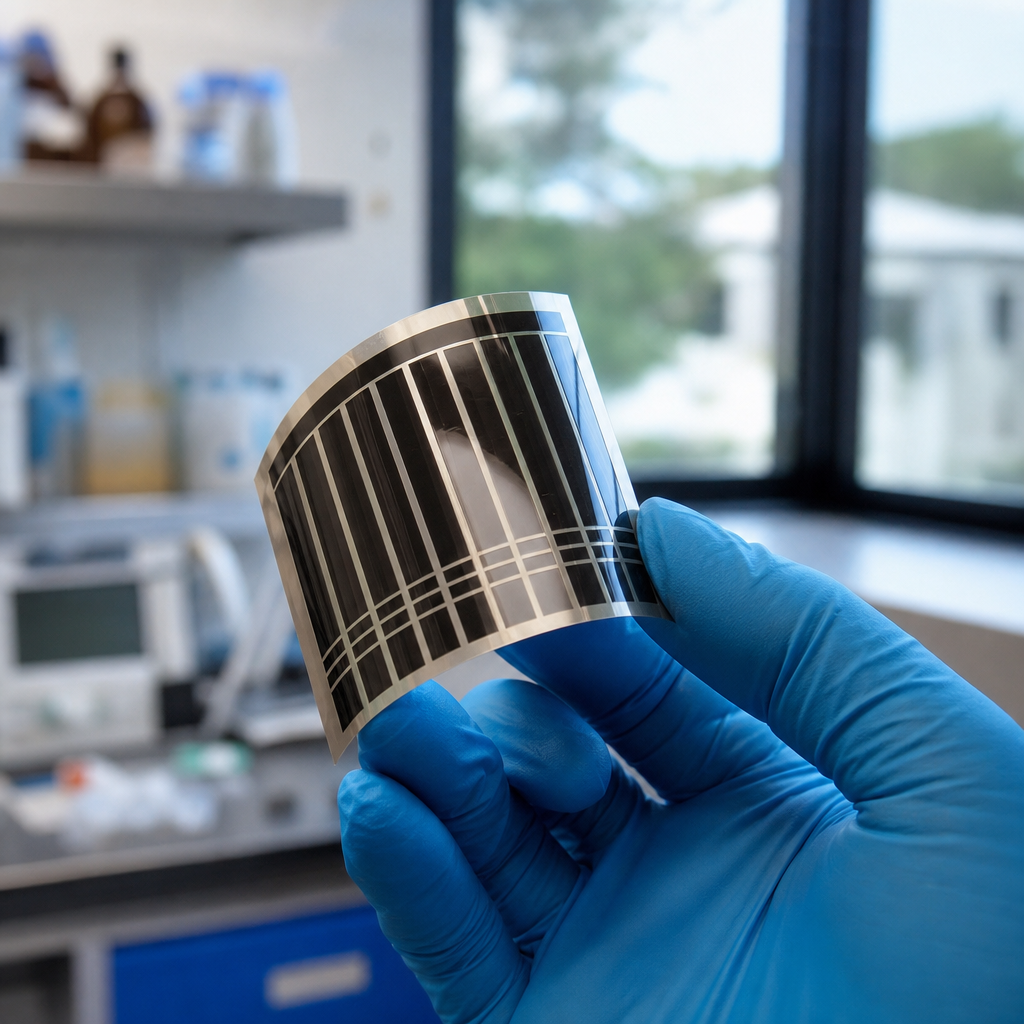
Flexible electronics is where conductive polymers gained their strongest reputation for enabling products that would otherwise be difficult to build. In OLED displays, PEDOT:PSS has long been used as a hole injection or hole transport layer because its work function aligns well with many active organic semiconductors, and its smooth films reduce pinholes that can short thin devices. It also planarizes rough electrode surfaces, which improves yield. That role may seem modest compared with a bulk electrode, but in manufacturing, yield improvement is often the difference between a viable display process and an expensive failure mode.
Printed electronics extends that advantage beyond displays. Conductive polymer inks can be deposited by screen printing, gravure, flexography, aerosol jet, and inkjet methods on plastic films, labels, and paper. This has enabled smart packaging, low-cost RFID-related components, membrane switches, heaters, and disposable diagnostics. The appeal is not just lower material use; it is the ability to print circuitry over large areas with limited tooling complexity. When I have seen these projects succeed, the teams focused early on ink rheology, substrate surface energy, drying kinetics, and contact resistance at interfaces. Conductive polymers reward process discipline. Devices fail less from the polymer concept itself than from poor film formation, moisture sensitivity, or incompatible encapsulation strategies.
| Application area | Common conductive polymer | Why it succeeds | Main limitation |
|---|---|---|---|
| OLED hole transport layers | PEDOT:PSS | Smooth films, good work function, solution processability | Moisture sensitivity and acidity in some formulations |
| Antistatic packaging | Polyaniline blends | Charge dissipation with lightweight coatings | Environmental stability varies by formulation |
| Biosensors | Polypyrrole | Easy electropolymerization and biomolecule immobilization | Long-term drift in wet environments |
| Supercapacitor electrodes | Polyaniline or polypyrrole | High pseudocapacitance and fast redox response | Swelling and cycle-life degradation |
| Organic solar cells | PEDOT:PSS | Transparent interfacial layer compatible with printing | Lower conductivity than inorganic electrodes |
Energy storage and conversion: batteries, supercapacitors, and solar cells
Among successful applications of conductive polymers, energy devices are the most technically ambitious. In supercapacitors, polyaniline, polypyrrole, and PEDOT can store charge through rapid surface and near-surface redox reactions, producing pseudocapacitance that exceeds purely electrostatic double-layer storage for a given mass. Researchers and manufacturers exploit this by coating conductive scaffolds, carbon cloth, metal foams, or nanostructured carbons with thin polymer layers. When done well, the result is high power density, low equivalent series resistance, and flexible device formats suitable for wearables and compact electronics.
The challenge is mechanical and electrochemical durability. Conductive polymers swell and contract during repeated doping and dedoping, which can crack films or disconnect active material from the current collector. The most successful commercial and near-commercial designs therefore use thin conformal coatings, composite electrodes, or hierarchical porous substrates that accommodate volume change. Batteries use similar logic. Conductive polymers can serve as binders, coatings, or active materials that improve electron transport and interfacial stability in cathodes and anodes. They are particularly valuable in sulfur batteries and silicon-rich electrodes, where dynamic interfaces demand materials that are both electronically active and mechanically forgiving.
In solar cells, conductive polymers appear in both organic photovoltaic architectures and as interfacial layers in hybrid devices. PEDOT:PSS became standard because it can be coated from water, offers decent transparency, and smooths rough interfaces. Yet here, too, the limitations are real: acidity and hygroscopicity can accelerate degradation if the device stack and encapsulation are not designed carefully. Successful deployment depends on barrier films, neutralized formulations, or alternative transport layers where stability targets are strict. The broader takeaway is that conductive polymers add value in energy systems when their electronic function is integrated with morphology control and interface engineering.
Biomedical devices, neural interfaces, and biosensors
Biomedical engineering has produced some of the most compelling successful polymer applications because soft, ionically rich biological environments expose the weaknesses of rigid conductors. Neural electrodes, cardiac interfaces, and tissue-contacting biosensors benefit from coatings that lower impedance, improve charge injection capacity, and better match the mechanical compliance of tissue. PEDOT, often electropolymerized with biologically relevant dopants, is widely studied and increasingly used because it forms rough, high-surface-area coatings that facilitate mixed ionic and electronic transport. That combination is critical for communicating with cells.
Polypyrrole has also been used in biosensors and drug-delivery-enabled interfaces because it can be electropolymerized directly onto microelectrodes while entrapping enzymes, antibodies, or other functional molecules. Glucose sensing, dopamine detection, and cell monitoring platforms have all benefited from this chemistry. In practical device work, however, biocompatibility claims must be specific. A polymer may be cytocompatible in one formulation and unsuitable in another due to residual monomer, dopant choice, sterilization effects, or mechanical debris generated over time. Regulatory pathways demand reproducibility, extractables control, and stability data, not just promising bench results. Conductive polymers succeed in medical settings when they improve signal quality or therapeutic performance without creating a new reliability burden.
Textiles, wearables, and smart surfaces
Wearable electronics need conductors that survive flexing, washing, and skin contact while remaining light and unobtrusive. Conductive polymers fit that requirement better than brittle coatings, especially when applied as fiber coatings, blended yarns, stretchable inks, or laminated thin films. Commercial examples include heated garments, pressure-sensitive insoles, physiological monitoring patches, and antistatic workwear. PEDOT-based coatings on fabrics can maintain conductivity under moderate bending because the conductive network moves with the textile rather than fracturing like a ceramic film. For designers, that means garments can retain drape and comfort instead of becoming stiff laminated electronics.
Smart surfaces follow the same principle on non-textile substrates. Conductive polymer coatings are used in corrosion-resistant layers, electrochromic windows, de-icing films, and touch-responsive interfaces. Electrochromic devices are especially instructive because polymers such as polyaniline and polythiophene derivatives change optical properties with redox state. That enables windows and displays that switch color or transparency with applied voltage. The commercial promise is strong, but durability under ultraviolet exposure, humidity, and repeated cycling still determines whether a prototype becomes a building product. Successful polymer applications in wearables and smart surfaces therefore depend less on headline conductivity than on adhesion, fatigue resistance, wash stability, and environmental sealing.
What separates successful applications from failed prototypes
After years of watching conductive polymer projects move from promising samples to actual products, I have found that success depends on five nonnegotiable factors. First, choose the material family for the operating environment, not just the lab result; polyaniline, for example, can be excellent in sensors and antistatic coatings but may struggle where long-term humidity stability is unmanaged. Second, design interfaces carefully, because contact resistance and delamination erase gains from a highly conductive film. Third, account for processing windows, including solvent compatibility, drying temperature, and shear history, since morphology drives performance. Fourth, validate aging under realistic thermal, moisture, UV, and mechanical stress. Fifth, use conductive polymers where their combination of flexibility, tunable chemistry, and scalable coating creates a clear system advantage over metals, carbon inks, or inorganic oxides.
The most successful applications of conductive polymers are not accidents of novelty. They are examples of materials engineering aligned with product constraints. Antistatic films work because they need controlled resistivity, not copper-like conduction. OLED stacks benefit because interfacial smoothness and work function matter as much as bulk conductivity. Neural electrodes improve because mixed ionic and electronic transport supports better biological communication. Supercapacitors gain because redox-active polymers can store charge rapidly when supported by stable architectures. If you are building out a broader view of successful polymer applications, use these cases as decision models: define the performance bottleneck, match it to the polymer’s strengths, and test the known failure modes early. That approach turns conductive polymers from an interesting class of materials into dependable commercial tools.
Frequently Asked Questions
What are conductive polymers, and why are they important in modern industry?
Conductive polymers are organic macromolecules engineered so their molecular backbone supports the movement of delocalized electrons. Unlike conventional plastics, which are usually electrical insulators, these materials can carry charge when they are properly doped, blended, or structurally tailored. That unique behavior is what made conductive polymers so significant: they bridge a gap that industry has long wanted to close by combining the easy processing, lightweight nature, and flexibility of plastics with the electronic functionality more commonly associated with semiconductors or even metals.
This combination has practical value across many sectors. Manufacturers can often process conductive polymers into thin films, coatings, fibers, or complex shapes using scalable methods such as printing, casting, and coating, which are typically less expensive and more adaptable than techniques used for brittle inorganic materials. At the same time, these polymers can be tuned for conductivity, transparency, chemical sensitivity, mechanical flexibility, and environmental stability. Materials such as polyaniline, polypyrrole, polyacetylene, and poly(3,4-ethylenedioxythiophene), commonly known as PEDOT, have all played important roles in moving the field from scientific novelty to real commercial relevance.
In modern industry, conductive polymers matter because they enable products that are lighter, more flexible, and easier to manufacture than many traditional electronic materials. They support innovation in antistatic coatings, sensors, energy storage devices, flexible electronics, electromagnetic shielding, corrosion protection, and biomedical interfaces. Their importance is not just that they conduct electricity, but that they do so in forms and formats conventional conductors often cannot match.
What are the most successful real-world applications of conductive polymers?
The most successful applications of conductive polymers are those where their electrical behavior works together with their polymer-like processability. One well-established use is in antistatic and electrostatic discharge protection. Conductive polymer coatings and blends are widely used in electronic packaging, industrial floors, textiles, and plastic housings to prevent charge buildup that could damage sensitive components or attract dust. These applications are commercially important because they take advantage of moderate conductivity without requiring the weight or rigidity of metal-based solutions.
Another major success story is in capacitors and energy storage. Conductive polymers, especially PEDOT and polyaniline derivatives, have been used in solid electrolytic capacitors to improve performance characteristics such as low equivalent series resistance and reliable charge transport. In batteries and supercapacitors, conductive polymers can serve as active electrode materials, conductive additives, or protective interlayers. Their redox activity and tunable chemistry make them attractive for next-generation energy devices, particularly where lightweight construction and flexible form factors are valued.
Conductive polymers have also become central to printed and flexible electronics. Transparent conductive coatings based on PEDOT:PSS are used in displays, touch-sensitive surfaces, organic solar cells, and other electronic structures where optical transparency and conductivity must coexist. In sensors, these materials have proven especially useful because their electrical properties can change in response to gases, humidity, strain, biomolecules, or pH. That makes them well suited for wearable devices, environmental monitoring, and medical diagnostics.
Additional successful applications include corrosion-resistant coatings, electromagnetic interference shielding, actuators, and bioelectronics. In each case, the commercial success comes from a balance of properties rather than conductivity alone. Conductive polymers succeed when designers need an electronic material that can also bend, coat, conform, print, or interact gently with biological or soft surfaces.
Why is PEDOT:PSS considered one of the most important conductive polymer systems?
PEDOT:PSS is widely regarded as one of the most important conductive polymer systems because it offers an unusually practical combination of conductivity, processability, transparency, and relative stability. PEDOT, or poly(3,4-ethylenedioxythiophene), is the electronically active polymer, while PSS, polystyrene sulfonate, helps disperse it in water and makes it easier to process into uniform films. That formulation allows manufacturers and researchers to deposit it using scalable techniques such as spin coating, inkjet printing, slot-die coating, and spray coating, which is a major reason it became so commercially relevant.
Its role in transparent conductive films is especially important. Traditional transparent conductors such as indium tin oxide perform well but can be brittle and less suitable for repeated bending. PEDOT:PSS offers a softer, more flexible alternative for applications including organic light-emitting devices, touch panels, solar cells, wearable electronics, and flexible sensors. It is often used as a hole transport layer, electrode modifier, or conductive coating that improves charge collection and device efficiency while preserving mechanical compliance.
Another reason PEDOT:PSS stands out is that its properties can be significantly tuned. Conductivity can often be enhanced through solvent treatments, secondary dopants, formulation changes, or post-processing steps. Film thickness, work function, optical transmission, and surface roughness can also be adjusted for specific device architectures. This versatility has made PEDOT:PSS a platform material rather than a niche one.
While it does have limitations, including sensitivity to moisture in some formulations and conductivity levels that may not replace metals in every role, its overall utility is exceptional. Few conductive polymer systems have had the same impact across research, prototyping, and commercial products. PEDOT:PSS is important not simply because it works in the lab, but because it works in real manufacturing environments and in a wide variety of end uses.
How do conductive polymers improve batteries, supercapacitors, and other energy storage technologies?
Conductive polymers contribute to energy storage technologies by adding both electrical functionality and electrochemical activity. In batteries and supercapacitors, charge must move efficiently through electrodes and interfaces. Conductive polymers help create pathways for electron transport while also participating in redox processes in many cases. That dual role can improve overall device performance, especially when low weight, mechanical flexibility, or high surface-area architectures are important.
In supercapacitors, conductive polymers such as polyaniline, polypyrrole, and PEDOT are especially valuable because they can store charge through faradaic mechanisms, often referred to as pseudocapacitance. This can lead to higher capacitance compared with purely electrostatic carbon-based systems alone. When these polymers are combined with carbon nanotubes, graphene, activated carbon, or metal oxides, they can form hybrid electrodes that balance conductivity, surface area, and energy storage behavior. Such composites are a major area of practical development because they often outperform single-component materials.
In batteries, conductive polymers can function as conductive coatings on active particles, binders with electronic functionality, or even active materials in organic electrode systems. They can help reduce interfacial resistance, buffer mechanical stress during charge-discharge cycling, and improve contact between components. In flexible and wearable energy devices, these benefits are particularly important because rigid conductive additives and metallic current collectors can limit device durability and comfort.
That said, conductive polymers are not a universal replacement for all electrode materials. Challenges such as swelling, structural degradation over repeated cycles, and limits on long-term stability still matter. Even so, their successful application in energy storage is growing because they solve design problems that traditional materials do not address as easily. Their greatest value often appears in hybrid systems, where they enhance performance, enable new form factors, and support more adaptable manufacturing approaches.
What challenges affect the broader adoption of conductive polymers, and what does the future look like?
The broader adoption of conductive polymers is shaped by a few key challenges, the most important being stability, conductivity optimization, and consistency at scale. Although these materials can conduct electricity, their performance often depends strongly on doping level, processing history, morphology, humidity, temperature, and chemical environment. That means two samples of the same nominal material may not behave identically unless manufacturing is tightly controlled. For commercial users, repeatability is just as important as peak performance.
Environmental and operational durability are also major concerns. Some conductive polymers can lose conductivity over time due to dedoping, oxidation, moisture uptake, thermal stress, or mechanical fatigue. In demanding applications such as outdoor electronics, automotive systems, or long-life energy devices, even modest degradation can limit adoption. There is also the issue of performance ceilings: while conductive polymers can reach impressive conductivity levels, they do not always match the absolute conductivity of metals, so engineers must choose applications where the full package of properties justifies the tradeoff.
Even with these limitations, the future is very promising. Materials science is steadily improving polymer design, dopant chemistry, nanocomposite architectures, and scalable processing methods. Researchers are developing more stable backbones, better interface engineering strategies, stretchable and self-healing formulations, and greener synthesis routes. These advances are expanding where conductive polymers can be used, especially in soft electronics, smart textiles, biomedical devices, printed sensors, organic photovoltaics, and lightweight energy systems.
Looking ahead, the strongest growth will likely come from applications that benefit from flexibility, low-temperature processing, biocompatibility, and integration with large-area manufacturing. Conductive polymers are unlikely to replace metals and inorganic semiconductors across the board, but they do not need to. Their future lies in enabling products that traditional materials cannot deliver efficiently. That is exactly how they moved from laboratory curiosities to commercially important materials, and it is why their role in advanced technology will continue to expand.