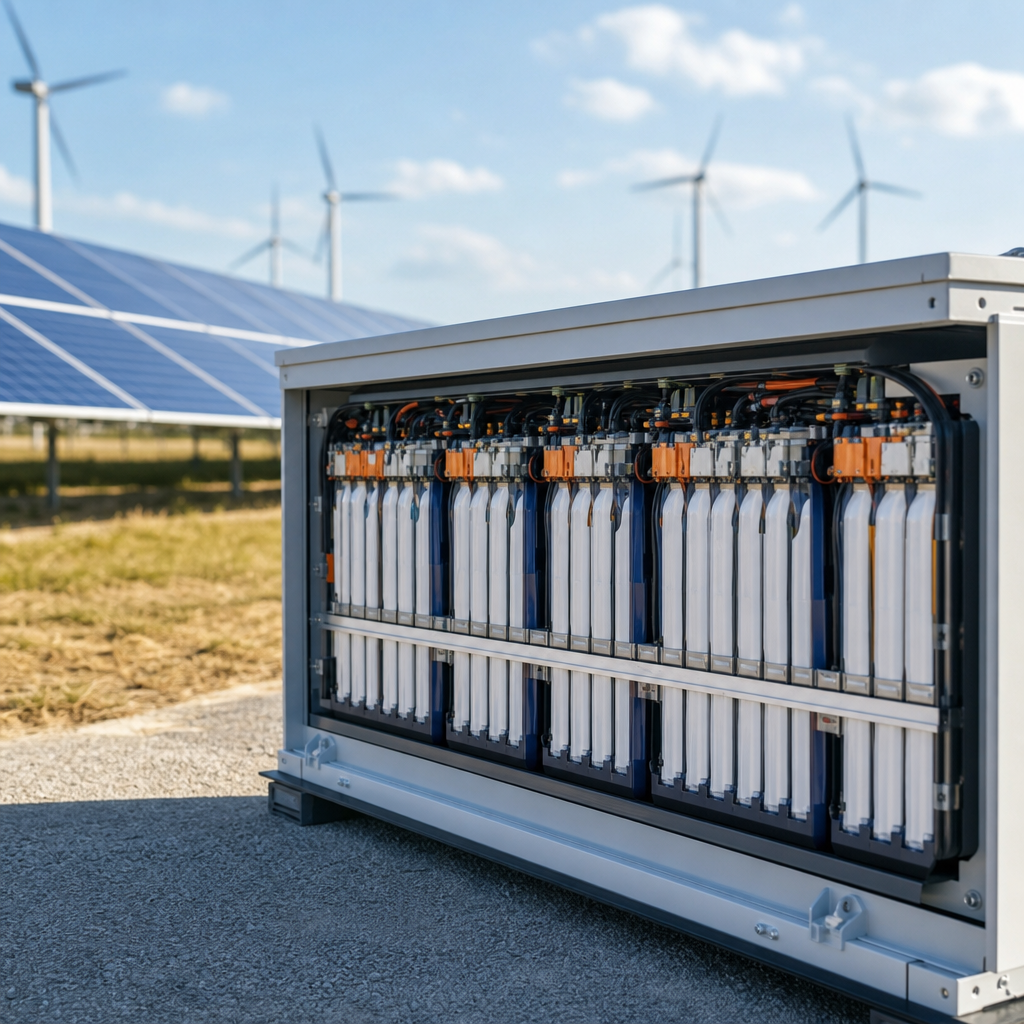
Polymers are becoming central to renewable energy storage because they solve a practical problem that engineers face every day: how to store intermittent solar and wind power in systems that are lighter, safer, cheaper, and easier to manufacture at scale. In this context, polymers include natural, synthetic, and hybrid macromolecules used as binders, separators, solid electrolytes, gel electrolytes, membranes, encapsulants, and structural components inside batteries, supercapacitors, hydrogen systems, and thermal storage units. Renewable energy storage refers to the technologies that capture energy from variable sources and release it when needed, whether over seconds, hours, or seasons. I have seen projects stall not because the electrochemistry was weak, but because materials around the active components failed under heat, cycling, moisture, or mechanical stress. That is why polymer selection matters. These materials influence ion transport, fire behavior, manufacturing yield, service life, recyclability, and overall system cost. As utilities, electric vehicle fleets, and distributed energy developers expand storage deployments, polymers are no longer secondary ingredients. They are often the reason a storage technology becomes commercially viable, environmentally acceptable, and durable enough for real operating conditions.
The environmental and sustainable applications of polymers in energy storage span the entire value chain. At the design stage, polymer chemistry helps reduce reliance on scarce metals by enabling alternative battery architectures such as sodium-ion, zinc-based, redox flow, and solid-state systems. During manufacturing, water-processable polymer binders can replace solvent-heavy formulations that depend on N-methyl-2-pyrrolidone, a costly solvent with strict handling requirements. In operation, advanced membranes and separators improve efficiency and suppress failure modes like dendrite growth, thermal runaway, electrolyte leakage, and gas crossover. At end of life, bio-based or depolymerizable materials can support easier recovery and lower environmental burden, although this area still lags commercialization. As a hub topic under case studies and applications, this article explains where polymers are used, how they affect performance and sustainability, and which environmental tradeoffs decision-makers should understand before adopting a material or technology pathway.
Why polymers matter in modern energy storage
Polymers matter because storage devices are integrated systems, not just collections of active powders. In lithium-ion batteries, the cathode and anode may attract attention, yet polymeric binders hold electrode particles together, adhere coatings to current collectors, and preserve porosity for ion movement. Polyvinylidene fluoride, commonly called PVDF, has dominated many lithium-ion electrode formulations because it offers chemical resistance and strong adhesion. However, in silicon-rich anodes or sustainable manufacturing lines, carboxymethyl cellulose and styrene-butadiene rubber often perform better because they accommodate volume expansion and can be processed in water. This shift is not trivial. Water-based electrode processing cuts solvent recovery equipment, lowers occupational exposure concerns, and can reduce manufacturing emissions when the line is properly engineered.
Separators are another critical example. Polyethylene and polypropylene microporous films physically isolate electrodes while allowing ions to pass through liquid electrolyte. Their shutdown behavior under elevated temperature can improve safety, but these polymers also have thermal limitations. For higher-temperature or high-power applications, researchers and manufacturers increasingly use ceramic-coated polymer separators or polymer composites to improve puncture resistance, dimensional stability, and wettability. In practice, this means a storage pack can survive abuse conditions more safely and retain performance over more cycles. The result is lower replacement frequency and less material throughput per unit of stored energy over the system lifetime.
Polymers also enable form factors that metals and ceramics cannot easily deliver. Flexible supercapacitors, wearable energy storage, structural batteries, and conformable modules for building-integrated renewables depend on polymer substrates and electrolytes. On grid sites, polymeric housings, potting compounds, cable insulation, thermal interface materials, and encapsulants protect storage hardware from humidity, dust, salt spray, and vibration. These functions rarely appear in headline performance metrics, but they determine uptime in the field.
Polymers in lithium-ion, sodium-ion, and solid-state batteries
In commercial lithium-ion batteries, polymers appear in every layer. PVDF remains standard in many cathodes, while polyethylene oxide, polyacrylonitrile, polymethyl methacrylate, and block copolymers are studied for gel and solid electrolytes. The sustainability discussion starts with processing. Traditional PVDF cathodes are often cast using NMP solvent, which demands recovery systems and careful compliance management. By contrast, waterborne binders such as CMC, SBR, alginate, and polyacrylic acid have become important for greener electrode manufacturing, especially on graphite and silicon anodes. Alginate, derived from brown algae, has drawn interest because its carboxyl groups bond effectively with silicon particles, improving cycle life in high-expansion electrodes.
Sodium-ion batteries highlight how polymers support lower-cost, more abundant chemistry. Since sodium is more abundant than lithium, sodium-ion is attractive for stationary renewable energy storage. Yet sodium ions are larger, which changes electrode mechanics and interfacial behavior. Polymer binders with strong elasticity and ionic compatibility help maintain electrode integrity during repeated sodiation and desodiation. Hard carbon anodes, Prussian white cathodes, and layered oxide systems all depend on binder and separator choices that stabilize interfaces and keep resistance manageable. Several commercial sodium-ion developers emphasize manufacturability on existing lithium-ion lines, and polymer processing compatibility is a major reason that transition is feasible.
Solid-state batteries often promise higher safety and energy density, but their polymer story is more nuanced than marketing suggests. Pure polymer electrolytes, especially polyethylene oxide-based systems, can transport lithium ions effectively at elevated temperature, yet room-temperature conductivity remains a challenge. Composite approaches, combining polymers with ceramic fillers such as LLZO or LATP, try to balance processability with conductivity and interfacial stability. In pilot work, I have seen polymer-rich interlayers solve contact problems between rigid electrolytes and electrodes more effectively than brute-force stack pressure alone. Still, no polymer electrolyte is a universal answer. Designers must consider electrochemical stability window, mechanical modulus, dendrite suppression, manufacturability, and moisture sensitivity together.
| Storage technology | Main polymer roles | Sustainability advantage | Key limitation |
|---|---|---|---|
| Lithium-ion | Binders, separators, gel electrolytes, encapsulation | Water-based processing can cut solvent use and emissions | Some standard binders rely on fluorinated chemistry |
| Sodium-ion | Binders, separators, coatings, packaging films | Supports storage based on abundant raw materials | Larger ion size stresses interfaces and electrode structure |
| Solid-state | Polymer electrolytes, composite interlayers, sealants | Lower leakage and potentially better safety | Room-temperature conductivity can be insufficient |
| Redox flow | Ion-exchange membranes, tank linings, gaskets | Long-duration storage with replaceable electrolytes | Membrane cost and crossover losses remain significant |
Flow batteries, hydrogen systems, and membrane-based storage
Redox flow batteries are among the clearest examples of polymers driving environmental performance. In vanadium redox flow batteries, ion-exchange membranes separate half-cells while allowing selected ions to move and maintaining charge balance. Perfluorosulfonic acid membranes such as Nafion are widely used because of strong conductivity and chemical durability, but they are expensive and can permit vanadium crossover that reduces efficiency. This has created demand for hydrocarbon-based membranes, anion-exchange membranes, and reinforced composites that lower cost and tune selectivity. Since the power stack and electrolyte tanks are decoupled in flow batteries, they are suited to long-duration storage that helps renewable-heavy grids manage multi-hour fluctuations. Better polymer membranes directly improve round-trip efficiency and operating life.
Hydrogen energy storage also depends heavily on polymers. Proton exchange membrane electrolyzers use polymer electrolyte membranes to split water into hydrogen and oxygen. Proton exchange membrane fuel cells then use closely related membrane technology to convert hydrogen back into electricity. These systems can absorb surplus renewable generation and serve as seasonal or industrial-scale storage. Nafion has long been the benchmark membrane, but the sustainability conversation includes fluorinated material use, catalyst loading, membrane longevity, and water purity requirements. Researchers are developing hydrocarbon membranes, reinforced thin films, and more durable ionomers to reduce cost and improve lifetime under dynamic operation tied to solar and wind variability.
Beyond electrochemical performance, polymers in hydrogen systems provide sealing, tubing, liners, insulation, and gas barrier layers. Type IV hydrogen tanks rely on polymer liners with composite overwraps, enabling much lower weight than all-metal alternatives. However, hydrogen permeation, embrittlement interactions in adjacent components, and end-of-life treatment of composite structures remain important sustainability challenges. In real projects, material compatibility testing under pressure cycling and humidified conditions is essential. A polymer that looks stable in a lab coupon test may behave differently in a full stack, manifold, or storage vessel after thousands of startup-shutdown cycles.
Bio-based, recyclable, and low-impact polymer pathways
The strongest environmental case for polymers in renewable energy storage is not simply that they are lightweight. It is that the right polymer can reduce hazardous solvent use, extend device life, enable abundant-ion chemistries, and improve repair or recycling outcomes. Bio-based binders are a practical illustration. Sodium alginate, chitosan, cellulose derivatives, lignin-based formulations, and guar gum have all been explored as electrode binders. Some already show competitive adhesion and cycling performance in laboratory and pilot settings, especially for silicon, sulfur, zinc, and hard-carbon electrodes. Their renewable feedstocks do not automatically make them superior, but they can lower fossil dependence and support safer processing.
Recyclability is more complicated. Many battery polymers are tightly integrated with active materials, metals, salts, and additives, so separating them economically is difficult. Fluorinated binders can complicate thermal treatment because decomposition products require careful control. This is one reason the battery industry is evaluating binder systems designed for easier delamination, solvent-free processing, or cleaner thermal behavior. Direct recycling methods, which aim to recover cathode materials with less structural damage than smelting, can benefit when polymer components are easier to remove without harsh chemistry. In my experience, recyclers care less about elegant chemistry on paper and more about whether a material fits into high-throughput, contamination-tolerant operations.
Life cycle assessment offers the right framework for judging these pathways. A polymer from biomass is not necessarily low impact if land use, purification energy, or short service life offset feedstock benefits. Likewise, a fluoropolymer may be defensible when it significantly extends system life, reduces failure rates, and prevents premature replacement. Sustainable material choice in storage should therefore consider embodied carbon, toxicity profile, water use, processing energy, durability, and recovery options together. Standards such as ISO 14040 and ISO 14044 guide this analysis, and serious procurement teams increasingly ask for environmental product data rather than generic green claims.
Case studies in environmental and sustainable applications
Utility-scale battery projects provide clear case studies. Many grid storage suppliers have shifted portions of anode manufacturing from solvent-based to water-based binder systems to reduce plant complexity and compliance costs. On large lines, removing or minimizing NMP handling can lower capital requirements for solvent recovery and air treatment while improving worker safety. Another case comes from lithium iron phosphate batteries used in stationary storage. Although the cathode chemistry gets most of the sustainability attention because it avoids cobalt and nickel, polymer separator coatings and binder choices strongly influence thermal stability and cycle life, especially in hot climates where passive cooling margins are narrow.
In long-duration storage demonstrations, vanadium flow batteries have shown how membrane improvements affect economics. A membrane with lower vanadium crossover can raise coulombic efficiency and reduce electrolyte rebalancing frequency, which lowers operating costs and waste streams. In microgrids powered by solar plus storage, that translates into fewer maintenance interventions and more reliable service. Similarly, zinc-based aqueous batteries use polymer gels and separators to manage dendrite formation and water activity. These systems are attractive for safety-sensitive sites because aqueous electrolytes are less flammable than conventional lithium-ion electrolytes, and polymer engineering is a large part of making them cycle reliably.
There are also building and consumer applications. Phase change thermal storage panels often use polymer encapsulation to contain salts or paraffins, helping buildings shift heating and cooling loads to match renewable generation. Supercapacitors for regenerative braking and wind turbine pitch systems use polymer separators and binders that must survive rapid charge-discharge cycles with minimal degradation. Across these examples, the recurring lesson is simple: polymer components are not peripheral. They decide whether a sustainable storage concept survives contact with manufacturing realities and field conditions.
Challenges, standards, and what comes next
Despite the momentum, several challenges remain. First, polymer degradation under electrochemical, thermal, and mechanical stress is still a major source of failure. Oxidation at high cathode voltage, hydrolysis in humid systems, swelling in liquid electrolytes, and chain scission during repeated cycling can all reduce performance. Second, environmental claims around bio-based or recyclable polymers are often ahead of industrial validation. A binder that works in coin cells may fail in thick electrodes, fast-dry coating lines, or ten-year outdoor service. Third, scaling a promising polymer from kilogram batches to automotive or grid qualification takes years because consistency, impurity control, and supply security matter as much as peak performance.
Standards and test methods are therefore essential. Battery materials are assessed using electrochemical impedance spectroscopy, differential scanning calorimetry, thermogravimetric analysis, peel strength testing, puncture resistance, and abuse testing aligned with UL and IEC frameworks. Hydrogen membranes and seals undergo accelerated stress tests for chemical durability and gas crossover. Flow battery membranes are evaluated for area resistance, selectivity, chemical stability, and crossover rates. Engineers should insist on data from realistic full-cell or stack conditions, not just half-cell results or isolated membrane conductivity values.
Looking ahead, the most important advances will likely come from multifunctional polymers rather than single-purpose materials. Expect binders that self-heal microcracks, separators that shut down safely while resisting shrinkage, solid electrolytes that combine ion conduction with mechanical robustness, and membrane chemistries tailored for long-duration grid storage rather than laboratory benchmarks. If you are evaluating renewable energy storage technologies, examine the polymer system with the same seriousness you give the active materials. It is often the quiet determinant of sustainability, safety, and commercial success. Use this hub as your starting point, then map each storage application to the polymer properties that matter most in service.
Frequently Asked Questions
1. Why are polymers so important in renewable energy storage systems?
Polymers are important in renewable energy storage because they help solve several core engineering challenges at once: weight, safety, cost, manufacturability, and long-term performance. Solar and wind power are intermittent by nature, so energy storage devices must be able to charge and discharge reliably, often under demanding conditions, while remaining affordable enough for large-scale deployment. Polymers support this goal because they are highly adaptable materials that can be engineered for specific mechanical, thermal, electrical, and chemical properties.
In practical systems, polymers appear in many roles. They are used as binders that hold active particles together in battery electrodes, as separators that prevent short circuits while allowing ions to move, as solid and gel electrolytes that improve safety compared with flammable liquid systems, as membranes in hydrogen technologies and flow batteries, and as encapsulants and structural components that protect devices from moisture, stress, and environmental degradation. This versatility makes polymers central not just to one technology, but across lithium-ion batteries, sodium-ion batteries, redox flow batteries, supercapacitors, fuel cells, electrolyzers, and hydrogen storage systems.
Another reason polymers matter is scalability. Many polymer-based components can be processed using established industrial methods such as coating, extrusion, casting, lamination, and roll-to-roll manufacturing. That creates a path toward lower production costs and faster commercial adoption. In short, polymers are not simply passive support materials; they are enabling materials that help renewable energy storage systems become lighter, safer, more durable, and more economically viable.
2. What roles do polymers play inside batteries and supercapacitors?
Inside batteries and supercapacitors, polymers often perform multiple functions simultaneously, which is one reason they are so valuable. In battery electrodes, polymer binders hold together active materials, conductive additives, and current collectors. Although binders do not usually store energy themselves, they strongly influence cycle life, mechanical stability, and resistance to cracking or delamination. This is especially important in electrodes that expand and contract during charging and discharging, such as silicon-based anodes or other high-capacity materials.
Polymers are also widely used as separators, the thin layers that keep the positive and negative electrodes apart while still allowing ionic transport. A good polymer separator must be chemically stable, mechanically strong, porous in the right way, and resistant to overheating. In advanced battery designs, polymer separators may be modified with ceramic coatings, functional groups, or shutdown features that improve thermal safety and reduce the risk of internal short circuits.
In addition, polymers can serve as solid electrolytes or gel electrolytes, replacing or reducing conventional liquid electrolytes. This is one of the most promising areas in energy storage because polymer electrolytes can improve safety, reduce leakage, and support flexible or solid-state device designs. While ionic conductivity and interfacial performance remain active research areas, polymer-based electrolytes are increasingly being tailored for better room-temperature operation and compatibility with high-energy electrode materials.
In supercapacitors, polymers can contribute as binders, separators, electrolytes, and even active materials. Conductive polymers such as polyaniline, polypyrrole, and PEDOT-based systems can store charge through pseudocapacitive mechanisms, making them useful for high-power applications. They also enable flexible and lightweight energy storage devices for wearable electronics, distributed sensors, and grid-support applications where rapid charge-discharge performance is valuable. Overall, polymers help batteries and supercapacitors achieve the balance between energy density, power density, safety, flexibility, and manufacturability that renewable energy applications increasingly demand.
3. How do polymers improve the safety and durability of energy storage technologies?
Polymers improve safety and durability by acting as carefully engineered barriers, supports, and transport media inside energy storage devices. Safety is a major concern in systems that store large amounts of energy, especially when these systems operate outdoors, in utility-scale installations, or in electric mobility applications connected to renewable power. Polymer components help reduce risk by controlling ion transport, insulating electrically where needed, resisting chemical attack, and limiting mechanical damage during repeated cycling.
For example, polymer separators in batteries are designed to keep electrodes from touching while maintaining ionic movement. If that separator fails, a short circuit can occur, so material selection and structure are critical. Many advanced polymer separators are engineered to resist puncture, shrink less at elevated temperatures, and in some cases shut down ion flow under abnormal heating conditions. Polymer electrolytes can also improve safety by replacing flammable organic liquids with less volatile solid or gel systems, which reduces leakage and can lower fire risk.
Durability is equally important, particularly for renewable energy storage systems expected to operate for years with minimal maintenance. Polymers help here by absorbing stress, maintaining electrode cohesion, preventing particle isolation, and protecting components from moisture, oxygen, and contaminants. Encapsulant polymers and protective membranes can dramatically extend the service life of devices exposed to outdoor environments or varying temperatures. In hydrogen systems and flow batteries, polymer membranes must maintain selectivity and chemical stability over long operating periods, which directly affects efficiency and lifespan.
Importantly, modern polymer design allows scientists to tune properties such as flexibility, crystallinity, crosslinking density, porosity, and thermal resistance. That means a polymer can be optimized not only to survive in harsh electrochemical environments, but to actively improve the reliability of the whole system. As renewable energy storage infrastructure grows, these safety and durability advantages make polymer-based materials increasingly indispensable.
4. Are polymer-based energy storage materials more sustainable and cost-effective than traditional alternatives?
They can be, but the answer depends on the application, the specific polymer chemistry, and the full life-cycle design of the storage system. From a cost perspective, polymers are attractive because many can be produced at large scale using relatively mature manufacturing techniques. They are often lightweight, require less energy-intensive shaping than metals or ceramics, and can be integrated into continuous fabrication methods that support high-throughput production. This can reduce both material handling costs and system-level costs, especially in applications where weight, flexibility, or form factor matter.
From a sustainability perspective, polymers offer both opportunities and challenges. On the positive side, researchers are increasingly developing bio-based, recyclable, water-processable, and lower-toxicity polymers for use in electrodes, separators, and electrolytes. Natural polymers and modified biopolymers such as cellulose, chitosan, alginate, and lignin-derived materials are being explored because they can reduce dependence on petroleum-based feedstocks and, in some cases, improve environmental compatibility. Water-based polymer binders, for instance, can lower solvent emissions and simplify manufacturing compared with systems that rely on harsher chemical processing.
However, not all polymer systems are automatically sustainable. Some synthetic polymers are difficult to recycle, rely on fossil-derived raw materials, or degrade into problematic waste streams if not properly managed. Performance also matters: a polymer that extends battery life, improves efficiency, or prevents failure can deliver major sustainability benefits at the system level by reducing replacement frequency and material waste. Conversely, a lower-cost polymer that performs poorly may increase lifecycle impacts if it leads to shorter service life or lower energy efficiency.
So the most accurate view is that polymers are a powerful pathway toward more sustainable and cost-effective energy storage, especially when paired with thoughtful materials selection, cleaner processing, longer product life, and end-of-life recovery strategies. In many renewable energy storage technologies, the future is likely to involve smarter polymer design rather than simply more polymer use.
5. What is the future of polymers in renewable energy storage research and commercialization?
The future of polymers in renewable energy storage is exceptionally strong because the field is moving beyond viewing polymers as passive supporting materials and toward using them as performance-defining components. Researchers are developing next-generation polymers with tailored ionic conductivity, self-healing behavior, flame resistance, selective transport properties, redox activity, and mechanical adaptability. These features are especially important as storage systems become more specialized, from grid-scale batteries and flow systems to flexible electronics, hydrogen technologies, and compact storage for distributed renewable installations.
One major direction is solid-state and quasi-solid-state energy storage. Polymer solid electrolytes and gel electrolytes are being intensively studied as safer alternatives to conventional liquid electrolytes, with the goal of enabling higher-energy batteries and more stable long-term operation. Another fast-growing area is multifunctional polymer design, where a single material may provide structural support, ionic transport, chemical protection, and thermal management at the same time. This kind of integration could simplify device architecture and lower manufacturing complexity.
Commercialization is also likely to expand through hybrid materials. Many of the most promising systems combine polymers with ceramics, nanomaterials, ionic liquids, carbon materials, or bio-derived compounds. These hybrids can overcome the weaknesses of any single material class, producing better conductivity, stronger interfaces, and improved durability. In hydrogen energy systems, polymer membranes remain central to proton exchange membrane fuel cells and electrolyzers, and continued advances in membrane chemistry will be crucial for reducing costs and increasing efficiency.
Looking ahead, the biggest winners will likely be polymer technologies that combine high performance with scalable manufacturing and credible sustainability advantages. Industry is not just asking whether a polymer works in the lab; it wants to know whether that material can be produced consistently, processed economically, integrated safely, and recovered responsibly at end of life. Because polymers can be engineered at the molecular and process levels,