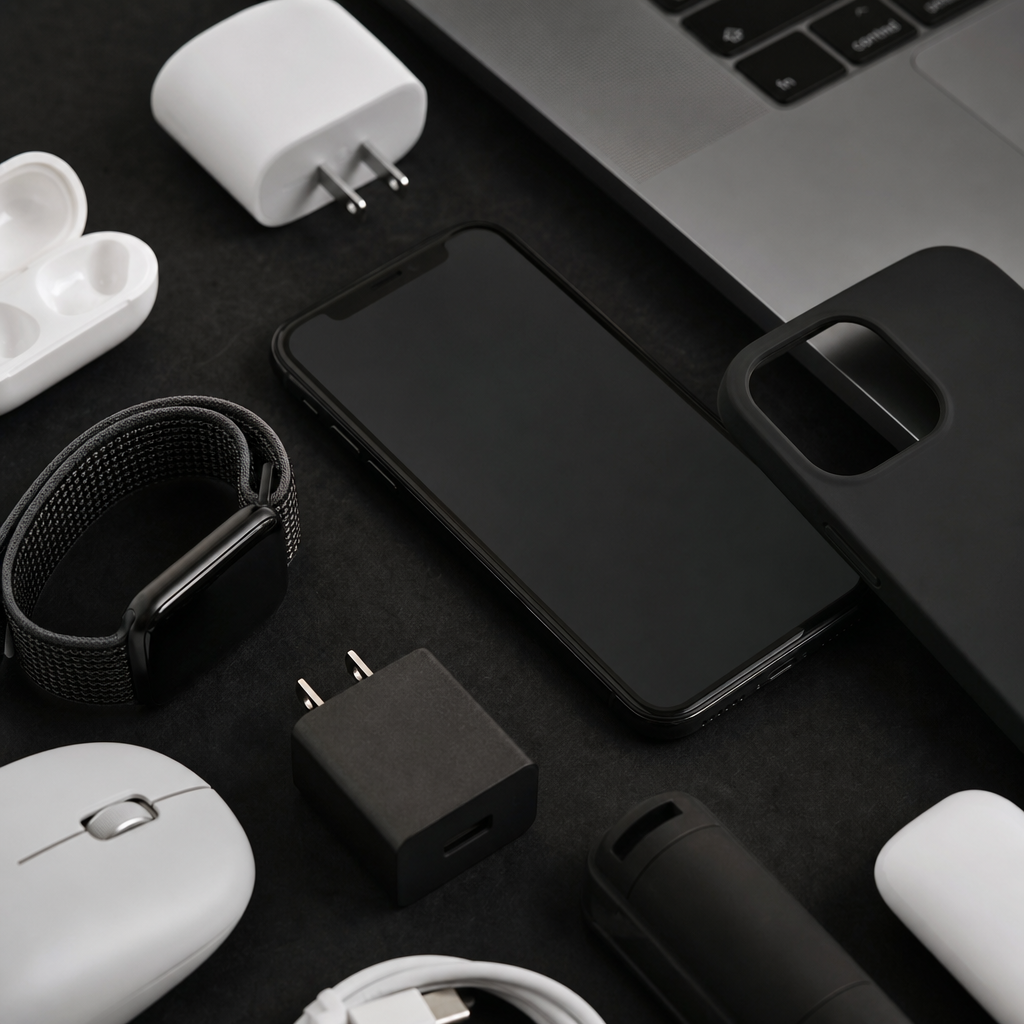
Polymers have become indispensable in consumer electronics manufacturing because they solve a difficult engineering problem: how to make devices lighter, tougher, safer, cheaper, and easier to mass produce without compromising performance. In this case study, polymers include thermoplastics such as polycarbonate, ABS, polypropylene, PBT, and LCP, as well as thermosets, elastomers, adhesives, conformal coatings, and engineered composites used in housings, connectors, displays, batteries, wearables, and internal assemblies. Consumer electronics manufacturing covers smartphones, laptops, tablets, earbuds, smartwatches, televisions, game consoles, routers, chargers, and smart home devices produced at very high volume under strict cost and reliability targets. I have worked with material selection reviews where one resin change affected drop performance, EMI shielding strategy, tooling cost, and regulatory approval all at once; in electronics, polymer choice is rarely cosmetic. It matters because electronics brands compete on thinness, battery life, tactile quality, repairability, sustainability claims, and speed to market, and polymers influence every one of those outcomes.
This hub article examines how polymers are applied across major product categories, what manufacturing and compliance constraints shape those choices, and which tradeoffs repeatedly appear in real programs. It also serves as a gateway for deeper industry-specific case studies within the wider applications category, because lessons learned in smartphones differ from those in appliances, automotive electronics, or medical devices. The central question is straightforward: which polymer systems deliver the right balance of mechanical strength, heat resistance, dielectric behavior, dimensional stability, appearance, and processability for a given consumer electronics application? The answer depends on use environment, wall thickness, assembly method, cosmetic expectations, and regional regulations such as UL flammability requirements, RoHS substance restrictions, and IEC reliability testing. Understanding those variables helps engineers avoid common failures such as stress whitening, sink marks, brittle snaps, warped bezels, connector creep, adhesive delamination, and charging port fracture.
Why polymers dominate electronics product design
Metals still matter in frames, heat spreaders, and premium exterior surfaces, but polymers dominate by volume because injection molding, insert molding, extrusion, film casting, and overmolding support complex geometry at scale with tight repeatability. A single molded part can integrate bosses, ribs, clips, light pipes, antenna windows, gasket lands, and cosmetic texture that would require multiple metal parts and secondary operations. In phone and earbud programs, I have seen a housing redesign cut assembly time simply by moving from a machined component stack to a molded PC/ABS part with molded-in alignment features. Material density is another advantage. Polycarbonate blends and glass-filled nylons weigh far less than aluminum or zinc while still meeting stiffness targets in many internal structures. Polymers also offer strong electrical insulation, tunable transparency, chemical resistance, and compatibility with high-volume decoration methods including in-mold labeling, vacuum metallization, laser etching, pad printing, and hard coating.
Cost performance is the real driver. Resin prices can be volatile, but total system cost often favors polymers because tooling amortizes well at consumer electronics volumes and cycle times are fast. A charger enclosure molded in flame-retardant PC can run in seconds, while a metal enclosure would add forming, machining, edge finishing, coating, and grounding steps. Polymers also help brands hit design goals that consumers notice immediately. Soft-touch TPE improves grip on remote controls and wearables. Optical-grade PMMA and polycarbonate enable light transmission in indicators and sensor windows. Liquid crystal polymer in high-speed connectors maintains precise geometry at very thin sections, preserving signal integrity for USB-C, board-to-board, and RF modules. When devices get thinner and more integrated, the ability to tailor modulus, melt flow, dielectric constant, and thermal expansion becomes a strategic manufacturing advantage rather than a commodity choice.
Core polymer families and where they are used
Different polymer families occupy distinct roles because no single material can meet every mechanical, thermal, electrical, and cosmetic requirement. PC/ABS blends remain common for exterior housings, monitor bezels, and accessory shells because they balance impact strength, dimensional stability, and paintability. Pure polycarbonate is preferred where toughness and transparency are critical, including protective covers, optical windows, and some battery housings. ABS appears in lower-cost products where stiffness, colorability, and easy molding matter more than high heat resistance. Polypropylene is less visible in premium housings but widespread in living hinges, packaging-adjacent components, and some battery insulation parts due to chemical resistance and low density. PBT and PA66 are standard in connectors, coil bobbins, and internal supports where heat resistance and electrical performance are essential. LCP is the high-performance choice for miniature connectors and antennas because it flows into thin walls and holds dimensions extremely well.
Elastomers and specialty polymers are equally important. Silicone is used in gaskets, keypads, wearable bands, and thermal interface pads because it maintains elasticity across a broad temperature range. TPU appears in cable jackets and overmolded protective cases thanks to abrasion resistance and tactile feel. Epoxy molding compounds encapsulate chips and protect semiconductor packages. Acrylic and urethane adhesives bond display stacks and camera modules. Conformal coatings shield circuit boards from moisture and ionic contamination. Fluoropolymers appear in high-performance wire insulation where thermal and chemical resistance are nonnegotiable. Carbon-filled or metal-coated polymers deliver EMI shielding in routers, consoles, and phone components where uncontrolled emissions would cause compliance failures or wireless interference. In practice, the material stack of a single smartphone can include more than a dozen polymer systems, each selected for a narrow function and processed through very different manufacturing windows.
Representative case studies across consumer electronics
Smartphones provide the clearest example of polymer complexity. Exterior materials may suggest metal and glass, but polymers still appear in antenna lines, camera brackets, speaker modules, adhesive films, connector housings, battery insulation, waterproof seals, and internal midframe components. One recurring challenge is drop durability in thin-wall parts. A switch from standard PC/ABS to a tougher grade can improve impact resistance, but if melt flow changes too much, weld line strength or cosmetic texture may suffer. Another issue is wireless performance. Conductive coatings for EMI control can unintentionally detune antennas, so engineers often segment coated areas and rely on precise masking around RF windows. In foldable devices, polymer films and adhesives become even more critical, with fatigue resistance, crease recovery, and optical clarity directly affecting product life.
Laptops and tablets reveal a different tradeoff set. Structural parts near processors and batteries face sustained heat, so creep resistance and dimensional stability become central. Glass-filled polycarbonate or PBT may replace lower-cost plastics around hinges, ports, and fan shrouds because repeated loading causes crack initiation in weaker materials. Keyboard assemblies depend on thin films, elastomer domes, and flame-retardant substrates that must survive millions of actuations. Display modules combine optically clear adhesives, diffusion films, polarizer protection layers, and molded frames that manage stress without causing mura or light leakage. Wearables emphasize skin contact, sweat resistance, and long-term comfort. Silicone, fluoroelastomers, and specialty coatings are chosen not just for look and feel but for hydrolysis resistance, biocompatibility considerations, and stability under sunscreen, soap, and salt exposure. Earbuds add acoustic tuning constraints, where the geometry and damping behavior of polymer chambers directly shape sound quality.
| Device category | Typical polymer systems | Main engineering priority | Common failure risk |
|---|---|---|---|
| Smartphones | PC/ABS, PC, LCP, silicone, acrylic adhesive | Thin-wall toughness and RF compatibility | Cracking, adhesive lift, antenna detuning |
| Laptops | GF-PC, PBT, PA66, TPU, flame-retardant PC | Heat resistance and hinge durability | Creep, warpage, port fracture |
| Wearables | Silicone, TPU, PC, optical adhesives | Skin comfort and sealing | Sweat degradation, delamination |
| Chargers and power accessories | Flame-retardant PC, PBT, epoxy | Electrical safety and insulation | Tracking, overheating, brittle snaps |
Manufacturing methods, quality control, and reliability testing
Material selection only works when it matches the manufacturing process. Injection molding remains the dominant method, but the details determine yield. Gate location affects weld lines in cosmetic housings and strength in snap features. Moisture-sensitive resins such as nylon, PBT, and some polycarbonate grades need controlled drying or hydrolysis will reduce molecular weight and produce brittle parts. Mold temperature affects gloss, shrinkage, and dimensional stability. Overmolding adds ergonomic grips and seals, yet poor surface energy matching between substrate and elastomer can lead to bond failure after thermal cycling. In-mold decoration can eliminate painting, but film stretch and registration must be tightly controlled on curved geometries. Adhesive lamination of display layers requires particulate control more familiar to cleanrooms than to traditional plastics shops. A dust particle trapped in an optically clear adhesive can turn a high-yield display line into a scrap generator.
Quality control in consumer electronics is heavily data driven. Engineers track melt flow index, ash content in filled resins, moisture level before molding, cavity pressure, and dimensional capability on critical-to-function features. Warpage simulation in Moldflow or Sigmasoft is routinely compared with metrology data from CMM or optical scanning. Reliability testing extends far beyond simple drop tests. Common protocols include thermal shock, temperature humidity bias, salt fog for exposed accessories, UV aging for outdoor devices, sweat and sebum resistance for wearables, and repeated insertion testing for connectors. Safety-critical components often need UL 94 flammability ratings, comparative tracking index evaluation, and glow-wire assessments depending on product class and market. In practice, the most expensive polymer failures are not dramatic melts or fires but subtle drifts: a connector that creeps out of tolerance after reflow-adjacent heating, a seal that compresses permanently, or a decorative coating that flakes after six months of hand oils.
Sustainability, regulation, and supply-chain realities
Sustainability in electronics polymers is no longer limited to recycled content claims on packaging. Brands increasingly ask for post-consumer recycled polycarbonate, bio-based polyamides, halogen-free flame-retardant systems, and designs that simplify disassembly. These goals are legitimate, but they carry engineering constraints. PCR resin can vary in color and impact properties unless tightly compounded and qualified. Bio-based feedstocks may reduce fossil dependence without changing end-of-life outcomes if collection systems are absent. Halogen-free flame retardants help address regulatory and customer concerns, yet they can change flow, toughness, and mold deposit behavior compared with brominated systems. Battery-intensive products raise additional issues around thermal runaway mitigation, insulation films, and adhesive debonding during service. Regulations such as RoHS, REACH, WEEE, and California Proposition 65 shape material declarations, additive choices, and documentation burden across the supply chain.
Procurement and geopolitics also influence polymer strategy. A resin specified solely by one supplier may create line-down risk if compounding capacity shifts or shipping lanes tighten. For that reason, strong electronics manufacturers dual-source materials when possible and build qualification matrices around equivalent grades from suppliers such as SABIC, Covestro, BASF, DuPont, Celanese, Toray, Solvay, and RTP. The nuance is that “equivalent” rarely means identical. Shrink rate, color undertone, laser markability, and even mold release package can differ enough to force tooling or process changes. I have seen programs delayed because a substitute flame-retardant PC passed mechanical tests yet failed cosmetic gloss targets under retail lighting. Sustainable design therefore requires operational realism: verified material traceability, clear change-control procedures, and early collaboration between design, manufacturing, quality, and sourcing teams rather than a late-stage resin swap driven only by cost or marketing.
How this hub connects industry-specific case studies
As a hub for industry-specific case studies, consumer electronics provides a useful baseline because it compresses many polymer challenges into short product cycles and extreme production volumes. The same selection logic extends into adjacent sectors, but with different priorities. Medical electronics place more weight on sterilization resistance, biocompatibility, and traceability. Automotive electronics raise the bar for thermal aging, vibration, chemical exposure, and long service life. Industrial controls emphasize flame performance, dimensional stability, and maintenance access. Home appliances often tolerate thicker walls and lower cosmetic perfection, but they introduce detergent exposure, steam, and long-duration heat. By comparing these sectors, engineers can see which material decisions are universal and which are application specific. That is the main value of a case-study hub: it organizes recurring patterns so future projects start with proven assumptions instead of relearning old failures.
The key takeaway is simple. Polymers are not secondary materials in consumer electronics; they are the enabling platform for safety, miniaturization, comfort, aesthetics, and scalable manufacturing. Good results come from matching polymer chemistry to actual service conditions, validating with process-aware testing, and managing supply-chain changes with discipline. If you are building a material selection framework for electronics programs, use this hub as your starting point, then explore the deeper case studies linked from this topic to compare devices, resin systems, and manufacturing methods in detail.
Frequently Asked Questions
Why are polymers so important in consumer electronics manufacturing?
Polymers are essential in consumer electronics because they help manufacturers balance several competing demands at once: low weight, high durability, electrical safety, attractive design, cost efficiency, and fast large-scale production. Metals, glass, and ceramics still play important roles, but polymers often provide the versatility needed to make devices practical for everyday use. In smartphones, laptops, wearables, chargers, connectors, battery systems, and display assemblies, polymers can be engineered to meet specific mechanical, thermal, electrical, and chemical performance requirements while remaining compatible with high-volume manufacturing methods such as injection molding, overmolding, extrusion, dispensing, coating, and automated assembly.
Another major advantage is design freedom. Thermoplastics such as polycarbonate, ABS, polypropylene, PBT, and liquid crystal polymer can be molded into complex shapes with tight tolerances, integrated clips and ribs, thin walls, and cosmetic surface finishes. That reduces part count and simplifies assembly, which lowers manufacturing cost and improves consistency. At the same time, elastomers improve sealing and grip, adhesives enable lightweight bonding of dissimilar materials, conformal coatings protect sensitive circuitry from moisture and contamination, and engineered composites can increase stiffness or thermal performance where standard plastics may not be enough. In short, polymers are not just substitutes for traditional materials; they are often the reason modern electronic products can be compact, reliable, and economically manufacturable.
Which types of polymers are commonly used in electronics, and what does each one do?
Different polymer families are selected based on the function of the part and the operating environment. Polycarbonate is widely used for housings, transparent covers, and impact-resistant components because it combines toughness, dimensional stability, and good aesthetics. ABS is common in device enclosures and consumer-facing components because it is easy to mold, cost-effective, and capable of achieving smooth cosmetic finishes. Polypropylene is valued for chemical resistance, low density, and flexibility, making it useful in selected internal parts, battery-related components, and living-hinge style applications. PBT is frequently chosen for connectors, switch components, and electrical parts because it has good dimensional stability, electrical insulation properties, and heat resistance.
Liquid crystal polymer, or LCP, is especially important in miniaturized electronics because it offers very high flow during molding, excellent dimensional precision, strong performance at elevated temperatures, and low moisture absorption. That makes it well suited for fine-pitch connectors, high-density electronic parts, and compact components used in advanced devices. Beyond thermoplastics, thermosets are used where permanent heat resistance and structural integrity are needed, such as certain encapsulants and electrical insulation systems. Elastomers are found in seals, gaskets, shock-absorbing elements, and soft-touch features. Adhesives play a major role in attaching displays, securing batteries, bonding structural frames, and reducing the need for mechanical fasteners. Conformal coatings protect printed circuit boards from humidity, dust, chemicals, and corrosion. Engineered composites, including fiber-reinforced polymer systems, can provide higher stiffness, lower weight, and tailored performance in parts that experience greater mechanical or thermal stress. Each material is chosen not in isolation, but as part of an integrated product design strategy.
How do polymers help make electronic devices lighter, tougher, and safer?
Polymers contribute to lightweighting by replacing heavier materials with lower-density alternatives that still deliver sufficient strength and toughness for the application. This is especially valuable in portable electronics, where every gram matters for user comfort, battery efficiency, and shipping economics. A polymer housing or structural insert can significantly reduce mass while still resisting drops, scratches, and everyday wear. Materials like polycarbonate and ABS are widely used because they absorb impact energy well and can be formulated for improved toughness, flame resistance, or surface quality depending on the product’s requirements.
Safety is another key area. Many polymers used in electronics are formulated to meet flame-retardancy standards, electrical insulation requirements, and thermal stability targets. In connectors and battery-adjacent components, the material must maintain shape and dielectric performance under heat and electrical load. Conformal coatings add another layer of protection by insulating circuitry against moisture and contamination that could cause corrosion, short circuits, or premature failure. Elastomeric seals help protect devices from sweat, rain, dust, and vibration, which is particularly important in wearables and mobile products. Adhesives also improve safety and durability by distributing stress more evenly than screws or clips in certain assemblies, reducing localized cracking and helping maintain structural integrity during impact or thermal cycling. Together, these polymer-based solutions improve not just the physical toughness of the device, but also its long-term electrical and environmental reliability.
What manufacturing advantages do polymers offer compared with other materials?
One of the biggest advantages of polymers is manufacturability at scale. Many polymer components can be produced through highly efficient processes like injection molding, where parts are made quickly, repeatedly, and with excellent dimensional consistency. This is ideal for consumer electronics, where millions of units may be produced under tight cost and quality constraints. Complex geometry that would be difficult or expensive to machine in metal can often be molded directly into a polymer part. Features such as snap-fits, cable-routing channels, bosses, mounting points, thin walls, and cosmetic textures can be integrated into a single component, reducing assembly steps and minimizing the need for secondary operations.
Polymers also support flexible assembly strategies. Overmolding allows manufacturers to combine rigid and soft materials into one part, such as a hard structural frame with a soft grip or seal. Adhesives and encapsulants make it possible to join dissimilar materials like glass, metal, and plastic while preserving sleek product designs. Coatings and dispensing materials can be applied selectively for protection, insulation, or thermal management. Because many polymers process at lower temperatures than metals or ceramics, energy use can also be lower in certain manufacturing steps, and tooling can be optimized for speed and repeatability. From a business perspective, the result is faster cycle times, lower part consolidation costs, better design flexibility, and more efficient mass production. These advantages are a major reason polymers have become foundational to the economics of modern electronics manufacturing.
What challenges do engineers face when selecting polymers for housings, connectors, displays, batteries, and wearables?
Material selection in electronics is rarely simple because each application imposes a different combination of mechanical, thermal, electrical, environmental, regulatory, and aesthetic requirements. A housing material may need to resist impact, look premium, accept paint or texture, and remain dimensionally stable over time. A connector resin may need excellent dielectric properties, high heat resistance during soldering, low warpage, and the ability to mold extremely fine details. Display-related materials may need optical clarity, scratch resistance, adhesive compatibility, and resistance to yellowing under UV exposure. Battery-area materials must often withstand elevated temperatures, chemical exposure, flame-retardancy requirements, and long-term aging without losing structural integrity. Wearables add another layer of complexity because materials may contact skin, flex repeatedly, resist sweat and cosmetics, and maintain comfort as well as performance.
Engineers must also consider trade-offs between cost and performance. A high-performance polymer like LCP may be ideal technically, but it may only be justified in miniaturized or high-precision components where its unique properties deliver real value. Moisture absorption, creep, thermal expansion, chemical resistance, recyclability, processing window, colorability, and compatibility with adhesives or coatings can all influence the final choice. Regulatory compliance is another critical factor, including flammability standards, environmental restrictions, and product safety requirements. In practice, the best polymer is the one that performs reliably across the full product lifecycle, from molding and assembly through shipping, consumer use, and long-term durability. That is why successful electronics manufacturers rely heavily on material testing, design validation, and cross-functional collaboration between materials scientists, design engineers, manufacturing teams, and quality specialists.