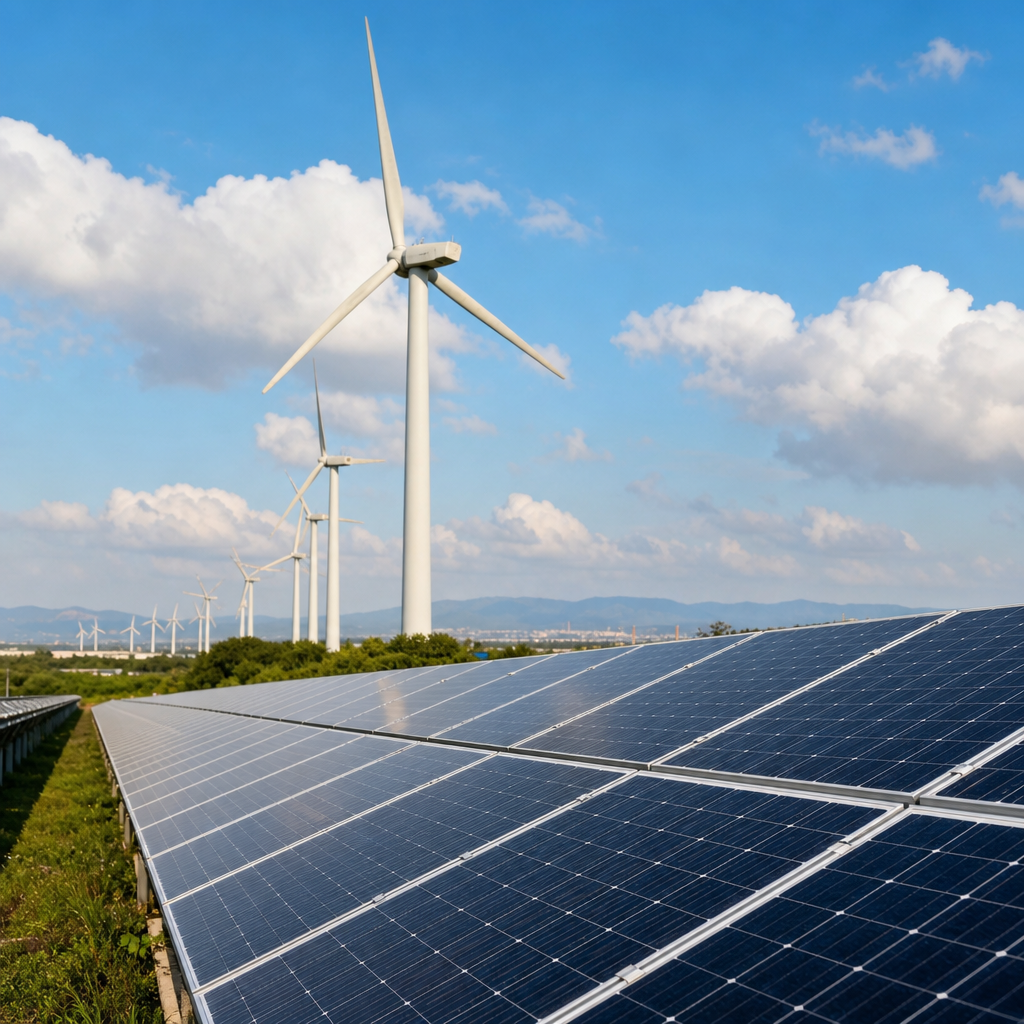
Polymers have become one of the quiet enablers of modern clean power, shaping how renewable energy systems are built, protected, and scaled across industries. In engineering terms, polymers are large molecules made of repeating units, and they include commodity plastics, high-performance thermoplastics, elastomers, epoxies, silicones, fluoropolymers, and advanced composite matrices. In the renewable energy sector, these materials do far more than replace metal. They insulate high-voltage components, reduce weight in moving structures, resist corrosion in harsh outdoor settings, and enable designs that would be impractical with traditional materials alone. Across wind, solar, batteries, hydrogen, marine energy, grid infrastructure, and electrified transport, polymer science has become directly tied to project bankability, reliability, and operating life.
I have seen this firsthand on energy projects where the material choice looked like a small procurement detail at design review, then determined maintenance intervals years later. A brittle cable jacket in ultraviolet exposure, a poorly selected seal in a battery enclosure, or a resin system that absorbs moisture too quickly can turn a sound energy concept into an expensive field problem. Conversely, a well-matched polymer system can extend service life, improve safety, and lower the levelized cost of energy. That matters because renewable assets operate under constant stress: heat cycling, salt spray, sand abrasion, humidity ingress, mechanical fatigue, electrical loading, and pressure to perform for twenty to thirty years with minimal downtime.
This article serves as the hub for industry-specific case studies within the broader case studies and applications topic. It explains where polymers create measurable value, which polymer families dominate by application, what tradeoffs engineers must manage, and how lessons from one renewable segment carry into another. If you want to understand how materials innovation supports the energy transition, polymers are one of the clearest places to start, because they connect laboratory chemistry to real assets in the field.
Why polymers matter in renewable energy systems
The core reason polymers matter is simple: they combine tailored properties in ways metals, ceramics, and glass usually cannot achieve alone. Renewable energy equipment often needs lightweight structural strength, electrical insulation, chemical resistance, impact tolerance, weatherability, processability, and low total system cost at the same time. Polymer formulations make that possible. Add glass fiber to a resin and you create a composite blade shell with high specific stiffness. Use cross-linked polyethylene in cable insulation and you get strong dielectric performance for medium- and high-voltage service. Apply fluoropolymer backsheets to photovoltaic modules and you gain weather resistance, low permeability, and long-term outdoor durability. Select silicone encapsulants and you reduce stress on delicate electronic parts during thermal cycling.
These are not niche gains. The International Energy Agency has repeatedly noted that clean energy deployment depends on manufacturing scale, resilient supply chains, and durable components. Materials are central to all three. In practice, polymers help manufacturers lower processing temperatures, mold complex geometries, integrate multiple functions into a single part, and reduce corrosion-related maintenance. They also support design for automation, which matters when the industry is moving from boutique projects to utility-scale buildouts measured in gigawatts.
There are limits. Polymers can creep under load, degrade under ultraviolet radiation, and suffer from fire, smoke, and toxicity concerns if the wrong formulation is chosen. Moisture uptake, gas permeability, and long-term aging must be measured, not assumed. Engineers rely on standards such as IEC testing for electrical equipment, UL flammability classifications, ASTM mechanical and environmental methods, and ISO quality systems to qualify materials for renewable applications. The strongest projects treat polymer selection as a system engineering decision, not a late-stage substitution exercise.
Wind energy case studies: blades, cables, coatings, and condition life
Wind energy offers the clearest example of polymers driving performance. Modern turbine blades are dominated by polymer composites, typically epoxy or polyester matrices reinforced with glass fiber, and increasingly carbon fiber in spar caps for stiffness-critical sections. Without these materials, utility-scale blades exceeding eighty meters would be far heavier, harder to transport, and less efficient. Lower blade mass reduces gravitational loads and fatigue stresses on hubs, bearings, and towers. That translates into lower maintenance and larger swept area per turbine, which increases annual energy production.
One practical case I have encountered involves leading-edge erosion. Offshore and high-wind onshore turbines can lose aerodynamic efficiency when rain, hail, or particulate impact damages blade surfaces. Polyurethane-based protection films and elastomeric coatings have become important because they preserve surface smoothness and delay expensive repairs. Operators learned that coating chemistry, cure process, and surface preparation matter as much as nominal hardness. An erosion shield that looks ideal on paper can debond in the field if the blade substrate, humidity conditions, or maintenance window are poorly managed.
Polymers also protect wind turbine electrical systems. Nacelle cable insulation, connector housings, sealants, and potting compounds must survive vibration, oil contact, thermal cycling, and sometimes salt-laden air. Thermoplastic elastomers and silicones are common in seals because they maintain flexibility over wide temperature ranges. Epoxy systems are used in generator insulation and power electronics encapsulation. In offshore arrays, corrosion resistance is particularly valuable. Polymer-coated components and composite elements reduce dependence on heavy metallic protection strategies, though they require rigorous inspection plans because hidden moisture ingress can progress before visible failure appears.
Solar energy case studies: module longevity, trackers, and floating arrays
In solar, polymers are embedded in nearly every layer around the cell. Ethylene-vinyl acetate and polyolefin elastomers are used as encapsulants to protect cells from moisture, vibration, and electrical leakage. Backsheets commonly use multilayer constructions that may include fluoropolymers such as PVF or PVDF for weather resistance. Junction boxes rely on flame-retardant engineering plastics. Cable insulation, connector bodies, combiner boxes, and inverter housings all depend on polymer performance under heat, ultraviolet exposure, and electrical stress.
A major industry lesson came from early backsheet cracking and delamination issues in some module fleets. The problem was not that polymers were unsuitable; it was that long-term field aging can differ sharply from accelerated lab assumptions. Temperature swings, humidity, ultraviolet dose, and installation-specific stress can combine in ways that expose formulation weaknesses years after commissioning. Manufacturers responded with improved weathering packages, tighter material qualification, and broader use of glass-glass module designs in some segments. The case study is important because it shows the renewable sector maturing: materials are now validated against realistic lifetime profiles, not only cost targets.
Solar trackers and mounting systems also benefit from polymers. Bushings, bearings, cable management components, and protective coatings reduce wear and corrosion while lowering maintenance needs in dusty or saline environments. In floating solar, polymer pontoons made from high-density polyethylene provide buoyancy, impact resistance, and modular assembly. Their success depends on ultraviolet stabilizers, weld quality, and resistance to stress cracking. On projects in hot climates, engineers pay close attention to creep and thermal expansion, because floating platforms experience continuous exposure and changing loads.
Battery storage and power electronics case studies
Battery energy storage systems depend on polymers for safety as much as for packaging. Cell separators are polymer membranes, typically polyethylene or polypropylene, engineered with controlled porosity to allow ion transport while preventing electrical shorting. Thermal interface materials, flame barriers, adhesive tapes, busbar insulation, potting compounds, and enclosure gaskets all contribute to how a battery system handles heat, vibration, and fault conditions. If these materials are poorly selected, thermal runaway propagation risk rises and service access becomes harder.
In utility-scale battery containers, I have repeatedly seen gasket and seal design decide whether an enclosure remains robust over years of rain, dust, and pressure variation. Silicone, EPDM, fluorosilicone, and polyurethane each have strengths, but compatibility with cleaning agents, electrolyte vapors, compression set behavior, and ingress protection targets must be checked in combination. The same is true for cable insulation inside inverters and transformers, where dielectric aging is closely linked to heat management. A polymer that performs well at room temperature may lose life quickly if hotspot temperatures are underestimated.
| Renewable segment | Key polymer materials | Main benefit | Critical limitation to manage |
|---|---|---|---|
| Wind turbines | Epoxy composites, polyurethane coatings, silicones | Lightweight blades and weather protection | Fatigue, erosion, moisture ingress |
| Solar modules | EVA, POE, PVDF, engineering thermoplastics | Encapsulation, insulation, outdoor durability | UV aging, delamination, cracking |
| Battery storage | PE and PP separators, silicone gaskets, epoxies | Electrical isolation and thermal safety | Heat buildup, flame spread, chemical compatibility |
| Hydrogen systems | PFSA membranes, PEEK, PTFE, elastomers | Chemical resistance and proton transport | Gas permeability, embrittlement, cost |
Power electronics bring another layer of demand. Wide-bandgap semiconductors such as silicon carbide can run at higher switching frequencies and temperatures, but the surrounding polymer package must endure those conditions. Encapsulants and insulation films therefore affect not only reliability but also how much efficiency gain the hardware can safely deliver. Better polymers are a hidden lever in cleaner, more compact conversion equipment.
Hydrogen, fuel cells, and electrolyzers: specialized polymer breakthroughs
Hydrogen technologies make the role of advanced polymers especially visible. Proton exchange membrane fuel cells and many electrolyzers rely on polymer electrolyte membranes, commonly perfluorosulfonic acid materials such as Nafion, to conduct protons while separating reactant gases. This is a chemically demanding environment involving acidity, hydration management, pressure differentials, and repeated startup cycles. The membrane must maintain conductivity and mechanical integrity at the same time. That combination is difficult and expensive, which is why membrane chemistry remains a major focus of research and industrial competition.
Beyond the membrane itself, hydrogen systems use PTFE, PEEK, PVDF, EPDM, FKM, and other polymers in seals, valve seats, tubing, insulation, and structural components. Material compatibility is essential because hydrogen can permeate through some polymers faster than many teams expect. In high-pressure storage and transport, liner systems in Type IV composite cylinders usually rely on polymer liners paired with carbon fiber overwraps. These cylinders enable lower weight than metal alternatives, which is critical for mobility applications and distributed storage. However, liner permeation, cycling durability, and temperature response must be validated over the full service profile.
Electrolyzer manufacturers have learned that a polymer component that survives deionized water in static lab conditions may fail much sooner under dynamic pressure, contaminants, and cleaning cycles. That is why field qualification programs increasingly combine chemical analysis, accelerated aging, and teardown inspection after pilot operation. The winning polymer solution is rarely the cheapest resin on a data sheet; it is the one that preserves stack performance and reduces unplanned maintenance.
Grid, marine, and circularity implications across industry applications
Polymers also strengthen renewable energy indirectly through the grid assets that connect generation to users. High-voltage cable insulation, composite insulators, transformer components, switchgear housings, and surge protection parts all depend on dielectric polymers. Offshore wind export cables, for example, commonly use cross-linked polyethylene insulation because it balances electrical performance with manufacturability and proven field history. Composite insulators with silicone rubber housings offer lower weight and better contamination performance than porcelain in many coastal and polluted settings. These choices improve installation logistics and reduce outage risk.
Marine renewables and harsh-environment installations present another set of case studies. Wave and tidal devices use polymers in buoyancy modules, coatings, bearings, cable protection, and sealed electronics enclosures. Saltwater exposure punishes metals, so corrosion-resistant polymers and composites can dramatically improve survivability. Yet marine fouling, impact from debris, and long periods without maintenance create tough design requirements. In these settings, the best polymer strategy usually combines material resistance with modular replacement planning, because no coating or elastomer remains perfect indefinitely.
The final issue is circularity. Renewable energy systems are expected to be cleaner than the technologies they replace, so the polymer story must include end-of-life management. Thermoplastic composites, recyclable encapsulants, blade recycling methods, and design-for-disassembly approaches are gaining attention. Wind blade waste has become a visible challenge because thermoset composites are hard to recycle at scale, though cement kiln coprocessing, mechanical grinding, and emerging chemical routes are expanding. Solar module recycling is improving as regulations and recovery economics evolve, especially in Europe. The practical takeaway is that polymers have enhanced the renewable energy sector decisively, but the next phase requires equal focus on durability, traceability, and recovery. Companies that map material choices to field performance and end-of-life pathways will build more resilient projects and stronger supply chains. If you are evaluating renewable technologies or planning deeper research, start with the polymer system inside each asset, then follow those material decisions through operation, maintenance, and recycling.
Frequently Asked Questions
How do polymers improve renewable energy systems beyond simply replacing metal parts?
Polymers improve renewable energy systems in ways that go far beyond lightweight substitution. In solar, wind, battery storage, hydrogen, and grid infrastructure, polymers serve as electrical insulators, corrosion barriers, vibration dampers, sealants, adhesives, coatings, and structural matrix materials. Their value comes from a combination of properties that metals often cannot deliver in a single material system: dielectric strength, chemical resistance, weatherability, design flexibility, and low weight. In practical terms, that means polymers help protect sensitive electronics from moisture, prevent current leakage in high-voltage environments, reduce maintenance in corrosive outdoor settings, and support longer service life for components exposed to heat, UV radiation, salt spray, and mechanical stress.
They also enable more advanced engineering designs. For example, fiber-reinforced polymer composites make it possible to manufacture long, strong wind turbine blades that remain relatively light compared with all-metal alternatives. In photovoltaic modules, polymer encapsulants and backsheets shield cells from water ingress, electrical failure, and environmental degradation. In batteries and power electronics, high-performance thermoplastics and elastomers help manage heat, isolate live components, and maintain dimensional stability. So while metals still play a critical role in renewable energy hardware, polymers often provide the protection, reliability, and manufacturability that allow those systems to operate efficiently at scale.
What role do polymers play in wind and solar energy applications?
In wind energy, polymers are central to both performance and durability. Modern turbine blades rely heavily on polymer composite systems, usually built from glass or carbon fibers embedded in epoxy or similar resin matrices. These materials provide the strength-to-weight ratio needed for large blades that can capture more wind without becoming too heavy to rotate efficiently or too difficult to transport and install. Polymers are also used in coatings that defend blades against rain erosion, UV damage, and surface wear, all of which can reduce aerodynamic efficiency over time. Inside the turbine, polymer-based insulation, cable jackets, seals, gaskets, lubricating elements, and vibration-control components help protect electrical and mechanical systems in harsh operating conditions.
In solar energy, polymers are equally important, though often less visible. Encapsulant materials such as EVA and POE protect photovoltaic cells from moisture, shock, and contamination while maintaining optical clarity so sunlight can still reach the active layers. Backsheets made from engineered polymer films provide insulation and environmental protection at the rear of modules. Sealants and adhesives help maintain long-term module integrity through thermal cycling, wind loading, and exposure to sunlight. In mounting systems, junction boxes, connectors, and wire insulation, specialized polymers help prevent electrical faults and environmental degradation. Together, these materials support energy output, reduce failure rates, and help solar panels maintain performance over years of outdoor exposure.
Why are insulation and environmental resistance such important polymer advantages in clean energy infrastructure?
Insulation and environmental resistance are essential because renewable energy systems routinely operate in demanding conditions where electrical safety and long-term durability directly affect performance, maintenance costs, and project economics. Many renewable technologies involve high voltages, fluctuating temperatures, moisture exposure, and outdoor deployment over decades. Polymers are especially valuable here because many grades offer strong dielectric properties, meaning they can prevent unwanted current flow and protect users and equipment from short circuits, arcing, and electrical breakdown. This is critical in cable systems, inverters, transformers, battery packs, connectors, switchgear, and power conversion equipment.
Environmental resistance matters just as much. Renewable assets are often installed in deserts, offshore environments, agricultural regions, industrial sites, and remote installations where UV radiation, salt, humidity, chemicals, dust, freeze-thaw cycling, and mechanical fatigue are constant threats. Engineered polymers such as fluoropolymers, silicones, thermosets, and specialty elastomers can be tailored to withstand these stressors better than many conventional materials. Their resistance to corrosion is particularly important, since rust and oxidation can quickly compromise metal-based components in marine or humid conditions. By maintaining insulation performance, sealing integrity, and structural stability under harsh exposure, polymers help renewable systems remain safe, efficient, and financially viable across long service lives.
How do polymers support energy storage, electrification, and grid modernization?
Polymers play a foundational role in the technologies that connect renewable generation to real-world power delivery. In battery energy storage systems, polymers are used in cell separators, thermal barriers, pack housings, wire insulation, busbar coatings, gaskets, sealants, adhesives, and electronic enclosures. These materials help isolate cells electrically, manage heat, reduce fire propagation risk, and protect against moisture and chemical exposure. High-performance polymers are particularly important as battery systems become more compact, higher in voltage, and more demanding in terms of thermal and electrical performance. Their ability to combine flame retardancy, dimensional stability, and electrical insulation makes them indispensable in modern battery design.
Beyond batteries, polymers are critical to electrification and smart grid infrastructure. They are used in cable insulation for underground and subsea transmission, insulators for high-voltage equipment, encapsulation materials for sensors and controls, and housings for power electronics that manage variable renewable inputs. As grids become more decentralized and digital, the need for durable insulating materials increases because more components must operate reliably in outdoor and electrically complex environments. Polymer-based materials also support lighter, easier-to-install equipment, which can reduce labor and infrastructure costs during grid upgrades. In short, polymers do not just support renewable generation at the source; they also help store it, condition it, and move it safely through the broader energy system.
Are polymers sustainable enough for the renewable energy sector, and what are the main challenges ahead?
Polymers are sustainable enough to be highly valuable in the renewable energy sector, but their sustainability profile depends on how they are selected, used, and managed across the full life cycle. On the positive side, polymers often reduce total system weight, improve energy efficiency, extend equipment life, and lower maintenance needs. Those benefits can significantly reduce lifetime emissions and resource consumption for renewable installations. For example, lightweight composite blades improve wind turbine performance, durable solar encapsulants protect modules for decades, and corrosion-resistant polymer components reduce replacement frequency in aggressive environments. In many cases, the operational and durability gains delivered by polymers outweigh the impacts associated with their production.
That said, important challenges remain. Some polymer systems, especially thermoset composites and multi-layer material structures, are difficult to recycle at end of life. Renewable infrastructure is now reaching ages where decommissioning and circularity are becoming major industry priorities, particularly for wind blades, solar module materials, and battery components. The sector is responding through development of recyclable thermoplastics, improved blade resin systems, better material separation technologies, design-for-disassembly approaches, and bio-based or lower-carbon polymer feedstocks. The future will likely depend on balancing performance with circularity: choosing polymers that still meet demanding electrical, thermal, and environmental requirements while becoming easier to recover, reuse, or recycle. So the key question is not whether polymers belong in renewable energy—they clearly do—but how the industry can make their use more circular, lower-carbon, and end-of-life ready.