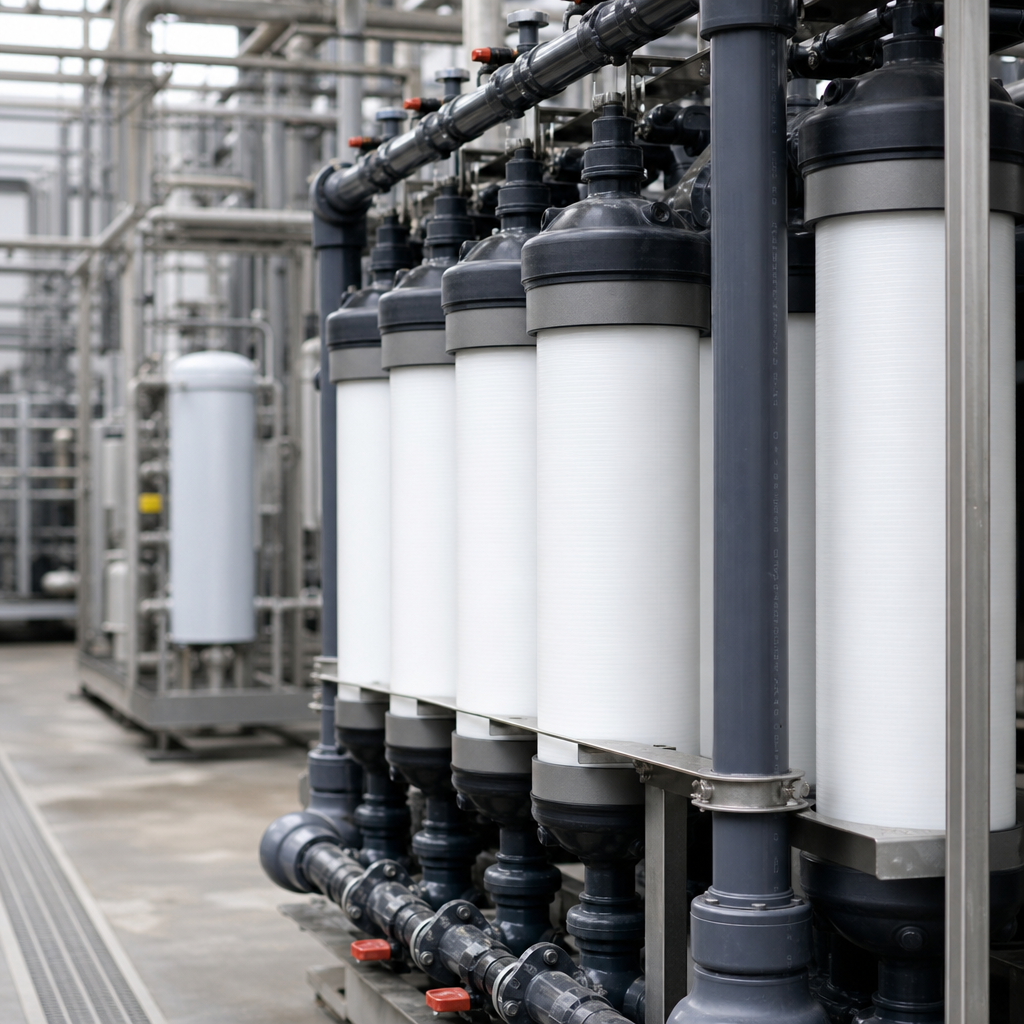
Polymers are central to modern industrial filtration systems because they combine chemical resistance, controllable pore structure, mechanical durability, and cost efficiency in ways that metals, ceramics, and natural fibers rarely match. In industrial practice, a polymer is a large molecule made of repeating units, while a filtration system is any engineered setup that separates solids, liquids, gases, or dissolved contaminants from a process stream. Put together, polymers in industrial applications form the backbone of filter media, housings, membranes, cartridges, seals, and support layers used in water treatment, food processing, pharmaceuticals, chemicals, energy, mining, and microelectronics.
I have worked with filtration specifications where a small polymer choice changed an entire plant maintenance schedule. A polypropylene bag filter that tolerated caustic washdown, a PTFE membrane that survived aggressive solvent exposure, or a PVDF cartridge that reduced extractables in a high-purity line can each determine whether a system runs reliably or fails early. That is why this topic matters. Filtration affects product quality, regulatory compliance, worker safety, equipment uptime, and operating cost. When polymer selection is wrong, pressure drop rises, blinding accelerates, cleaning becomes less effective, and contamination risk increases.
Industrial buyers usually ask the same practical questions. Which polymers are used in filtration systems? Why are they chosen over metal or ceramic alternatives? How do polymer membranes differ from depth filters, woven fabrics, and nonwoven felt? What limits their performance at high temperature, high pressure, or in strong oxidizing chemistry? Those are the right questions, because polymer filtration is not one product category but a family of materials engineered around pore size, particle loading, fluid chemistry, sterilization regime, and service life. This hub article explains the main polymer types, the filtration formats they enable, the industries that rely on them, and the selection factors that separate a robust design from an expensive mistake.
Why Polymers Dominate Industrial Filtration Design
Polymers dominate filtration design because they are versatile at both the resin level and the finished-media level. Engineers can extrude them into fibers, cast them into membranes, mold them into rigid support cages, sinter them into porous structures, or laminate them into multilayer composites. That manufacturing flexibility lets suppliers tune pore geometry, surface energy, thickness, pleat stability, and contaminant release. Compared with stainless steel media, polymer filters are often lighter, lower in cost, and easier to convert into disposable sanitary formats. Compared with ceramics, they usually offer better processability and lower capital cost, even if ceramics still win in very high-temperature service.
Another reason is chemical targeting. Polypropylene resists many acids and bases, making it common in water and chemical filtration. Polyester performs well in many liquid bag filters where strength and dimensional stability matter. Nylon offers toughness and abrasion resistance in monofilament mesh and cartridge components. PTFE is preferred for corrosive gases and demanding vent filtration because it has exceptional inertness and low surface energy. PVDF is widely chosen for high-purity water, semiconductor chemicals, and oxidizing environments. Polyethersulfone and polysulfone are standard membrane materials in bioprocessing and water treatment because they combine thermal tolerance with strong flow performance.
Performance is also shaped by how polymers interact with fouling. Hydrophobic polymers such as PTFE and polypropylene can be ideal for air and gas filtration, but liquid wetting may require surfactant treatment or membrane modification. Hydrophilic membranes, including modified PES or nylon, are often selected for aqueous sterilizing or clarification duties because they wet easily and support predictable flow. In real plants, this distinction matters. I have seen commissioning delays caused simply by installing a hydrophobic membrane in a water service without accounting for the higher wetting pressure.
Core Polymer Materials and What Each One Does Best
The most widely used polymers in industrial filtration systems each occupy a specific performance niche. Polypropylene is the workhorse for sediment cartridges, melt-blown depth media, filter bags, and many molded housings. It is inexpensive, broad-spectrum compatible, and suitable for temperatures typically up to about 80 to 90 degrees Celsius in continuous liquid service, depending on design. Polyester, often sold as PET, is common in needlefelt bags and spunbond media where strength, dimensional stability, and abrasion resistance are important. Nylon is used in woven mesh for precise particle capture and in applications requiring toughness, but it can absorb moisture and is less compatible with some strong acids.
For harsher chemistry, fluoropolymers lead. PTFE membrane laminates are standard in dust collection, corrosive fume handling, and sterile vent filtration because they shed particles well and tolerate aggressive chemicals. PVDF offers a balance of purity, oxidation resistance, and mechanical integrity, which is why it appears so often in electronics-grade and biotech systems. PES and polysulfone membranes are favored for aqueous filtration, including prefiltration and bioburden reduction, because they provide high porosity and strong flow at fine ratings. In ultrafiltration and reverse osmosis systems, polyamide thin-film composites are especially important because they deliver the salt rejection needed for desalination and ultrapure water production.
Material selection should never stop at the generic polymer family. Additives, pore-forming methods, fiber diameter, thermal bonding, backing layers, and extractables profile all affect field performance. Two polypropylene cartridges can behave very differently if one is nominally rated melt-blown media and the other is an absolute-rated pleated structure with tighter manufacturing control. The same is true of PTFE membranes supported on polypropylene versus polyester scrim. In validation-heavy sectors, engineers review not only compatibility charts but also bacterial retention data, pressure-flow curves, total organic carbon contribution, and cleaning method limitations.
How Polymer Filter Media Are Engineered
Polymer filtration media generally fall into four functional categories: surface filters, depth filters, membranes, and porous rigid media. Surface filters capture particles primarily on the upstream face. Woven nylon mesh is a classic example, used when a repeatable cut point and easy cleaning are more important than maximum dirt-holding capacity. Depth filters trap contaminants throughout the thickness of the medium. Melt-blown polypropylene cartridges and needlefelt bags are common choices for higher particulate loads because they hold more solids before pressure drop rises sharply. Membranes provide much finer separation, from microfiltration and ultrafiltration through nanofiltration and reverse osmosis, and they work by tightly controlled pore structure or diffusion mechanisms.
Manufacturing method determines performance. Melt blowing creates very fine fibers and tortuous pathways suited to sediment reduction. Spunbonding produces stronger continuous-filament layers that often serve as support media. Phase inversion is used to form asymmetric membranes with a thin selective skin over a porous substructure, a design common in PES, PVDF, and polyamide systems. Sintering can create rigid porous polyethylene or polypropylene parts for venting, sparging, and specialty fluid distribution. Pleating increases surface area dramatically, lowering face velocity and extending service life in cartridges and air filters.
| Polymer | Common filtration format | Typical strength in service | Key limitation |
|---|---|---|---|
| Polypropylene | Melt-blown cartridges, bags, housings | Low cost, broad chemical resistance | Moderate temperature ceiling |
| Polyester | Needlefelt bags, support media | Strength and abrasion resistance | Limited in strong alkali service |
| Nylon | Woven mesh, membrane, components | Toughness and precise mesh opening | Moisture uptake, acid sensitivity |
| PTFE | Membranes, laminates, vent filters | Excellent chemical inertness | Higher cost |
| PVDF | Membranes, cartridges, piping components | High purity and oxidant tolerance | Cost above commodity polymers |
| PES | Liquid membranes | High flow in aqueous systems | Not ideal for some solvents |
The engineering details behind pore size are often misunderstood. A nominal 10 micron depth filter does not perform like an absolute 10 micron membrane-rated filter. Nominal ratings indicate a general capture efficiency, while absolute ratings are tied to a defined retention level under specified conditions. In industrial procurement, confusion here causes many complaints that are actually specification errors. Matching the rating method to the contamination risk is essential, especially in final product protection, wastewater discharge compliance, and catalyst recovery.
Where Polymers Are Used Across Industrial Sectors
Water and wastewater treatment is the largest application area. Polymer membranes are used in ultrafiltration skid systems to remove suspended solids, bacteria, and colloids before reverse osmosis. Polyamide RO membranes then remove dissolved salts, enabling boiler feedwater preparation, reuse water production, and desalination. In municipal and industrial effluent treatment, polypropylene cartridges and polyester bags often protect pumps, ion exchange beds, and membrane trains from particulate fouling. In these systems, the economic value of polymer filtration is measured in lower cleaning frequency, improved recovery, and reduced unplanned downtime.
In food and beverage processing, polymers help meet hygiene requirements while preserving taste and throughput. PES and PVDF cartridges are used for beverage clarification, bottled water treatment, and process water polishing. PTFE vent filters protect tanks during filling and emptying while preventing microbial ingress. Nylon and polyester mesh filters remove larger particles from syrups, edible oils, and wash streams. Because these operations frequently use clean-in-place chemicals, the chosen polymer must survive caustic, acid, and hot-water cycles without shedding fibers or deforming.
Pharmaceutical and biotechnology plants rely heavily on polymer membranes for sterile filtration, bioburden reduction, buffer preparation, and gas venting. Regulatory expectations are strict, so suppliers provide extractables data, integrity test parameters, and bacterial challenge results using standard organisms such as Brevundimonas diminuta for sterilizing-grade validation. In semiconductor manufacturing, PVDF and high-purity polyethylene components are favored because trace metals and organics can ruin yield. Chemical processing and mining use polymer filter cloths, press fabrics, and baghouse media to separate slurries, recover solids, and control emissions in corrosive or abrasive service. Even in oil and gas, where metal is common, polymers remain critical in coalescers, produced water treatment, and gas conditioning.
Selection, Failure Modes, and Best Practices
Choosing the right polymer filtration system starts with five variables: fluid chemistry, temperature, pressure, particle characteristics, and cleaning regime. Fluid chemistry includes not only the main solvent but trace oxidizers, surfactants, and pH swings during cleaning. Temperature affects creep, seal compression, and long-term oxidation. Pressure determines collapse strength and whether a pleated element needs an internal core or outer cage. Particle shape matters because fibrous, gelatinous, or deformable contaminants foul differently than hard mineral solids. Cleaning regime is often the hidden constraint; steam sterilization, sodium hypochlorite, ozone, and solvent flushes can each eliminate otherwise suitable polymers.
The most common failure modes are chemical attack, thermal distortion, differential-pressure collapse, fouling, and extractables-related contamination. Chemical attack may appear as embrittlement, swelling, discoloration, or sudden loss of strength. Thermal distortion shows up when cartridge pleats bunch together or bag seams creep under load. Differential-pressure collapse can occur when a filter is not changed on time or when cold viscous startup conditions overwhelm the design. Fouling may be reversible, such as cake buildup removable by backwash, or irreversible, such as pore blocking by oils, biofilm, or precipitated salts. Extractables matter most in high-purity and regulated industries, where even low-level leachables can affect product stability or analytical baselines.
Best practice is to validate polymer choice with pilot testing, compatibility review, and operating envelopes that include upset conditions rather than ideal conditions. Use recognized guidance from ASTM test methods, ISO cleanliness standards, ASME housing requirements, and supplier validation packages where relevant. Track pressure drop over time, not just final throughput, because the slope of fouling often reveals whether the selected polymer surface is interacting poorly with the process stream. If the system is critical, specify lot traceability, integrity testing, and change-control notification from the supplier. Those controls turn polymer filtration from a consumables purchase into a reliable process safeguard.
Future Trends in Polymers in Industrial Applications
The next phase of polymer filtration is being shaped by sustainability, longer service life, and smarter media design. Manufacturers are developing lower-pressure-drop structures that cut pumping energy, gradient-density depth media that improve dirt holding, and membrane surface modifications that resist biofouling or oil wetting. In dust collection, expanded PTFE laminates continue to improve particulate capture while supporting pulse-cleaning efficiency. In water treatment, more durable ultrafiltration modules and better pretreatment pairings are extending membrane run times and lowering cleaning chemical demand.
There is also growing interest in circularity, although the practical limits are real. Some polymer housings and support components are recyclable, but contaminated filter media usually require controlled disposal because they carry captured process waste. That said, reducing changeout frequency and improving cleanability can still deliver meaningful environmental gains. Digital monitoring is another major trend. Plants increasingly use differential-pressure sensors, conductivity monitoring, and integrity-test data to predict when polymer filters should be changed, cleaned, or audited. The result is less guesswork and better lifecycle economics.
Polymers are used in industrial filtration systems because they solve the core separation problem with a rare combination of precision, durability, and adaptability. Polypropylene, polyester, nylon, PTFE, PVDF, PES, and polyamide each support different duties, from coarse solids removal to sterile filtration and desalination. The right choice depends on chemistry, temperature, pressure, fouling behavior, and compliance needs, not on price alone. Across water treatment, food production, pharmaceuticals, chemicals, mining, and electronics, polymer filtration improves product quality, protects equipment, and stabilizes operations.
As a hub for polymers in industrial applications, this topic is best understood through real use cases and material-specific selection criteria. The main lesson is simple: filtration performance is designed into the polymer, the media structure, and the operating method together. When those three align, systems run longer, cleaner, and more predictably. Review your current filtration points, compare polymer compatibility against real operating conditions, and identify where an upgraded polymer medium or membrane could deliver measurable process gains today.
Frequently Asked Questions
1. Why are polymers so widely used in industrial filtration systems?
Polymers are widely used in industrial filtration systems because they offer a highly practical combination of performance, flexibility, and cost control. In filtration, materials must do more than simply block particles. They need to withstand process pressure, resist chemical attack, maintain a stable pore structure, and continue performing over long operating cycles. Many polymers meet these requirements extremely well, which is why they are found in filter media, membranes, housings, cartridges, and support layers across countless industries.
One of the biggest advantages of polymers is chemical resistance. Industrial process streams often contain acids, alkalis, solvents, oils, salts, oxidizers, or suspended solids that would quickly degrade less suitable materials. Depending on the polymer selected, engineers can design filtration components that remain stable in aggressive environments where natural fibers would swell, corrode, or break down. This makes polymers especially valuable in water treatment, chemical processing, food and beverage production, pharmaceuticals, electronics manufacturing, and oil and gas operations.
Another major benefit is controllable pore structure. Polymer-based membranes and filter media can be engineered with very specific pore sizes, porosity levels, thicknesses, and surface characteristics. That level of precision allows filtration systems to target different separation goals, from coarse particle capture to microfiltration, ultrafiltration, and other highly selective separations. In practice, this means a polymer filter can be tuned for flow rate, dirt-holding capacity, contaminant retention, or cleanability depending on the application.
Polymers also provide strong mechanical durability relative to their weight. They can be formed into fibers, films, hollow fibers, pleated sheets, porous blocks, and composite structures that hold up under continuous use. At the same time, they are often lighter and easier to process than metals or ceramics, which helps reduce manufacturing cost and simplify equipment design. For many facilities, that balance of reliable performance and economic efficiency is a decisive advantage.
Just as important, polymers are versatile in fabrication. They can be extruded, spun, cast, stretched, sintered, laminated, or chemically modified to create filtration media with specialized performance characteristics. This design freedom is one reason polymer filtration technology has advanced so quickly. Engineers are not limited to a single structure or chemistry; they can match the polymer and manufacturing method to the exact demands of the process.
2. What types of polymers are commonly used in industrial filtration applications?
Several polymers are commonly used in industrial filtration, and each one is selected for a reason tied to temperature limits, chemical compatibility, mechanical strength, and filtration performance. There is no single “best” polymer for every system. Instead, material selection depends on the process stream, the contaminants being removed, operating pressure, cleaning method, and required service life.
Polypropylene is one of the most widely used filtration polymers because it is cost-effective, chemically resistant to many acids and bases, and easy to convert into melt-blown, spunbond, or pleated filter media. It is often used in cartridge filters, depth filters, sediment filtration, and liquid process filtration. Its popularity comes from its strong all-around performance in relatively moderate temperature conditions.
Polyvinylidene fluoride, often abbreviated as PVDF, is valued for its excellent chemical resistance and durability in harsher environments. It performs well in applications involving aggressive chemicals, high-purity water systems, and certain membrane processes. Because it can be manufactured into robust microporous structures, it is frequently used where both structural integrity and chemical stability are critical.
Polytetrafluoroethylene, or PTFE, is another important filtration polymer, especially in demanding chemical or high-temperature settings. PTFE has exceptional resistance to corrosive substances and is widely used in vent filtration, membrane filtration, and applications involving hot gases or challenging solvents. Its surface properties can also help reduce fouling in some cases, making it attractive when cleanliness and chemical inertness are priorities.
Nylon, polyester, and polyethylene are also common. Nylon is often chosen for strength and abrasion resistance, while polyester is known for dimensional stability and solid mechanical performance. Polyethylene can be used in porous filtration components and other filtration structures where toughness and chemical resistance are needed. In membrane technology, polymers such as polysulfone, polyethersulfone, and cellulose-based derivatives are also important because they can be engineered into high-performance membranes used in water purification, biotech, and industrial process separations.
In many modern systems, polymers are not used alone but as part of composites or multilayer structures. A membrane may have one polymer for selectivity, another for structural support, and a surface treatment for hydrophilicity or anti-fouling behavior. This layered approach allows filtration manufacturers to combine the strengths of multiple materials and deliver more precise performance than a single material could provide by itself.
3. How do polymers improve filtration efficiency and system performance?
Polymers improve filtration efficiency and overall system performance by giving engineers fine control over how contaminants are captured and how fluids or gases move through the filter. Efficiency in filtration is not only about trapping the smallest possible particles. It is also about maintaining flow, reducing pressure drop, limiting fouling, surviving cleaning cycles, and delivering consistent separation over time. Polymer materials can be engineered to support all of these goals.
One key factor is pore control. Polymer membranes and nonwoven media can be manufactured with pore sizes tailored to a very narrow range, which helps the system remove targeted particles or dissolved species more reliably. Uniform pore distribution can improve consistency, while graded-density structures can capture larger contaminants first and smaller contaminants deeper within the media. This approach extends filter life and prevents rapid surface blockage.
Surface chemistry is another major advantage. Polymers can be modified to become more hydrophilic, more hydrophobic, more oleophobic, or more resistant to biofouling and chemical adsorption. These changes influence how water, oils, gases, proteins, or suspended solids interact with the filter surface. In real-world operation, that means better wetting, easier cleaning, reduced clogging, and more predictable separation performance. This is particularly important in food processing, pharmaceutical manufacturing, wastewater treatment, and high-purity applications.
Polymers also support high media area designs. Because they can be formed into pleated cartridges, hollow-fiber modules, spiral-wound elements, and fine nonwoven mats, a large amount of filtration surface can be packed into a relatively compact unit. More surface area generally means higher throughput, lower face velocity, and better contaminant loading before pressure drop becomes too high. That translates into longer service intervals and improved operating efficiency.
From a system perspective, polymer filters can reduce energy and maintenance burdens when properly matched to the application. A well-designed polymer medium can deliver lower resistance to flow while still meeting particle retention targets. Lower pressure drop means pumps and blowers may use less energy. At the same time, filters that resist fouling and chemical degradation require fewer replacements and less unscheduled downtime. The result is not just better filtration performance on paper, but a more dependable and economical process in daily operation.
4. In which industries are polymer-based filtration systems most important?
Polymer-based filtration systems are important across a wide range of industries because nearly every industrial process depends on controlling contamination, protecting equipment, maintaining product quality, or meeting environmental standards. The exact role changes from one sector to another, but the core value remains the same: polymers make it possible to build filtration systems that are efficient, chemically compatible, scalable, and cost-conscious.
In water and wastewater treatment, polymer membranes and filter media are central to removing suspended solids, microorganisms, colloids, and in some cases dissolved contaminants. Municipal systems, industrial reuse systems, desalination pretreatment trains, and effluent polishing operations all rely heavily on polymeric components. Their corrosion resistance and adaptability make them especially useful where water chemistry can vary widely.
In chemical processing, filtration systems must handle aggressive fluids and protect downstream equipment from solids, gels, or unwanted reaction byproducts. Polymer materials are often selected because they can tolerate corrosive service conditions while still providing precise filtration performance. In pharmaceuticals and biotechnology, polymers are essential in sterile filtration, vent filtration, clarification, and high-purity liquid handling. These applications demand consistent pore structure, validated performance, and compatibility with sanitation or sterilization procedures.
Food and beverage manufacturers also use polymer filtration extensively for product clarification, ingredient separation, water purification, and air or gas filtration in hygienic environments. The materials chosen must support cleanliness, reliability, and regulatory compliance while preserving product quality. In electronics and semiconductor manufacturing, polymer membranes help produce the ultra-clean water and process chemicals needed for sensitive production steps where even tiny contaminants can cause major defects.
Oil and gas, power generation, mining, automotive manufacturing, and industrial coating operations also rely on polymer-based filtration. These sectors use them for fuel filtration, lubricant cleanup, coolant purification, intake air treatment, process water recycling, and emissions control. In all of these environments, polymer filters are valued not just for contaminant removal, but for their ability to stand up to real operating conditions while helping plants maintain safety, uptime, and consistent output.
5. What should engineers consider when selecting a polymer for an industrial filtration system?
Selecting the right polymer for an industrial filtration system requires a careful balance of chemistry, operating conditions, separation goals, and total lifecycle cost