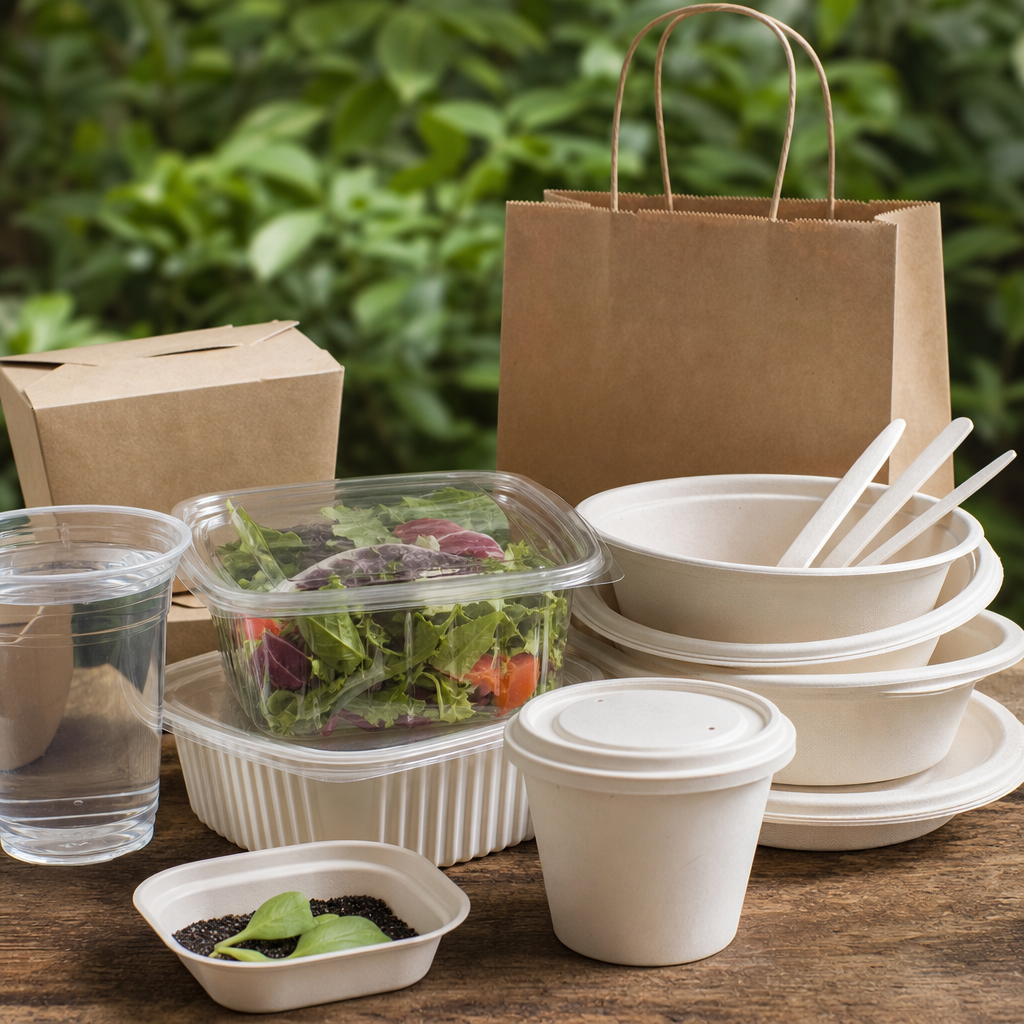
Successful applications of biodegradable polymers in packaging are no longer niche experiments; they are working commercial solutions used in food service, retail, e-commerce, and agricultural supply chains. Biodegradable polymers are materials designed to break down through the action of microorganisms, moisture, heat, or composting conditions into simpler substances such as carbon dioxide, water, methane, and biomass, depending on the disposal environment. In packaging, the term usually refers to bio-based or fossil-based polymers such as PLA, PBAT, PBS, PHA, starch blends, and cellulose-derived materials that can replace conventional plastics in selected formats. I have worked with packaging teams evaluating these materials, and the central lesson is consistent: success depends less on marketing claims and more on matching polymer chemistry to product requirements, converting conditions, shelf-life targets, and end-of-life infrastructure.
This matters because packaging sits at the intersection of waste policy, consumer behavior, food preservation, and brand risk. Global plastic production exceeds hundreds of millions of tonnes annually, and packaging remains the largest single use segment, according to PlasticsEurope and OECD reporting. At the same time, municipalities, retailers, and food brands face pressure to reduce persistent plastic waste without increasing food spoilage or logistics damage. Biodegradable polymers can help when they are applied in the right use cases, especially where contamination with food or organic matter makes mechanical recycling difficult. They are not a universal replacement for polyethylene, polypropylene, or PET, but in targeted applications they provide measurable value: diversion of organic waste, reduced fossil feedstock dependence in some cases, improved compostability for food-contact items, and better fit with emerging collection systems for organics.
To understand where biodegradable packaging works, it helps to define a few terms clearly. Biodegradable describes the ability to break down biologically, but the speed and completeness depend on conditions. Compostable is narrower and usually linked to standards such as EN 13432 in Europe and ASTM D6400 or ASTM D6868 in North America, which specify disintegration and ecotoxicity criteria under industrial composting conditions. Home compostability is different and harder to achieve because temperatures are lower and less controlled. Marine biodegradable claims are separate again and should be treated cautiously unless supported by specific test evidence. For packaging decision-makers, the practical question is not whether a polymer is biodegradable in theory, but whether it performs in a verified disposal pathway that actually exists where the package will be used.
As a hub for case studies and applications, this article maps the most successful polymer applications in packaging, explains why they worked, and identifies the limits that still matter. It covers compostable food-service formats, produce and flexible packaging, coated paper systems, agricultural and waste-collection applications, e-commerce protective formats, and the operational criteria brands use to move from pilot to scale. The throughline is simple: the best results come from using biodegradable polymers where recovery through organics collection or unavoidable contamination makes them operationally superior to conventional plastics.
Food-service packaging has delivered the clearest commercial wins
The most established success story is food-service packaging used in closed or semi-closed collection systems. Cold cups, cutlery, plates, takeaway containers, coffee capsules, and compost caddy liners have all shown strong adoption when they are collected with food scraps. PLA has been widely used in clear cold cups, deli containers, and lids because it offers good clarity, stiffness, and processability on thermoforming lines similar to those used for PET. In stadiums, universities, corporate campuses, and quick-service restaurant pilots, compostable serviceware has reduced contamination in organics bins by aligning packaging disposal with leftover food. This is one of the few situations where end-of-life behavior matches consumer reality.
A practical example is event venues that switched from mixed plastic serviceware to certified compostable formats paired with back-of-house sorting. Operators reported cleaner organics streams because staff no longer needed to separate food from forks, cups, or clamshells covered in sauce or grease. That operational simplification often matters more than the resin itself. Where industrial composting capacity exists, compostable liners made from starch blends or PBAT compounds have become routine because they improve kitchen collection hygiene and are accepted by many organics processors. Several municipalities in Italy, for instance, normalized compostable caddy liners alongside food-waste collection, creating one of the strongest market pull factors for biodegradable polymers in everyday use.
The technical reason these applications succeed is that performance requirements are modest and well understood. A cold beverage cup does not need the oxygen barrier of a beer bottle or the heat resistance of a microwave tray. A compost bin liner needs puncture resistance, sealability, and controlled disintegration, not multi-year durability. Converters can therefore formulate PLA, PBAT, or starch blends to hit the target properties without forcing the material into unsuitable conditions. When a package is likely to be heavily food-soiled, compostability can provide a better systems outcome than recycling-compatible design that fails in actual sorting and washing operations.
Fresh produce and flexible packaging show where biodegradable films add value
Fresh produce has become another strong application area because many fruits and vegetables need breathability, anti-fog performance, and moderate moisture management more than extreme barrier protection. Biodegradable films based on PLA blends, PBAT, starch compounds, and cellulose can be tuned for these needs. I have seen successful launches in salad bags, mushroom punnets overwrap, banana bands, and produce labels designed to compost with food waste. In these formats, the package often ends up contaminated by moisture, soil, or plant residues, which lowers the likelihood of high-quality recycling. If the retailer or local authority also supports organics collection, a compostable solution becomes more credible.
Cellulose films have been particularly effective in premium produce and bakery packaging because they offer excellent transparency and natural dead-fold in some constructions. Brands use them for flow wraps around organic produce, tea envelopes, and confectionery inner wraps where visual appeal matters. NatureFlex, produced from renewable cellulose, is a well-known example used in compostable flexible packaging. PHA-based films are also drawing attention because PHA can biodegrade in a wider range of environments than PLA, though cost and production scale remain constraints. For brands selling produce with short shelf life, the ability to combine product visibility with compostability can support both waste reduction and merchandising.
Success still depends on disciplined design. Compostable films are not interchangeable with polyethylene. Seal windows can be narrower, machine settings may need adjustment, and moisture sensitivity can shorten storage life for unused reels. Retailers that achieved stable performance usually worked closely with resin suppliers and film extruders during line trials. They validated coefficient of friction, haze, puncture resistance, and pack-fogging behavior under actual chilled distribution conditions, not just laboratory data sheets. That level of process control is why some pilots scale smoothly while others fail.
Coated paper, molded fiber, and hybrid structures are expanding adoption
Some of the most commercially successful packaging does not rely on a monomaterial biodegradable polymer alone. Instead, it uses thin biodegradable polymer coatings or dispersions on paper, paperboard, or molded fiber to add grease resistance, moisture resistance, heat sealing, or oxygen barrier. This approach has been effective in cups, trays, cartons, and dry-food packs because the fiber component provides stiffness while the polymer layer contributes functionality. PLA coatings have long been used on compostable paper cups and containers, though heat resistance and repulpability questions require careful assessment. Newer water-based barrier coatings and PHA or starch-derived coatings are broadening the design space.
Molded fiber paired with biodegradable coatings has done well in fresh food trays and protective packaging. For example, ready-meal trays made from bagasse or other molded pulp substrates can replace expanded polystyrene in certain chilled applications when combined with a compostable lidding film. Fiber-based coffee capsules with compostable barrier layers are another important case, as coffee grounds naturally fit organic waste collection better than conventional multilayer capsules. The application works because the barrier need is limited to the shelf life of roasted coffee and because single-serve capsules are difficult for consumers to empty and recycle consistently.
| Application | Common polymer system | Why it succeeds | Main limitation |
|---|---|---|---|
| Food-waste caddy liners | Starch blend, PBAT | Fits organics collection and handles food contamination | Needs composting acceptance locally |
| Cold cups and deli containers | PLA | High clarity, thermoformability, good stiffness | Low heat resistance |
| Produce films and wraps | PLA blend, cellulose, PBAT blend | Breathability and compostability with food residues | Machinability varies by formulation |
| Molded fiber trays with coating | PHA, PLA, starch coating | Fiber provides rigidity; coating adds barrier and sealing | Coating weight and disposal route must be validated |
| Coffee capsules | PLA, PHA, fiber hybrid | Convenient disposal with spent grounds in some systems | Performance and certification requirements are strict |
Hybrid structures succeed when they reduce material use while preserving functionality. They also align with the direction many brands prefer: less plastic overall, better renewable content, and easier communication to consumers. However, they must be assessed against actual mill, composting, or recycling infrastructure. A paper pack with a biodegradable coating is not automatically recyclable in paper streams, and a compostable coating on a non-compostable substrate does not make the whole package compostable. The applications that last are the ones where substrate, coating, certification, and disposal instructions are tightly aligned.
Agriculture, waste collection, and transit packaging reveal high-fit use cases
Outside retail shelves, biodegradable polymers have shown strong results in applications where recovery after use is difficult or contamination is unavoidable. Agricultural mulch films are one example. Conventional polyethylene mulch boosts crop yields by suppressing weeds and retaining soil moisture, but collecting thin contaminated film after harvest is labor-intensive and often incomplete. Soil-biodegradable mulch films, typically based on PBAT blends with other biodegradable components, were developed to solve that retrieval problem. Their use has expanded in crops such as tomatoes, strawberries, and melons, especially where labor costs are high. While this sits adjacent to packaging, it demonstrates the same principle: biodegradation is most useful when collection is costly and contamination is intrinsic.
Compostable waste bags are another clear success case. Bin liners for food waste, yard waste, and institutional organics collection are now standard in many programs because they improve participation and reduce mess. In my experience, households are more likely to separate food scraps when liners are allowed, and kitchens remain cleaner. This behavior effect is often underestimated. Technical performance has improved as manufacturers optimized dart impact strength, tear propagation, and seal integrity. Certification logos from organizations such as TÜV Austria or BPI help procurement teams distinguish compliant products from vague environmental claims.
Transit and protective packaging also offer emerging opportunities. Loose-fill packing peanuts made from starch have been commercially successful for years because they cushion light goods and dissolve in water, avoiding the disposal problems of polystyrene. Compostable mailers used for apparel and soft goods have gained traction among direct-to-consumer brands, especially when returns rates are manageable and the package does not face prolonged outdoor exposure. These are not ideal for every parcel, but for low-barrier applications they can reduce persistent plastic use without compromising basic shipping performance.
What separates successful applications from failed pilots
The difference between a successful biodegradable packaging application and an expensive trial usually comes down to system design. First, the package must solve a real operational problem, such as food contamination, difficult recovery, or a mismatch between consumer behavior and recyclable design. Second, the polymer must meet performance requirements with enough safety margin for production variation, logistics stress, and seasonal conditions. Third, claims must match verified end-of-life routes supported by standards and local infrastructure.
Brands that scale successfully follow a disciplined evaluation process. They begin with application mapping: temperature exposure, fill conditions, shelf life, seal requirements, barrier needs, and likely disposal behavior. Next comes material screening using data from suppliers such as TotalEnergies Corbion, BASF, Novamont, Danimer Scientific, Futamura, or NatureWorks. Then they run converter trials, migration testing for food contact where required, and aging studies under actual storage conditions. Finally, they validate certification and disposal language with legal and sustainability teams. This process is slower than simply swapping one resin for another, but it prevents the common failure modes of brittle packs, warped lids, blocked film reels, misleading compostability claims, and consumer confusion.
The larger lesson is that biodegradable polymers are highly effective when used selectively and honestly. They work best in packaging connected to organics collection, food contamination, thin-film recovery challenges, or fiber-based formats needing modest barrier enhancement. They are less suitable for long shelf-life high-barrier packaging, hot-fill systems beyond their thermal limits, or regions without credible composting infrastructure. For companies building a durable packaging strategy, the next step is straightforward: identify product lines where disposal reality favors organics recovery, then evaluate certified biodegradable polymers against performance, cost, and local infrastructure before scaling.
Frequently Asked Questions
What are some real-world examples of successful biodegradable polymer packaging applications?
Biodegradable polymers have moved well beyond pilot projects and are now used in multiple commercial packaging formats. In food service, one of the most visible applications is compostable cups, lids, cutlery, trays, and takeaway containers made from materials such as PLA blends, starch-based polymers, and molded fiber systems combined with biodegradable coatings. These products are widely adopted by restaurants, event venues, cafeterias, and institutional food programs that want packaging aligned with organic waste collection systems. In retail, biodegradable polymer films and bags are used for produce packaging, bakery items, and lightweight shopping bags in markets where compostable solutions fit local waste infrastructure and policy requirements.
E-commerce and logistics have also created successful use cases. Mailers, loose-fill cushioning, and protective packaging made from starch-based foams or biodegradable film structures are increasingly used by brands that want to reduce reliance on conventional plastics for short-life packaging. In agriculture, mulch films made from biodegradable polymers are one of the strongest examples of practical success because they can reduce the labor and cost associated with retrieving conventional plastic films after use. Across these sectors, the common factor is not just that the material can biodegrade, but that it performs well enough in actual supply chains to protect products, support operations, and meet consumer expectations.
Why are biodegradable polymers considered a good fit for packaging applications?
Biodegradable polymers are considered a strong fit for packaging because packaging is typically a short-use application with a limited service life. Unlike durable goods that are expected to last for years, most packaging is used for days, weeks, or months and then discarded. That makes it a logical category for materials designed to break down under the right end-of-life conditions. When packaging is contaminated with food residues or paired with organic waste streams, biodegradable options can be especially useful because they may support composting systems that process both the packaging and the waste together.
Another reason they fit well is the diversity of available material types and performance profiles. Different biodegradable polymers can be engineered for rigid containers, flexible films, coatings, pouches, trays, or cushioning. Some provide clarity and stiffness, while others offer toughness, sealability, or breathability. This flexibility allows manufacturers to match material characteristics to specific packaging needs rather than treating biodegradable polymers as a single one-size-fits-all category. Their success in packaging comes from balancing functional requirements such as barrier performance, printability, machinability, and shelf-life protection with end-of-life goals that are better aligned with circular and compost-focused waste strategies.
Do biodegradable polymer packages break down everywhere, or do they need specific disposal conditions?
No, biodegradable polymer packaging does not break down the same way in every environment, and this is one of the most important points for businesses and consumers to understand. Biodegradation depends heavily on conditions such as temperature, moisture, oxygen availability, microbial activity, and time. Many commercial packaging products marketed as biodegradable are actually designed for industrial composting environments, where heat, humidity, and biological activity are carefully managed. In those settings, the material can break down into simpler substances such as carbon dioxide, water, and biomass within a defined timeframe that meets certification standards.
By contrast, the same package may break down much more slowly in a backyard compost pile, landfill, roadside environment, or marine setting. That is why proper labeling, disposal guidance, and certification are essential. A successful application is not just about the polymer itself; it is about how well the packaging is matched to the waste management system available in the region where it is used. Brands that implement biodegradable polymer packaging effectively usually pair the material choice with clear consumer instructions, realistic claims, and an understanding of whether composting or other organics processing infrastructure is actually accessible.
How do biodegradable polymers perform compared with conventional plastic packaging?
Performance depends on the application, but in many packaging categories biodegradable polymers now deliver commercially acceptable results. They can offer good stiffness, transparency, seal performance, grease resistance, and processability when properly formulated. For example, in food packaging, biodegradable polymer trays, films, and coated paper structures can provide the product protection needed for fresh produce, bakery items, prepared foods, and dry goods. In mailers and secondary packaging, biodegradable materials can provide sufficient strength and cushioning for transport while supporting sustainability goals.
That said, biodegradable polymers do not automatically outperform conventional plastics in every area. Some applications still require careful design to address moisture sensitivity, heat resistance, oxygen barrier needs, or long shelf-life demands. This is why successful commercial use often involves material blends, multilayer structures, coatings, or application-specific engineering rather than simple material substitution. The best results come when companies evaluate the full packaging system, including product compatibility, storage conditions, transportation stresses, sealing equipment, and disposal route. In other words, biodegradable polymers can perform very well, but success usually depends on thoughtful packaging design and realistic application targeting.
What should companies evaluate before switching to biodegradable polymer packaging?
Companies should start by evaluating whether biodegradable packaging truly fits the product, market, and disposal environment. The first question is functional: does the material protect the product adequately throughout filling, shipping, display, and use? Packaging still has to maintain shelf life, prevent damage, support branding, and work efficiently on existing machinery or with reasonable equipment adjustments. The second question is end-of-life practicality: will the package enter a waste stream where biodegradation or composting can actually occur as intended? If the answer is no, then the environmental benefit may be reduced or misunderstood.
Businesses should also review certification standards, labeling requirements, local regulations, cost implications, and supply chain reliability. Claims such as compostable, biodegradable, and home compostable are not interchangeable, and using them incorrectly can create compliance risks and consumer confusion. It is equally important to assess customer education needs, since packaging is only successful if users know how to dispose of it properly. Finally, companies should look at the broader life-cycle picture, including raw material sourcing, manufacturing impacts, transportation, and waste outcomes. The most successful applications of biodegradable polymers in packaging are usually the result of a systems-based decision, not just a material trend. When the packaging format, performance requirements, and regional recovery infrastructure are aligned, biodegradable polymers can become a practical and credible commercial solution.