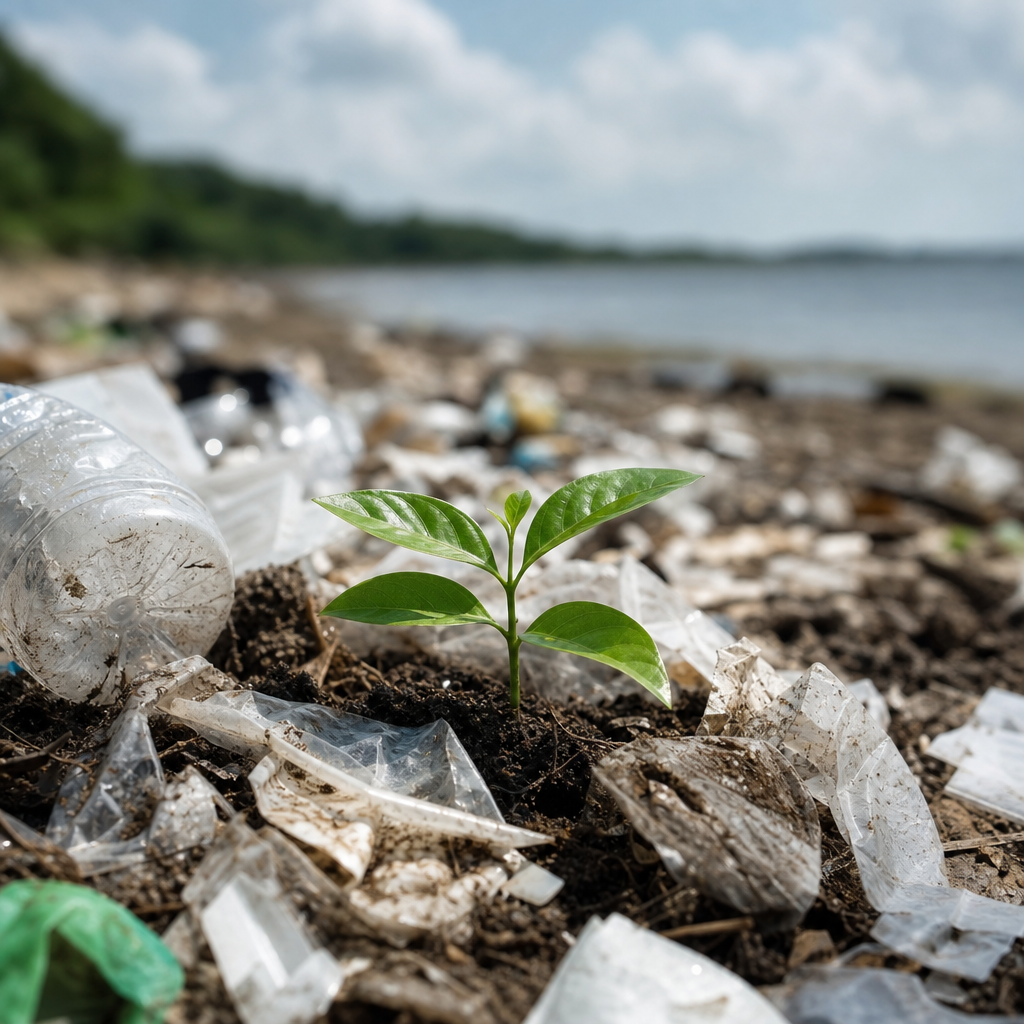
Biodegradable polymers are changing how industries approach plastic waste because they are designed to break down through the action of microorganisms, moisture, heat, and natural biological processes rather than persisting for decades or centuries like conventional plastics. In practical terms, that means a biodegradable polymer can serve many of the same functions as petroleum-based packaging, agricultural films, disposable food-service items, and selected medical materials while offering a more manageable end-of-life pathway under the right conditions. That distinction matters. Plastic waste has become a defining environmental challenge, with global production exceeding 400 million metric tons annually and only a small share being effectively recycled. The rest is landfilled, burned, leaked into rivers and oceans, or fragmented into microplastics that move through soil, water, wildlife, and human food systems. In sustainability work, I have repeatedly seen that waste reduction depends less on one perfect material and more on matching the right material to the right recovery system. Biodegradable polymers matter because they expand the number of workable options.
The term biodegradable polymer is often confused with bio-based plastic, compostable plastic, and recyclable plastic, but these categories are not identical. A polymer can be bio-based and not biodegradable, biodegradable and fossil-derived, or technically compostable only in industrial facilities operating at controlled temperatures. Common examples include polylactic acid, polyhydroxyalkanoates, starch blends, polybutylene adipate terephthalate, and polybutylene succinate. Each has different mechanical properties, processing requirements, and decomposition profiles. For environmental and sustainable applications, the real question is not whether biodegradable polymers are universally better than conventional plastics. It is where they reduce plastic waste most effectively, how infrastructure affects outcomes, and what lessons current case studies offer for broader adoption. This hub article examines those points clearly so readers can navigate packaging, agriculture, food service, medical use, standards, and implementation choices with a realistic understanding of benefits and limits.
Why biodegradable polymers matter in environmental and sustainable applications
Biodegradable polymers reduce plastic waste most successfully in applications where conventional plastic is difficult to collect, easily contaminated, or likely to escape into the environment. That is why they are especially relevant in organic waste collection, agricultural systems, and certain short-life disposable products. In food waste programs, for example, compostable liners and caddy bags can increase household participation because they make kitchen scrap collection cleaner and easier. Where municipalities operate industrial composting systems, these liners help divert organics from landfill while reducing contamination from conventional plastic bags. Several European cities have used certified compostable bags in source-separated organics programs for years because they fit the reality of wet waste handling better than reusable containers alone.
Another major reason biodegradable polymers matter is that they can reduce the persistence of plastic fragments in specific environments. Agricultural mulch films are a clear case. Traditional polyethylene mulch improves soil temperature, moisture retention, and weed control, but recovering thin, soil-contaminated film after harvest is labor-intensive and expensive. Farmers often struggle to remove all residues, and fragments can remain in fields. Soil-biodegradable mulch films, when properly certified and used according to guidance, can be tilled into the soil after the season, eliminating collection and reducing visible residual waste. I have seen growers evaluate these films not just on material price, but on total system cost, including labor, disposal fees, and field cleanup. That broader accounting is where the environmental value often becomes clearer.
Biodegradable polymers also support waste reduction by enabling design for organics recovery in settings where food contamination undermines recycling. A salad bowl, coffee pod component, produce sticker substrate, or food-soiled serviceware item may be technically recyclable in theory but not in actual post-use conditions. When such items are paired with composting systems and certified for that route, they can simplify sorting and improve diversion of both packaging and food residues. The benefit is not automatic. It depends on infrastructure, labeling, and procurement discipline. Still, in the right system, biodegradable polymers can reduce leakage, support cleaner waste streams, and lower reliance on persistent single-use plastics for applications that are inherently short lived.
Key types of biodegradable polymers and how they perform
Understanding polymer families is essential because performance differences determine environmental success. Polylactic acid, or PLA, is one of the most widely used biodegradable polymers in packaging. Made primarily from fermented plant sugars, PLA offers good clarity and stiffness, making it useful for cups, trays, clamshells, and films. However, PLA typically requires industrial composting conditions to break down efficiently; it does not reliably biodegrade in the open environment, marine settings, or backyard compost. Polyhydroxyalkanoates, or PHAs, are produced by microorganisms and have attracted attention because some grades can biodegrade in a wider range of environments, including marine and soil conditions, though performance varies by formulation. PHAs are often more expensive than PLA, but they offer strong sustainability potential in niche applications where accidental environmental release is hard to prevent.
Starch blends are another important category, particularly for compostable bags and films. By combining starch with biodegradable polyesters, manufacturers can create flexible materials suited to organics collection and lightweight packaging. Polybutylene adipate terephthalate, usually called PBAT, is frequently used in these blends because it adds flexibility and toughness. PBAT is fossil-derived, which surprises many buyers, yet it is biodegradable under composting conditions and plays a practical role in achieving required performance. Polybutylene succinate, or PBS, is another biodegradable polyester used in films, coated paper, and molded products. In medical settings, polymers such as polyglycolic acid and polylactic-co-glycolic acid are valued because they safely degrade in the body, reducing the need for surgical removal of sutures or implants.
| Polymer | Typical applications | Main strength | Important limitation |
|---|---|---|---|
| PLA | Rigid packaging, cups, trays, fibers | Clarity, stiffness, commercial availability | Usually needs industrial composting |
| PHA | Films, coatings, food service, specialty packaging | Potential biodegradation in more environments | Higher cost, variable supply scale |
| Starch blends | Compostable bags, films, loose-fill packaging | Good flexibility and organic waste compatibility | Moisture sensitivity in some uses |
| PBAT | Flexible films, bag blends, agricultural film | Toughness and processability | Often blended; not typically bio-based |
| PBS | Films, coated paper, molded items | Balanced thermal and mechanical properties | Less market penetration than PLA |
Selection should always start with use case and recovery pathway, not marketing claims. For a clear cold-drink cup in a stadium with commercial composting, PLA may be a sensible fit. For mulch film intended to remain in soil after harvest, a certified soil-biodegradable formulation is more appropriate. For medical devices, degradation rate, biocompatibility, and mechanical retention matter more than municipal waste handling. Across projects, the best outcomes come when material science, product design, collection logistics, and disposal infrastructure are planned together from the start.
Case studies in packaging, food service, and organics diversion
Packaging is the most visible arena for biodegradable polymers because it sits at the intersection of consumer convenience, brand pressure, and waste management limits. One instructive pattern comes from food scrap collection programs that distribute compostable liners to households. Municipalities in Italy, where organic waste separation is well established, have long integrated certified compostable bags into collection systems. These bags help capture wet food waste hygienically, reducing contamination from conventional plastic and increasing participation. The result is not simply less plastic waste by weight; it is a more effective organics system that keeps food out of landfill, where decomposition produces methane if unmanaged. The bag becomes part of a larger material flow strategy rather than an isolated product substitution.
Food-service venues provide another strong example. Stadiums, universities, airports, and corporate campuses often generate large volumes of food-soiled plates, cutlery, cups, and containers in a short period. Recycling these items is difficult because leftover food contaminates the stream and mixed materials complicate sorting. Where sites have access to commercial composting, switching to certified compostable serviceware can simplify front-of-house disposal by aligning food and packaging in one collection stream. I have seen this work best when operators standardize vendors, use highly visible bin signage, and train staff to monitor disposal stations during peak traffic. Without that operational discipline, contamination rates rise quickly and the theoretical waste benefit disappears.
Brands are also exploring biodegradable polymers for flexible packaging, coffee capsules, produce bags, and coated paper formats. Here the lesson from real projects is that material substitution alone rarely solves waste. A compostable coffee capsule works only if consumers have access to composting and can identify the item correctly. A produce bag helps only if stores and municipalities coordinate accepted materials. Coated paper with a biodegradable barrier reduces plastic content, but performance must still meet shelf-life, sealing, and moisture requirements. The most credible case studies therefore combine material innovation with collection access, certification, labeling, and procurement standards. That systems approach is what turns biodegradable polymers from a promising concept into measurable plastic waste reduction.
Agriculture, medicine, and other high-impact application areas
Agriculture is one of the strongest environmental and sustainable applications for biodegradable polymers because contamination and recovery costs make conventional plastics especially problematic in the field. Mulch films, controlled-release fertilizer coatings, seed tapes, plant clips, and twines can all generate dispersed waste that is difficult to collect completely. Soil-biodegradable mulch films have gained traction in Europe, North America, and parts of Asia for crops such as tomatoes, strawberries, and melons. Farmers value the reduced labor involved in post-harvest removal, especially where weather, soil adhesion, and film tearing make polyethylene cleanup expensive. Standards such as EN 17033 were developed specifically to evaluate biodegradable mulch films used in agriculture, giving buyers a more reliable basis for product selection than generic marketing claims.
Medical applications show a different but equally important dimension of waste reduction and sustainability. Biodegradable polymers are used in absorbable sutures, drug-delivery systems, orthopedic fixation devices, tissue-engineering scaffolds, and wound-care products. In these settings, the key benefit is not litter prevention but functional degradation after use. An absorbable suture made from polyglycolic acid or related materials eliminates the need for removal, reducing patient burden and clinical time. A biodegradable implant can provide temporary mechanical support and then resorb as tissue heals. These applications demonstrate that the most powerful role of biodegradable polymers is often design efficiency: the material disappears when permanence is unnecessary. That principle has broader relevance for environmental products intended for a short service life.
Other sectors are testing biodegradable polymers in 3D printing filaments, fishing gear components, hygiene products, and e-commerce packaging. Some uses are more defensible than others. For example, gear used in marine environments is a compelling target because loss at sea is difficult to eliminate completely, though performance under real ocean conditions must be verified carefully. In contrast, substituting a durable reusable item with a biodegradable single-use alternative may not improve sustainability at all. Decision-makers should prioritize applications where collection is hard, contamination is high, product life is short, and biodegradation provides a clear end-of-life advantage over recycling or reuse.
Limits, standards, and what organizations must get right
Biodegradable polymers are not a blanket solution to plastic waste, and the limitations are as important as the benefits. First, biodegradation depends on conditions. Many products marketed as biodegradable require industrial composting temperatures around 50 to 60 degrees Celsius, controlled moisture, oxygen, and active microbial populations. Put the same product in a landfill, roadside ditch, home compost pile, or ocean, and breakdown may be much slower or incomplete. Second, contamination risks are real. If compostable plastics enter PET or HDPE recycling streams, they can reduce recyclate quality. If conventional plastics enter composting streams, they create visible contamination and operational costs. This is why color, labeling, sorting guidance, and procurement consistency matter so much.
Standards provide the best guardrail against vague environmental claims. ASTM D6400 and ASTM D6868 are widely used in North America for compostable plastics and compostable coatings on paper, while EN 13432 is a major European standard for packaging recoverable through composting and biodegradation. For agricultural mulch films, EN 17033 is especially relevant. Certification bodies such as TÜV Austria and the Biodegradable Products Institute help translate these technical standards into recognizable market signals. Even so, buyers need to read the scope carefully. A product certified for industrial composting is not automatically suitable for home composting, soil biodegradation, or marine environments. Good sustainability procurement always asks two questions: certified to which standard, and accepted by which local facility?
Organizations that want biodegradable polymers to reduce plastic waste should focus on implementation details. Start with a waste audit to identify short-life items that are food-soiled, hard to recycle, or likely to escape collection. Confirm whether composting or another compatible recovery route exists locally. Choose certified materials only, then align signage, staff training, vendor specifications, and data tracking. Measure contamination, capture rates, hauling outcomes, and total system costs rather than just unit price. Most importantly, keep the waste hierarchy in view. Reduction and reuse still outperform single-use substitution in many cases. Biodegradable polymers deliver the greatest value when they replace persistent plastics in applications where reuse is impractical and recycling is unlikely.
The role of biodegradable polymers in reducing plastic waste is significant, but it is specific rather than universal. These materials work best when they are matched to environmental and sustainable applications that have short product life, high contamination, difficult recovery, or clear biological end-of-life requirements. Packaging linked to organics collection, compostable food-service systems, soil-biodegradable agricultural films, and absorbable medical materials are the strongest current examples. Across these case studies, the same lesson appears repeatedly: material choice alone does not solve waste. Results come from combining the right polymer with certification, infrastructure, procurement controls, and user education.
For this sub-pillar hub, that point is the foundation for every related article in the broader case studies and applications topic. To evaluate biodegradable polymers responsibly, compare polymer type, product function, collection pathway, decomposition conditions, and local processing capacity before making claims about sustainability. When those variables align, biodegradable polymers can reduce persistent plastic waste, improve organics diversion, lower cleanup burdens, and support smarter product design. When they do not, the environmental benefit quickly weakens. Use this hub as your starting point, then map each application to the standards, systems, and real-world constraints that determine whether biodegradable polymers deliver measurable progress.
Frequently Asked Questions
1. What are biodegradable polymers, and how are they different from conventional plastics?
Biodegradable polymers are materials engineered to break down through the action of microorganisms, moisture, heat, and naturally occurring biological processes. Unlike conventional petroleum-based plastics, which can persist in landfills, waterways, and the natural environment for decades or even centuries, biodegradable polymers are designed to degrade into simpler substances such as water, carbon dioxide, methane in some oxygen-limited conditions, and biomass under the right conditions. This difference is important because it changes the long-term environmental footprint of products made from these materials.
In practical use, biodegradable polymers can perform many of the same roles as traditional plastics. They are used in packaging, disposable food-service items, agricultural mulch films, compostable bags, and certain medical applications. The key distinction is not that they disappear instantly or harmlessly in every environment, but that they are formulated to break down more effectively when exposed to suitable disposal conditions. That makes them especially valuable in applications where plastic contamination is hard to avoid or recovery is difficult.
It is also worth noting that “biodegradable” does not always mean “bio-based.” Some biodegradable polymers are made partly or entirely from renewable feedstocks such as corn starch, sugarcane, or cellulose, while others may still be derived from fossil-based inputs. Likewise, not all plant-based plastics are biodegradable. Understanding these distinctions helps industries and consumers make better choices based on performance, disposal requirements, and environmental goals.
2. How do biodegradable polymers help reduce plastic waste?
Biodegradable polymers help reduce plastic waste by addressing one of the biggest challenges associated with conventional plastics: persistence. Traditional plastic products can remain in the environment for extremely long periods, fragmenting into smaller pieces rather than truly decomposing. Biodegradable polymers, by contrast, are intended to break down through natural biological activity, which can reduce the volume of long-lasting waste when they are used appropriately and managed within effective waste systems.
This is particularly useful in sectors where plastic products are short-lived or frequently contaminated with organic material. Food packaging, compostable cutlery, produce bags, and coffee pods are common examples. These items are often difficult to recycle because food residues and mixed materials can interfere with standard recycling processes. If made from certified biodegradable or compostable polymers, they may be diverted along with food scraps into industrial composting systems, where both the organic waste and the packaging can be processed together. That can reduce landfill pressure and support broader organic waste diversion strategies.
Biodegradable polymers can also reduce plastic pollution in agriculture. Agricultural mulch films made from conventional plastic are often difficult to collect completely after use, leaving fragments in the soil. Biodegradable alternatives can be designed to break down after serving their purpose, reducing the need for removal and lowering the risk of residual plastic accumulation. In medical settings, biodegradable polymers can eliminate the need for removal surgeries for certain implants or sutures, improving efficiency while reducing material waste.
That said, their impact depends heavily on proper product design, clear labeling, and access to the right disposal infrastructure. Biodegradable polymers are not a complete replacement for waste reduction, reuse, or recycling, but they can play a meaningful role in reducing persistent plastic waste in targeted applications where conventional materials create ongoing environmental problems.
3. Do biodegradable polymers break down anywhere, or do they need special conditions?
Biodegradable polymers do not necessarily break down effectively in every setting. This is one of the most important points to understand. Their degradation depends on environmental factors such as temperature, moisture, oxygen levels, microbial activity, and time. Many biodegradable plastics are designed to decompose efficiently in industrial composting facilities, where conditions are carefully controlled to accelerate biological breakdown. In those facilities, heat, humidity, and active microbial populations can help convert the material into stable compost-like outputs much faster than would happen in nature or in a landfill.
In contrast, if the same material is thrown into a conventional landfill, buried in dry soil, or exposed to cold marine environments, decomposition may be much slower or incomplete. Landfills are often designed to limit oxygen and moisture, which can restrict biodegradation. In natural environments such as oceans or roadsides, conditions are unpredictable and often unsuitable for rapid microbial action. That means a biodegradable polymer should never be treated as a license to litter. It is better understood as a material that offers improved end-of-life potential when paired with the correct disposal pathway.
Consumers and businesses should also pay attention to standards and certifications. Some products are labeled as industrially compostable, while others may be suitable for home composting under milder conditions. These are not interchangeable claims. Industrial compostable products may need sustained high temperatures that a backyard compost pile cannot consistently provide. Clear certification helps ensure that expectations match real-world performance and that biodegradable polymers contribute to waste reduction rather than confusion in the disposal stream.
4. What industries are using biodegradable polymers most effectively today?
Several industries are already using biodegradable polymers effectively, especially where products are intended for short-term use or where post-use recovery is difficult. Packaging is one of the leading sectors. Companies are increasingly using biodegradable polymers for food containers, films, wraps, produce packaging, and compostable serviceware. These applications make sense because they often become contaminated with food and are less suitable for conventional recycling, making compostable or biodegradable alternatives a practical option in closed waste-management systems.
The agricultural sector is another strong fit. Biodegradable mulch films, plant pots, seed coatings, and controlled-release systems can help reduce the labor and environmental costs associated with collecting thin plastic materials from fields after use. By using materials that degrade under suitable soil or composting conditions, farmers may be able to reduce residual plastic contamination while maintaining productivity.
In healthcare, biodegradable polymers are especially valuable because they can deliver both functional and environmental benefits. They are used in absorbable sutures, drug-delivery systems, wound care materials, tissue engineering scaffolds, and certain implants. In many of these cases, the material is intended to perform for a defined period and then safely break down in the body, eliminating the need for removal procedures. That not only reduces waste but can also improve patient outcomes.
Retail, consumer goods, and event services are also exploring biodegradable polymers for shopping bags, mailers, disposable utensils, and single-use items in controlled settings. The most effective use cases tend to be those where the material’s end-of-life route is well understood and supported. Industries that match biodegradable polymers to the right application, disposal infrastructure, and performance requirements are seeing the greatest benefit.
5. What are the limitations and challenges of biodegradable polymers in reducing plastic waste?
Biodegradable polymers offer real advantages, but they also come with limitations that need to be addressed honestly. One major challenge is infrastructure. If a product is designed to biodegrade or compost under industrial conditions but ends up in a landfill or the wrong recycling stream, its environmental benefits may be reduced. Many regions still lack widespread industrial composting facilities, standardized collection systems, or clear public guidance on how to dispose of biodegradable plastic products properly. Without those systems, even well-designed materials can fail to deliver their intended waste-reduction benefits.
Another challenge is contamination. Biodegradable polymers can create confusion when mixed with conventional plastics in recycling streams, potentially lowering the quality of recycled material. This is why labeling, sorting technology, and consumer education are so important. Product claims also need to be credible and backed by recognized certifications. Vague terms like “eco-friendly” or “green” can mislead buyers unless the material’s actual biodegradation conditions and timeframes are clearly explained.
Performance and cost can also be barriers in some applications. While biodegradable polymers have improved significantly, they may not always match the durability, barrier properties, heat resistance, or price point of conventional plastics. For high-performance or long-life products, traditional materials or reusable alternatives may still be more practical. In addition, the environmental impact of producing biodegradable polymers depends on feedstock sourcing, energy use, land use, and manufacturing methods, so sustainability must be evaluated across the full life cycle rather than assumed.
The broader takeaway is that biodegradable polymers are best viewed as one tool within a larger strategy to reduce plastic waste. They are most effective when used in the right products, supported by proper infrastructure, and combined with source reduction, material efficiency, reuse systems, and responsible waste management. When those elements work together, biodegradable polymers can make a meaningful contribution to lowering persistent plastic pollution and supporting a more circular materials economy.