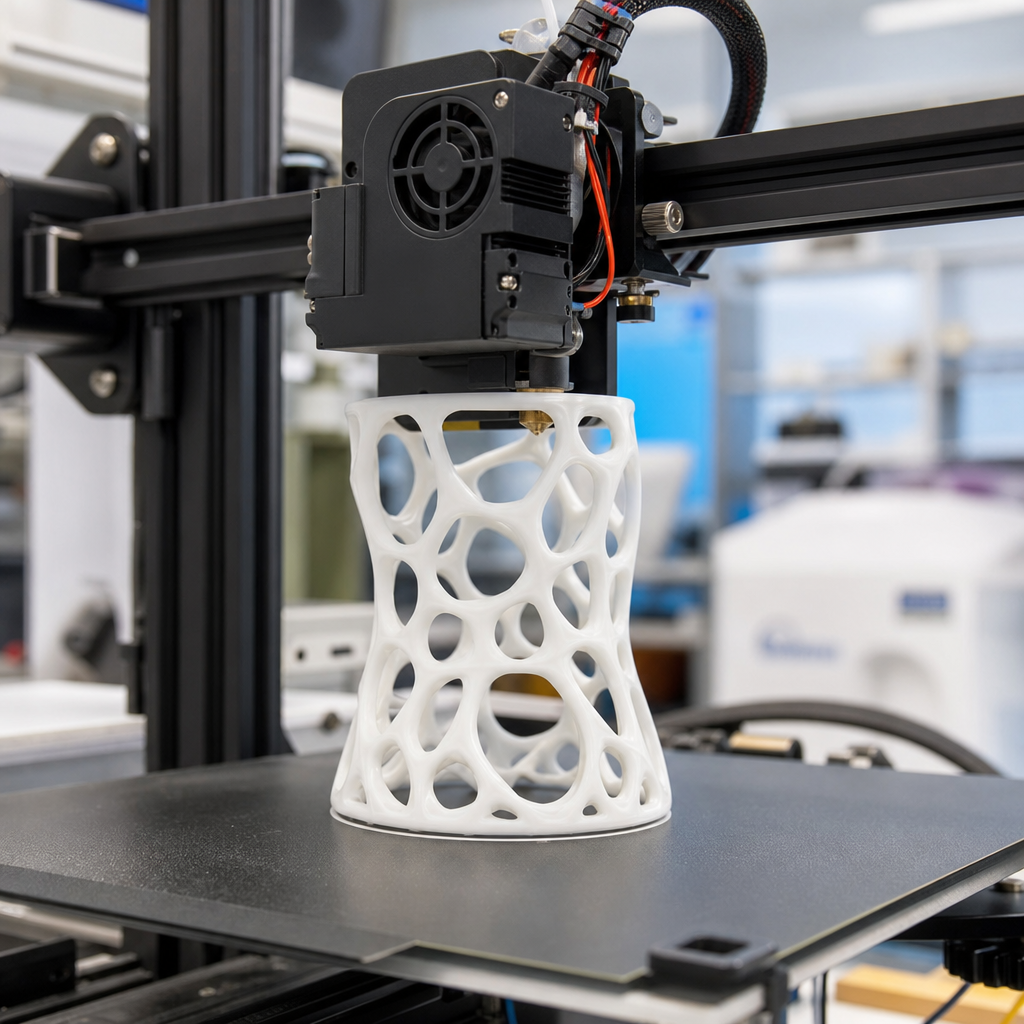
Case studies of polymers in 3D printing and additive manufacturing show how material choice turns a promising prototype into a durable medical guide, a lightweight aircraft duct, or a custom consumer product produced at scale. In this context, polymers are long-chain materials such as thermoplastics, photopolymers, elastomers, and high-performance engineering plastics that can be shaped layer by layer through processes including fused filament fabrication, selective laser sintering, stereolithography, material jetting, and powder bed fusion. Additive manufacturing is the broader production approach that builds parts from digital files rather than subtracting material from stock. The distinction matters because successful polymer applications depend on matching polymer chemistry to process physics, post-processing, regulatory constraints, and final-use demands. I have seen projects fail when teams selected a material only because it printed easily, then discovered poor chemical resistance, low heat deflection, or anisotropic strength. I have also seen polymer parts outperform machined alternatives by consolidating assemblies, reducing weight, and enabling patient-specific geometry. For manufacturers, engineers, and product teams, this topic matters because polymer additive manufacturing now spans prototyping, tooling, bridge production, and certified end-use components, making material strategy a direct driver of cost, speed, and product performance.
Successful polymer applications share a consistent pattern. The team defines the load case, environment, compliance requirement, and economic target before choosing a machine or a resin. Then it validates dimensions, mechanical properties, surface finish, and repeatability with test coupons and pilot builds. This article serves as a hub for successful polymer applications by explaining where common polymer families work best, why certain case studies succeeded, and what lessons transfer across industries. It covers healthcare, aerospace, automotive, consumer goods, tooling, and industrial spare parts, because those sectors have generated the clearest evidence of additive manufacturing value. It also addresses practical questions searchers usually ask: Which polymers are used most often in 3D printing? What makes an application commercially successful? Where do photopolymers fit compared with nylon powders or filament materials? When should a company avoid polymer additive manufacturing? By answering those questions directly and grounding each section in real use cases, the article provides a useful decision framework for anyone building a roadmap around polymer 3D printing.
Healthcare and dental case studies
Healthcare offers some of the strongest case studies because polymer additive manufacturing solves a geometry problem and a workflow problem at the same time. In hospitals and dental labs, every patient is slightly different, so digital customization has immediate value. Surgical guides printed in biocompatible photopolymers are a standard example. For dental implant placement, clinicians use intraoral scans or cone beam CT data to design a guide that controls drilling angle and depth. The polymer must be dimensionally stable, sterilizable within the intended protocol, and approved for mucosal contact where required. The application succeeds because it reduces chair time, improves placement accuracy, and lowers the need for remakes. Similar logic supports orthodontic models, clear aligner molds, hearing aid shells, and anatomical models for preoperative planning. These are not novelty parts; they fit regulated workflows with measurable time savings.
Medical device companies also use nylon, TPU, and high-performance polymers for external orthotics, prosthetic sockets, and rehabilitation tools. A custom wrist brace printed in PA12 through powder bed fusion can combine rigidity with low weight and ventilation, while a TPU liner adds comfort in pressure-sensitive areas. The success factor is not customization alone. It is the ability to tune stiffness, wall thickness, and lattice density around anatomy. I have seen clinics adopt polymer printed devices fastest when the digital chain, from scan to design to print to finishing, is controlled tightly enough to produce repeatable fit. Surface quality, cleaning validation, and traceability matter as much as print speed. In this sector, successful polymer applications prove that additive manufacturing works best when design freedom directly improves clinical outcomes or patient comfort rather than merely replacing a conventionally made shape.
Aerospace and defense applications
Aerospace and defense case studies demonstrate that polymers in additive manufacturing are valuable when weight reduction, part consolidation, and low-volume production outweigh the premium cost of specialized materials and qualification. Cabin interior parts, environmental control system ducts, clips, brackets, fairings, and UAV housings are common examples. High-performance polymers such as ULTEM 9085, PEKK, and PEEK are chosen because they combine low mass with strong mechanical properties, chemical resistance, and, in some cases, flame, smoke, and toxicity performance needed for aircraft interiors. One successful pattern is replacing a multi-part duct assembly with a single printed component. That reduces fasteners, eliminates tooling for small production runs, and shortens spare part lead times. The printed polymer must still pass dimensional checks, environmental testing, and process qualification, but the business case is often compelling because traditional tooling for niche geometries is expensive.
Defense organizations have expanded polymer printing for maintenance and field support, especially for legacy systems where suppliers no longer stock low-demand plastic components. Nylon powder bed fusion and reinforced filaments can produce protective covers, cable management parts, or noncritical housings on demand. The key lesson from successful programs is disciplined classification. Teams do not print everything. They identify components with manageable risk, stable geometry, and clear logistics benefit, then create controlled digital inventories. Aerospace case studies repeatedly show that polymer additive manufacturing is strongest for lightweight, low-volume, complex, and supply-constrained parts. It is weaker for large, highly loaded structures exposed to sustained heat unless the organization has the expertise and certification pathway to support advanced polymers. Success depends on treating the printed polymer part as an engineered system with defined material pedigree, machine parameters, and inspection criteria.
Automotive, motorsport, and transportation use cases
Automotive and motorsport teams adopted polymer additive manufacturing early because vehicle development moves quickly and demands constant iteration. In prototype phases, ABS-like photopolymers, nylon powders, polypropylene-like materials, and carbon-fiber-filled filaments support fast design validation for ducts, clips, housings, bezels, and ergonomic interior features. The more interesting case studies involve production tooling and end-use service parts. Jigs, fixtures, and assembly aids printed in reinforced nylon can reduce operator fatigue and shorten line balancing cycles because they are lighter than machined aluminum and easier to customize. In motorsport, under-the-hood airflow ducting and cockpit components often benefit from fast redesign after testing, where additive manufacturing compresses the loop between telemetry, CAD revision, and track validation. Transportation operators have also used printed polymers for replacement interior fittings in trains and buses, avoiding the cost of obsolete tooling for small quantities.
Commercial success in automotive comes from process economics, not just engineering elegance. A printed fixture succeeds when it removes enough labor, setup time, or ergonomic strain to justify the machine, material, and validation cost. An end-use polymer vent succeeds when annual volume is low enough that injection mold tooling would dominate total cost, or when customization creates premium value. Companies such as BMW, Ford, and Volkswagen have publicly described additive use for tooling, prototypes, and selected production components, reinforcing a broader industry pattern. The lesson is clear: polymer additive manufacturing competes best in automotive where product cycles are short, variants are many, and geometry changes often. It is less competitive for simple, high-volume thermoplastic parts that injection molding can produce for pennies once tooling is amortized. Knowing that boundary is what separates a useful case study from a marketing demo.
Consumer products, tooling, and industrial spare parts
Consumer brands, factory teams, and maintenance organizations have created some of the most practical polymer application successes because they focus on responsiveness. Consumer products benefit from short-run customization, fast market testing, and design complexity without tooling delay. Brands use nylon, TPU, and resin systems for eyewear frames, wearable accessories, protective cases, and footwear midsoles, especially when personalization or lattice performance adds customer value. Tooling teams use printed polymers for drill guides, vacuum form tools, check fixtures, grippers, and end-of-arm tooling. Industrial maintenance teams print machine guards, sensor mounts, and replacement knobs or covers for older equipment when original suppliers no longer support the platform. In each example, the polymer part succeeds because waiting for conventional fabrication would slow revenue, maintenance, or product launch more than the printed part’s material premium costs.
| Application area | Typical polymer | Common process | Main value driver | Key limitation |
|---|---|---|---|---|
| Dental guides and models | Biocompatible photopolymer | SLA or DLP | Patient-specific accuracy | Sterilization and resin aging |
| Aircraft interior ducting | ULTEM 9085 or PEKK | FFF or powder bed fusion | Weight and part consolidation | Qualification burden |
| Assembly fixtures | Glass- or carbon-filled nylon | FFF or SLS | Lower labor and faster changeover | Wear over long cycles |
| Consumer wearables | TPU or PA12 | SLS, MJF, or material jetting | Customization and comfort | Surface finishing cost |
| Legacy spare parts | PA12, ABS, or PC blend | SLS or FFF | On-demand availability | Need for reverse engineering |
From years of implementation work, the strongest industrial spare-part programs begin with criticality mapping. Teams classify which polymer components can be digitized safely, which require redesign for printability, and which should remain conventionally sourced. A warehouse may hold thousands of low-turn plastic parts, yet only a fraction are good additive candidates. The winners are parts with intermittent demand, geometric complexity, expensive tooling, or long procurement delays. Reverse engineering with 3D scanning is often necessary, followed by material substitution because the original molded resin may not have a direct additive equivalent. That is acceptable if the functional requirement is understood clearly. A machine cover may need stiffness and chemical resistance, while a cable guide may need snap-fit flexibility. Successful polymer applications in this category prove that digital inventory can cut downtime and reduce stock, but only when documentation, revision control, and test fit validation are handled rigorously.
What makes a polymer additive manufacturing case study successful
Across industries, successful polymer applications follow five rules. First, the team defines performance requirements in measurable terms, including tensile load, impact exposure, temperature range, UV exposure, sterilization method, and expected life. Second, it chooses a process-material pair rather than treating polymer selection and printer selection as separate decisions. PA12 in selective laser sintering behaves differently from nylon filament in fused deposition, even when the names sound similar. Third, the design is optimized for additive manufacturing through orientation, wall control, support strategy, and part consolidation. Fourth, post-processing is planned from the start, including depowdering, washing, curing, dyeing, machining, sealing, or annealing. Fifth, validation covers both part performance and manufacturing repeatability. Without that final step, early success often disappears when production scales beyond a pilot batch.
Material data must also be interpreted carefully. Supplier datasheets are useful, but they usually reflect standard test conditions and ideal specimen preparation. Real parts may vary by orientation, humidity conditioning, wall thickness, and thermal history. Standards such as ISO 527 for tensile properties, ISO 178 for flexural properties, and ASTM D638 are commonly referenced, yet companies still need internal acceptance criteria tied to the actual application. That is why the best case studies include test coupons printed with the same build, machine calibration records, and destructive or dimensional sampling plans. Successful polymer additive manufacturing is never just a story about a printer making a shape. It is a controlled production method with design rules, material behavior, and quality evidence. Organizations that understand this move from isolated wins to repeatable deployment across product lines.
How to evaluate the right polymer application next
If you are identifying the next polymer additive manufacturing opportunity, start with a three-part screen: geometry, volume, and consequence of failure. Geometry asks whether internal channels, lightweight lattices, mass customization, or part consolidation create a genuine advantage over molding or machining. Volume asks whether annual demand is low, variable, or uncertain enough that tooling cost and inventory burden are a problem. Consequence of failure asks what happens if the part cracks, warps, or drifts dimensionally in service. Low- to medium-consequence parts are usually the fastest route to adoption, especially in tooling, fixtures, housings, and customized fit products. Then compare candidate polymers against the use environment, including moisture absorption for nylons, creep for loaded thermoplastics, UV stability for outdoor parts, and long-term heat resistance for engine-adjacent components. This disciplined filter prevents teams from choosing additive manufacturing because it is available rather than because it is strategically correct.
The core lesson from these case studies is simple: polymers succeed in 3D printing and additive manufacturing when design freedom solves a real operational problem and the material is validated for the environment it will face. Healthcare wins through patient-specific accuracy. Aerospace wins through weight reduction and low-volume efficiency. Automotive wins through rapid iteration and smart tooling. Consumer and industrial users win through customization, speed, and digital inventory. None of those successes happened by accident. They came from precise application selection, realistic material understanding, and disciplined quality control. Use this hub as a starting point for deeper exploration of successful polymer applications in each sector, then map the examples to your own products, constraints, and economics. The best next step is straightforward: shortlist one part where geometry, lead time, or customization clearly matters, test the right polymer-process combination, and build your additive manufacturing case from evidence.
Frequently Asked Questions
What do case studies reveal about the importance of polymer selection in 3D printing and additive manufacturing?
Case studies consistently show that polymer selection is one of the most important decisions in any 3D printing or additive manufacturing project because the material directly affects printability, part strength, dimensional stability, surface finish, regulatory suitability, and long-term performance. A design that works well as a concept model in a low-cost thermoplastic may fail completely when exposed to sterilization cycles, aircraft vibration, UV light, or repeated mechanical loading. In practical terms, this is why successful projects start by matching application requirements to material behavior rather than choosing a polymer only because it is easy to print.
Real-world examples make this especially clear. In medical applications, a polymer used for a surgical guide must not only print with fine detail, but also maintain accuracy after cleaning and sterilization. In aerospace, a lightweight duct or bracket may need flame resistance, low smoke emissions, and good fatigue behavior, which immediately narrows the field to high-performance engineering polymers. In consumer products, the winning material may be the one that balances appearance, toughness, texture, and production cost for thousands of units. The lesson from case studies is simple: material choice is often what determines whether a part remains a prototype or becomes a reliable end-use component.
Which polymer types are most commonly used in additive manufacturing, and where does each perform best?
The most common polymer families in additive manufacturing include thermoplastics, photopolymers, elastomers, and high-performance engineering plastics. Each category serves different goals, and case studies show that success depends on understanding both the strengths and the limitations of each one. Standard thermoplastics such as PLA, ABS, PETG, and nylon are widely used because they are accessible, versatile, and compatible with established processes like fused filament fabrication and selective laser sintering. These materials are often chosen for prototypes, fixtures, tooling aids, housings, and functional parts where moderate strength and reasonable cost matter most.
Photopolymers are heavily used in stereolithography and related resin-based systems when very high detail, smooth surfaces, and precise geometries are required. They are common in dental models, surgical planning tools, casting patterns, and visually refined prototypes. However, case studies often note that not all photopolymers are suitable for long-term structural use, especially if the part will face heat, impact, or sunlight. Elastomers, including flexible polyurethane-like resins and thermoplastic elastomers, are selected when softness, cushioning, sealing, or repeated flexing is required. These materials are often featured in wearable products, gaskets, grips, and custom-fit consumer goods. High-performance engineering plastics such as PEEK, PEKK, ULTEM, and reinforced nylons appear in the most demanding case studies, particularly in aerospace, automotive, and medical environments where high temperature resistance, chemical stability, and strong mechanical properties are essential. These materials offer impressive performance, but they also require more advanced equipment, tighter process control, and greater design discipline.
How do different 3D printing processes influence polymer performance in finished parts?
The printing process has a major influence on how a polymer behaves in the finished component because each technology builds parts differently, creating distinct internal structures, mechanical properties, and surface characteristics. Case studies repeatedly show that the same polymer can perform very differently depending on whether it is processed through fused filament fabrication, selective laser sintering, stereolithography, material jetting, or another additive method. That is why process selection should be treated as a material-performance decision, not just a manufacturing preference.
For example, fused filament fabrication is valued for affordability, material availability, and ease of iteration, but parts may show anisotropic strength because bonding between layers is often weaker than strength within a layer. Selective laser sintering, especially with nylon powders, typically produces more uniform and durable functional parts with no support structures, making it popular for complex geometries and low-volume production runs. Stereolithography excels in accuracy and surface finish, which is why it appears frequently in medical and design-focused case studies, but engineers must evaluate brittleness, post-curing behavior, and environmental durability carefully. In short, case studies demonstrate that final part performance is shaped by the combination of polymer chemistry, process physics, build orientation, thermal history, and post-processing. Organizations that treat these factors as interconnected usually achieve better repeatability and better real-world results.
What are the biggest challenges companies face when moving polymer 3D printed parts from prototyping to end-use production?
The transition from prototype to production is where many additive manufacturing projects either prove their value or expose their weaknesses. Case studies show that the biggest challenges usually involve consistency, qualification, economics, and scaling workflows. A prototype can succeed because it only needs to work once or impress a small internal team. A production part, by contrast, must perform reliably across multiple builds, operators, machines, and environmental conditions. This is a much higher standard, and it places greater pressure on polymer selection, machine calibration, quality assurance, and documentation.
One major challenge is repeatability. Polymers can respond differently to small changes in temperature, humidity, print orientation, powder reuse, resin age, or post-processing conditions. Another challenge is design adaptation. A shape that looks acceptable as a printed prototype may need wall-thickness changes, support reduction, tolerance refinement, or assembly redesign before it can be manufactured efficiently at scale. Cost is also a frequent barrier. While additive manufacturing reduces tooling costs and enables customization, production economics depend on throughput, material yield, labor, finishing time, and scrap rates. In regulated sectors such as medical, aerospace, and automotive, qualification adds another layer of complexity because printed polymer parts may require mechanical validation, traceability, biocompatibility evidence, or compliance testing. The companies highlighted in strong case studies succeed because they build robust material-process controls and treat scale-up as an engineering program rather than a simple extension of prototyping.
What lessons do polymer case studies offer for the future of additive manufacturing across medical, aerospace, and consumer markets?
Polymer case studies point to a future in which additive manufacturing becomes less about novelty and more about targeted manufacturing advantage. The strongest lesson is that polymers enable highly application-specific solutions when design freedom is paired with the right material and process. In medical settings, this means patient-matched guides, anatomical models, and custom devices that improve clinical workflow and precision. In aerospace, it means lightweight components, part consolidation, and supply chain simplification using advanced polymers that meet demanding performance requirements. In consumer markets, it means rapid product iteration, mass customization, localized production, and distinctive product aesthetics that would be difficult or uneconomical with conventional tooling alone.
At the same time, these case studies also highlight where the industry is heading next. Material portfolios are expanding to include tougher resins, more stable elastomers, flame-retardant grades, recyclable thermoplastics, and reinforced engineering polymers. Digital workflows are improving as simulation, build preparation, and in-process monitoring become more sophisticated. Companies are also learning that additive manufacturing works best when it is integrated thoughtfully into the broader manufacturing strategy rather than treated as a stand-alone experiment. The overall takeaway is encouraging: polymer additive manufacturing is no longer limited to visual prototypes. When supported by proper engineering, testing, and production planning, it is increasingly capable of delivering certified, durable, and commercially viable parts across a wide range of industries.