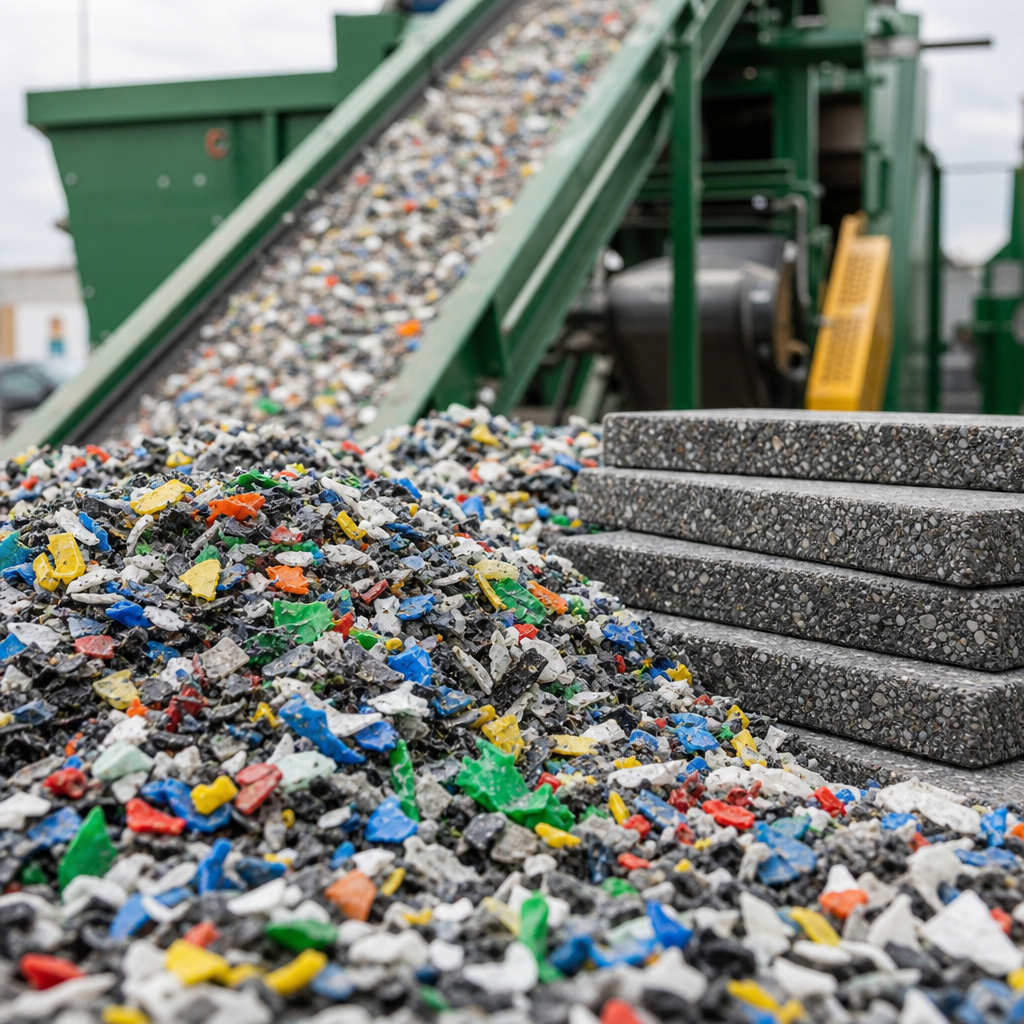
Polymer recycling is no longer a side conversation in waste management; it is becoming a practical supply strategy for the construction industry. In simple terms, polymers are long-chain materials such as polyethylene, polypropylene, polyvinyl chloride, polystyrene, and polyethylene terephthalate that appear in packaging, pipes, films, consumer products, textiles, and industrial scrap. Recycling these polymers into construction materials means collecting discarded plastic, sorting it by resin type, cleaning it, processing it through mechanical or chemical methods, and converting it into products such as composite lumber, insulation panels, pavers, roofing tiles, pipes, geotextiles, and asphalt modifiers. I have worked on projects where the question was not whether recycled polymer could replace virgin input, but which application could tolerate variability while still meeting performance and compliance requirements.
This topic matters because construction consumes huge volumes of material, while plastic waste remains abundant and persistent. The match is strategically important: buildings and infrastructure can absorb large quantities of secondary material if engineers control quality, durability, fire behavior, ultraviolet resistance, and structural loading limits. Global plastic production exceeds 400 million tonnes annually, and only a modest share is recycled into durable products. Construction, by contrast, values longevity and often benefits from properties polymers already offer, including corrosion resistance, low water absorption, light weight, and moldability. As a hub for case studies in polymer recycling, this article explains how recycled polymers move from waste stream to job site, which products perform well, where failures happen, and what standards, examples, and decision criteria professionals should use when evaluating applications.
From Waste Stream to Construction Feedstock
The route from discarded plastic to construction material begins with feedstock discipline. Mixed plastics rarely become reliable building products without careful separation, because each resin melts, flows, shrinks, and ages differently. High-density polyethylene from detergent bottles can be remelted into lumber profiles and drainage components. Polypropylene from caps, crates, and automotive trim often appears in boards, pallets, and composite products. PET from bottles can be transformed into fibers for concrete reinforcement or insulation products. PVC from window profiles and pipes is often recycled in closed loops because additives and chlorine content require tighter process control. In practice, the highest-performing construction products usually come from narrowly specified waste streams, not from unsorted municipal bales.
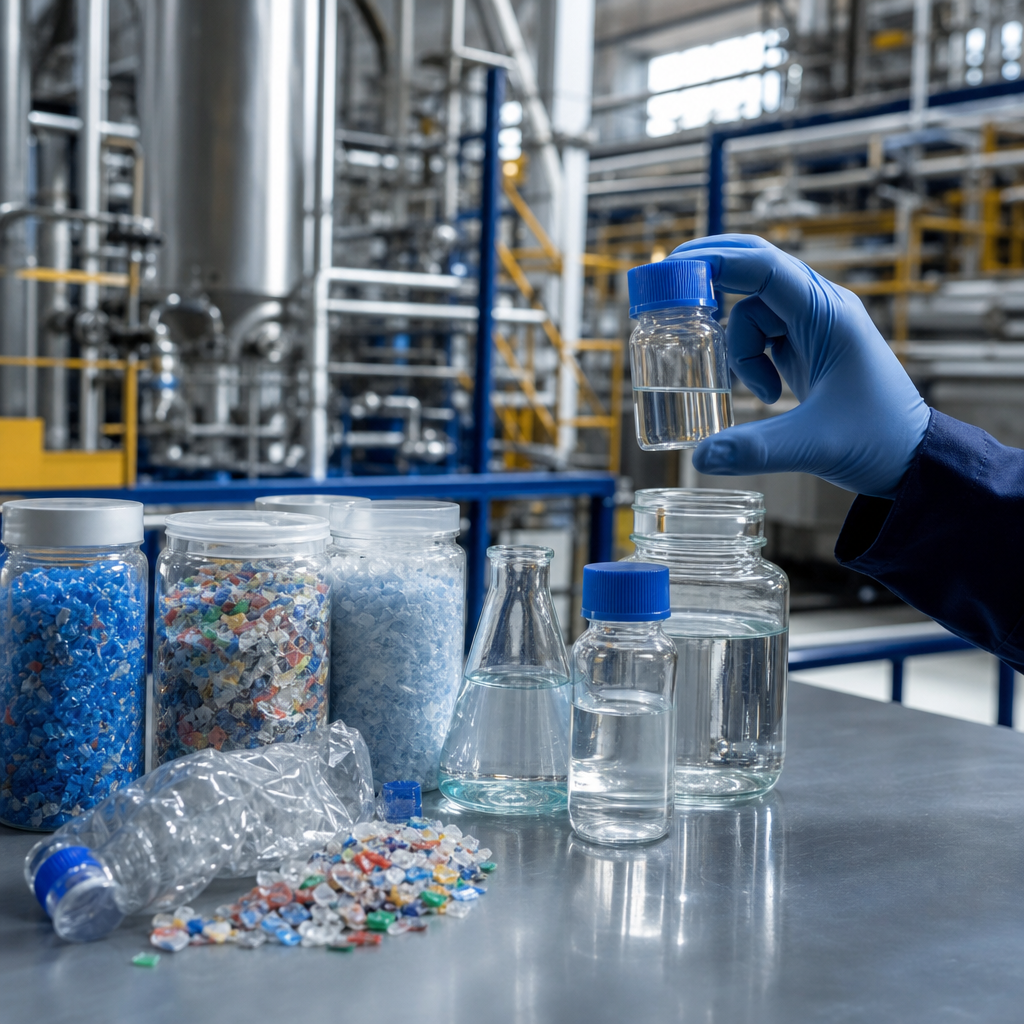
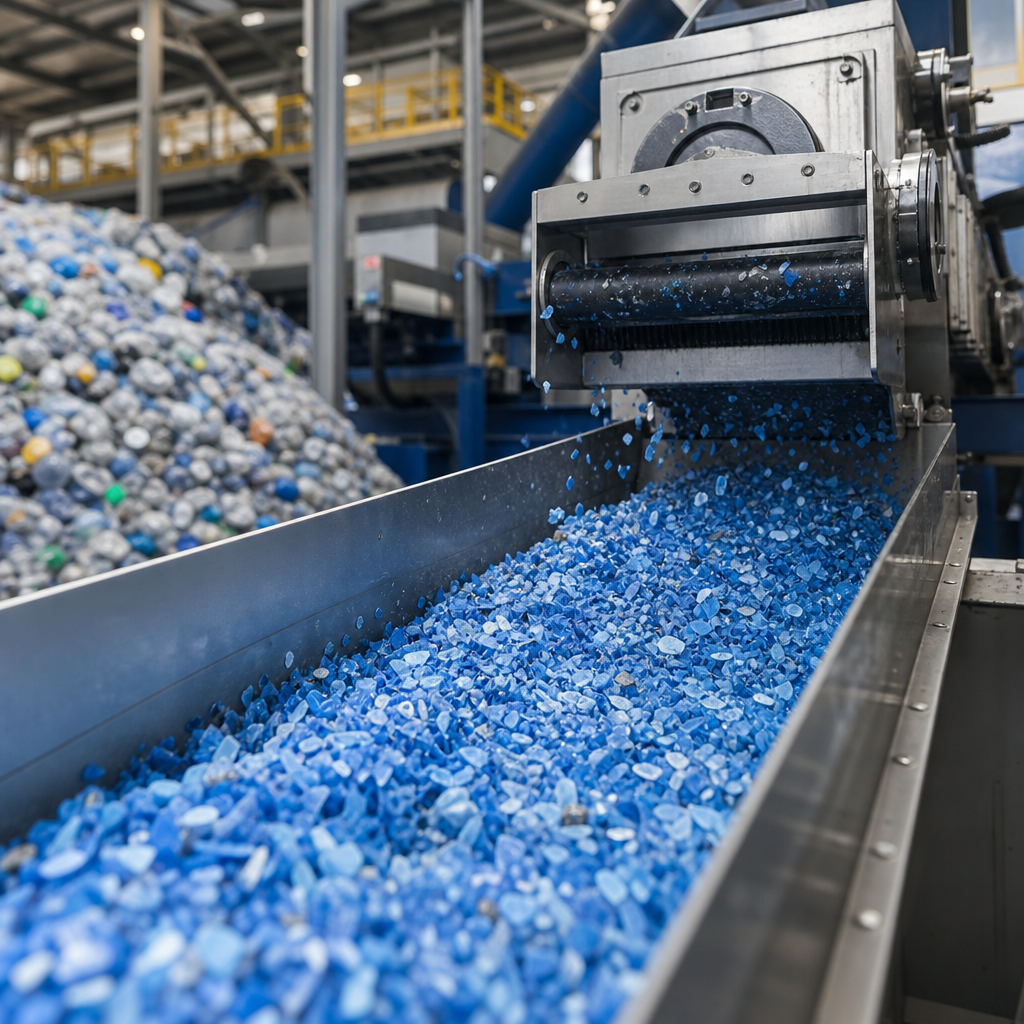
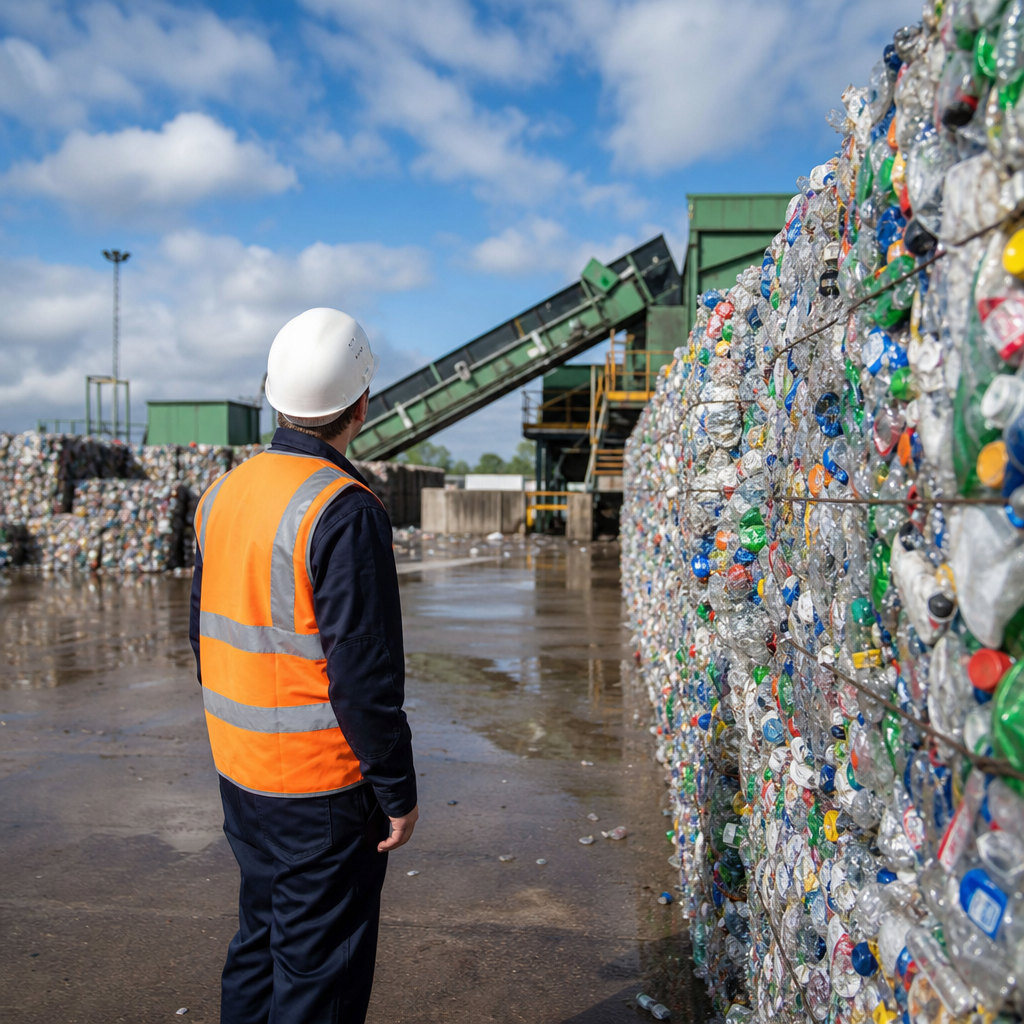
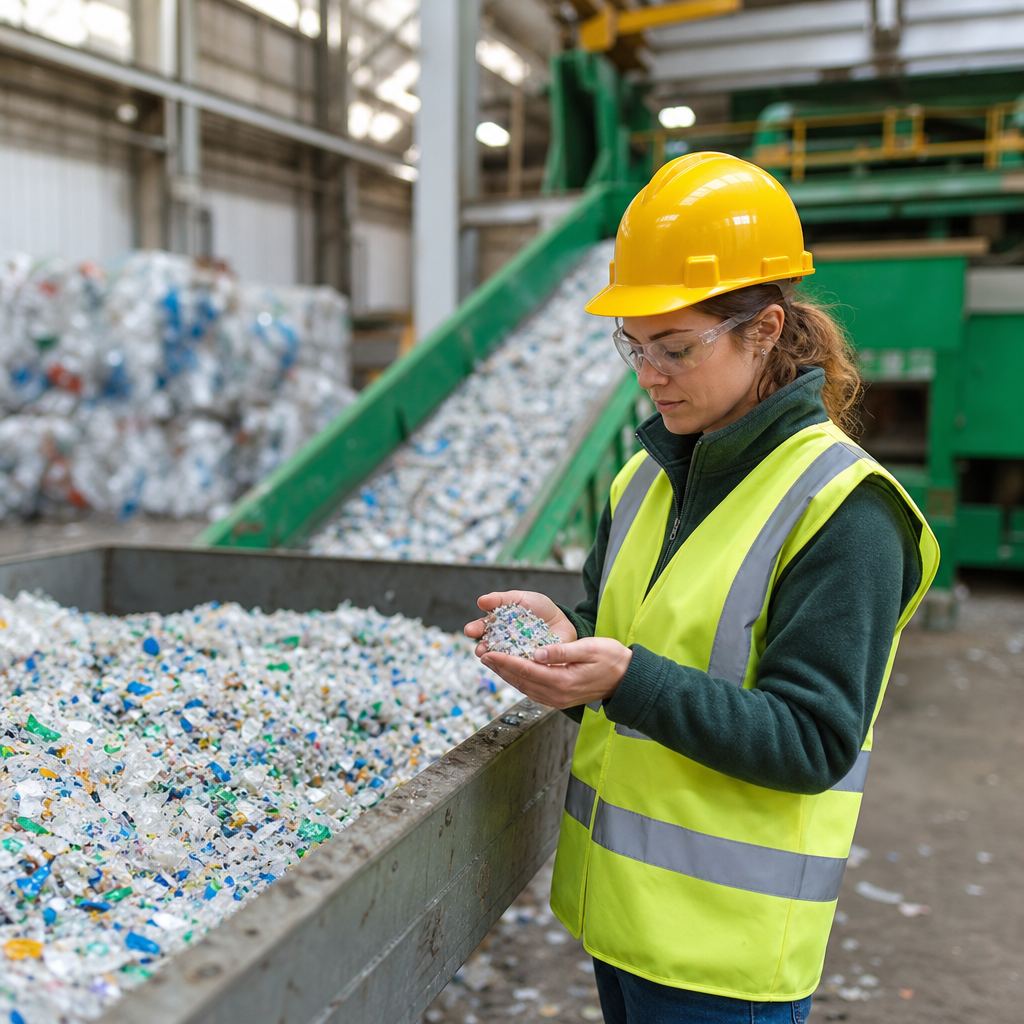
Processing usually follows four stages: collection, sorting, conditioning, and conversion. Collection may come from post-industrial scrap, construction and demolition waste, or post-consumer sources such as packaging. Sorting uses near-infrared systems, float-sink tanks, optical scanners, and manual quality checks. Conditioning includes shredding, washing, drying, and metal removal. Conversion then relies on extrusion, compression molding, injection molding, densification, or depolymerization, depending on the resin and final product. Mechanical recycling remains the dominant route because it is less energy intensive and commercially mature, but it does not fully reset polymer chains; repeated heat histories can reduce impact strength or molecular weight. Chemical recycling can recover monomers or hydrocarbon feedstocks from certain streams, yet economics, contamination, and scale remain limiting factors for most building-product applications.
For construction buyers, the key issue is not simply recycled content percentage. It is fitness for purpose. A recycled polymer product must hold dimensions across seasonal temperature swings, resist creep under sustained load, survive ultraviolet exposure, and satisfy local codes. A bench made from recycled plastic can tolerate broader variability than a structural decking subframe. That is why manufacturers use stabilizers, mineral fillers, glass fibers, compatibilizers, and co-extruded skins to engineer more predictable performance from secondary polymers.
Mechanical Recycling in Real Construction Products
Mechanical recycling produces many of the polymer-based materials already installed in parks, roads, drainage systems, and buildings. Recycled plastic lumber is one of the clearest examples. Manufacturers extrude HDPE-rich feedstock into planks used for benches, boardwalks, fencing, sound barriers, and marine applications. These products resist rot and moisture better than untreated timber, making them attractive in wetlands and coastal areas. However, they also have lower stiffness than wood and can deform under high heat if spans are too wide. On one municipal walkway project, the recycled planks performed well only after the designer reduced joist spacing and specified a textured cap layer to improve slip resistance.
Composite decking and cladding represent another mature category. These systems typically blend recycled polyethylene with wood flour, pigments, coupling agents, and ultraviolet stabilizers. The polymer shields the lignocellulosic filler from moisture, while the filler improves stiffness and lowers cost. Major brands in North America and Europe have built entire product lines around recycled content, often using reclaimed shopping bags and recovered wood fiber. The case-study lesson is straightforward: recycled content succeeds when manufacturers tightly manage particle size, moisture content, extrusion temperature, and capstock adhesion. When those controls fail, boards can swell, fade, or delaminate.
Recycled polymers also enter infrastructure through asphalt modification. Waste polyethylene and polypropylene can be shredded or pelletized and blended into bituminous mixes to improve rutting resistance and divert waste from landfill. India has been widely cited for road programs using waste plastic in asphalt, particularly under approaches promoted by Dr. R. Vasudevan. The benefit is not magical durability; the real value comes from better binder performance and reduced plastic leakage when the polymer is properly incorporated. Poorly designed mixes can still crack, and unsupported claims about roads consuming any plastic waste should be treated cautiously. The engineering depends on polymer type, dosage, wet or dry process selection, and compatibility with local aggregate and climate conditions.
Case Studies Across Building and Infrastructure Applications
The strongest case studies in polymer recycling share a common trait: they match waste stream characteristics to a product with realistic performance demands. In Europe, recycled PVC window profile programs have shown how closed-loop recycling can preserve value. Old frames are collected, contaminants such as metal reinforcements and seals are removed, and the PVC is reprocessed into core layers for new profiles. Because outer layers can use virgin or highly controlled compound formulations, manufacturers maintain weatherability and appearance while incorporating substantial recycled core content. This model works because the feedstock is known, additives are understood, and product specifications are stringent.
In housing and community infrastructure, interlocking bricks and pavers made from mixed plastic and sand have gained traction in parts of Africa and South Asia. Companies process low-value films and packaging into molded paving units for sidewalks, courtyards, and low-speed surfaces. The practical advantage is diversion of difficult waste streams into dense, saleable products. The limitation is equally important: these units are not direct replacements for reinforced concrete in high-load structural settings. The best programs publish compressive strength, abrasion resistance, and water absorption data rather than marketing them as universal substitutes.
Pipe and drainage products offer another compelling use case. Recycled HDPE and PP are widely used in non-pressure drainage pipes, cable conduits, inspection chambers, and stormwater management components. Dual-wall corrugated pipes often place recycled material in the core while preserving performance-critical inner or outer layers. This multilayer design is a recurring lesson in case studies: use recycled polymer where it contributes bulk and stiffness, and reserve tightly specified material for interfaces that govern sealing, friction, or environmental exposure.
| Application | Common Recycled Polymer | Main Benefit | Main Limitation |
|---|---|---|---|
| Plastic lumber | HDPE | Moisture and rot resistance | Lower stiffness and creep risk |
| Composite decking | PE with wood fiber | Uses mixed recovered inputs efficiently | Can fade or delaminate if poorly processed |
| Drainage pipe | HDPE or PP | High recycled content in non-pressure uses | Needs strict control for pressure-rated systems |
| Pavers and bricks | Mixed plastics | Consumes difficult local waste streams | Not suitable for all structural loads |
| Asphalt modifier | PE or PP | Improves rutting resistance in some mixes | Performance depends heavily on design and climate |
Performance Standards, Testing, and Compliance
No serious evaluation of recycled polymers in construction is complete without standards and testing. The core question is always the same: can the product meet its declared performance over its service life? For plastics, common test references include ASTM and ISO methods for tensile strength, flexural modulus, impact resistance, melt flow, density, Vicat softening temperature, and environmental stress cracking. Building products may also require fire testing, smoke development ratings, slip resistance, freeze-thaw durability, creep measurements, and weathering exposure using xenon arc or ultraviolet chambers. European construction products may need compliance pathways tied to harmonized standards and declaration requirements, while US applications often align with ASTM product specifications and local building codes.
Quality control is especially important because recycled feedstocks vary by origin, additive package, and contamination level. Experienced manufacturers rely on incoming bale audits, spectroscopy, ash-content testing, moisture measurement, and lot traceability to control this variability. In my experience, projects fail less from the concept of recycled polymer and more from weak process control. A pipe producer that monitors melt flow index and contamination every batch can deliver highly consistent non-pressure products. A smaller operator buying mixed flakes on spot markets may produce acceptable material one month and brittle, odor-prone stock the next.
Fire performance deserves explicit attention. Many recycled polymers are combustible, and additives from prior use can complicate smoke and toxicity behavior. This does not disqualify them from construction, but it does determine where they belong. Exterior site furnishings, landscape edging, and buried drainage systems pose different fire requirements than façade elements or occupied interior spaces. The right approach is application-specific design, not blanket endorsement or rejection.
Economic and Environmental Tradeoffs
The business case for converting recycled polymers into construction materials rests on three factors: feedstock cost, processing cost, and avoided impacts. Recycled polymers can be cheaper than virgin resin, but only when collection and sorting systems are efficient and contamination is low. Post-industrial scrap usually offers the best economics because it is cleaner and more uniform. Post-consumer waste often carries higher washing, sorting, and reject costs. Transportation also matters. Lightweight plastic waste is expensive to move over long distances unless it is densified or processed near source.
Environmental gains are real but should be stated carefully. Mechanical recycling typically lowers greenhouse gas emissions compared with producing virgin polymer from fossil feedstocks, especially when the recycled material displaces virgin resin in durable applications. Life cycle assessment studies commonly show advantages in embodied energy and waste diversion. Still, benefits depend on system boundaries. If a product has a short life, cannot be recycled again, or requires heavy additive loading, the net advantage narrows. Durable, reusable, and repairable products usually produce the strongest outcomes.
Another tradeoff is design for future recovery. Construction products remain in service for decades, which is positive for carbon amortization but challenging for later recycling if layers are inseparable or additives are undocumented. The best emerging practice is to pair recycled content with design-for-disassembly principles, resin identification, and digital product records so future demolition waste can reenter controlled streams rather than becoming mixed debris.
Where the Market Is Heading Next
The next phase of case studies in polymer recycling will focus less on novelty and more on repeatability at scale. Expect growth in multilayer pipe, modular panels, geosynthetics, 3D-printed formwork, and hybrid composites that combine recycled polymers with mineral fillers or fibers. Digital sorting systems using AI-assisted vision and advanced spectroscopy are improving feedstock purity. Extended producer responsibility rules, landfill restrictions, and procurement standards are also pushing manufacturers to document recycled content with more rigor. At the same time, buyers are asking better questions: What resin mix is used? What standard was the product tested to? What is the creep behavior at design temperature? Can the product be recycled again?
Those are the right questions for this subtopic. Case studies in polymer recycling are useful only when they connect waste source, processing method, product design, test data, and field performance. That full chain explains why one recycled polymer product becomes a durable construction material while another fails early or never scales beyond pilot production.
Recycled polymers are already proving their value in construction when the application is chosen carefully and the manufacturing process is tightly controlled. The most successful examples use known waste streams, application-specific design, and verified testing to produce materials that are durable, compliant, and commercially viable. Plastic lumber, composite decking, drainage products, recycled PVC profiles, paving units, and asphalt modifiers each show a different route from discarded polymer to practical built infrastructure.
The central lesson is simple: recycled content alone does not create performance. Sorting accuracy, formulation, stabilization, processing conditions, and standards-based validation create performance. Professionals who evaluate these materials should look beyond marketing claims and ask for resin provenance, quality-control data, service-life evidence, and relevant test results. That discipline turns polymer recycling from a sustainability talking point into a dependable construction strategy.
As a hub for case studies and applications, this page should guide your next step: compare specific product categories, review detailed project examples, and use performance criteria to decide where recycled polymers fit best in your building or infrastructure portfolio.
Frequently Asked Questions
What types of polymers can be recycled into construction materials?
A wide range of polymers can be recycled into useful construction products, but the most common are polyethylene (PE), polypropylene (PP), polyvinyl chloride (PVC), polystyrene (PS), and polyethylene terephthalate (PET). These materials come from everyday and industrial waste streams such as packaging films, bottles, containers, pipes, insulation, textiles, and manufacturing scrap. Each polymer has different physical properties, so it is typically matched with applications where those properties make sense. For example, recycled HDPE and PP are often used in plastic lumber, decking, outdoor furniture, drainage products, and composite boards because they offer good toughness and moisture resistance. Recycled PVC can be processed into pipes, conduits, window profiles, flooring layers, and panels when the material is properly sorted and formulated. PET, which is widely known from beverage bottles and synthetic fibers, may be converted into insulation components, composite reinforcement, or binders in engineered materials.
Not every polymer stream is equally easy to recycle into construction applications. Success depends on how clean the feedstock is, whether different resins are mixed together, and whether additives, fillers, dyes, or contaminants are present. Construction manufacturers usually prefer consistent input material because product performance and processing stability matter at scale. That is why sorting by resin type is such an important first step. In practice, post-industrial plastic scrap is often easier to use than mixed household waste because it tends to be cleaner and more uniform. Even so, advances in sorting systems, density separation, washing, shredding, compounding, and compatibilizer technology are making it possible to recover more complex polymer streams and convert them into durable construction materials.
How are discarded plastics processed before they become construction products?
The process usually begins with collection and sorting. Waste plastics are gathered from municipal recycling programs, commercial facilities, industrial operations, demolition sites, and manufacturing lines. Once collected, they are separated by resin type, color, density, and sometimes by intended end use. This sorting step is essential because polyethylene does not behave the same way as PVC or PET during melting and forming. If incompatible polymers are mixed without proper controls, the final product may become weak, brittle, or inconsistent. After sorting, the plastics are cleaned to remove labels, dirt, food residue, adhesives, metals, and other contaminants that could interfere with processing or product quality.
After cleaning, the material is typically shredded or ground into flakes, then dried and prepared for reprocessing. In mechanical recycling, those flakes are melted, filtered, and extruded into pellets or directly formed into products such as boards, tiles, pipes, sheets, panels, or composite feedstock. Additives may be introduced at this stage to improve UV resistance, flame performance, impact strength, color consistency, or compatibility between different polymers. In some applications, recycled plastic is blended with wood fiber, sand, mineral fillers, rubber, or glass to produce engineered construction materials with specific performance characteristics. Quality control then plays a major role: manufacturers test melt flow, density, contamination levels, mechanical properties, dimensional stability, and weathering performance before materials are approved for construction use. The result is not simply melted waste plastic, but a carefully processed feedstock engineered to meet practical building requirements.
What construction materials can be made from recycled polymers?
Recycled polymers can be turned into a surprisingly broad range of construction products. One of the most established categories is plastic lumber and composite decking, where recycled PE or PP is used alone or combined with wood fiber to create boards that resist rot, insects, and moisture. Recycled plastics are also used in drainage pipes, cable conduits, geotextiles, vapor barriers, roofing membranes, insulation components, wall panels, cladding systems, and modular formwork. In infrastructure and site development, recycled polymer materials appear in road barriers, erosion-control products, pavers, manhole components, pallets, curb systems, and subbase stabilization products. Some manufacturers even use recycled plastic in bricks, blocks, or panelized systems, often blending polymers with sand, mineral aggregates, or other fillers to improve stiffness and compressive behavior.
The suitability of a recycled polymer product depends on the demands of the application. For instance, materials used outdoors must withstand UV exposure, thermal cycling, and moisture. Products intended for structural or semi-structural use need reliable strength, creep resistance, and dimensional stability over time. Interior applications may place greater emphasis on flame performance, emissions, aesthetics, and ease of installation. This is why recycled polymer construction materials are typically engineered for specific use cases rather than treated as generic substitutes. In the best examples, they provide advantages beyond waste reduction, including lower maintenance requirements, corrosion resistance, lighter weight, and design flexibility. As the recycling and compounding process becomes more sophisticated, the portfolio of viable construction products continues to expand.
Are recycled polymer construction materials durable and safe to use?
Yes, recycled polymer construction materials can be both durable and safe when they are designed, processed, and tested correctly. Durability depends on resin selection, cleanliness of the recycled feedstock, formulation, manufacturing quality, and whether the final product is matched to the right application. Many polymer-based construction products naturally resist moisture, corrosion, and biological decay, which gives them a strong advantage in wet or aggressive environments where wood, metal, or untreated materials may deteriorate more quickly. Recycled plastic lumber, for example, does not rot and can perform well in outdoor settings when UV stabilizers and proper structural design are included. Similarly, recycled polymer pipes and panels can offer long service life when produced under controlled standards.
Safety is addressed through material testing, product certification, and compliance with building and product standards. Manufacturers evaluate properties such as tensile strength, flexural strength, impact resistance, fire behavior, chemical resistance, thermal expansion, and weathering stability. In some cases, recycled polymers must also meet requirements related to toxicity, emissions, or contact with water and indoor environments. It is important to recognize that not all recycled plastic products are interchangeable; a material suitable for landscaping or non-load-bearing partitions may not be appropriate for structural framing or high-temperature exposure. The key is using recycled polymer products that have been properly formulated for their intended application and verified through recognized test methods. When that happens, these materials can deliver dependable performance while also supporting circular material use.
Why is polymer recycling becoming more important for the construction industry?
Polymer recycling is becoming more important because it addresses two major pressures at the same time: growing plastic waste and rising demand for reliable material supply in construction. The building sector uses enormous volumes of materials, and manufacturers are increasingly looking for feedstocks that are cost-effective, scalable, and less exposed to supply chain volatility. Recycled polymers offer a practical solution because many plastic waste streams are already available from packaging, consumer goods, industrial scrap, and end-of-life products. Instead of treating these materials only as waste, the construction industry can convert them into boards, pipes, insulation-related products, membranes, and composite components that have real commercial value. This helps reduce landfill disposal and can lower dependence on virgin resin in selected applications.
There is also a strong sustainability driver behind this shift. Many developers, contractors, manufacturers, and public agencies are under pressure to reduce embodied carbon, improve resource efficiency, and support circular economy goals. While recycled polymers are not the answer to every material challenge, they can contribute to better waste recovery, lower raw material extraction, and more efficient use of existing resources. Just as important, the industry is moving beyond theory into practical deployment. Better sorting technology, more advanced compounding methods, and clearer product standards are making recycled polymer construction materials more consistent and easier to specify. In other words, polymer recycling is no longer just an environmental talking point; it is increasingly part of how construction materials are sourced, engineered, and manufactured at scale.