Polymers transformed textile manufacturing from a largely mechanical craft into a highly engineered production system with tighter quality control, faster throughput, and fabrics designed for specific performance targets. In textiles, a polymer is a large molecule made of repeating units, either occurring naturally, like cellulose in cotton, or synthesized industrially, like polyester, nylon, acrylic, polyurethane, and polypropylene. Textile manufacturing processes include fiber formation, spinning, weaving, knitting, dyeing, finishing, lamination, coating, and recycling. When manufacturers ask how polymers improved textile manufacturing processes, the answer reaches far beyond replacing natural fibers. Polymers changed how fibers are extruded, how yarns withstand stress, how fabrics manage moisture, how finishes bond to surfaces, and how mills reduce waste, energy use, and defects.
I have worked with mills evaluating yarn breakage, coating adhesion, and finishing consistency, and the pattern is unmistakable: polymer science often determines whether a textile line runs smoothly or struggles with rework. Polymer selection influences melt viscosity, crystallinity, tensile strength, abrasion resistance, dye affinity, thermal stability, and chemical resistance. Those properties directly affect machine settings, line speed, product durability, and unit cost. This matters because textile production is under pressure from every direction at once. Brands want lighter, stronger, cheaper, more sustainable fabrics. Regulators are tightening rules on emissions, restricted substances, and waste. Buyers expect repeatable quality across global supply chains. Understanding polymer-driven improvements helps manufacturers choose the right materials, understand tradeoffs, and identify where the next gains in performance and efficiency will come from.
From Natural Cellulose to Engineered Synthetics
The first major improvement polymers brought to textile manufacturing was consistency. Natural fibers vary by climate, harvest, staple length, fineness, contamination, and moisture content. Synthetic polymers allowed manufacturers to engineer denier, cross-section, luster, elongation, and shrinkage with far narrower tolerances. Polyester, commercialized at scale in the mid twentieth century, became dominant because it could be melt spun efficiently, heat set predictably, and blended with cotton to improve wrinkle resistance and dimensional stability. Nylon added high strength and abrasion resistance, making it valuable in hosiery, carpets, and technical textiles. Acrylic offered wool-like bulk and softness. Polypropylene created low-density nonwovens critical in hygiene and medical applications.
Engineered polymers also expanded process flexibility. In a cotton system, many variables are inherited from the crop. In a polymer system, many variables can be designed. Manufacturers can alter molecular weight to change melt behavior, add delustrants such as titanium dioxide, include comonomers to improve dyeability, or spin bicomponent fibers that combine two polymers in a sheath-core or side-by-side structure. Those innovations improved downstream processing because the fiber itself was built for the machine and end use. For example, low-melting binder fibers help nonwoven producers thermally bond webs without adding separate adhesives. That shortens the process, lowers chemical use, and improves line efficiency.
Polymer Effects on Spinning, Weaving, and Knitting Efficiency
One of the clearest manufacturing benefits of polymers is fewer interruptions on the production floor. In spinning, synthetic fibers offer controlled length, low contamination, and predictable frictional behavior. That reduces unevenness and end breaks compared with variable natural feedstocks. In weaving, stronger filament yarns and properly engineered staple blends improve loom efficiency by surviving higher tensions and faster speeds. In knitting, yarns with consistent elongation and recovery reduce barre, spirality, and course distortion. When a mill raises machine speed even modestly while cutting stops for yarn failure, the economics improve immediately.
Texturizing and heat setting are especially important polymer-enabled advances. Thermoplastic fibers such as polyester and nylon can be permanently shaped with heat. False-twist texturing creates bulk, stretch, and hand feel that were difficult to achieve consistently with traditional fibers. Heat setting stabilizes fabric dimensions before dyeing and garment production, reducing skew, shrinkage, and post-finish distortion. I have seen mills solve repeated claims about seam puckering not by changing sewing conditions, but by tightening polymer-specific heat-set parameters upstream. The polymer’s glass transition temperature, crystallization behavior, and orientation determine the window for stable processing, so understanding the resin is as important as understanding the machine.
Case Studies Across Industry-Specific Applications
Industry-specific case studies show that polymers improved textile manufacturing processes differently depending on the end market. Apparel producers adopted polyester-cotton blends because they reduced wrinkling and improved wash durability while running efficiently on established ring spinning and weaving equipment. Sportswear manufacturers moved heavily toward polyester and elastane systems because moisture management, stretch recovery, and lightweight construction are easier to engineer in synthetic polymer platforms. Automotive suppliers rely on nylon, polyester, polyurethane, and engineered nonwovens for seat fabrics, airbags, carpets, and insulation because these materials meet strict requirements for abrasion, flame behavior, dimensional stability, and process repeatability. Medical textile manufacturers use polypropylene and polyester nonwovens in gowns, masks, wipes, and drapes because polymer-based spunbond and meltblown lines can produce high volumes with controlled filtration and barrier properties.
A practical comparison illustrates the manufacturing impact clearly.
| Industry | Key Polymer | Process Improvement | Result |
|---|---|---|---|
| Apparel | Polyester-cotton blends | Better dimensional stability during spinning, weaving, and finishing | Fewer wrinkles, lower shrinkage, more consistent quality |
| Sportswear | Polyester with elastane | Heat-set stretch fabrics and engineered moisture transport | Improved fit, recovery, and comfort |
| Automotive | Nylon, polyurethane, polyester | High-strength yarns and durable coated fabrics | Long service life and efficient high-volume production |
| Medical | Polypropylene | Spunbond and meltblown nonwoven processing | Fast output, filtration control, and lower contamination risk |
| Geotextiles | Polypropylene and polyester | Needle-punched and woven structures with chemical resistance | Reliable separation, filtration, and reinforcement performance |
These case studies matter because this subtopic is not a single story. The best polymer for a compression legging is not the best polymer for a roofing membrane, an airbag, or a surgical mask. Manufacturing improvements come from matching polymer chemistry to processing method and performance requirement.
Dyeing, Finishing, Coating, and Functional Performance
Polymers improved textile manufacturing processes not only in yarn formation but also in wet processing and finishing. Dye uptake depends strongly on polymer chemistry. Polyester requires disperse dyes and high-temperature dyeing because of its hydrophobic, highly crystalline structure. Nylon dyes more readily with acid dyes due to available amide linkages. Acrylic responds to basic dyes. These distinctions pushed equipment and recipe innovation, including pressurized dyeing machines, carrier-free processes, and optimized reduction clearing. The result was better shade reproducibility and less off-quality production when mills aligned chemistry, machine, and dyestuff correctly.
Finishes also became more durable because polymer binders and crosslinking systems attach functional chemistries more effectively to fabric surfaces. Water repellency, flame retardancy, antimicrobial treatments, antistatic behavior, UV protection, and soil release all depend on controlled interactions between a finish and the substrate polymer. Polyurethane, acrylic, silicone, and fluorine-free dispersion systems are now central to coatings and functional finishes. In coated textiles for rainwear, upholstery, and industrial covers, polymer layers provide barrier performance while maintaining flexibility. In technical laminates, thermoplastic polyurethane films can deliver waterproofness and elasticity at the same time. Those gains improved manufacturing because coating lines became more predictable, cure conditions more controllable, and final performance more repeatable.
Nonwovens, Composites, and Automation in Modern Mills
Some of the biggest process improvements happened outside traditional spinning and weaving. Polymer-based nonwoven technologies such as spunbond, meltblown, needle punch, hydroentanglement, and thermal bonding created textile products with fewer process steps and very high output. Polypropylene dominates many nonwovens because it melts cleanly, has low density, and works well in continuous filament web formation. During the rapid scale-up of mask production, manufacturers relied on polypropylene because meltblown microfibers can create effective filtration layers through fine fiber diameter and electrostatic charge retention. That is a direct example of polymer choice enabling process scalability under urgent demand.
Automation also works better when the material is consistent. Sensor-based tension control, automated winding, online defect inspection, and closed-loop finishing depend on stable substrates. Polymer-engineered yarns and films produce fewer surprises than inconsistent feedstocks, making digital process control more reliable. Composite textiles show the same pattern. Reinforcement fabrics made from glass fiber, aramid, carbon, and thermoplastic matrices depend on polymer binders, sizing agents, and resin compatibility. In these systems, manufacturing quality is inseparable from polymer science.
Sustainability, Recycling, and the Limits Manufacturers Must Manage
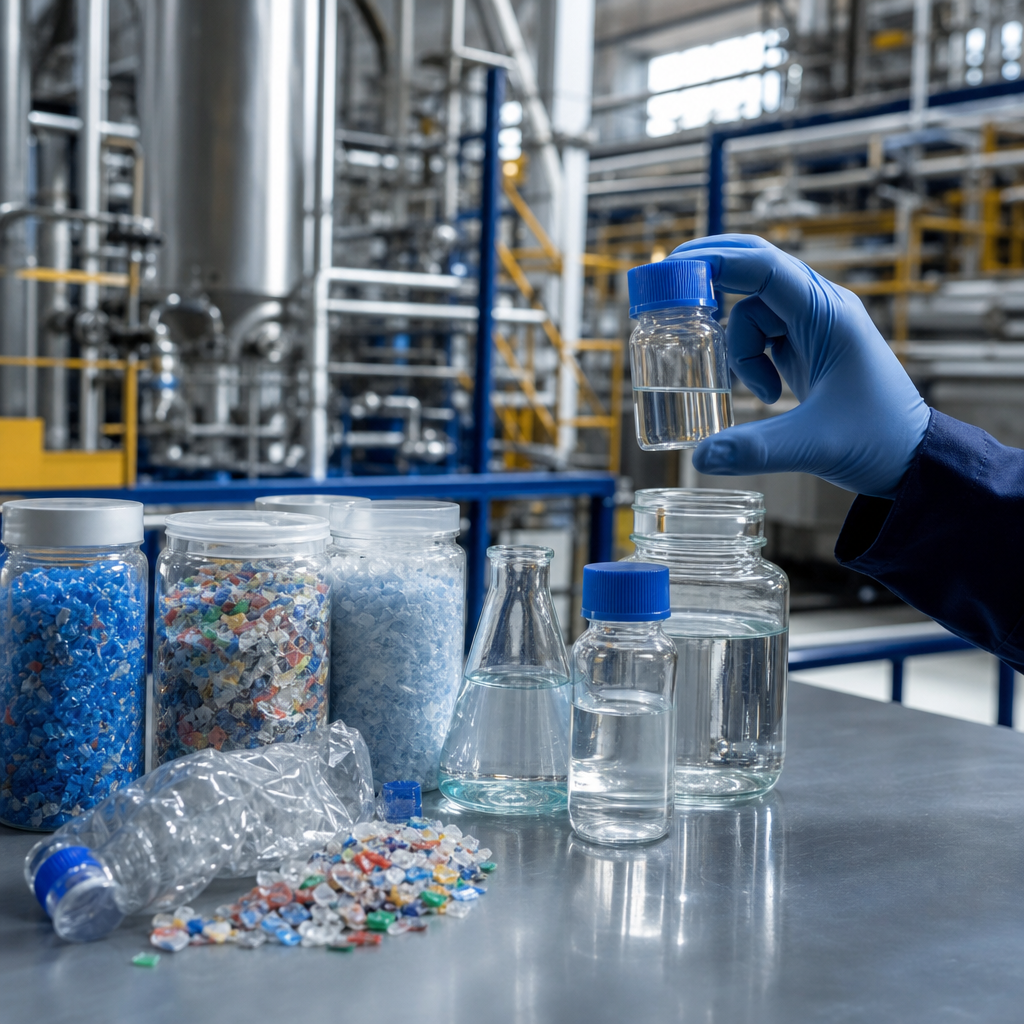
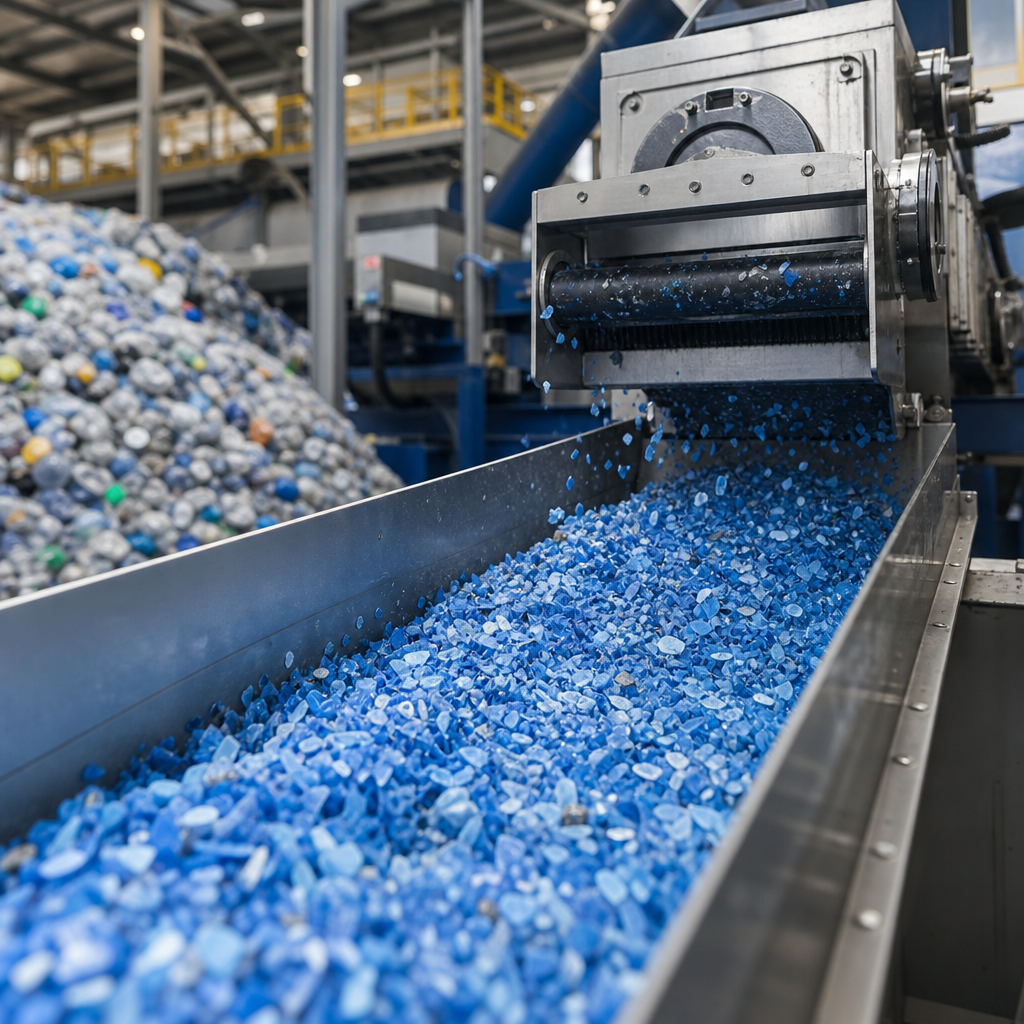
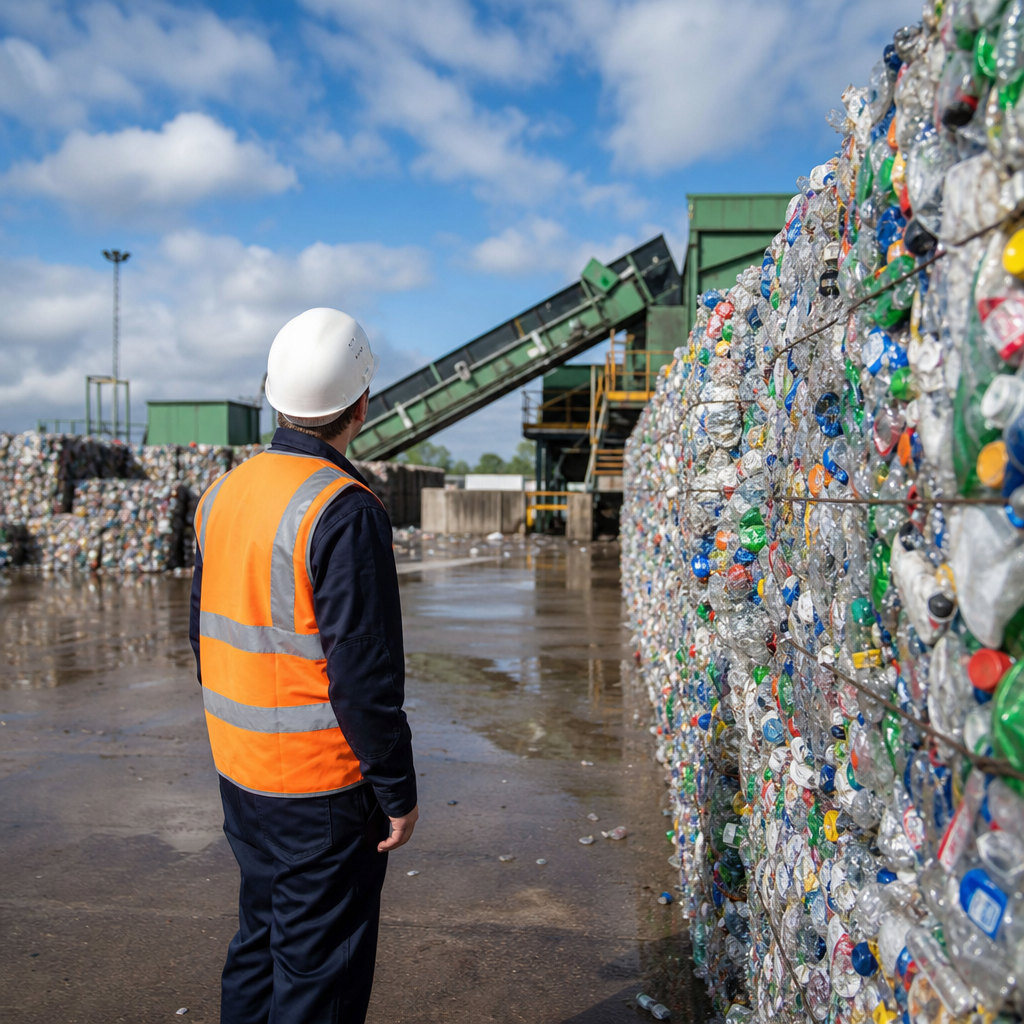
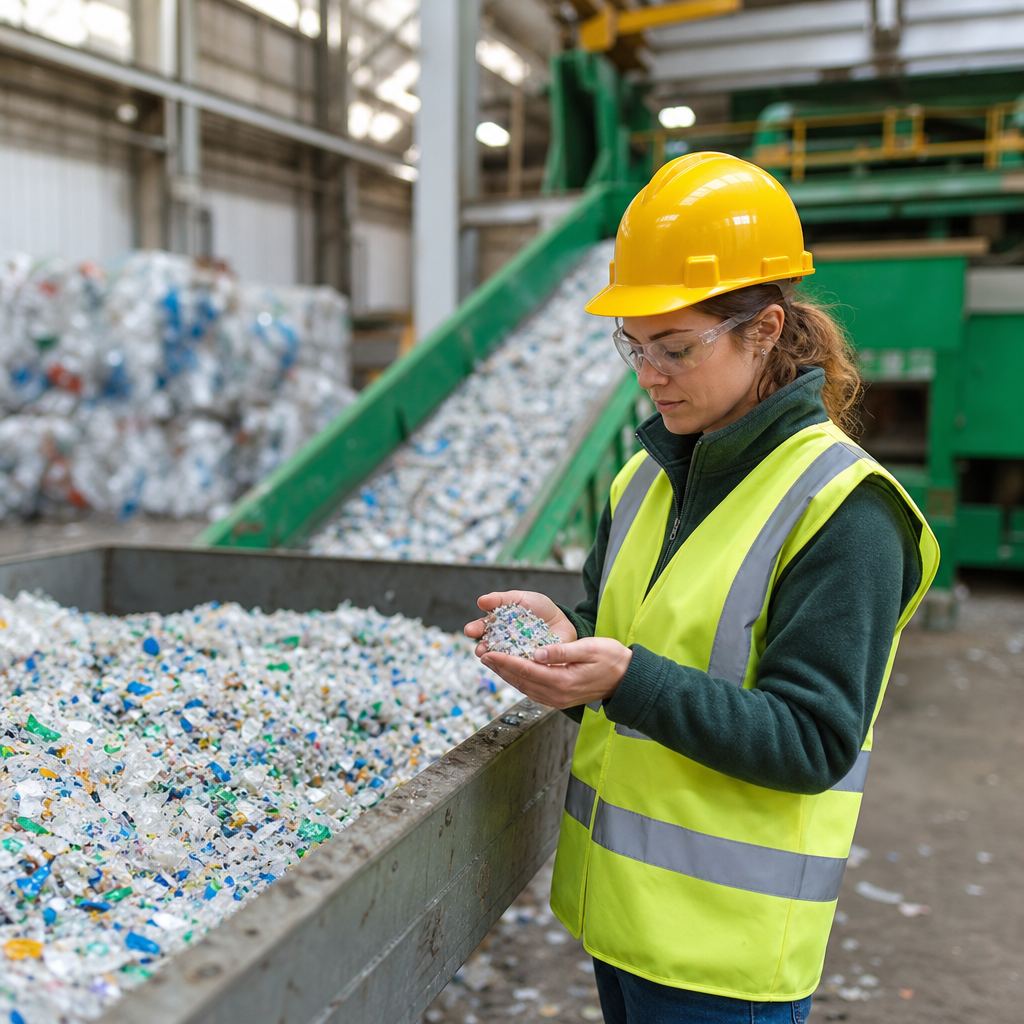
Polymers improved sustainability in some areas while creating new challenges in others, and manufacturers need an honest view of both. On the positive side, durable synthetic fibers extend product life, lightweight polymer-based textiles reduce transport weight, and solution dyeing can cut water use dramatically compared with conventional piece dyeing. Recycled polyester from post-consumer bottles is now widely used in apparel and home textiles, while mechanically and chemically recycled nylon has gained traction in carpets and performance fabrics. Bio-based polymers, including polylactic acid and partly bio-based polyesters, are also expanding, though performance and infrastructure vary by application.
The limits are equally important. Microfiber shedding, fossil feedstock dependence, mixed-material recycling difficulty, and finish chemistry restrictions remain serious issues. In practice, the best results come from design for recyclability: mono-material constructions where possible, easier disassembly, lower-impact coloration, and finishes chosen for compatibility with recovery systems. Standards such as Global Recycled Standard, OEKO-TEX, bluesign, and ZDHC guidance help manufacturers align polymer choices with compliance and brand requirements. The lesson from mills and converters is clear: polymers improved textile manufacturing most when technical performance, process efficiency, and end-of-life planning were addressed together rather than as separate decisions.
Polymers improved textile manufacturing processes by giving manufacturers control where older systems depended on variability. They enabled precision in fiber design, higher efficiency in spinning and fabric formation, more reliable dyeing and finishing, rapid growth in nonwovens, and application-specific performance across apparel, medical, automotive, geotextile, and industrial markets. The strongest case studies all show the same principle: the polymer is not just a raw material but a process tool. Its molecular structure shapes line speed, defect rate, durability, comfort, and compliance.
For companies building out case studies and applications content, this industry-specific hub should guide deeper exploration of each end market, from polyester apparel blends to polypropylene medical nonwovens and polyurethane-coated technical fabrics. The practical takeaway is simple. Evaluate polymers by how they behave in your actual manufacturing sequence, not only by resin cost or headline properties. When polymer chemistry, machinery, finishing, and sustainability goals are aligned, textile production becomes faster, more consistent, and more competitive. Use this hub as the starting point for selecting the right application-specific pathways and for identifying where the next measurable process improvement will come from.
Frequently Asked Questions
1. How did polymers change textile manufacturing compared with traditional fiber production?
Polymers fundamentally changed textile manufacturing by making the entire process more controllable, scalable, and performance-driven. Traditional textile production relied heavily on naturally occurring fibers such as cotton, wool, flax, and silk, which vary in length, strength, fineness, moisture behavior, and consistency from one harvest or source to another. That variability required more manual adjustment during spinning, weaving, dyeing, and finishing. When polymer-based fibers entered the industry, manufacturers gained access to materials that could be engineered at the molecular level to deliver repeatable properties from batch to batch.
That shift improved nearly every stage of production. In fiber formation, synthetic polymers such as polyester, nylon, acrylic, and polypropylene can be extruded through spinnerets to create filaments with specific diameters, cross-sectional shapes, and tensile characteristics. This made it possible to design fibers for high strength, softness, elasticity, insulation, moisture management, or chemical resistance. In spinning and fabric formation, more uniform fibers reduced breakage, improved machine efficiency, and supported faster production speeds. In dyeing and finishing, polymer chemistry allowed fabrics to be modified for wrinkle resistance, stain repellency, water resistance, stretch recovery, flame retardancy, and durability.
Just as important, polymers helped transform textiles from commodity materials into engineered products. Manufacturers could now target end-use requirements much more precisely, whether for sportswear, medical textiles, automotive interiors, industrial filters, or protective clothing. In practical terms, polymers moved the industry away from depending only on what nature provided and toward a model in which fiber behavior, processing characteristics, and fabric performance could be designed in advance.
2. What role do polymers play in fiber formation and yarn production?
Polymers are central to modern fiber formation because they provide the raw molecular structure from which many textile fibers are made. In synthetic textile manufacturing, polymer pellets or chips are melted or dissolved and then forced through very fine openings called spinnerets. As the polymer exits, it solidifies into continuous filaments. This process allows manufacturers to control filament thickness, shape, orientation, and internal structure with a high degree of precision. By adjusting processing conditions such as temperature, draw ratio, cooling rate, and polymer composition, producers can create fibers with very different properties from the same basic chemical family.
That level of control matters greatly in yarn production. Once filaments or staple fibers are formed, they move into spinning systems where consistency is critical. Polymer-based fibers are often more uniform in length, diameter, and strength than many natural fibers, which helps reduce irregularities in the yarn. Better uniformity means fewer weak spots, less lint generation, fewer end breaks, and smoother operation on high-speed spinning equipment. This improves throughput while also producing yarns with more predictable appearance and performance.
Polymers also enable specialized yarn engineering. Manufacturers can create microfibers for softness and drape, hollow fibers for insulation, high-tenacity fibers for reinforcement, bicomponent fibers for crimp and bulk, and elastomeric fibers for stretch. Blending polymer fibers with natural fibers is another major advantage. For example, polyester-cotton blends combine the comfort and breathability of cotton with the strength, wrinkle resistance, and dimensional stability of polyester. As a result, polymers do not simply replace traditional fibers; they expand the range of yarn structures and fabric behaviors that textile producers can achieve efficiently.
3. How did polymers improve speed, efficiency, and quality control in textile manufacturing?
Polymers improved textile manufacturing efficiency by making raw materials more predictable and more compatible with automated, high-speed production systems. One of the biggest limitations in older textile manufacturing was inconsistency in fiber behavior. Natural fibers can vary due to climate, soil, species, maturity, and harvesting conditions, which makes machine settings harder to standardize. Polymer-based fibers are manufactured under controlled industrial conditions, so they typically offer tighter tolerances in fineness, strength, elongation, and surface characteristics. This consistency supports stable machine operation and reduces downtime.
In spinning, consistent polymer fibers reduce yarn breaks and allow faster spindle or rotor speeds. In weaving and knitting, stronger and smoother yarns improve process efficiency by lowering the rate of stoppages caused by abrasion, snarling, or tension variation. In dyeing and finishing, controlled polymer structures help manufacturers predict how the fabric will react to heat, chemicals, pressure, and mechanical handling. That improves reproducibility, which is essential for maintaining color matching, dimensional stability, and surface quality across large production runs.
Polymers also strengthened quality control by enabling measurable, engineered performance standards. Instead of accepting broad natural variation, manufacturers could specify target values for tensile strength, shrinkage, elasticity, moisture transport, pilling resistance, or thermal behavior. This made quality assurance more data-driven. In many modern textile operations, polymer science works hand in hand with process monitoring, laboratory testing, and automated inspection systems. The result is faster throughput, less waste, fewer defects, and products that meet tighter performance specifications. In short, polymers helped move textile production toward the kind of precision manufacturing associated with advanced industrial systems.
4. What kinds of fabric properties became possible because of polymer technology?
Polymer technology dramatically expanded the range of fabric properties available to manufacturers and end users. Before the widespread use of engineered polymers, fabric performance was largely limited by the natural characteristics of the fibers being used. With polymers, textile producers could begin designing fabrics around specific functional goals rather than simply choosing from a narrow set of naturally available traits. This opened the door to a wide range of high-performance and specialty textiles.
For example, polyester brought strength, abrasion resistance, dimensional stability, and wrinkle resistance. Nylon added excellent toughness, elasticity, and resistance to wear, making it valuable in hosiery, activewear, and industrial applications. Acrylic offered lightweight warmth and a wool-like hand, while polypropylene delivered low weight, moisture resistance, and chemical resistance. Polyurethane, especially in elastomeric fibers such as spandex, made stretch fabrics practical for sportswear, swimwear, compression garments, and fitted apparel. Beyond the fiber itself, polymer-based coatings, laminates, and finishes made it possible to add waterproofing, breathability, stain resistance, flame retardancy, antimicrobial performance, UV protection, and improved handle.
Another major advantage is that polymer properties can be combined. A fabric might be designed to be lightweight, quick-drying, durable, and elastic at the same time. That would be difficult to achieve with many traditional materials alone. Polymer engineering also allowed manufacturers to tailor aesthetics as well as function, including luster, softness, bulk, drape, texture, and color retention. This is why modern textiles can be optimized for highly specific uses, from medical gowns and geotextiles to outdoor jackets, carpeting, airbags, and moisture-wicking athletic apparel. Polymer technology did not just improve fabrics; it multiplied the number of performance categories textiles could serve.
5. Are polymers only synthetic in textiles, or do natural polymers matter too?
Polymers in textiles are not limited to synthetic materials. Natural polymers have always been an essential part of textile manufacturing, even before the industry commonly used the word “polymer.” Cellulose, which is the main structural component of cotton and other plant-based fibers, is a natural polymer. Protein-based fibers such as wool and silk are also polymeric in nature because they consist of long chains of repeating molecular units. So, when discussing how polymers improved textile manufacturing, it is important to understand that the concept includes both naturally occurring polymers and industrially synthesized ones.
What changed over time was the industry’s ability to understand, modify, and exploit polymer behavior. With natural polymers, manufacturers learned how to process cellulose and proteins more effectively through improved spinning preparation, chemical finishing, and blending technologies. Regenerated fibers such as rayon and lyocell also emerged from advances in working with natural polymer sources, especially cellulose, in more controlled manufacturing systems. These materials helped bridge the gap between fully natural fibers and fully synthetic ones.
Synthetic polymers, however, expanded the design space much further because chemists could create materials with properties not readily found in nature. That said, the textile industry today often gets the best results by combining natural and synthetic polymers. Blends can improve comfort, strength, care performance, cost efficiency, and appearance all at once. For example, cotton-polyester fabrics remain popular because they balance softness and breathability with durability and easy maintenance. In modern textile manufacturing, natural and synthetic polymers are best viewed as complementary tools. Together, they have enabled a more advanced, flexible, and application-specific industry.