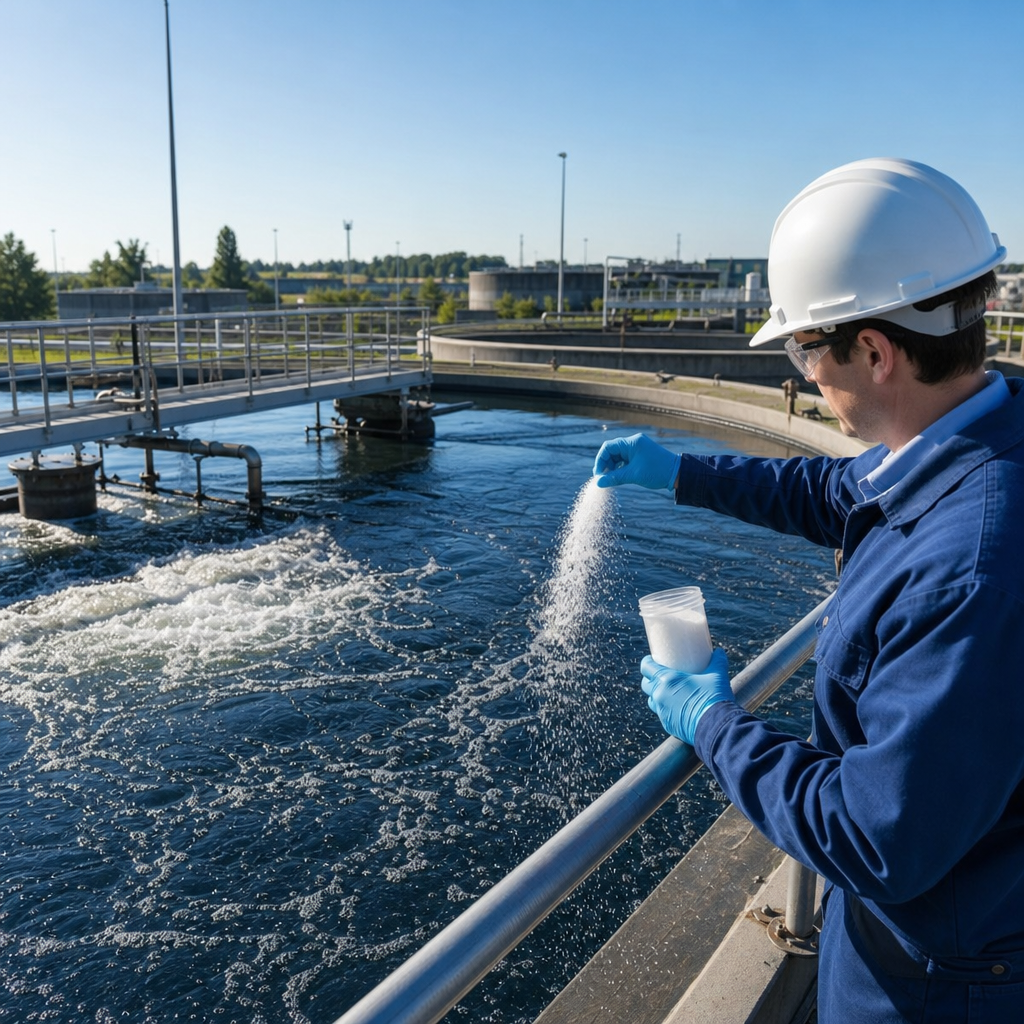
Polymers play a central role in improving water and wastewater treatment technologies because they make separation, purification, and process control more efficient, more selective, and more economical across industrial applications. In treatment practice, the word polymer usually refers to a large molecule engineered to interact with suspended solids, dissolved contaminants, membranes, or ion species in water. That includes commodity flocculants such as polyacrylamide, high-performance membrane materials such as polyethersulfone and polyvinylidene fluoride, ion exchange resins built from crosslinked polystyrene, and specialty chelating polymers designed to capture metals or organics. I have worked on projects where a small change in polymer selection cut sludge hauling costs, stabilized turbidity removal, and extended membrane cleaning intervals, so the impact is not theoretical. It shows up in daily plant performance, compliance margins, and operating budgets.
Water and wastewater treatment technologies depend on reliable physical and chemical separation. Raw waters contain colloids, natural organic matter, hardness ions, microbes, oils, dyes, nutrients, and trace contaminants that do not behave the same way. Industrial wastewater is even more complex, often carrying emulsified fats, surfactants, solvents, heavy metals, or high chemical oxygen demand from sectors such as food processing, textiles, mining, microelectronics, and power generation. Polymers matter because they can be tailored at the molecular level for charge density, molecular weight, porosity, hydrophilicity, and chemical resistance. Those design levers determine whether particles agglomerate, whether membranes foul quickly, whether ions exchange efficiently, and whether adsorbents survive harsh pH or oxidizing conditions. As a result, polymers sit at the core of clarification, filtration, dewatering, desalination pretreatment, advanced reuse, and resource recovery systems.
For a hub article on polymers in industrial applications, the key question is not whether polymers are useful, but which polymer class solves which treatment problem best. The answer depends on feedwater composition, target effluent quality, regulatory requirements, and lifecycle cost. A mining thickener needs a different flocculant architecture than a municipal sludge centrifuge. A semiconductor rinsewater polishing train demands different membrane and resin chemistry than a refinery wastewater plant. Understanding those distinctions helps engineers choose treatment strategies that perform consistently at full scale, not just in jar tests or pilot trials. The sections below explain where polymers deliver value, how they are selected, and what tradeoffs operators should expect in real plants.
Polymer chemistry and why it changes treatment performance
The treatment function of a polymer begins with structure. Molecular weight influences bridging ability and solution viscosity. Charge type and charge density determine attraction to suspended particles or dissolved ions. Crosslinking controls mechanical strength, pore structure, swelling, and permeability. Hydrophilic groups can reduce membrane fouling, while hydrophobic backbones can improve solvent or oxidant resistance. In practical terms, a cationic polymer with high molecular weight can neutralize negatively charged solids and bridge them into larger flocs, while a strongly acidic cation exchange resin can selectively remove calcium and magnesium hardness from boiler makeup water.
These structure-property relationships are why polymer choice cannot be reduced to brand preference. In a papermill wastewater project, for example, we found that two products labeled as cationic flocculants behaved very differently because one had much higher charge density and formed compact flocs, while the other created bulky flocs that blinded the belt press. The same principle applies in membrane systems. PVDF membranes are valued for chemical durability and mechanical strength, while cellulose acetate has historically offered good salt rejection but less tolerance to high pH and chlorine exposure. The polymer itself dictates process behavior, cleaning options, and replacement frequency.
Coagulation, flocculation, and solids-liquid separation
One of the most established uses of polymers in water and wastewater treatment technologies is flocculation. After destabilization by metal salts or direct polymer addition, suspended particles aggregate into larger flocs that settle, float, or filter more easily. Anionic, cationic, and nonionic polymers are selected based on water chemistry and particle charge. Polyacrylamide derivatives dominate this application because they offer tunable molecular weight and charge. In clarifiers, dissolved air flotation systems, and thickeners, the right flocculant improves capture of total suspended solids, lowers turbidity, and reduces downstream loading on filters and membranes.
Industrial applications show why optimization matters. In mineral processing tailings, ultra-high-molecular-weight anionic flocculants accelerate settling of fine clays that would otherwise remain dispersed for hours. In slaughterhouse wastewater, cationic polymers can improve dissolved air flotation by aggregating fats, oils, grease, and proteins into floatable solids. In municipal sludge treatment, emulsion or dry polymer preparation strongly affects performance; under-mixed polymer never fully activates, while over-shearing can break chains and reduce bridging efficiency. Operators often focus on dose alone, but mixing energy, maturation time, feed point, and interaction with coagulants such as ferric chloride or alum are equally important.
| Polymer application | Common materials | Main treatment benefit | Typical industrial example |
|---|---|---|---|
| Flocculation and clarification | Polyacrylamide, polyDADMAC | Larger flocs, faster settling, lower turbidity | Mining tailings and food processing wastewater |
| Membrane filtration | PVDF, PES, PA thin-film composites | Selective separation and higher flux stability | Reuse systems in electronics and power plants |
| Ion exchange | Crosslinked polystyrene resins | Removal of hardness, nitrate, metals, organics | Boiler feedwater and groundwater polishing |
| Adsorption and chelation | Functionalized polymer beads | Targeted capture of specific contaminants | Metal finishing and mining effluents |
| Sludge dewatering | Cationic polyacrylamides | Higher cake solids and lower disposal volume | Municipal biosolids and pulp mill sludge |
Membrane polymers in filtration, desalination, and reuse
Membrane treatment is another area where polymers define performance. Microfiltration and ultrafiltration modules commonly use PVDF, PES, and polypropylene. Nanofiltration and reverse osmosis typically rely on thin-film composite polyamide layers supported by porous polymer substrates. These materials determine pore size distribution, permeability, fouling tendency, oxidant resistance, and mechanical integrity under pressure. In water reuse systems, pretreatment quality and membrane surface chemistry are tightly linked. A hydrophilic modified membrane surface usually resists organic fouling better than a more hydrophobic one, but chemical compatibility with cleaning agents must still be verified.
Real-world examples are instructive. Power plants increasingly use membrane bioreactors plus reverse osmosis for cooling tower blowdown recovery, where polymeric membranes help remove suspended solids, dissolved salts, and silica-forming species. Semiconductor manufacturers depend on membrane trains followed by ion exchange and ultraviolet oxidation to produce high-purity water, and polymer compatibility becomes critical because even trace leachables can affect product quality. In landfill leachate treatment, severe fouling from humics and ammonia pushes polymer membranes to their limits, so material choice, antiscalant strategy, and clean-in-place protocols must be integrated rather than treated as separate decisions.
Ion exchange resins and selective contaminant removal
Ion exchange is a polymer success story because it combines robust mechanical structure with highly specific chemistry. Most conventional resins are crosslinked polystyrene beads functionalized with sulfonic acid, quaternary amine, carboxylic acid, or specialty chelating groups. Those sites exchange ions reversibly, allowing removal of hardness, nitrate, arsenic, perchlorate, ammonia, or dissolved metals depending on resin type and operating conditions. Strong acid cation resins are standard for softening, while strong base anion resins are common in demineralization trains. Chelating resins with iminodiacetate or aminophosphonic groups are especially useful for copper, nickel, or other metal recovery applications.
In industrial wastewater treatment, selectivity is the economic driver. A metal finishing facility may use chelating polymer resins to recover copper from rinse streams at concentrations too low for precipitation to be efficient. A beverage plant might use ion exchange to polish process water and protect product consistency. A power station demineralization train depends on resin integrity to control sodium leakage and silica breakthrough, both of which can damage turbines and boilers. Resin fouling by iron, organics, or oxidants is a real limitation, however, and poor regeneration control can increase salt use, waste brine, and operating cost. Good design balances capacity, selectivity, hydraulics, and regenerant management.
Polymeric adsorbents, binders, and emerging contaminant control
Beyond classic flocculants and resins, specialty polymers increasingly target contaminants that conventional treatment struggles to remove. Functionalized adsorbent beads and polymer-supported sorbents can be engineered for dyes, phenols, PFAS, pharmaceutical residues, and metal complexes. Some systems use molecular imprinting or tailored ligand chemistry to favor one contaminant over another. Others blend polymer matrices with activated carbon, metal oxides, or bio-based fillers to increase adsorption capacity while preserving mechanical strength. These materials are attractive where contaminant concentrations are low, discharge limits are strict, or selective recovery creates value.
There are also important caveats. Many emerging contaminant applications look impressive at bench scale but face regeneration, disposal, and cost barriers at plant scale. PFAS treatment is a good example. Polymeric ion exchange media can outperform granular activated carbon for certain short-chain compounds, but media exhaustion profiles, co-contaminant competition, and spent media handling still need close evaluation. In pharmaceutical wastewater, specialty adsorbents may remove color and trace organics effectively, yet a biological pretreatment step often remains necessary to lower bulk COD first. The right lesson is that polymers expand the treatment toolbox; they do not eliminate process integration.
Sludge dewatering, process stability, and operating economics
When treatment discussions focus only on effluent quality, one of the biggest polymer benefits gets overlooked: better solids handling. Sludge dewatering polymers improve cake solids, filtrate clarity, and throughput on centrifuges, screw presses, and belt filter presses. That directly affects hauling cost, landfill tonnage, dryer fuel demand, and operator time. In plants I have supported, a one-point increase in cake solids changed annual disposal budgets materially because less water was being transported as waste. Polymer optimization is therefore one of the fastest ways to improve whole-plant economics without major capital construction.
Process stability matters just as much as peak performance. A polymer that performs well only under narrow pH or solids conditions can create constant operator intervention. The best industrial programs include routine jar testing, standardized dilution and aging procedures, feed system maintenance, and trending of key indicators such as capillary suction time, specific resistance to filtration, solids capture, and polymer pounds per dry ton. Seasonal temperature swings, upstream chemistry changes, and equipment wear can all change polymer demand. Plants that treat polymer selection as an ongoing control variable usually outperform plants that buy on unit price alone.
Selection criteria, sustainability, and future direction
Choosing polymers for industrial water and wastewater treatment technologies requires more than matching a product to a contaminant list. Engineers should evaluate compatibility with pH, temperature, shear, salinity, oxidants, and cleaning chemicals; verify performance under realistic hydraulic conditions; and compare total cost rather than chemical cost per kilogram. Regulatory considerations also matter. Residual monomers, disposal constraints, and potable water approvals must be checked against local requirements and standards such as NSF/ANSI certifications where relevant. Pilot testing remains the most reliable path when wastewater composition varies or when treatment goals include reuse, resource recovery, or very low discharge limits.
Sustainability is shaping polymer development in measurable ways. Suppliers are working on lower-toxicity formulations, biodegradable flocculants, more fouling-resistant membranes, and adsorbents that regenerate more efficiently. Digital tools also help. Online streaming current monitors, membrane autopsy data, resin exhaustion modeling, and supervisory control systems make polymer dosing and replacement decisions more evidence-based than they were a decade ago. The direction of travel is clear: smarter polymers paired with better process data. For industrial operators, the benefit is straightforward. Better polymer choices mean stronger compliance, lower energy and sludge costs, longer asset life, and more dependable water reuse. If you are building this subtopic into your treatment strategy, start by mapping each unit operation to the polymer function it depends on, then optimize from there.
Frequently Asked Questions
1. What role do polymers play in water and wastewater treatment technologies?
Polymers are essential performance materials in modern water and wastewater treatment because they improve how contaminants are separated, concentrated, captured, or rejected throughout the treatment train. In practical terms, polymers are used to help small suspended particles come together into larger, heavier flocs that settle or float more easily, to enhance dewatering of sludge, to provide selective transport or rejection in membrane systems, and to support ion exchange or adsorption processes aimed at removing dissolved pollutants. Their value comes from the fact that they can be engineered to interact very specifically with solids, organics, salts, metals, oils, and process surfaces.
In conventional clarification, for example, polymer flocculants reduce turbidity and improve solids removal by destabilizing colloidal particles and promoting aggregation. In sludge handling, polymers increase cake solids and reduce disposal volumes by making mechanical dewatering more efficient. In membrane-based treatment, polymer chemistry is central to the manufacture of reverse osmosis, nanofiltration, ultrafiltration, and microfiltration membranes, where it influences permeability, selectivity, fouling resistance, and durability. Specialized polymers are also used in ion exchange resins, adsorbent media, scale inhibitors, and chemical dosing programs that improve process stability and operating economics. Taken together, polymers are not just additives; they are enabling materials that make treatment systems more effective, more controllable, and often more cost-efficient across municipal and industrial applications.
2. How do polymer flocculants and coagulant aids improve solid-liquid separation?
Polymer flocculants and coagulant aids improve solid-liquid separation by helping very fine particles, which would otherwise remain suspended for long periods, combine into larger agglomerates that can be removed by sedimentation, dissolved air flotation, or filtration. Many suspended solids in water carry surface charges that cause them to repel one another, which keeps the suspension stable. When the right polymer is added, it can neutralize surface charge, create bridges between particles, or do both at the same time. This causes dispersed matter to form stronger and more settleable flocs.
The effectiveness of a polymer in this role depends on several factors, including molecular weight, charge type, charge density, dose, mixing intensity, pH, water temperature, and the nature of the solids present. Cationic polymers are often selected for negatively charged organic solids, while anionic or nonionic polymers may work better in mineral-rich or different pH environments. Polyacrylamide-based chemistries are especially common because they can be tailored to produce the floc size, strength, and settling characteristics required for a given process. In many systems, a metal coagulant such as alum or ferric chloride is first used to destabilize particles, and the polymer then acts as a coagulant aid to build larger, more robust flocs.
The operational benefits are significant. Better floc formation can reduce clarifier carryover, improve filter run times, lower turbidity, and increase throughput. In wastewater treatment, polymers can improve primary clarification, tertiary polishing, and solids thickening. They also support more consistent treatment during variations in flow or contaminant loading. When selected and dosed properly, polymer programs help plants achieve higher removal efficiency with less chemical waste, lower energy use in downstream operations, and more reliable compliance with discharge or reuse standards.
3. Why are polymers so important in membrane filtration systems?
Polymers are fundamental to membrane filtration because most commercial membranes used in water and wastewater treatment are made from polymeric materials or are modified with polymer-based surface chemistries. Materials such as polyamide, polysulfone, polyethersulfone, polyvinylidene fluoride, cellulose acetate, and related polymers are widely used to create membranes with carefully controlled pore structure and transport properties. These materials determine how a membrane balances water permeability with selectivity, meaning how much clean water it can pass while still rejecting particles, dissolved salts, microorganisms, natural organic matter, or specific contaminants.
Beyond basic membrane formation, polymer science is what allows manufacturers to tailor membranes for difficult feedwaters and demanding operating conditions. Surface modifications can increase hydrophilicity, reduce organic fouling, limit biofilm attachment, improve chlorine tolerance in some cases, and enhance resistance to chemical cleaning. Thin-film composite reverse osmosis and nanofiltration membranes, for instance, rely on highly engineered polymer layers to deliver salt rejection and contaminant selectivity at practical operating pressures. In ultrafiltration and microfiltration systems, polymer composition strongly affects mechanical integrity, backwash performance, and long-term durability.
Polymers also matter because membrane fouling is one of the biggest operating challenges in treatment plants. The right polymer design can help reduce adsorption of foulants, minimize pore blockage, and maintain flux over time. That leads to lower cleaning frequency, longer membrane life, and reduced operating cost. In short, polymers do not simply form the membrane structure; they define much of the membrane’s real-world performance, including efficiency, reliability, and total lifecycle value.
4. What types of polymers are commonly used in industrial water and wastewater treatment?
A wide range of polymers are used in industrial treatment, and each class serves a different function depending on the contaminants present and the treatment objective. One of the most familiar groups is flocculants, especially polyacrylamide-based polymers. These may be anionic, cationic, or nonionic and are selected based on the charge characteristics of the suspended matter and the process conditions. They are commonly used for clarification, sludge thickening, dissolved air flotation, and dewatering. Cationic polymers are especially common in biological sludge dewatering because they interact effectively with negatively charged biosolids.
Another major category is membrane polymers. Polyamide is widely used in reverse osmosis and nanofiltration membranes because of its strong salt rejection properties. Polysulfone and polyethersulfone are common support or ultrafiltration materials due to their strength and thermal stability, while PVDF is widely valued for toughness and chemical resistance in filtration modules. Ion exchange resins represent another important polymer class. These are crosslinked polymer beads with functional groups that selectively exchange ions such as calcium, magnesium, nitrate, sulfate, or heavy metals. They are used in softening, demineralization, condensate polishing, and specialty separations.
There are also functional polymers used as dispersants, antiscalants, adsorption media, and surface modifiers. Some polymer formulations are designed to keep sparingly soluble salts from precipitating on membranes and heat transfer surfaces. Others are incorporated into adsorbents for selective contaminant removal, including PFAS, dyes, metals, or organics in specialized applications. Because industrial wastewater streams vary widely across sectors such as food processing, mining, power generation, textiles, chemicals, and microelectronics, polymer selection is usually highly application-specific. The best-performing polymer is the one whose chemistry aligns with the water matrix, treatment goal, equipment design, and downstream handling requirements.
5. How do treatment plants choose the right polymer, and what factors affect performance?
Choosing the right polymer is a technical process that combines water chemistry, process design, operational goals, and economic evaluation. The first step is understanding the treatment challenge in detail: whether the target is suspended solids, emulsified oil, color bodies, metals, sludge dewatering, membrane fouling control, or dissolved ions. From there, operators and treatment specialists evaluate factors such as particle size distribution, zeta potential, pH, alkalinity, conductivity, temperature, organic loading, hydraulic conditions, and the presence of competing contaminants. These variables strongly influence how a polymer behaves once it is introduced into the system.
For flocculation and dewatering applications, jar testing and bench-scale screening are standard because polymer performance can vary dramatically even among products that appear similar on paper. Molecular weight, charge density, polymer architecture, solution make-down quality, dilution water, dosage point, and mixing energy all affect results. Underdosing may lead to weak floc formation and poor separation, while overdosing can restabilize particles, increase residuals, or interfere with downstream filtration. In membrane and ion exchange applications, selection tends to focus more on permeability, selectivity, compatibility with cleaning chemicals, fouling behavior, and expected service life under real operating conditions.
Cost is also important, but the lowest unit price is rarely the best measure of value. A higher-performance polymer may reduce sludge hauling, lower energy demand, extend membrane runtime, improve effluent quality, or reduce total chemical consumption, making overall treatment more economical. Environmental and regulatory considerations also play a role, especially where residual monomer limits, potable water approvals, discharge requirements, or sustainability goals apply. In the most successful programs, polymer selection is treated as an optimization exercise rather than a commodity purchase decision. That approach helps treatment plants improve performance, reliability, and compliance while controlling total operating cost.