Polymers are reshaping sustainable energy harvesting by enabling lighter, cheaper, and more adaptable devices that capture power from sunlight, heat, motion, and chemical gradients. In this context, polymers are large molecules built from repeating units, and they include commodity plastics, high-performance engineering materials, elastomers, ion-conducting membranes, and electrically active conjugated polymers. Sustainable energy harvesting means converting ambient or renewable energy into usable electricity or fuel with lower material intensity, lower carbon emissions, and broader deployment potential than conventional systems alone. I have worked with polymer films, encapsulants, membranes, and composites in energy device development, and the pattern is consistent: when a design fails in the field, the root cause is often not the active semiconductor itself, but moisture ingress, UV damage, fatigue, delamination, or poor processability. Polymers sit at the center of those problems and, increasingly, at the center of the solutions.
This environmental and sustainable applications hub matters because the global energy transition depends not just on peak efficiency, but on scalability, durability, cost, and circularity. The International Energy Agency has repeatedly shown that solar, wind, batteries, hydrogen, and electrification must expand simultaneously to keep climate targets credible. Polymers support each of those pathways. They form photovoltaic active layers and backsheets, binders in lithium-ion electrodes, proton exchange membranes in fuel cells, separators in batteries, piezoelectric films in wearables, dielectric layers in triboelectric generators, and corrosion-resistant coatings for marine systems. They also reduce weight in transport and building-integrated systems, which lowers the energy required for deployment and operation. Yet polymer use is not automatically sustainable. Feedstock origin, additives, solvent choice, end-of-life recovery, fire behavior, and long-term degradation all affect environmental performance.
As the hub page for environmental and sustainable applications, this article explains where polymers create real value in energy harvesting, which polymer classes dominate each application, what tradeoffs engineers manage, and how to judge whether a polymer-enabled solution is genuinely greener across its life cycle. It also connects the major case-study areas under this subtopic: solar energy harvesting, thermoelectric and pyroelectric systems, piezoelectric and triboelectric devices, electrochemical harvesting and storage interfaces, blue-energy and moisture-driven systems, and recyclable bio-based materials. A useful rule is simple. In sustainable energy systems, the best polymer is rarely the one with the most impressive lab number; it is the one that balances performance, stability, manufacturability, safety, and recovery at scale.
Polymer roles in solar energy harvesting
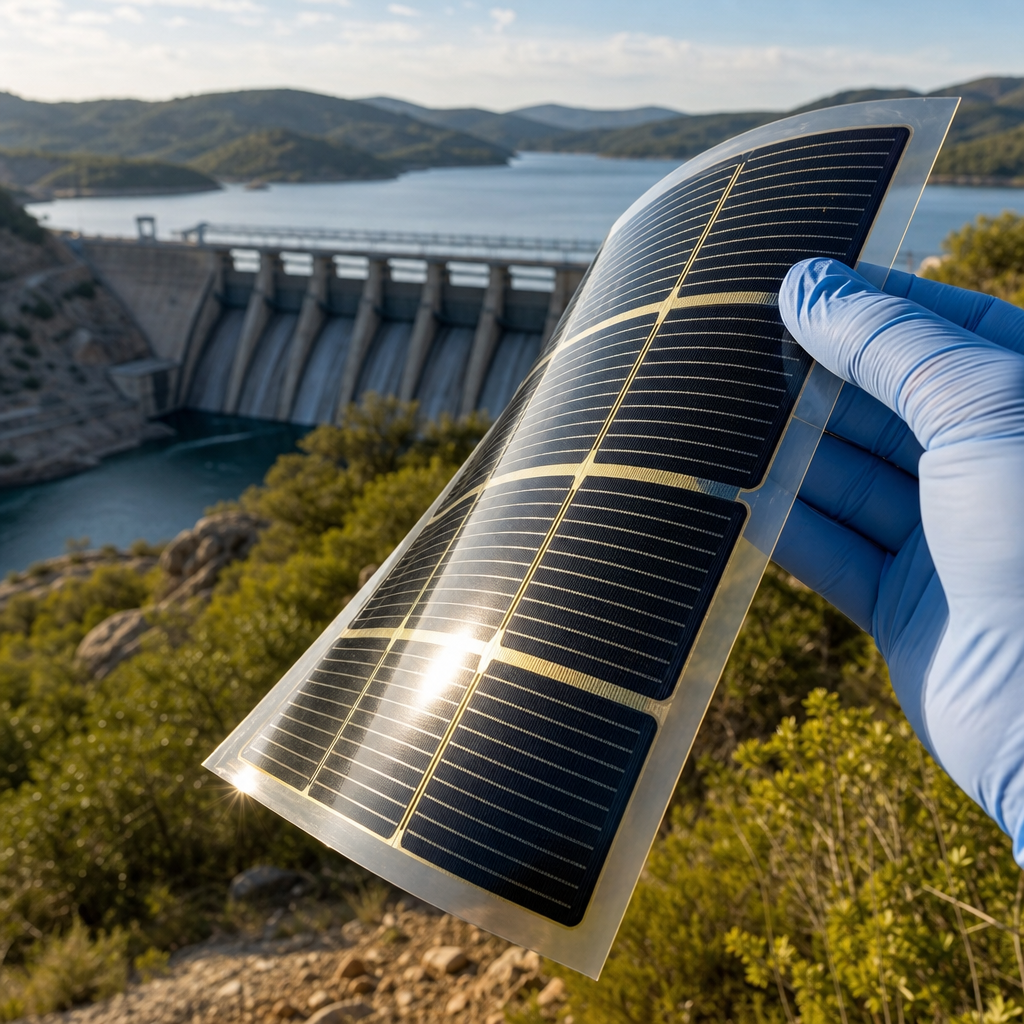
Solar is the clearest example of how polymers move from supporting material to core energy harvester. In organic photovoltaics, semiconducting polymers such as PM6 and donor-acceptor backbones transport charge while blending with non-fullerene acceptors to form bulk heterojunctions. These devices can be printed at low temperatures on flexible substrates, reducing manufacturing energy compared with crystalline silicon processing. In perovskite solar cells, polymers more often appear as hole-transport layers, passivation additives, encapsulants, and barrier films. Ethylene-vinyl acetate, polyolefin elastomers, fluoropolymers, and multilayer barrier laminates protect modules against oxygen and water, which are primary causes of power loss. In silicon photovoltaics, polymer backsheets and encapsulants are already indispensable. The environmental point is not that polymers replace silicon everywhere, but that they enable lighter modules, building integration, portable generation, and lower-balance-of-system costs.
Real-world deployment shows the distinction between laboratory efficiency and field value. Flexible organic and perovskite-based modules can be integrated onto curved roofs, facades, logistics shelters, agricultural tunnels, and low-load surfaces where glass-glass silicon is impractical. I have seen pilot projects where the deciding factor was not efficiency per square meter, but whether a rooftop could tolerate the dead load and wind uplift of traditional modules. Polymer-based encapsulation and substrates solved that problem. At the same time, environmental credibility depends on service life. A flexible module that fails in three years is usually less sustainable than a heavier module that runs for twenty-five. That is why UV stabilizers, moisture barriers, edge seals, and adhesion promotion matter as much as active-layer chemistry. Standards such as IEC 61215 and damp-heat testing protocols remain critical reference points when evaluating polymer-heavy solar designs.
Piezoelectric, triboelectric, and mechanical energy harvesting
Polymers are especially powerful in harvesting small amounts of mechanical energy from movement, vibration, pressure, and contact electrification. Polyvinylidene fluoride, or PVDF, and its copolymers are leading piezoelectric polymers because their beta crystalline phase produces useful electrical polarization under strain. They appear in shoe insoles, structural health monitoring patches, implantable sensors, and smart textiles. Triboelectric nanogenerators use polymer pairs with different electron affinities, such as PTFE, PDMS, nylon, and Kapton, to generate charge through contact and separation. These systems excel where power demand is low and intermittent, such as wireless sensor nodes, pipeline monitoring, and wearable electronics. Their sustainability advantage comes from replacing disposable batteries in distributed devices, cutting maintenance trips, and scavenging energy that would otherwise be wasted.
However, engineers need realistic expectations. Mechanical harvesting rarely powers large loads continuously. In practice, it works best when matched with low-power electronics, duty-cycled sensing, and energy storage elements such as supercapacitors or thin-film batteries. I have tested flexible PVDF laminates that produced impressive voltage spikes but negligible average power once rectification losses and irregular motion were included. The better metric is energy delivered under a defined mechanical input, not open-circuit voltage alone. Durability also matters: repeated bending can crack electrodes, and surface wear can degrade triboelectric output. Encapsulation with silicones, thermoplastic polyurethanes, and fluorinated coatings improves lifespan but may complicate recycling. For environmental applications like bridge sensors, ocean buoys, or forest monitoring tags, the winning design is usually a rugged polymer composite system that accepts moderate power density in exchange for long maintenance intervals.
Thermal, ionic, and electrochemical harvesting pathways
Not all harvesting comes from light or motion. Polymers also enable devices that convert heat, ionic gradients, humidity, and electrochemical potential into useful energy. In thermoelectric systems, conductive polymers such as PEDOT:PSS can be engineered to carry charge while maintaining low thermal conductivity, a desirable combination for the thermoelectric figure of merit. Although polymer thermoelectrics are less efficient than classic inorganic materials like bismuth telluride, they are flexible, printable, and better suited to low-grade waste heat on skin, pipes, and curved equipment. Pyroelectric polymers generate current when temperature changes over time; PVDF again plays an important role. In fuel cells and electrolyzers, polymer electrolyte membranes such as Nafion conduct protons while separating reactants. Anion exchange membranes, often built from functionalized hydrocarbon polymers, are becoming increasingly important because they may reduce reliance on expensive catalysts.
Humidity and salinity gradients are another emerging area. Hydrogels, polyelectrolytes, and ion-selective polymer membranes can create streaming potentials or osmotic power by controlling ion transport across concentration differences. These concepts matter in coastal and wastewater settings, where small-scale distributed harvesting can support sensors and treatment controls. The same polymer science applies to blue energy devices that exploit river-seawater mixing and to moisture-enabled generators that operate from evaporation. The key mechanism is selective transport: the polymer’s fixed charges, pore architecture, and water uptake determine ion mobility and potential difference. From a sustainability perspective, these systems are attractive because they use ambient gradients that are often ignored. Their limits are equally clear. Fouling, swelling, biofilm formation, and membrane aging can sharply reduce output. Any serious environmental assessment must include cleaning chemistry, replacement frequency, and water compatibility, not just power density.
| Application | Common polymers | Main benefit | Primary limitation |
|---|---|---|---|
| Organic and flexible solar | Conjugated polymers, EVA, POE, fluoropolymers | Low-weight, printable, adaptable modules | Moisture and UV stability |
| Piezoelectric harvesting | PVDF, P(VDF-TrFE), TPU composites | Flexible power from motion and vibration | Low average power output |
| Triboelectric devices | PTFE, PDMS, Kapton, nylon | Simple structures for self-powered sensors | Wear, charge decay, inconsistent inputs |
| Thermoelectric and pyroelectric | PEDOT:PSS, PVDF-based films | Use of low-grade heat and thermal fluctuation | Lower efficiency than inorganics |
| Fuel cells and electrolyzers | Nafion, sulfonated hydrocarbons, AEM polymers | Ion transport and chemical separation | Cost, chemical degradation, water management |
| Blue energy and moisture systems | Hydrogels, polyelectrolytes, ion-selective membranes | Harvesting from salinity and humidity gradients | Fouling and long-term instability |
Bio-based, recyclable, and low-impact polymer strategies
If sustainable energy harvesting is the goal, feedstock and end-of-life decisions cannot be an afterthought. Conventional petrochemical polymers often provide the best combination of barrier properties, toughness, and cost, but they carry embodied carbon and can create difficult waste streams when laminated into multi-material devices. That is why bio-based and recyclable polymers are receiving serious attention. Polylactic acid, cellulose derivatives, chitosan, silk fibroin, lignin-based polymers, and bio-derived epoxies are being explored for substrates, binders, separators, and active composites. Cellulose nanofibrils, for example, can reinforce films while remaining lightweight and renewable. Lignin, once treated mainly as a low-value byproduct of pulping, has shown promise in carbon precursors, binders, and redox-active components. Some biodegradable polymer systems are useful for temporary environmental sensors deployed in agriculture or marine monitoring, where retrieval is difficult.
The caution is straightforward: bio-based does not automatically mean lower impact, and biodegradable does not mean harmless in every environment. Agricultural feedstocks can compete with land use, biodegradable plastics may require industrial composting conditions, and some bio-derived materials still depend on hazardous solvents or fluorinated additives in processing. I have reviewed device claims that centered on a biodegradable substrate while ignoring silver electrodes, persistent encapsulants, or energy-intensive synthesis elsewhere in the stack. A defensible low-impact strategy looks at the full bill of materials. It favors mono-material designs where possible, reversible adhesives, solvent recovery, modular repair, and mechanical or chemical recycling routes that already exist or can be implemented regionally. Life cycle assessment, especially cradle-to-gate and cradle-to-grave comparisons, is the right tool here. The most sustainable polymer solution is usually the one designed from the start for disassembly, not the one labeled green after the fact.
Manufacturing, durability, and the standards that determine real sustainability
Manufacturing method often determines whether a polymer-enabled harvester remains a niche curiosity or becomes a scalable climate solution. Roll-to-roll coating, slot-die deposition, inkjet printing, extrusion, lamination, and melt processing can dramatically lower production energy and material waste compared with vacuum-heavy fabrication. That is a major reason polymer devices attract interest for large-area electronics. Yet process sustainability depends on details: solvent toxicity, drying temperature, line speed, scrap recovery, and worker exposure controls. Water-based formulations such as improved PEDOT:PSS inks can reduce volatile organic emissions, but they may introduce drying and stability challenges. Likewise, thermoplastic encapsulants may support repairability better than thermosets, but only if the device architecture allows separation without destroying active layers. In my experience, manufacturability reviews should begin before performance optimization is complete; otherwise teams lock in chemistries that cannot be safely scaled.
Durability is the other decisive factor. Energy harvested over service life must exceed the environmental cost of producing and replacing the device. For polymers, the common failure modes are photodegradation, hydrolysis, oxidation, creep, solvent attack, thermal softening, and interfacial delamination. Additives help, but they can migrate, reduce recyclability, or create compliance issues. Accelerated aging tests are essential, though they must be interpreted carefully because combined stressors in the field can differ from laboratory protocols. Recognized tools include IEC test frameworks for photovoltaics, ASTM methods for polymer weathering, electrochemical impedance spectroscopy for membrane health, and dynamic mechanical analysis for fatigue behavior. For this sub-pillar hub, the practical lesson is clear. Sustainable polymer energy harvesting succeeds when material selection, device physics, manufacturing, and end-of-life planning are treated as one system rather than separate tasks.
Polymers have become foundational to sustainable energy harvesting because they solve practical problems that determine whether clean-energy devices can leave the lab and survive in the real world. They make solar modules lighter and more adaptable, turn motion and vibration into usable power for autonomous sensors, enable ion transport in fuel cells and electrolyzers, and open emerging routes for thermal, moisture, and salinity-gradient harvesting. Across these applications, the same pattern holds: polymers create value through flexibility, selective transport, processability, low thermal conductivity, corrosion resistance, and tunable interfaces. They are not automatically the greenest option, but they are often the enabling material that makes distributed renewable energy systems affordable and deployable in places where rigid, brittle, or heavy materials fall short.
The strongest environmental outcomes come from matching polymer choice to service conditions and judging performance over the full life cycle. That means asking direct questions. How long will the device last in heat, UV, moisture, salt, or cyclic strain? Can it be manufactured with safer solvents and lower process energy? Are the layers repairable, separable, or recyclable? Do bio-based feedstocks reduce impact in practice, or only in marketing language? When those questions are answered early, polymer-enabled systems can reduce maintenance, expand access to off-grid power, and cut material use across buildings, transport, industry, and environmental monitoring. Use this hub as the starting point for deeper case studies on each application area, and evaluate every new polymer energy technology with the same disciplined standard: measurable energy benefit, proven durability, and credible sustainability from production through end of life.
Frequently Asked Questions
What role do polymers play in sustainable energy harvesting?
Polymers play a central role in sustainable energy harvesting because they make energy-conversion devices lighter, more flexible, easier to process, and often less expensive than systems built entirely from traditional rigid materials. In this field, polymers are not limited to everyday plastics. They include structural polymers used for packaging and encapsulation, elastomers that stretch and recover under mechanical stress, ion-conducting membranes that transport charged particles in electrochemical systems, and conjugated polymers that can conduct electricity or interact directly with light. That broad functionality allows polymers to contribute to multiple harvesting pathways, including solar, thermoelectric, piezoelectric, triboelectric, and electrochemical energy systems.
One of their biggest advantages is tunability. Scientists and engineers can adjust polymer chemistry, molecular weight, crystallinity, porosity, and surface properties to control how a material absorbs light, moves ions, responds to heat, or generates charge under deformation. This means polymers can be designed for very specific applications, such as lightweight solar films for buildings, wearable generators that convert body motion into electricity, or membranes that improve ion transport in systems that capture energy from chemical gradients. In practical terms, polymers help sustainable energy harvesters move beyond the lab by improving manufacturability, enabling roll-to-roll fabrication, and supporting new device formats that conform to curved, soft, or mobile surfaces.
How are polymers used in solar energy harvesting technologies?
Polymers are widely used in solar energy harvesting, especially in organic photovoltaics, hybrid solar cells, coatings, encapsulants, and flexible substrates. In organic solar cells, conjugated polymers act as active semiconducting materials that absorb sunlight and convert it into electrical charge. These polymers contain alternating single and double bonds along their backbone, which allows electrons to move more freely than in conventional insulating plastics. By carefully choosing and modifying these polymer structures, researchers can tune the wavelengths of light absorbed, improve charge transport, and increase overall device efficiency.
Beyond serving as the active light-harvesting layer, polymers are also critical to the supporting architecture of solar devices. Flexible polymer substrates make it possible to manufacture thin, bendable solar modules that can be integrated into portable electronics, windows, tents, vehicles, and building materials. Encapsulation polymers protect moisture-sensitive solar components from oxygen, water, and mechanical damage, extending service life. Adhesive and barrier polymers also support lamination and packaging processes that are essential for commercial deployment. Because many polymer-based solar components can be processed from solution using printing or coating methods, they offer the potential for lower-energy manufacturing and reduced material waste compared with conventional wafer-based production. This combination of flexibility, scalable manufacturing, and functional versatility is one reason polymers are considered so important in next-generation solar energy harvesting.
Can polymers help harvest energy from motion, vibration, and human activity?
Yes, polymers are especially valuable for harvesting small amounts of energy from motion, vibration, pressure, stretching, and repetitive human activity. In piezoelectric and triboelectric generators, polymers can convert mechanical input into electrical output. Piezoelectric polymers such as polyvinylidene fluoride, commonly known as PVDF, generate electrical charge when they are bent, pressed, or vibrated. This makes them useful in wearable electronics, structural monitoring systems, footwear-based generators, and self-powered sensors. Their flexibility gives them a major advantage over brittle ceramic piezoelectric materials in applications where repeated deformation is expected.
Triboelectric nanogenerators also rely heavily on polymers because many polymer surfaces readily exchange charge when brought into contact and then separated. Different polymers occupy different positions in the triboelectric series, meaning some tend to gain electrons while others tend to lose them. By pairing appropriate polymer layers and optimizing surface texture, engineers can boost charge generation from actions such as walking, typing, airflow, wave motion, or machine vibration. These devices are attractive for low-power energy harvesting because they can be lightweight, low-cost, and mechanically compliant.
Polymers also enable stretchable and textile-based energy harvesters that can be embedded into clothing, gloves, patches, or soft robotics. In these cases, the polymer is not just an inactive support material; it may be the active energy-converting medium, the dielectric layer, the encapsulant, or the structural matrix that keeps the device comfortable and durable. This is why polymer science is so closely linked to the development of self-powered wearables and distributed sensor networks powered by ambient motion.
What makes polymers attractive for thermoelectric and electrochemical energy harvesting?
Polymers are attractive in thermoelectric and electrochemical energy harvesting because they can combine low weight, mechanical flexibility, and chemically tailored transport properties in ways that rigid inorganic materials often cannot. In thermoelectric systems, the goal is to convert a temperature difference into electricity. Conductive and semiconductive polymers can be engineered to transport charge while maintaining relatively low thermal conductivity, which is a desirable trait for thermoelectric performance. Although polymer thermoelectrics have historically lagged behind inorganic materials in efficiency, they offer important benefits for wearable devices, curved surfaces, and low-grade waste heat recovery where flexibility and comfort matter as much as peak conversion efficiency.
In electrochemical harvesting systems, polymers are often indispensable. Ion-conducting polymer membranes are used to move specific ions while blocking unwanted species, which is essential in fuel cells, osmotic power systems, and other devices that convert chemical potential differences into usable electricity. These membranes can be designed for proton transport, hydroxide transport, or selective ion exchange depending on the application. Their chemical stability, water management properties, and mechanical strength all strongly influence overall device performance and lifetime.
Polymers also appear in electrodes, binders, separators, gels, and solid-state electrolytes. In many cases, they improve interfacial contact between components, reduce leakage risk, and allow safer or more compact system designs. As researchers develop bio-based and recyclable polymers for these roles, the sustainability profile of thermoelectric and electrochemical harvesters can improve further. The key point is that polymers are not merely passive packaging materials; they often govern how heat, ions, and charges move through the system, directly affecting how effectively energy is captured.
What are the main sustainability benefits and challenges of using polymers in energy harvesting devices?
The sustainability benefits of polymers in energy harvesting devices are significant, but they come with important trade-offs that need to be addressed honestly. On the benefit side, polymers can reduce device weight, lower transportation impacts, enable manufacturing at lower temperatures, and support scalable processes such as printing, coating, and lamination. They can also make it feasible to deploy energy harvesters on surfaces and in settings where conventional rigid materials are impractical, such as wearable systems, portable electronics, agricultural covers, temporary structures, and large-area building integration. If a polymer-based harvester is inexpensive, durable, and easy to install, it can increase access to renewable and ambient energy technologies in ways that support broader sustainability goals.
At the same time, not all polymers are inherently sustainable. Many are derived from fossil feedstocks, and some can be difficult to recycle because energy harvesting devices often combine multiple layers of different materials, including metals, ceramics, additives, and adhesives. Long-term environmental exposure can also degrade polymers through ultraviolet radiation, heat, moisture, or mechanical fatigue, which affects both performance and end-of-life handling. In addition, certain high-performance polymers or processing solvents may raise environmental or health concerns if not managed properly during manufacturing and disposal.
Current research is focused on solving these issues through bio-based polymers, recyclable device architectures, solvent reduction, greener synthesis routes, improved durability, and design-for-disassembly strategies. The most sustainable polymer energy harvester is not simply the one made from a “green” plastic; it is the one that balances material sourcing, performance, operating lifetime, manufacturing impact, and end-of-life recovery. That full life-cycle perspective is becoming the standard for evaluating how polymers can contribute meaningfully to sustainable energy harvesting rather than just offering short-term technical advantages.